Complete Guide to Keeping Horned Frogs (Pacman Frogs): Cage Setup, Temperature & Humidity, Feeding, and Water Quality Management
A comprehensive guide to raising horned frogs (Pacman frogs). Covers everything from species types and beginner-friendly semi-aquatic care, to cage setup, temperature and humidity management, feeding techniques, health checks, and breeding of these popular amphibians.
Key Takeaways
A comprehensive guide to raising horned frogs (Pacman frogs). Covers everything from species types and beginner-friendly semi-aquatic care, to cage setup, temperature and humidity management, feeding techniques, health checks, and breeding of these popular amphibians.
Related Species
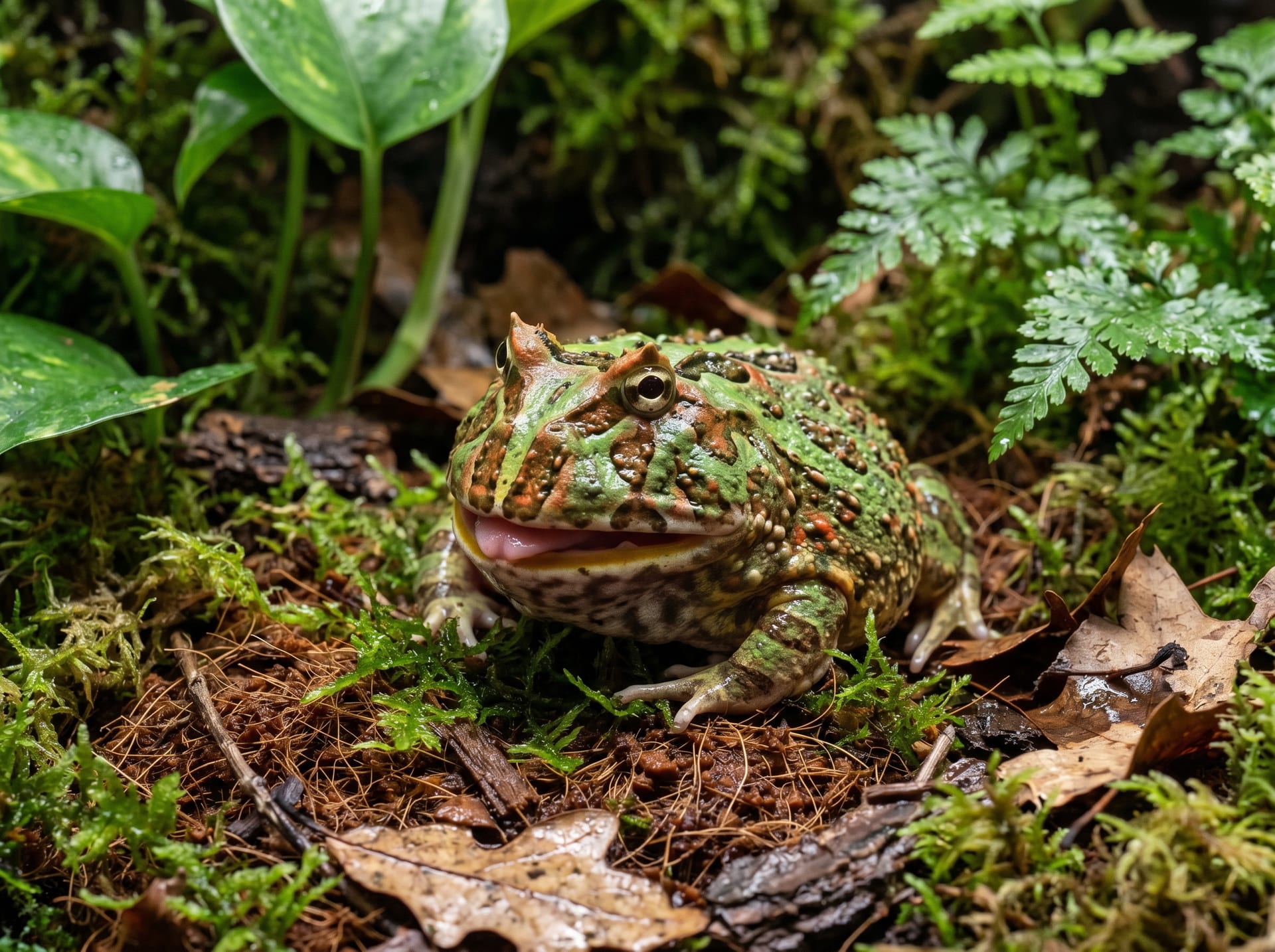
Horned frogs are carnivorous frogs native to South America, known as "Pacman frogs" because of their round, stocky bodies and large mouths. Due to their ease of care and distinctive appearance, they are extremely popular in Japan's aquarium and reptile hobby communities, and are frequently chosen by those keeping amphibians for the first time. This article provides a detailed explanation covering everything from basic knowledge about horned frogs to daily care.
Species and Characteristics of Horned Frogs
Several species and cultivated morphs of horned frogs are commonly available in Japan.
Argentine Horned Frog (Ceratophrys ornata): The most common species, characterized by striking green and brown mottled patterns. Grows to approximately 15–20 cm in length, making it a large species. Easy to care for and suitable for beginners.
Cranwell's Horned Frog (Ceratophrys cranwelli): Slightly smaller than the Argentine species and considered easier to care for. Albinos and various morphs (color variations) are widely available, offering a diverse range of colors including white, cream, and green hues.
Surinam Horned Frog (Ceratophrys cornuta): A large species with a wild nature, featuring prominent projections on the upper eyelids and a distinctively rugged appearance. Requires some experience to care for properly.
Fantasy Horned Frog: A hybrid between Cranwell's and Argentine horned frogs, with the most diverse range of morphs. Currently the most widely available species in the Japanese market.
All of these are ambush predators (they bury themselves in substrate to wait for prey) with elastic, large mouths and powerful jaws that swallow insects, small fish, and mice whole.
Required Equipment for Keeping Horned Frogs
Cage (Enclosure)
Horned frogs are extremely sedentary and often remain stationary in one spot, so a large cage is not necessary.
- Recommended size by adult size: Individuals under 10 cm in length require approximately 30 cm × 30 cm plastic containers or reptile cases; those exceeding 15 cm are ideally housed in 45–60 cm cages.
- Secure lid is essential: While their jumping ability is not particularly strong, they can jump despite their weight and may escape, so always use a secure lid.
- Materials: Transparent plastic containers or glass aquariums are easy to observe and manage. For individuals sensitive to humidity, reptile cases with good ventilation are suitable.
Substrate (Bedding)
Substrate directly affects horned frog health. Choose materials that maintain a wet environment.
- Coconut husk soil (Coconut husk mat): High moisture retention, easy to replace when soiled, and a standard choice. Creates a jungle-like natural appearance.
- Sphagnum moss (Water moss): Excellent moisture retention. Easy water control with odor-reducing properties. Popular method includes placing it over slate.
- Artificial turf + water area: For simplified management, artificial turf with a shallow water dish provides a simple, convenient setup.
- Soil-based substrate: Allows frogs to burrow naturally, encouraging natural behavior, though fecal removal is more difficult.
Water Area
Horned frogs are semi-aquatic and prefer soaking in shallow water.
- Place a shallow container (ceramic dish, plastic tub, etc.) where half the frog's body can submerge
- Water depth should be approximately 3–5 cm. Water that is too deep poses drowning risks
- Use dechlorinated tap water or frog-specific water conditioner
- Change water daily (easily contaminated by urine and feces)
Temperature and Humidity Management
Appropriate Temperature
Horned frogs are native to temperate to subtropical regions, with ideal temperatures between 20–28°C, with the optimal range being 23–26°C.
- Winter heating requires panel heaters placed under or on the side of the cage
- Temperatures exceeding 30°C cause stress, reduced activity, and may trigger estivation (cocoon formation)
- Summer cooling with air conditioning or cooling fans may be necessary if ambient temperature is high
Appropriate Humidity
Maintain humidity at approximately 70–80%. Dry conditions cause the frog's skin to dry out, forming a cocoon (mucus-like membrane) for energy conservation. While short-term cocoon formation is harmless, prolonged formation becomes dangerous.
- Mist the substrate daily or every other day
- Install a humidity gauge to monitor appropriate levels
- Maintain substrate in a consistently moist state (avoid soaking wet)
Feeding
Horned frogs are carnivorous and prefer live or thawed frozen prey.
Types of Food
Crickets: The most popular feeder insect. Use appropriately-sized specimens (two-thirds of the frog's head width) such as dubia crickets or house crickets. Dust with calcium and vitamin supplements before feeding.
Dubias (Roaches): Nutritionally rich, easier to maintain than crickets, and slower-moving for easier management.
Pinky Mice (Frozen): High-nutrition food rich in protein and fat. Feed to adults approximately once or twice monthly, though overfeeding leads to obesity.
Medaka and small fish (Live): Release into shallow water to encourage natural predatory behavior.
Artificial pellet feed (Horned frog-specific pellets): For acclimated individuals, offer pellets with tweezers by making them wiggle. Nutritionally balanced and eliminates the need to manage live prey.
Feeding Frequency
- Juveniles (up to 5 cm): Daily or every two days with small crickets
- Subadults (5–10 cm): Every 2–3 days
- Adults (10 cm and larger): 1–2 times per week
These frogs are prone to obesity, so avoid overfeeding. Maintain proper body condition where the abdomen is appropriately full without the back or sides being excessively bloated.
Calcium and Vitamin Supplementation
Insect prey contains less calcium than natural diet, so dust feeders with calcium powder at each feeding. Use vitamin supplements containing D3 once or twice weekly.
Water Quality and Hygiene
Water is extremely important in horned frog care.
- Chlorine removal: Always use dechlorinated water. Tap water directly damages the frog's skin
- Water change frequency: Change the water daily. Remove feces or urine immediately if substrate becomes soiled
- Full substrate replacement: Substrate becomes easily contaminated with crickets, food debris, and feces, requiring partial changes weekly or full changes monthly
Health Management and Common Illnesses
Red-leg Syndrome (Bacterial Infection)
Characterized by redness and bleeding on limbs and abdomen caused by bacterial infection. Results from unsanitary conditions, stress, or immune suppression. Early detection is crucial, requiring antibiotic treatment.
Cocoon Formation (Dryness Signal)
A condition where mucus membrane attaches to the body surface due to excessive dryness. Prevention through regular misting and water access.
Shedding Difficulty
Incomplete skin shedding. Primarily caused by insufficient humidity. May improve with a warm bath (5–10 minutes).
Indigestion and Regurgitation
Often occurs when prey is too large or temperature is too low. Adjust prey size and review temperature management.
External Parasites
Mites and ticks may attach. Particular caution needed when feeding wild-collected live prey.
Breeding
Breeding horned frogs is relatively challenging but not impossible with proper conditions.
Sexing: Males have dark throats (black or brown) and vocalize during breeding season. Females are larger than males.
Breeding triggers: Exposing frogs to cooler temperatures (around 20°C) and dryness for 1–2 months, then increasing temperature and humidity can induce spawning (rain chamber method simulating seasonal changes).
Spawning and hatching: Females lay hundreds to thousands of eggs in water per spawn. Eggs hatch within 1–3 days at water temperatures of 25–27°C, transforming into tadpoles managed in the tank.
Tadpole care: Tadpoles exhibit high cannibalism and require individual housing. Feed brine shrimp or specialized food while awaiting metamorphosis.
Summary
Horned frogs are relatively inactive, can be kept in small spaces, and offer unique appeal through their distinctive appearance and the striking power of carnivorous frogs. With careful temperature, humidity, and water quality management, long-term care is possible, and collecting various albinos and morphs adds collectible appeal. Through BreederDirect, you can acquire individuals directly from domestic breeders with confirmed health status and access detailed information about species and morphs.