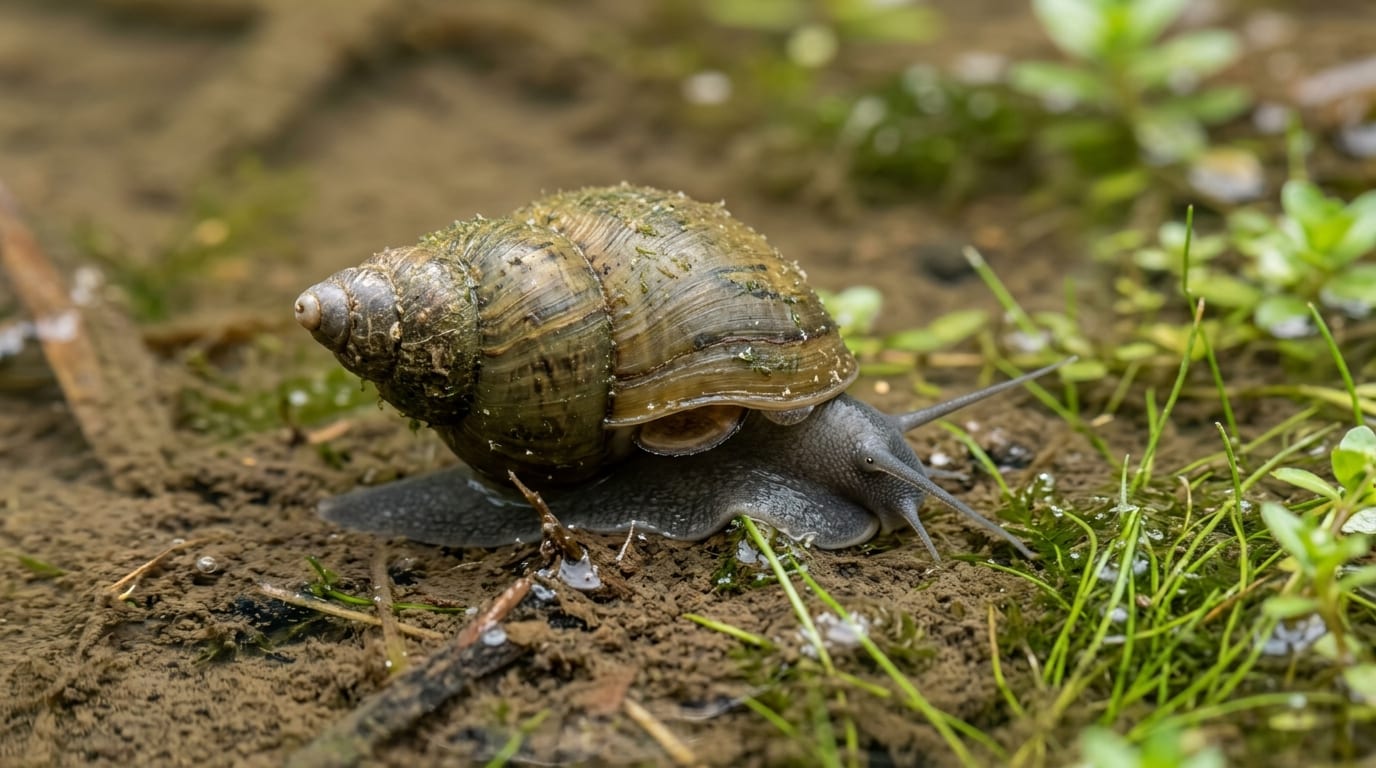
AI-generated image
Japanese Trapdoor Snail
BeginnerSinotaia quadrata histrica
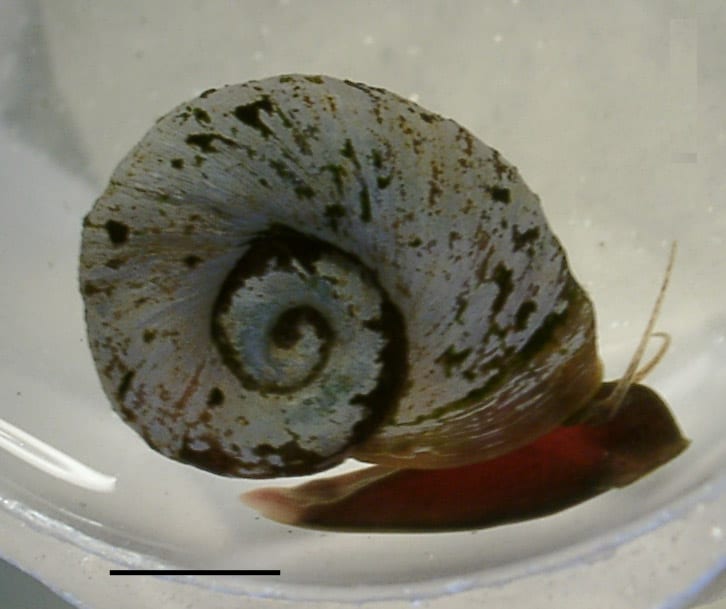
A viviparid snail common in Japanese paddies and irrigation channels, with a shell 20-30mm high. It grazes epiphytic algae, feeds on detritus and filters suspended matter with its gills, and gives birth to live young.
Difficulty
Beginner
Temperature
22〜28℃
Lifespan
2-4 years
Size
Shell height 20-30mm
Diet
Epiphytic algae, detritus and suspended matter
About
Sinotaia quadrata histrica is a viviparid snail found in paddies, irrigation channels and ponds throughout Japan, one of the four Japanese species of the family. The shell of Sinotaia quadrata is reported as 20-30mm high, taller than wide in adults, with no difference in dimensions between the sexes. Newborn shells are 2.93-3.70mm and are wider than high, the reverse of the adult. It is a herbivorous deposit feeder living mainly on epiphytic algae but also taking detritus, bacteria, aquatic plants, diatoms, green algae and cyanobacteria such as Microcystis. Viviparids are said to combine grazing, deposit feeding and gill filter feeding, which lets them survive in waters that change sharply. The sexes are separate and the snail is ovoviviparous, giving birth to several to a dozen or more well-grown young. The male's right tentacle is modified, which allows the sexes to be told apart.
Source: Wikipedia (CC BY-SA 4.0)
Lifespan of the Japanese Trapdoor Snail
The Japanese Trapdoor Snail lives 2-4 years.
Size of the Japanese Trapdoor Snail
The Japanese Trapdoor Snail grows to Shell height 20-30mm.
Basic Info
Origin
Japan, China, northern Vietnam and northeastern Thailand
Lifespan
2-4 years
Size
Shell height 20-30mm
Temperature
Care Specifications
PeacefulGroupBreeding: Easy
Sources: Wikipedia (Sinotaia quadrata) / Wikipedia (Viviparidae, ja) / WoRMS
References & Sources
Edited & verified by: BreederDirect editorial team
The taxonomic, regulatory, and husbandry data on this page are compiled and verified against the authoritative primary sources below.
Taxonomy & Authority
Accepted name: Sinotaia quadrata histrica (A. A. Gould, 1859)
Authority databases: GBIF
Nomenclature follows global taxonomic authority databases.
Regulations & Conservation Status
Not CITES-listed
Sources: CITES Appendices (species not listed) / IUCN Red List
Regulations may change. Always verify the latest information with the relevant authorities.
Japanese Trapdoor Snail Listings
Loading latest listingsFind listings for this species