A Home Collecting, Breeding, and Care Guide for Japanese Rhinoceros Beetles | Collection Sites, Feeding, Egg-Laying Setups, and Larval Rearing Tips
A complete guide for beginners on collecting, caring for, and breeding Japanese rhinoceros beetles, Japan's iconic summer insect. Learn how to find collection sites, manage adults, set up egg-laying beds, and raise larvae from start to finish, with step-by-step instructions for each season.
Key Takeaways
A complete guide for beginners on collecting, caring for, and breeding Japanese rhinoceros beetles, Japan's iconic summer insect. Learn how to find collection sites, manage adults, set up egg-laying beds, and raise larvae from start to finish, with step-by-step instructions for each season.
Japanese Rhinoceros Beetle Collection Season and Habitat
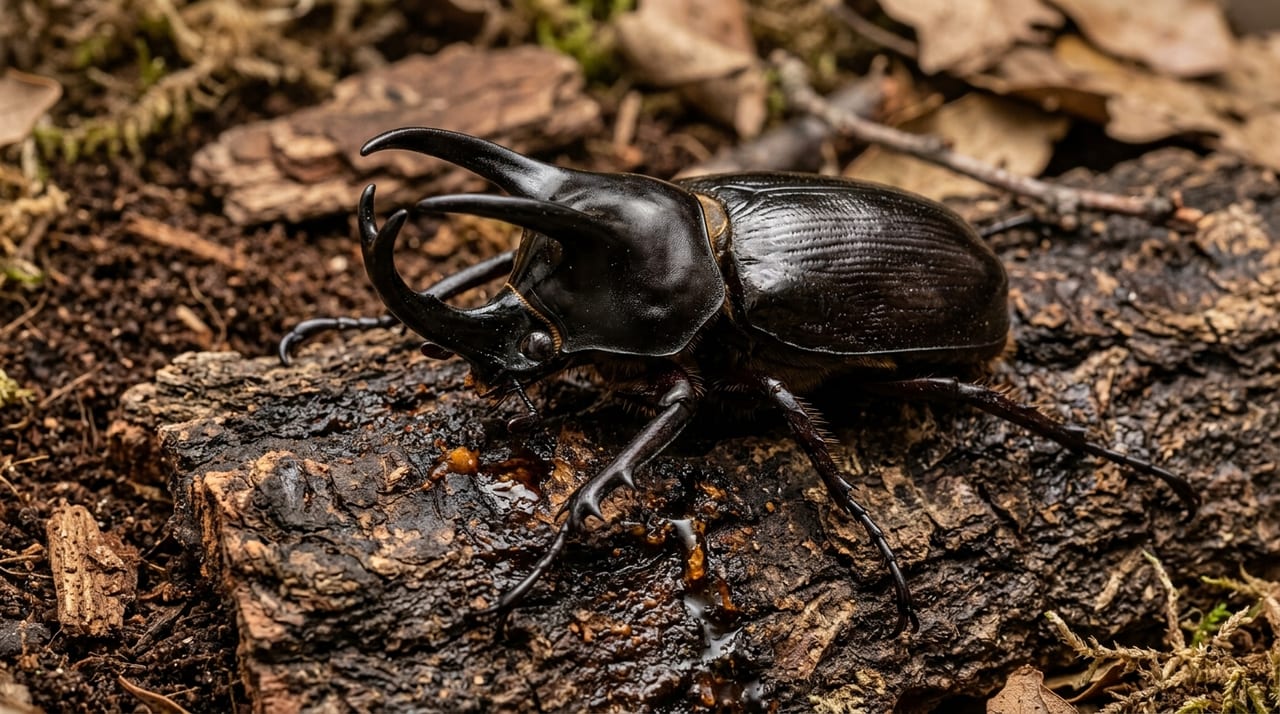
The Japanese rhinoceros beetle (Trypoxylus dichotomus) is widely distributed throughout Japan from Hokkaido to Okinawa and is a classic choice for summer insect collecting. In most regions, late June through early August is peak adult emergence, with early to mid-July being the best collection season. Unlike stag beetles, rhinoceros beetles hide under leaf litter and soil during the day to rest, becoming active after sunset.
Collection sites are typically around trees with oozing sap, such as Japanese oak, ring-cupped oak, willow, and savin juniper. When sap flows from wounds on thick trunks at the edges of mixed woodlands, countryside forests, or parks, adults usually congregate there. Collection is best done at night (sunset to around 2 AM) with a headlamp or flashlight. During the day, you can sometimes find hidden adults by digging around tree bases or under leaf litter.
Collection Etiquette and Precautions: Collection is prohibited in some natural parks and national parks. Check usage restrictions in advance and obtain permission from the landowner or manager before collecting. Over-collection leads to population decline, so take only what you need.
Adult Care and Husbandry Basics
To keep collected or purchased beetles healthy for an extended period, provide proper conditions.
Container Size: A medium-sized plastic enclosure about 30 cm wide is sufficient for a single male, but a larger enclosure (40–50 cm wide) is ideal for a pair. When housing multiple adults, males fight vigorously with their horns, so the standard is one male and one female.
Substrate (Bedding): Layer fermented insect substrate about 8–10 cm deep. Beetles burrow into the substrate during the day to rest, so adequate depth is essential. Keep the substrate moist (compacts when squeezed but doesn't release water), and mist with a spray bottle if it dries out.
Food: Commercial high-protein insect jelly (such as Pro-Jelly) is ideal. While beetles also eat watermelon, banana, and apple, excess moisture and spoilage degrade the enclosure environment, so jelly should be the primary food source for hygiene. Change food every 2–3 days and always remove old jelly.
Temperature: The ideal range is 25–30°C; summer temperatures in Japan require no supplemental heating. Avoid direct sunlight, which can cause fatal overheating—keep the enclosure in a shaded, well-ventilated spot. Temperatures above 35°C can be lethal. Adults cannot overwinter, so natural death after October is normal.
Setting Up Egg-Laying Beds
Once mating is confirmed, set up an egg-laying bed. Move the female to the egg-laying setup and collect eggs and hatchlings after 3–5 weeks.
How to Set Up an Egg-Laying Bed:
- Fill the container 7–8 full with well-aged fermented substrate (dark, fully decomposed material). No egg-laying wood is needed since beetles lay eggs in substrate.
- Place insect jelly and a piece of wood on the surface, then add the female.
- Place the container in a quiet location and leave it undisturbed for 3–5 weeks. During this time, only refill food and check for dryness—avoid digging excessively.
- After 3–5 weeks, excavate the substrate to find white, round eggs (3–4 mm diameter) and first-stage hatchlings. A single setup can yield 20–50+ eggs.
Important: Keeping the female in the egg-laying setup too long exhausts her and shortens her lifespan. Remove her after 3–4 weeks or move her to a separate container.
Larval Rearing: From First Stage to Pupation
Beetle larvae molt repeatedly through three instars before pupating. Larval care directly affects adult size.
Larval Transfer and Individual Care: Eggs and early-stage (1st–2nd instar) larvae can be kept together in small containers, but move third-stage larvae to individual rearing containers (800 mL–1 L plastic boxes). Larvae in shared substrate may cannibalize each other.
Food (Substrate Changes): Larvae feed on fermented substrate to grow. When black frass (droppings) accumulates on the surface, it's time to change substrate—roughly every 1–2 months. Carefully remove the larva with a plastic spoon and place it in the center of fresh substrate. It will burrow in on its own.
Temperature and Care: Larvae are also heat-sensitive and weaken above 28°C. Ideal storage is in cool locations (indoors or basements) even in summer.
Pupation: Late third-stage larvae construct pupae chambers in the substrate. Do not move the container or subject it to vibration or shock—chamber collapse risks deformed emergence. Pupae take about 3–4 weeks to develop into adults.
Post-Emergence Care and Adult Use
Newly emerged adults have soft bodies and pale wings. Leave them in their pupal chambers undisturbed during this time. Over 1–2 weeks, the body hardens and darkens.
Feeding Begins: 2–4 weeks after emergence, adults emerge from the substrate and begin moving and eating (post-emergence feeding). This signals maturity and readiness for breeding. Attempting to pair pre-feeding individuals usually fails to produce mating.
Male lifespan is roughly until fall (September–October) of the year they emerge (if emergence occurs July–September). Proper care and consistent jelly supply can extend this slightly.
Larvae and adults from home collection and breeding can be shared with fellow enthusiasts on BreederDirect. As a breeder, showcase your adults and larvae and share the joy of collecting and breeding with the community.