Complete Guide to Keeping Red-Footed Stag Beetles | Lifespan, Collection, Summer Cool-Down Management, and Egg-Laying Setup
A guide to the lifespan and care of Red-Footed Stag Beetles (*Dorcus rubrofemoratus*). Learn the differences in lifespan between wild individuals (several months) and captive-bred specimens (1–2 years), their life cycle, summer heat management on flat terrain, overwintering, wood-laying egg-laying setups, and larval rearing through practical step-by-step instructions.
Key Takeaways
A guide to the lifespan and care of Red-Footed Stag Beetles (*Dorcus rubrofemoratus*). Learn the differences in lifespan between wild individuals (several months) and captive-bred specimens (1–2 years), their life cycle, summer heat management on flat terrain, overwintering, wood-laying egg-laying setups, and larval rearing through practical step-by-step instructions.
✍️
BreederDirect Editorial
The BreederDirect editorial team specializes in care information for animals, covering veterinary care and breeding to deliver beginner-friendly guides.
Find Insects on BreederDirect
Buy directly from verified breeders
Browse Related Listings
Find Insects listings related to this article on BreederDirect. Buy directly from verified breeders.
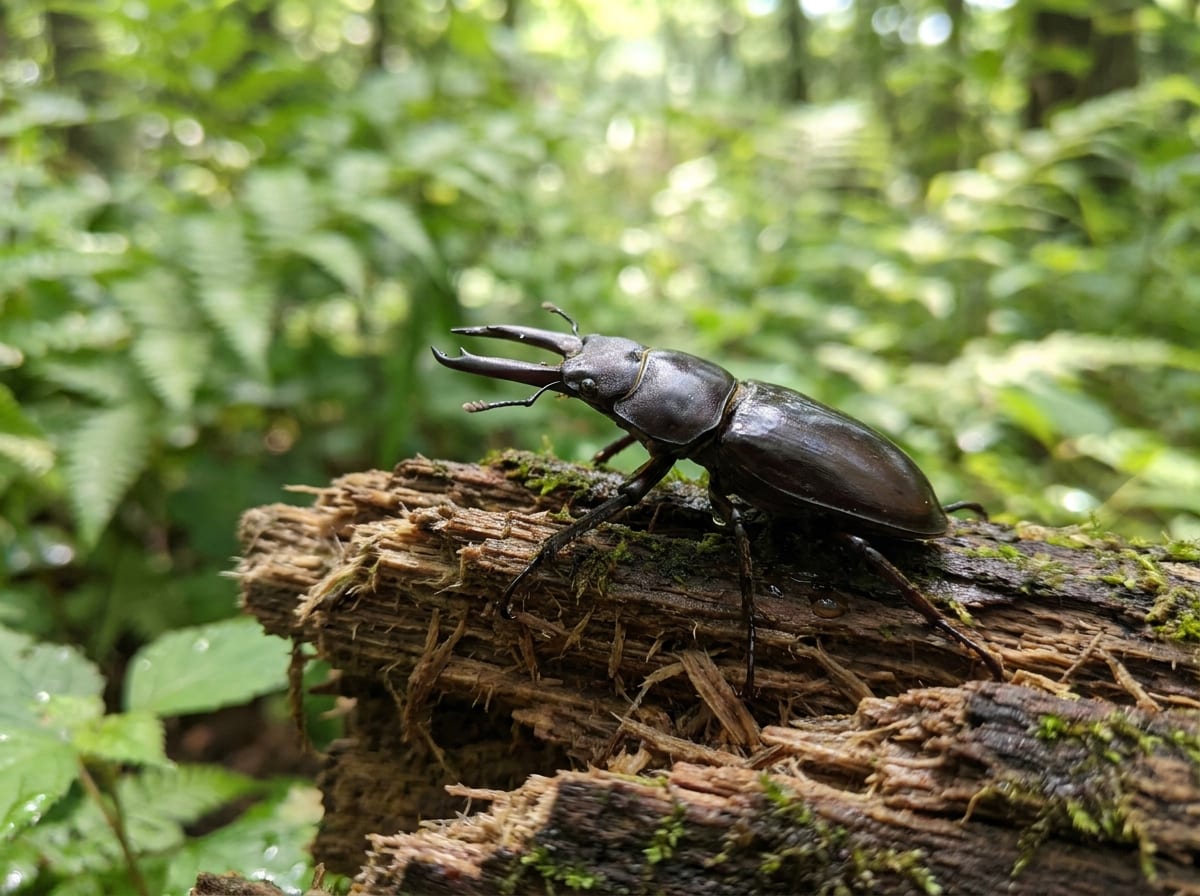
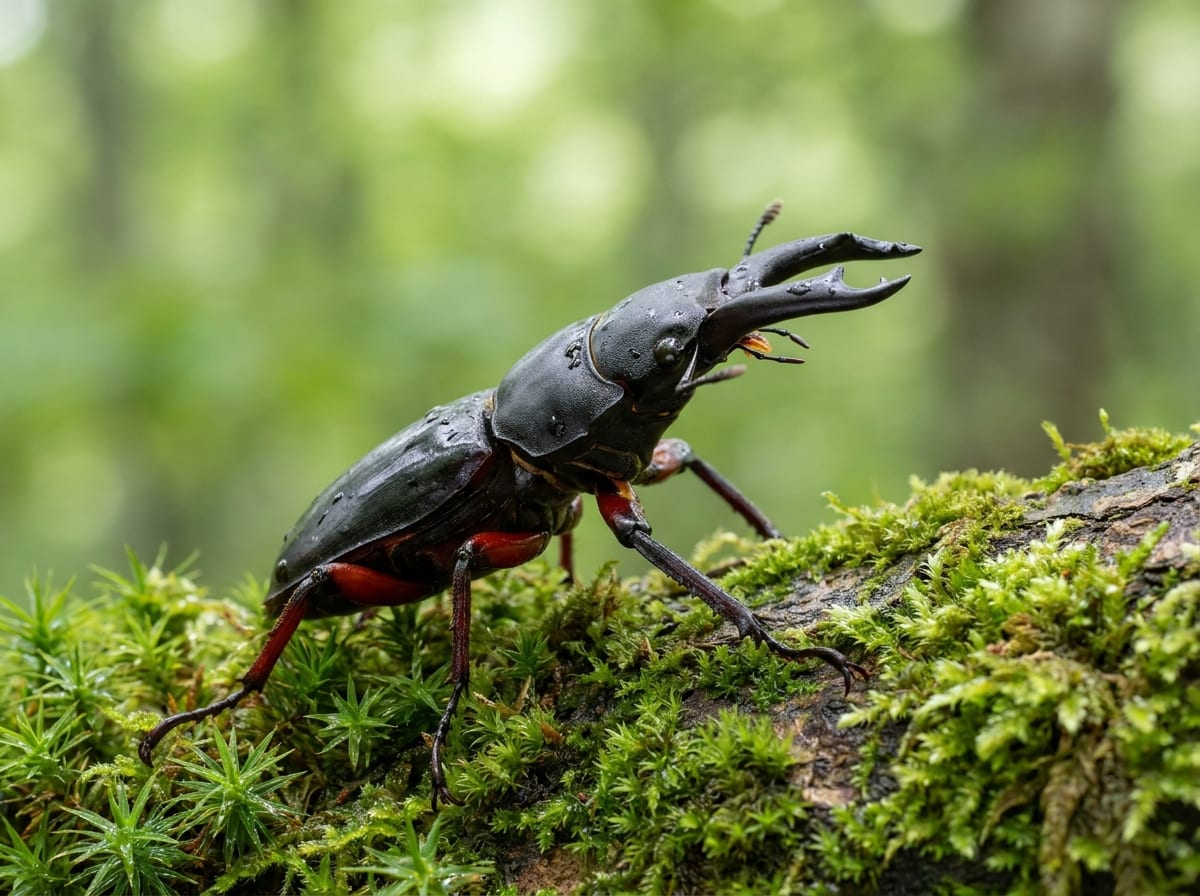
The Red-Footed Stag Beetle (Dorcus rubrofemoratus) is found throughout most of Japan, from Hokkaido to Kyushu, as well as on Tsushima and Sado islands. Its primary habitat is cool environments like beech forests around 1,000 meters in elevation (though in some regions it can be found in mixed deciduous forests at 100–200 meters). The name derives from the reddish-brown to reddish coloring of the leg bases (femur). While resembling the Small Black Stag Beetle in body shape, this species possesses the cold-adaptation abilities unique to mountain-dwelling beetles.
Red-Footed Stag Beetle: Basic Data
Item
Details
Scientific Name
Dorcus rubrofemoratus
Common Name
Red-Footed Stag Beetle
Distribution
Hokkaido to Kyushu, Tsushima, Sado (primary habitat: beech forests around 1,000m elevation)
Body Length (Males)
21.8–58.5 mm (captive-bred record: 59.5 mm)
Body Length (Females)
24.9–38.9 mm
Lifespan (Adults)
Wild: several months (die within the year) / Captive: 1–2 years
Collection Season
Active period: June–October (peak season: late July–mid-August)
Difficulty Level
Beginner to Intermediate
Lifespan and Life Cycle
When researching Red-Footed Stag Beetle lifespans, you'll find conflicting figures—"several months" and "1–2 years"—which can be confusing. This discrepancy exists because wild and captive-bred individuals have vastly different lifespans, and both are correct.
Wild
Captive
Adult Active Period
June–October
Year-round (with temperature management)
Adult Lifespan
Several months (die within the year)
1–2 years
Overwintering
Do not (generation dies before winter)
Possible (adult overwintering)
In the wild, Red-Footed Stag Beetles are active from June through October, gathering at tree sap sites. Although they're seen until around October when other species' activity wanes (due to cold tolerance), they still complete their life cycle and die within that year. In other words, if you collect a wild individual, assuming it will live another 2 years would be incorrect—often the collected specimen has only weeks of life remaining.
In captivity, however, the cold winter period can be survived, allowing adults to overwinter and remain active the following season. As a result, captive lifespans extend to 1–2 years. The seemingly contradictory statements in various resources—"wild beetles don't hibernate but captive-bred ones do"—refer to this exact difference.
Development from Egg to Adult
Stage
Duration
Egg-laying setup → Larval separation
2–3 months
Larvae (1st to 3rd instar)
8–10 months (some sources cite 1–2 years)
Pupation → Emergence
Approximately 1 month
Emergence → Post-Emergence Feeding
2–4 months (no feeding during this period)
Post-Emergence → Pairing Ready
Additional 1–2 months
The larval period typically lasts 8–10 months to emergence, though low-temperature rearing or individual variation can extend this to over a year. Adults do not begin feeding for 2–4 months after emergence, so even after confirming emergence, they cannot be used for breeding immediately. Keeping records of emergence dates helps you distinguish between "still too early" and "something's wrong."
The Greatest Lifespan Reducer in Captivity: Summer Heat
Red-Footed Stag Beetles, being mountain-dwellers with primary habitat in beech forests around 1,000 meters, are highly resistant to cold but extremely vulnerable to heat. Prolonged exposure to temperatures above 25°C causes rapid deterioration, and the typical 1–2-year lifespan can be cut to just a few months. The reason they're considered "difficult to keep" boils down almost entirely to this single factor—conversely, if you can maintain low summer temperatures, their care difficulty is quite manageable. Specific temperature ranges are discussed later under "Adult Care Management."
Priorities for preserving lifespan, in order: ① Maintain below 25°C during summer → ② Provide overwintering to reduce metabolism → ③ Manage gelly freshness. Notably, point ② is important: keeping specimens in heated indoor environments year-round exhausts their energy reserves and shortens their lives, so consciously creating a cold period is highly effective.
Collection
Red-Footed Stag Beetles are best collected in low mountain to alpine beech, Japanese oak, and konara oak forests at elevations of 500–1,500 meters.
Collecting Sites
Higher elevations yield more beetles (primary habitat around 1,000m beech forests, though some regions show them in mixed forests at 100–200m)
Night collecting with lights is effective (peak season: late July–mid-August)
Can be found in rotting wood (especially during fall–winter larval collection)
Precautions
Mountain collecting requires insect repellent and cold-weather gear. Night collecting in alpine areas is hazardous; always go with companions and verify light batteries beforehand.
Adult Care Management
Since Red-Footed Stag Beetles are cool-loving mountain species, summer heat management is the top priority.
Rearing Temperature
Season
Recommended Temperature
Normal Keeping
18–24°C
Summer (Critical)
20–23°C (above 25°C is dangerous)
Winter (Overwintering)
5–12°C (cool dark place or refrigerator vegetable drawer)
Summer heat management is key: Temperatures above 25°C cause rapid decline and shortened lifespans. Air conditioning is essential during Japanese summers on flat terrain.
Housing and Substrate
Item
Details
Container Size
Medium plastic container (suitable for singles or pairs)
Substrate
Kunugi or konara mat (3–5cm depth) or sphagnum moss
Perches
Cork bark or dried branches (prevents tipping)
Humidity
60–70% (mist occasionally to prevent drying)
Feeding
Insect jelly (Pro-Jelly or fruit-based brands) as primary food
Small slices of banana or apple accepted readily
Replace one jelly every 2–3 days outside summer
Overwintering
Red-Footed Stag Beetles can be overwintered as adults in captivity (wild individuals do not overwinter and complete their life cycle within the year). Activity declines as temperatures drop below 10°C around October.
Overwintering Steps
Increase substrate depth (10cm+) to allow burying
Maintain only light monthly misting to prevent drying
Replace food only when activity is confirmed (not needed during dormancy)
As spring temperatures rise (April–May), beetles naturally resume activity
Breeding and Egg-Laying Setup
Red-Footed Stag Beetles primarily use wood-laying (depositing eggs in wood) for reproduction.
Creating an Egg-Laying Setup
Materials Needed
Egg-laying wood: Slightly soft konara or mizunara wood (soft to medium grade). Soak then air-dry in shade for 1–2 days
Substrate: Additive-free fermented mat or egg-laying wood chips (for base layer)
Container: Medium plastic container
Steps
Soak egg-laying wood for 2–4 hours, then shade-dry for 1–2 days to saturate the core
Spread substrate 3–5cm deep in container, compacting firmly
Place egg-laying wood horizontally (half-buried or fully buried)
Introduce a post-emergence-feeding, mature female
Maintain at 18–23°C in a cool environment (higher temps reduce egg-laying)
Egg Count Estimate: One setup typically yields 10–30 eggs. Depending on female vigor, 2–3 setups may be organized.
Separation
Separate larvae approximately 2–3 months after introducing the female to the setup. Carefully split the egg-laying wood and remove eggs or first-instar larvae.
Larval Rearing
First-Instar Larva Management
Newly separated first-instar larvae should be reared individually in printed cups (approximately 200ml) filled with additive-free fermented substrate.
Instar
Container
Substrate
1st Instar (L1)
200ml cup
Additive-free mat
2nd Instar (L2)
500ml bottle
Additive-free mat (or fungal bottle)
3rd Instar (L3)
800–1200ml bottle
Additive-free mat (or fungal bottle)
Larval Rearing Temperature: 18–22°C (cool-temperature rearing is key to larger adults)
Fungal Bottle Rearing Notes
Red-Footed Stag Beetle larvae can be reared in fungal bottles (oyster or chestnut mushroom substrate), but some individuals exhibit restlessness (digging behavior). For maximum size, fungal bottles are recommended; for stable, predictable rearing, substrate mats are preferable.
Pupation and Emergence
Once pupation-chamber formation is observed, avoid any vibration. Pupation to adult emergence takes approximately one month. After emergence, do not remove larvae from their containers for 2–4 months while they're in the post-emergence non-feeding phase.
The Appeal of Red-Footed Stag Beetles
Red-Footed Stag Beetles captivate through understated coloration and the wild charm of mountain-dwelling species rather than flashiness. Although collection difficulty is high, breeding collected specimens and returning their offspring to nature (observe local regulations) represents a cyclical approach to keeping that fosters deep understanding of the natural world. These native beetles possess a quiet but devoted following.