Golden Stag Beetle Care Guide | High Temperature & High Humidity Management, Breeding Sets, Larval Rearing Practices
Explanations of breeding methods for the Golden Stag Beetle (Allotopus rosenbergi), characterized by its brilliantly golden-colored body. This practical guide covers adult high-temperature and high-humidity management, husbandry container setup and feeding, breeding set composition using wood spawning, and larval rearing with fully-matured substrate and fungal media.
Key Takeaways
Explanations of breeding methods for the Golden Stag Beetle (Allotopus rosenbergi), characterized by its brilliantly golden-colored body. This practical guide covers adult high-temperature and high-humidity management, husbandry container setup and feeding, breeding set composition using wood spawning, and larval rearing with fully-matured substrate and fungal media.
Related Species
About the Golden Stag Beetle
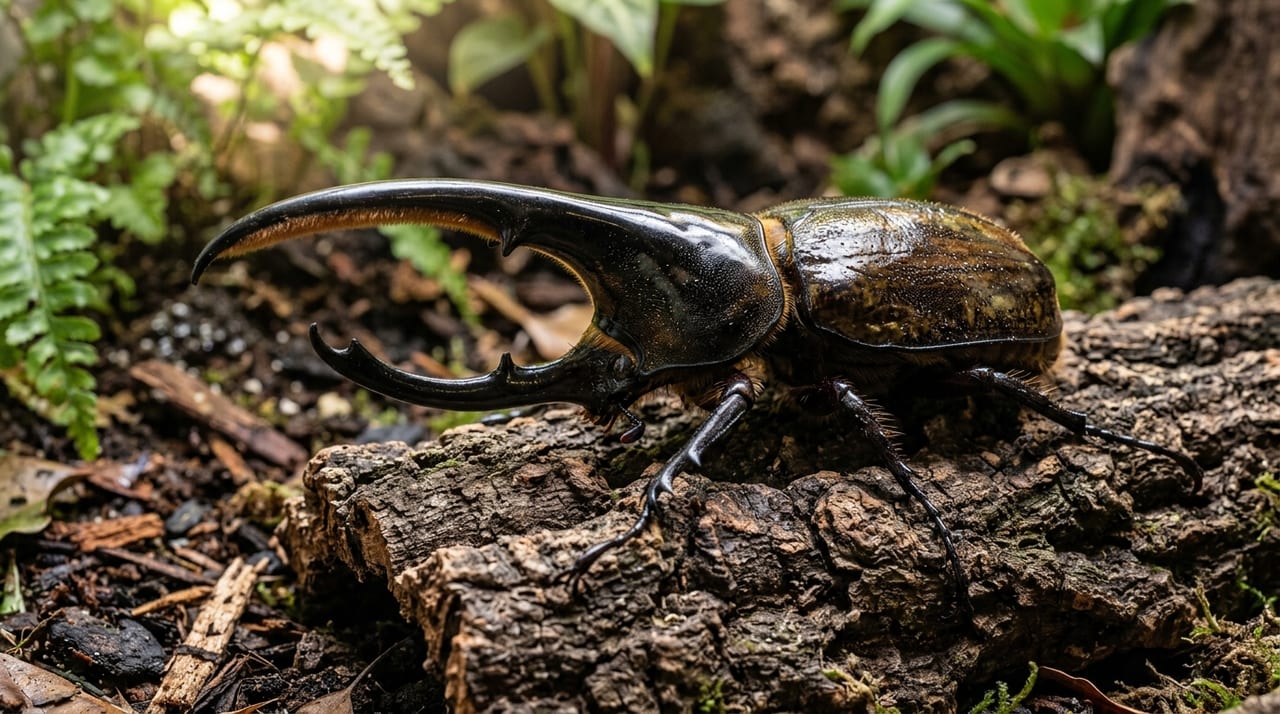
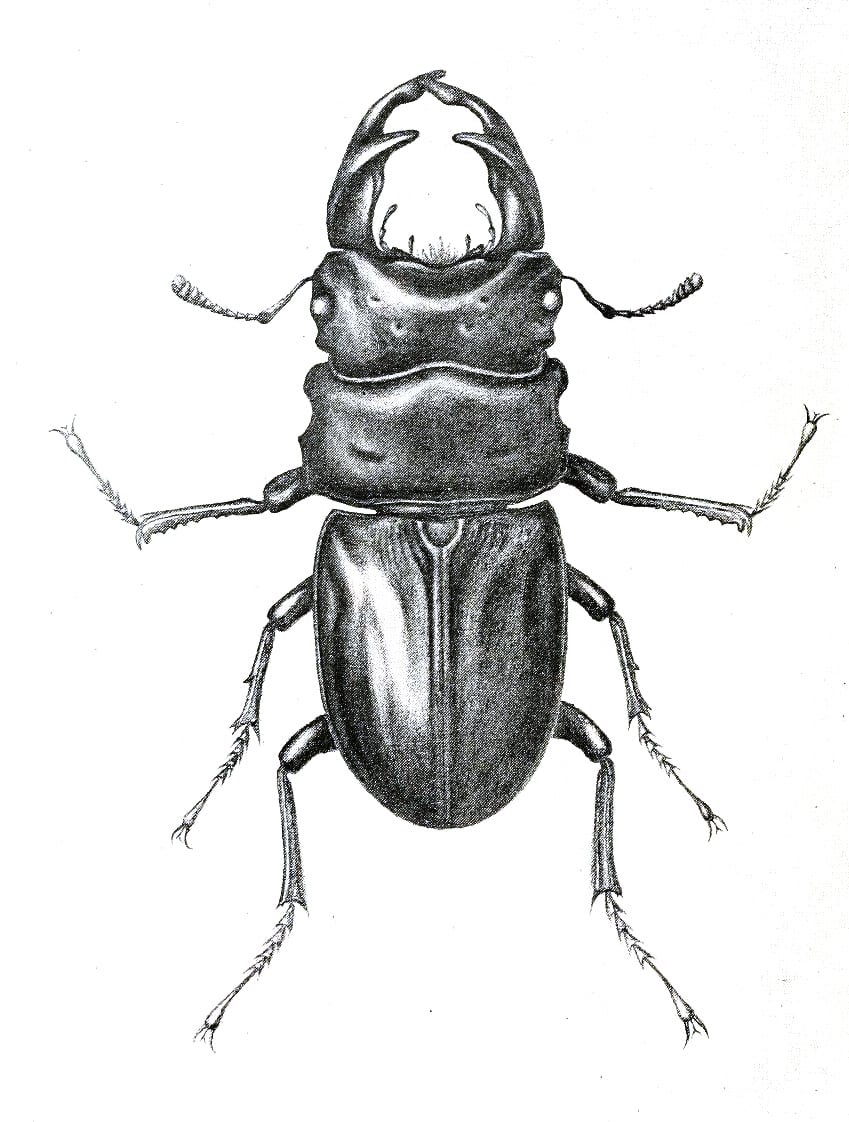
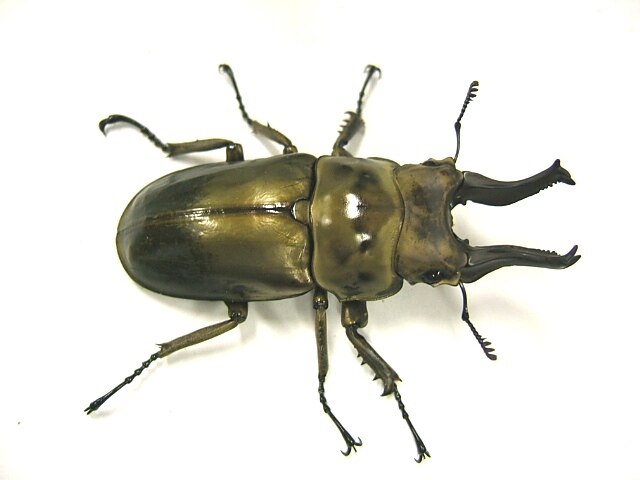
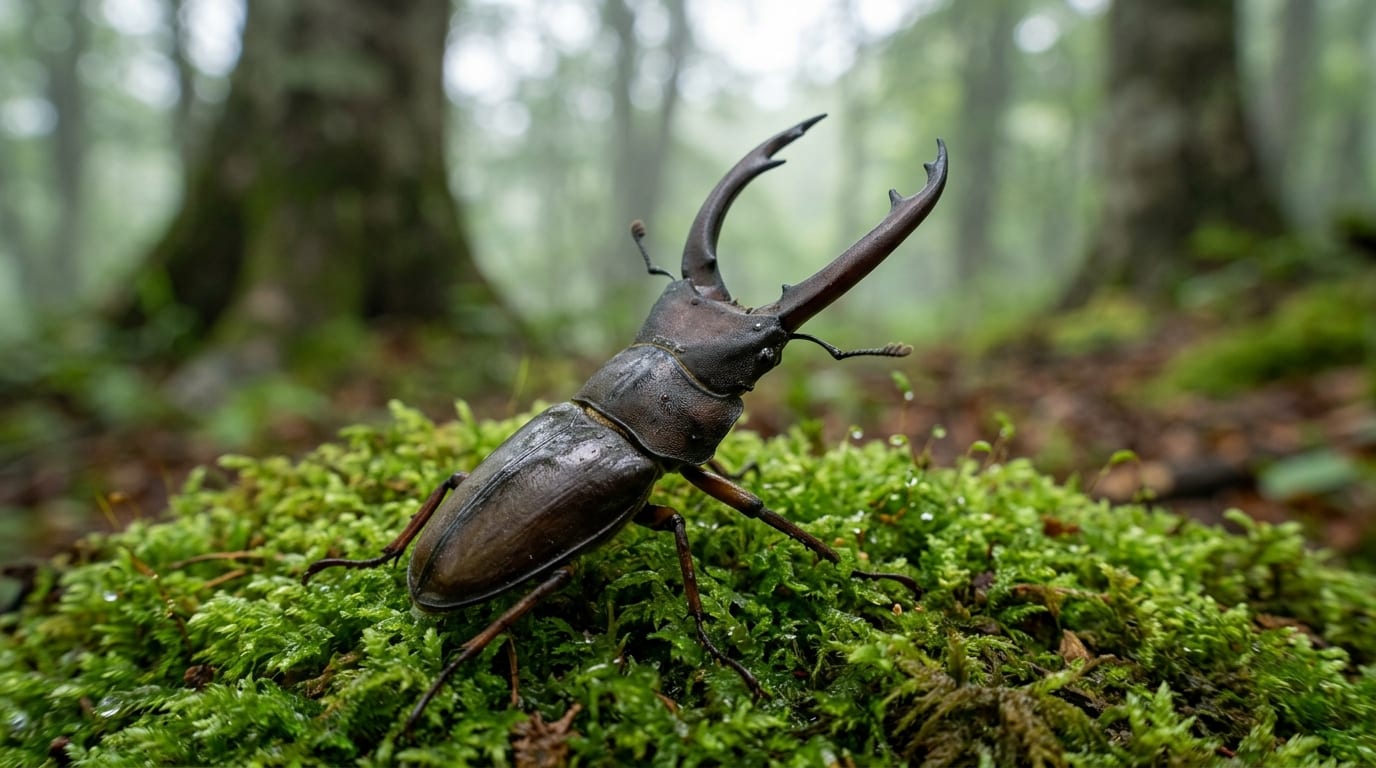
The Golden Stag Beetle (scientific name Allotopus rosenbergi) is a large species of the Allotopus genus found throughout Southeast Asia (Indonesia, Malaysia, Thailand, etc.). As its name suggests, the adult's body surface gleams with golden to orange-golden coloration, which is why it is called the "golden demon stag," and it is known worldwide as one of the stag beetles with particularly high ornamental value.
Golden Stag Beetle Basic Information
| Item | Details |
|---|---|
| Scientific Name | Allotopus rosenbergi |
| Common Name | Golden Stag Beetle |
| Native Range | Indonesia (Sumatra, Java, etc.), Malaysia, Thailand |
| Body Length (Male) | 50–75 mm (large specimens exceed 80 mm) |
| Body Length (Female) | 35–45 mm |
| Adult Lifespan | 6–12 months |
| Difficulty Level | Intermediate to Advanced (High temperature & humidity management required) |
Adult Care & Management
Housing
- Single Male: 600–800 ml pudding cup or small plastic container
- Pair: Medium plastic container (approx. W30 × D20 × H15 cm)
- Cork bark or fine branches as climbing decor must always be provided
Temperature & Humidity
The Golden Stag Beetle prefers warm, humid tropical lowland environments. Temperature control is especially critical, as they are sensitive to cold.
| Setting | Recommended Value |
|---|---|
| Rearing Temperature | 24–28°C |
| Minimum Temperature | 20°C or higher (below 18°C is dangerous) |
| Humidity | 70–80% (maintain consistently moist environment inside container) |
Summer: 25–27°C is ideal. Air conditioning is essential.
Winter: Use panel heaters or similar to maintain temperature above 20°C.
Feeding Adults
The Golden Stag Beetle prefers high-protein, high-sugar insect jelly.
- Recommended Jelly: High-protein insect jelly (pro jelly, mushroom mat-specific jelly, etc.)
- Change Frequency: Every 2–3 days in summer, every 3–5 days in winter
- Fruits (banana, apple) are also enjoyed but should be offered sparingly due to spoilage risk
- Sufficient moisture is obtained from the insect jelly
Handling Precautions
The golden coloration of the adult's body surface is due to a waxy secretion. When handling, it is recommended to avoid prolonged contact with bare hands. Body heat, perspiration, and skin oils may affect the body surface coating.
Breeding & Spawning Setup
Conditions Required for Spawning
The Golden Stag Beetle has unique spawning characteristics typical of the Allotopus genus, with wood spawning (decaying log egg-laying) being the primary method.
Breeding Set Composition
| Material | Details |
|---|---|
| Spawning Wood | Soft to semi-soft oak or kunugi wood. Soak for 1–2 hours, then air-dry in shade for 1–2 days |
| Substrate | Fully-matured fermented substrate (5–8 cm layer on bottom) |
| Container | Medium to large plastic container (W30 × D20 × H20 cm or larger) |
| Temperature | Maintain stable 24–26°C |
Breeding Set Setup Steps
- Soak spawning wood (submerge for 1–2 hours), then air-dry in shade for 1–2 days to adjust to proper moisture level
- Compress substrate firmly on the container bottom to a depth of 5–8 cm
- Place 1–2 spawning logs horizontally (half-buried or fully embedded in substrate)
- Introduce a female confirmed to have mated
- Maintain in a dark location at 26–28°C and leave undisturbed for approximately 2 months
Confirmation of Feeding & Maturation
Post-emergence feeding (when the beetle begins eating) occurs at minimum 2–4 months after emergence. Mating before confirming post-emergence feeding must be absolutely avoided. Allowing an additional 1–2 months of maturation after feeding is confirmed before mating will increase spawning rate.
Female Management After Spawning
Females kept in breeding sets deplete their energy. After spawning, place them in separate containers and provide high-calorie jelly generously to aid recovery.
Larval Rearing
From Hatching to First Instar
When the spawning wood is excavated, eggs or first-instar larvae (L1) will be discovered.
- Excavation Timing: Approximately 2 months after the breeding set is established
- First Instar: Located within the spawning wood. Extract carefully.
- Place in pudding cups (200–300 ml) filled with fully-matured substrate for individual rearing
Management from Second Instar Onward
| Instar | Container | Substrate |
|---|---|---|
| Second (L2) | 500–800 ml bottle | Fully-matured substrate |
| Third Early (L3 early) | 800–1200 ml bottle | Fully-matured substrate or fine-particulate fungal media |
| Third Late–Pre-Pupation | 1200–1500 ml bottle | Same as above |
Note: Unlike large stag beetles, fully-matured substrate rearing is often more stable than fungal media bottle rearing for the Golden Stag Beetle. Some fungal media bottles may cause restlessness depending on the strain.
Temperature Management & Emergence
The ideal larval rearing temperature is 24–26°C. Growth is significantly slowed below 20°C.
Once pupation chamber formation begins, keep the container undisturbed and avoid vibrations and temperature fluctuations.
Breeding Considerations
- Maintaining Pure Bloodlines: Multiple geographic subspecies exist, so maintain accurate lineage records
- Preventing Cannibalism: Maintain strict individual larval rearing
- Legal Compliance: Verify that imported specimens are not subject to CITES or invasive species regulations
The Golden Stag Beetle has high collection value due to its remarkable luster and unique body shape. While husbandry difficulty is intermediate to advanced, breeding is achievable if proper high-temperature and high-humidity conditions are maintained, making it a fascinating species to work with.