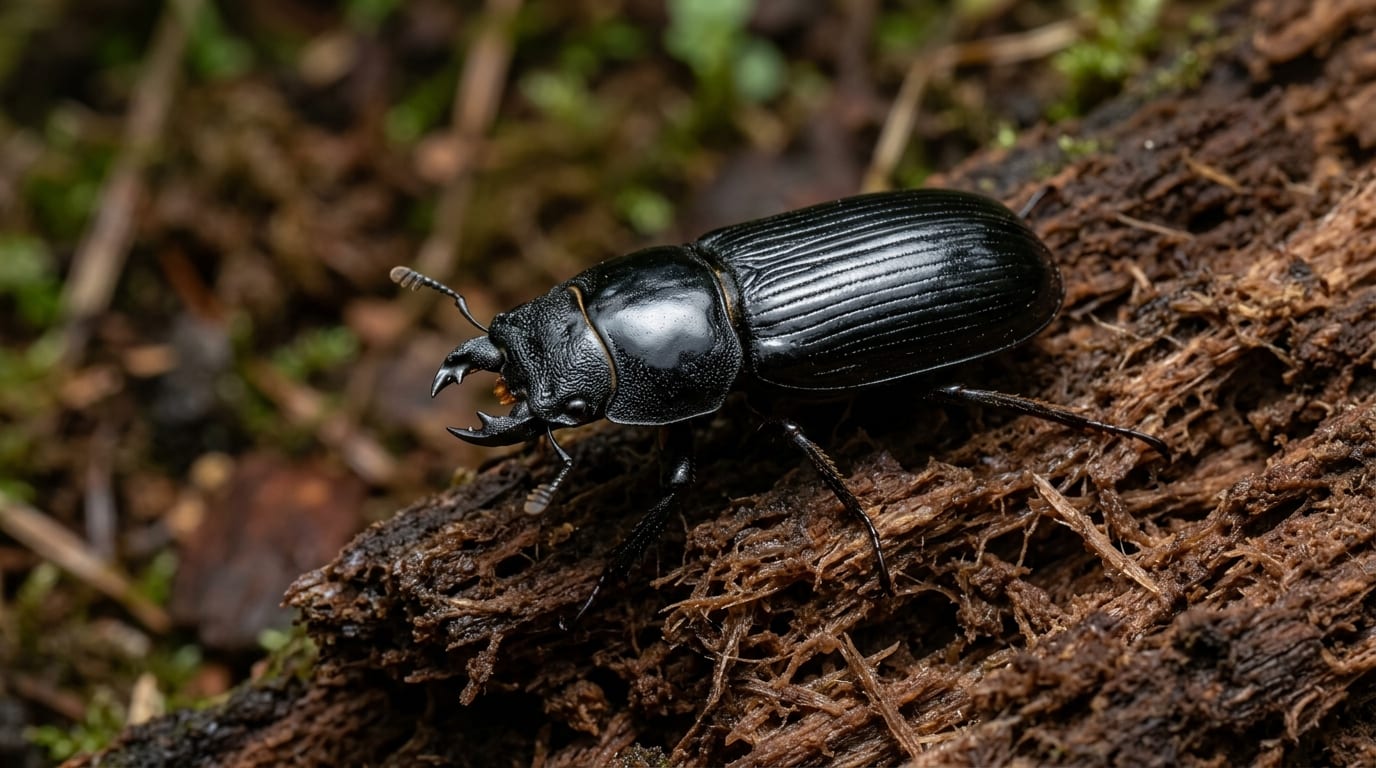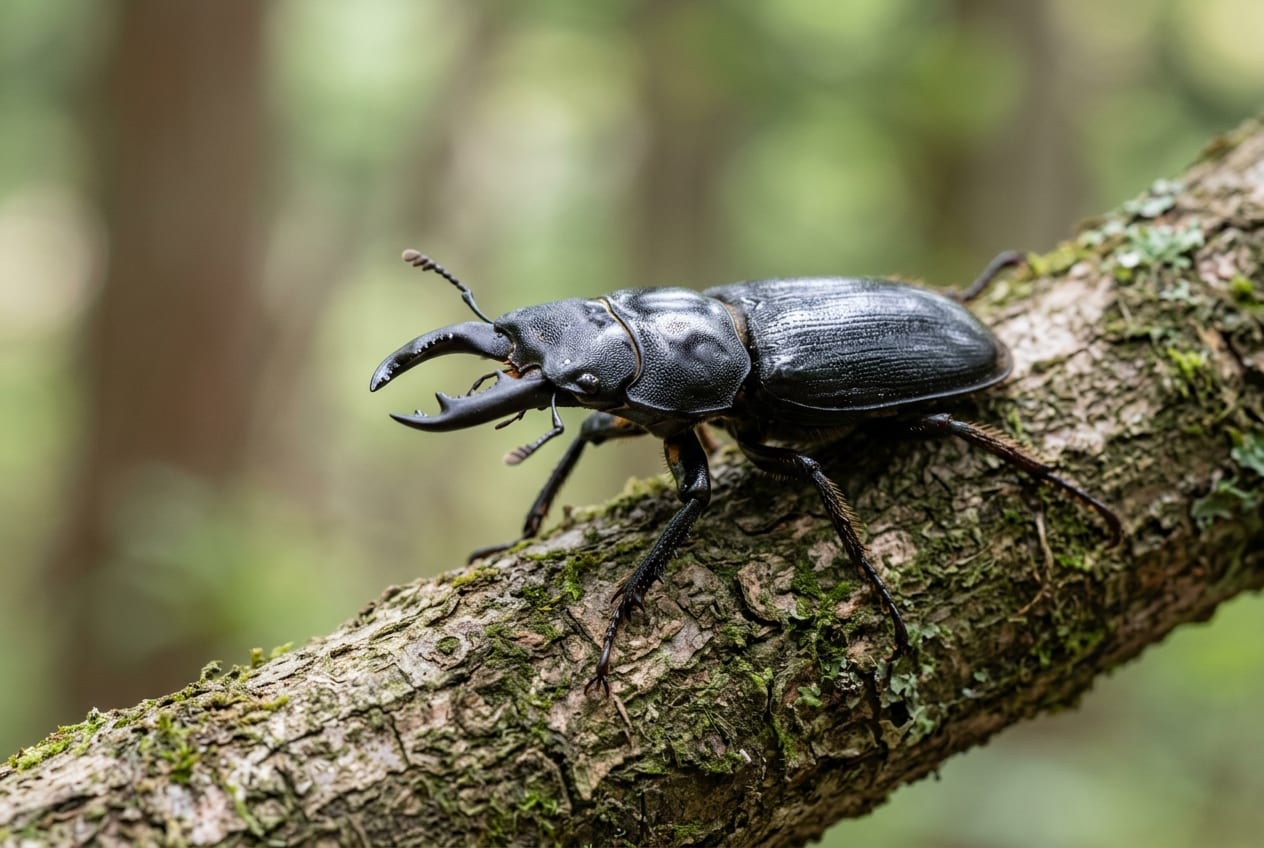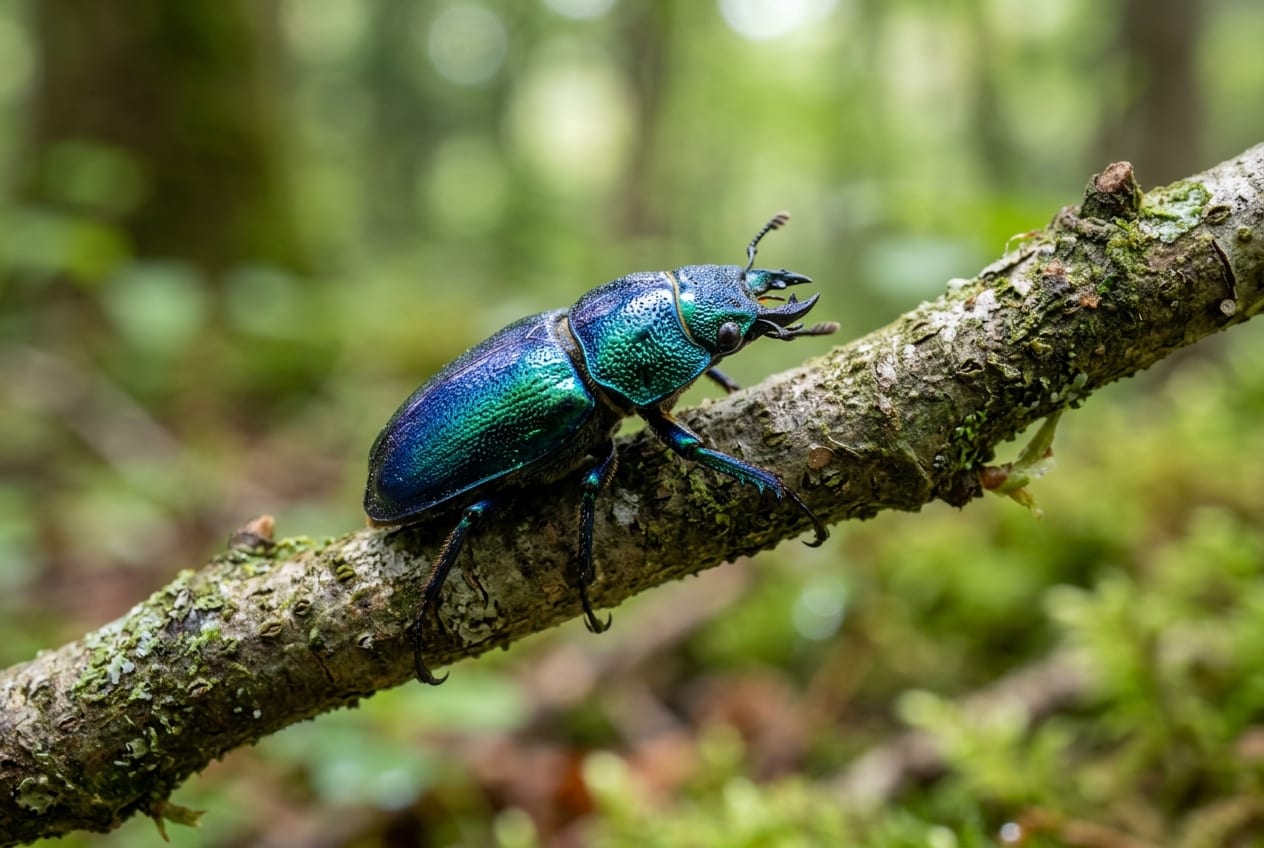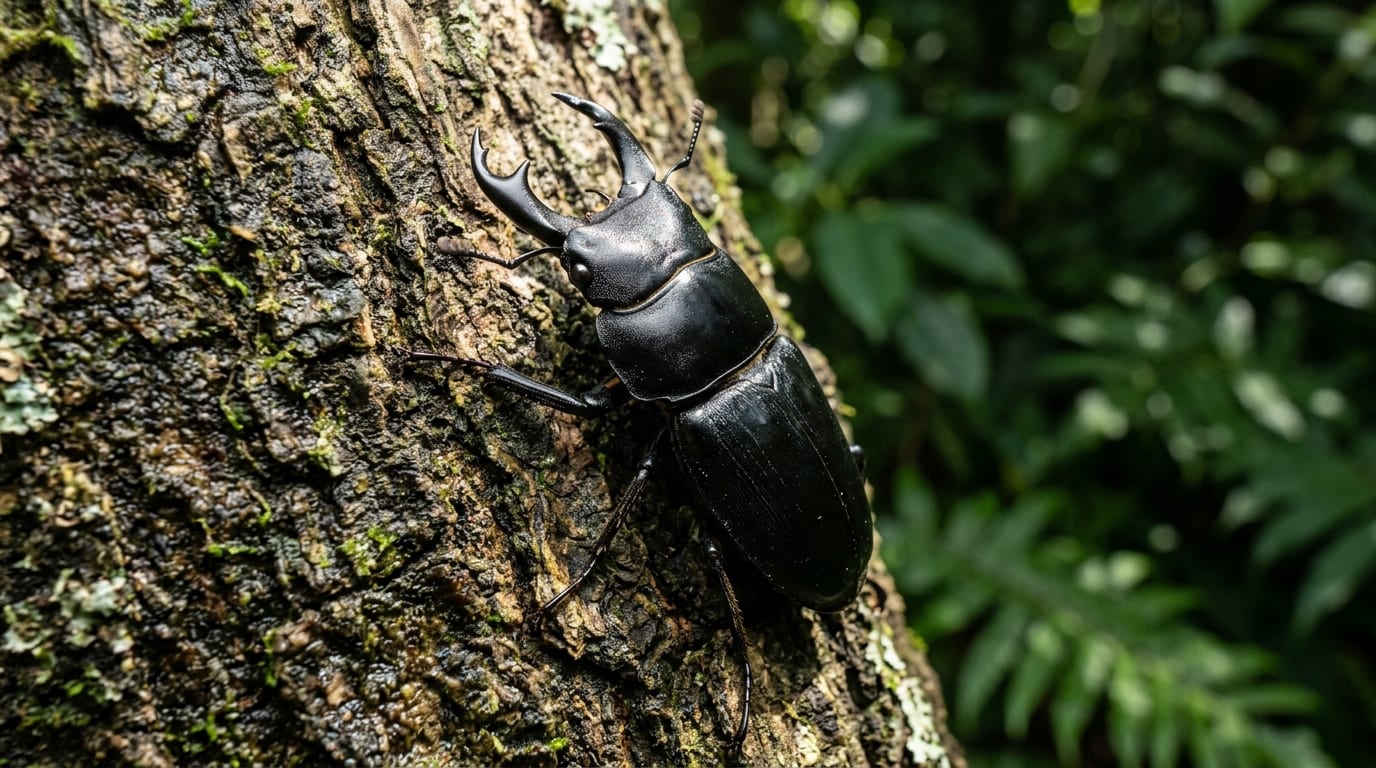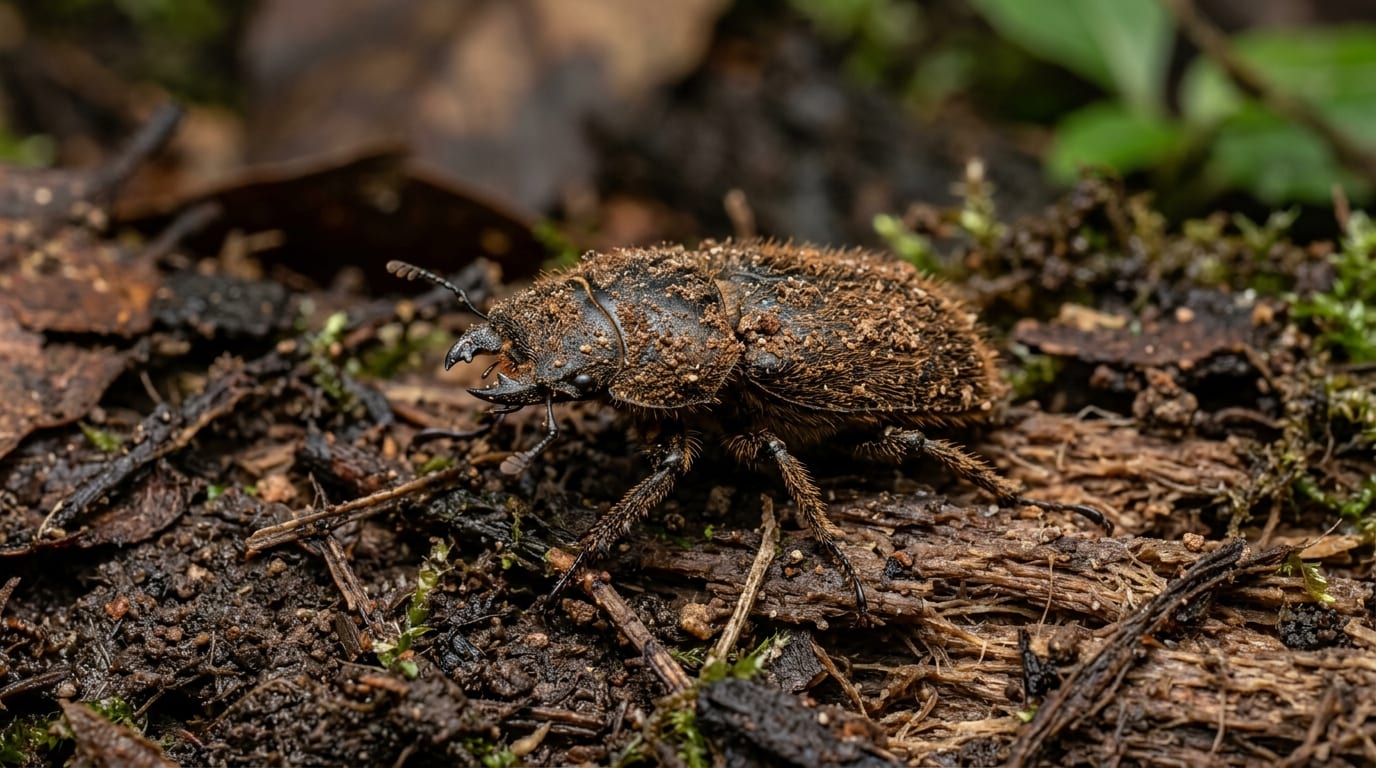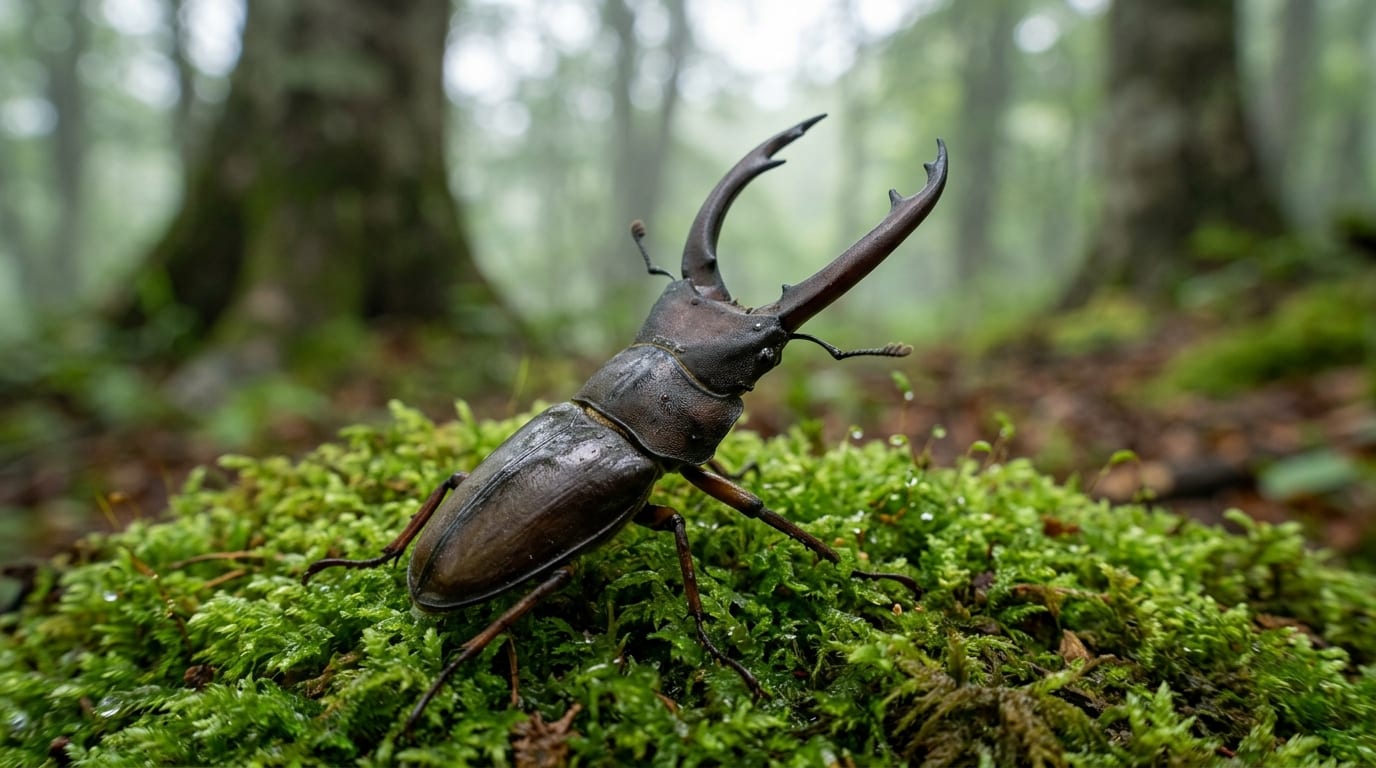
AI-generated image
Oni Stag Beetle
AdvancedPrismognathus angularis
A small stag beetle in which even large males reach only about 25 mm, with mandibles that sweep straight upwards. It lives in beech forest at around 800 to 2,000 m, and in Hokkaido also in the lowlands. The adults barely feed.
Difficulty
Advanced
Temperature
20〜28℃
Lifespan
One to several weeks once active
Size
About 25mm in large males (captive record 27.0mm, wild record 27.2mm)
Humidity
60〜80%
Diet
Larvae eat soft rotten wood of broadleaf trees; adults barely feed
About
Prismognathus angularis is a small stag beetle in which even large males reach only about 25 mm. The sexes differ little, and the male's modest mandibles sweep straight upwards. It lives mainly in beech forest at around 800 to 2,000 m, though in Hokkaido it is also found in the lowlands. The larvae eat damp, soft fallen wood of beech, Japanese oak, horse chestnut and other broadleaf trees, take about a year to grow, pupate in late July and emerge in August and September. Once active the adults eat almost nothing, walking day and night over the same fallen logs that feed the larvae and serve as egg-laying sites, and they die within a week to a few weeks of mating and laying. They often come to lights. Unlike most stag beetles, every beetle that ecloses leaves the wood within the same season, so no adults overwinter in rotten wood. Molecular work suggests the genus is close to Lucanus.
Source: Wikipedia (CC BY-SA 4.0)
Size of the Oni Stag Beetle
The Oni Stag Beetle grows to About 25mm in large males (captive record 27.0mm, wild record 27.2mm).
Basic Info
Origin
Japan (Hokkaido, Honshu, Sado, Shikoku and northern Kyushu) and Sakhalin
Lifespan
One to several weeks once active
Size
About 25mm in large males (captive record 27.0mm, wild record 27.2mm)
Temperature
20〜28℃
Humidity
Care Specifications
PeacefulSolitaryBreeding: Hard
Sources: Prismognathus - Wikipedia (JA; size, beech-zone habits, life cycle, adults that barely feed, absence of overwintering adults, subspecies) / GBIF species page for Prismognathus angularis Waterhouse, 1874 / BE-KUWA Certified Breeding Records (Mushi-sha, FY2025 edition PDF, JA)
Breeding Records & Localities
Captive record (♂)
27 mm
Wild record (♂)
27.2 mm
Record source: BE-KUWA 2025 edition, captive records for medium and large Japanese stag beetles (Oni stag: captive 27.0 mm, Takashi Ichimura, registered 2017, expected maximum 29 mm; wild 27.2 mm, Masanori Nagashima)
Notable localities
HokkaidoHonshuSadoShikokuNorthern Kyushu
Regional subspecies
- Prismognathus angularis angularis(This entry) — Hokkaido, Honshu, Sado, Shikoku, northern Kyushu, Sakhalin
- Prismognathus angularis morimotoi — Southern Kyushu (the Kirishima range, Mt Wanitsuka, Mt Aoi and others)
Generation codes
- WD
- Wild-caught
- WF1
- Offspring of a wild-caught female
- F1〜
- Captive generations (same locality)
References & Sources
Edited & verified by: BreederDirect editorial team
The taxonomic, regulatory, and husbandry data on this page are compiled and verified against the authoritative primary sources below.
Taxonomy & Authority
Accepted name: Prismognathus angularis Waterhouse, 1874
Synonyms: Prismognathus angularis angularis, Prismognathus angularis morimotoi
Authority databases: GBIF
Nomenclature follows global taxonomic authority databases.
Regulations & Conservation Status
Not CITES-listed
Sources: CITES Appendix (checklist.cites.org)
Regulations may change. Always verify the latest information with the relevant authorities.
Oni Stag Beetle Listings
Loading latest listingsFind listings for this species