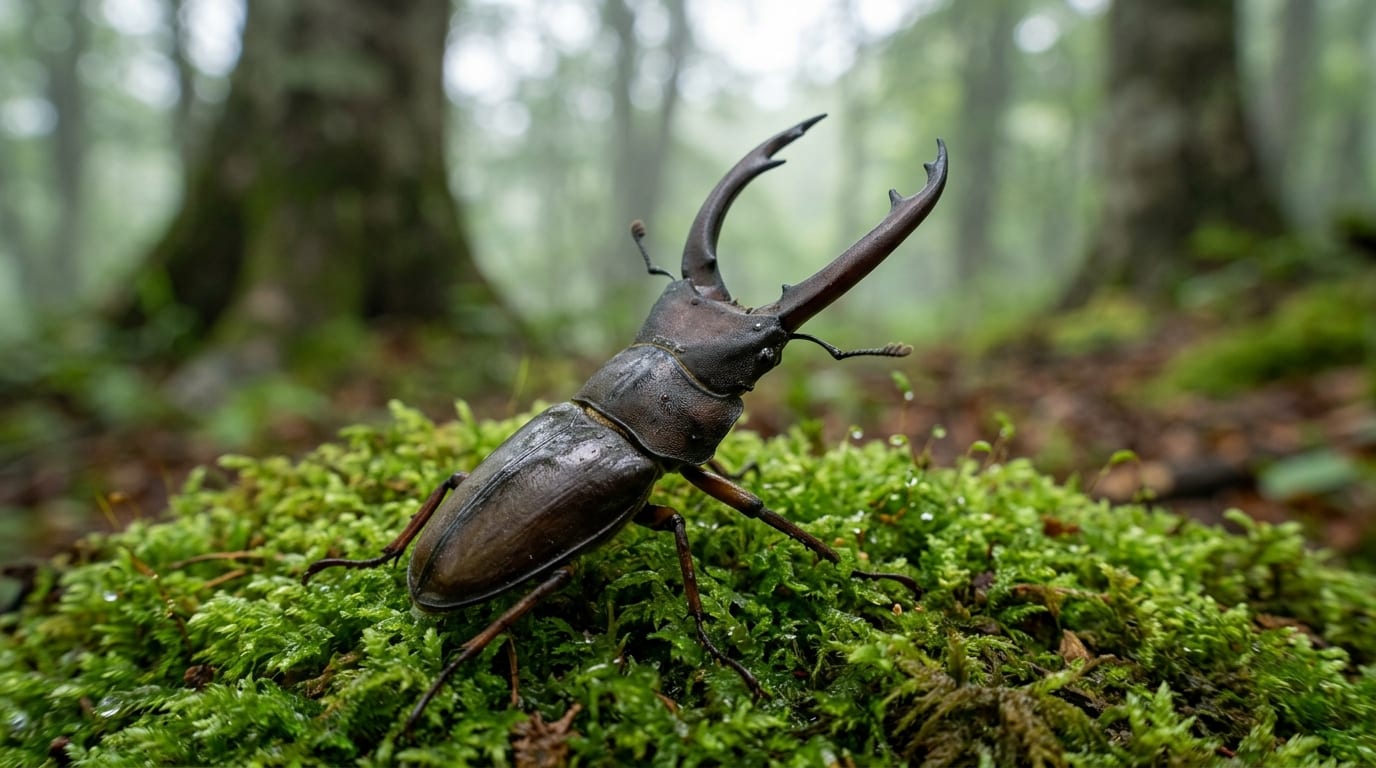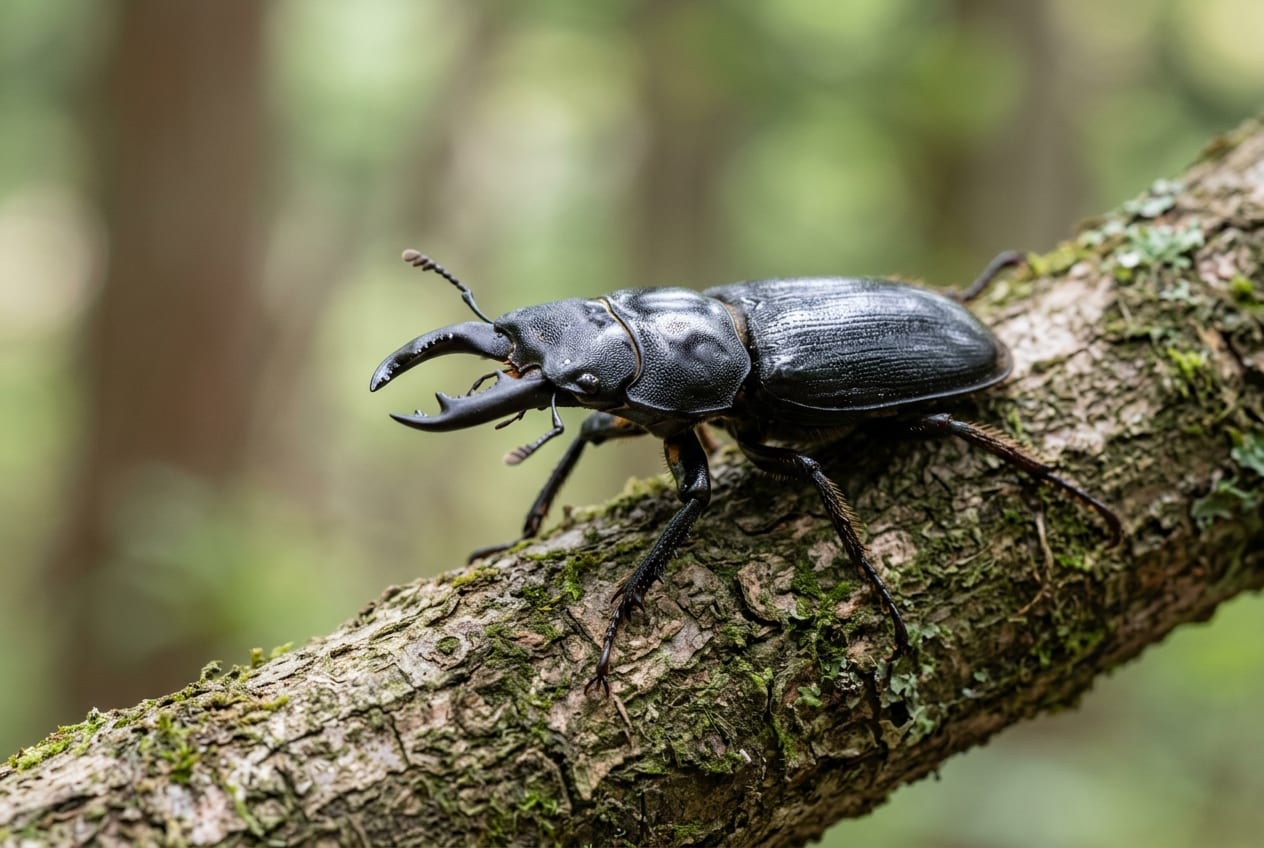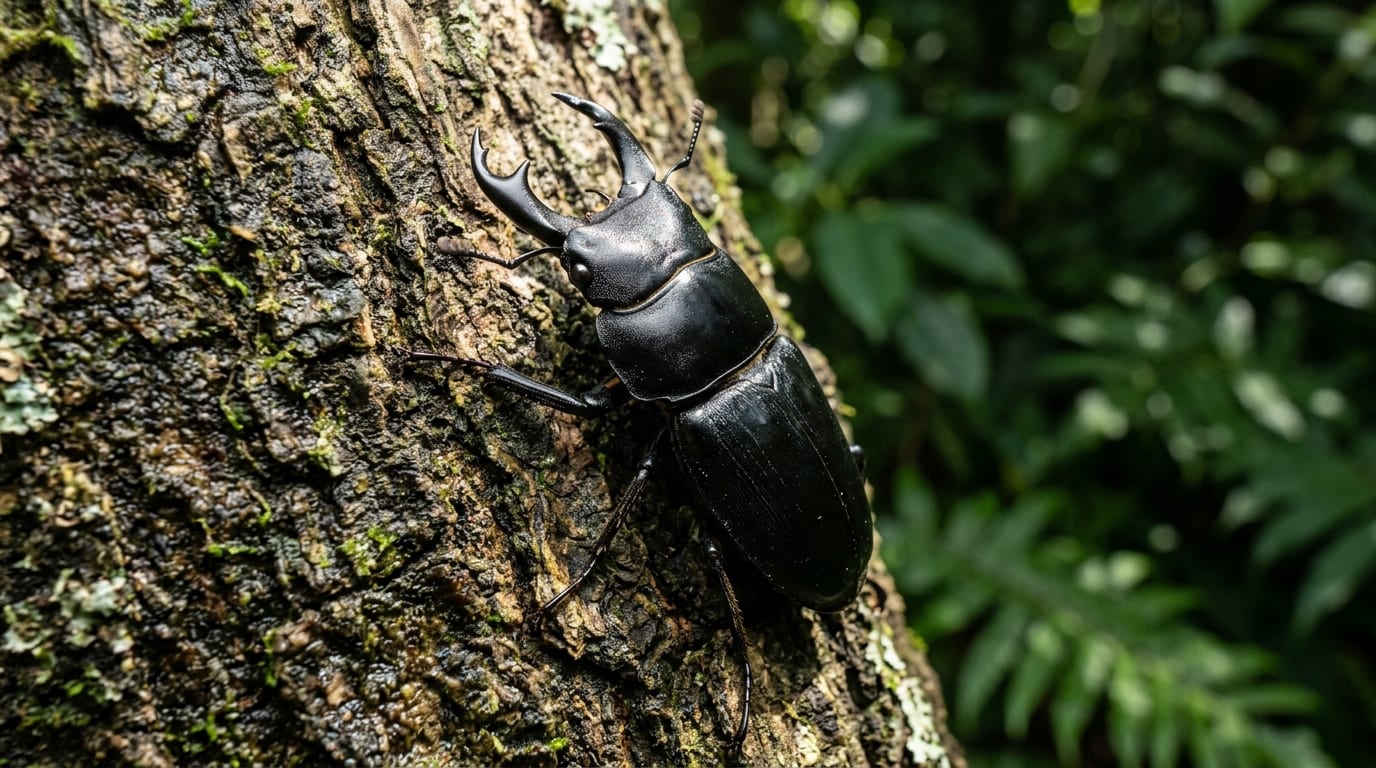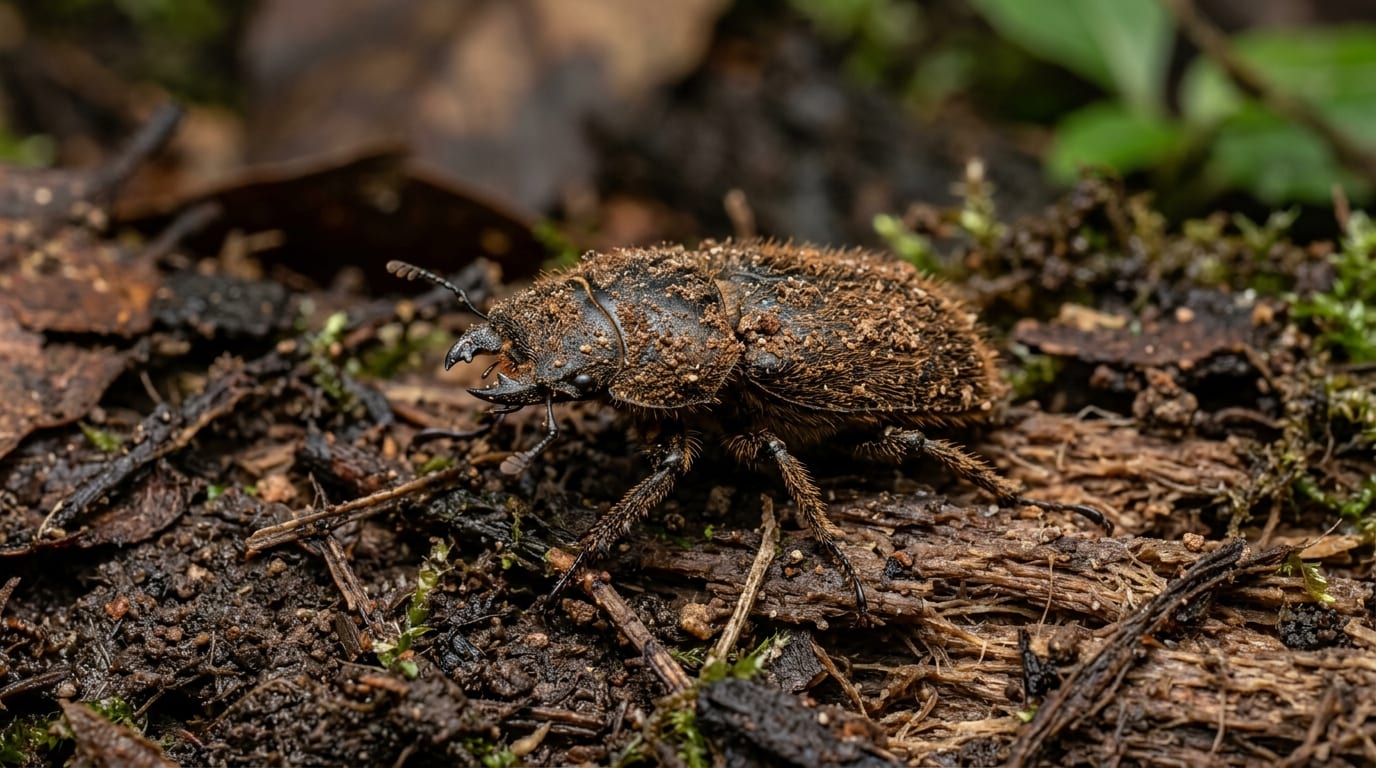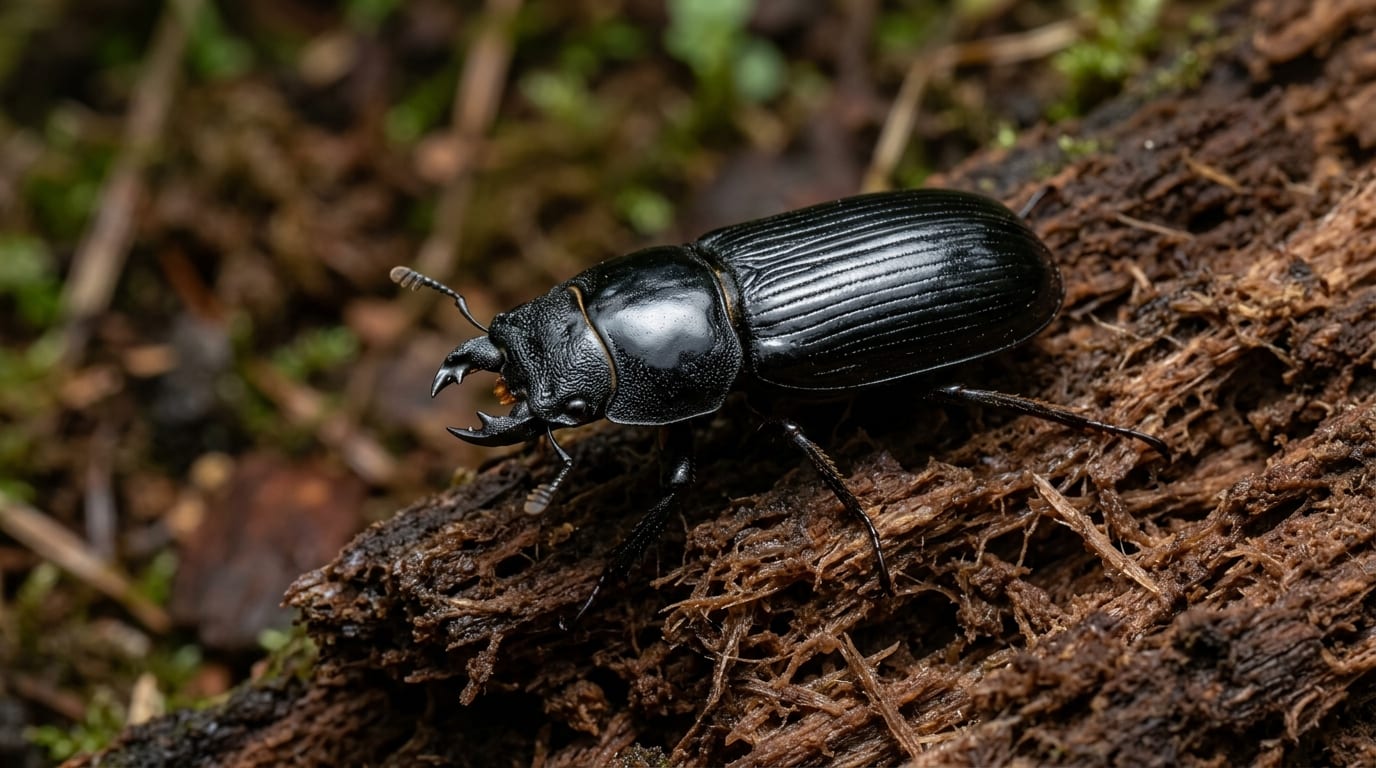
AI-generated image
Glossy Stag Beetle
AdvancedCeruchus lignarius
A small stag beetle of about 12 mm. Where most stag beetles are flattened, this one has a cylindrical body with a strong sheen. It lives in subalpine and alpine forest between about 1,000 and 2,000 m.
Difficulty
Advanced
Temperature
20〜28℃
Lifespan
Adults 6 months to 1 year
Size
About 12mm
Humidity
60〜80%
Diet
Larvae eat brown-rotted wood; adults take little more than water
About
Ceruchus lignarius is a small stag beetle of about 12 mm regarded as a primitive member of the family. Where most stag beetles are flattened, this one is cylindrical, a form it shares with the bessbugs thought to be close to the ancestors of stag beetles. The surface is strongly glossy and the elytra carry clear longitudinal striae. The mandibles bear a single inner tooth at the base and reach only about a fifth of the body length. It lives in subalpine and alpine forest between about 1,000 and 2,000 m, where both adults and larvae are found inside damp, brown-rotted fallen logs, most often beech and Japanese oak but also katsura and fir. Some individuals never leave the wood at all, and they come to lights less often than most stag beetles. The larval period runs one to two years depending on the climate. The species is extremely intolerant of heat, and in the lowlands of the Kanto region in summer nearly all die unless kept cool. Adults that eclose in late summer overwinter in the pupal chamber.
Source: Wikipedia (CC BY-SA 4.0)
Lifespan of the Glossy Stag Beetle
The Glossy Stag Beetle lives Adults 6 months to 1 year.
Size of the Glossy Stag Beetle
The Glossy Stag Beetle grows to About 12mm.
Basic Info
Origin
Japan (subalpine and alpine zones of Hokkaido, Honshu, Shikoku and Kyushu)
Lifespan
Adults 6 months to 1 year
Size
About 12mm
Care Specifications
References & Sources
Edited & verified by: BreederDirect editorial team
The taxonomic, regulatory, and husbandry data on this page are compiled and verified against the authoritative primary sources below.
Taxonomy & Authority
Accepted name: Ceruchus lignarius Lewis, 1883
Synonyms: Ceruchus lignarius monticola, Ceruchus lignarius nodai
Authority databases: GBIF
Nomenclature follows global taxonomic authority databases.
Regulations & Conservation Status
Not CITES-listed
Sources: CITES Appendix (checklist.cites.org)
Regulations may change. Always verify the latest information with the relevant authorities.
Glossy Stag Beetle Listings
Loading latest listingsFind listings for this species