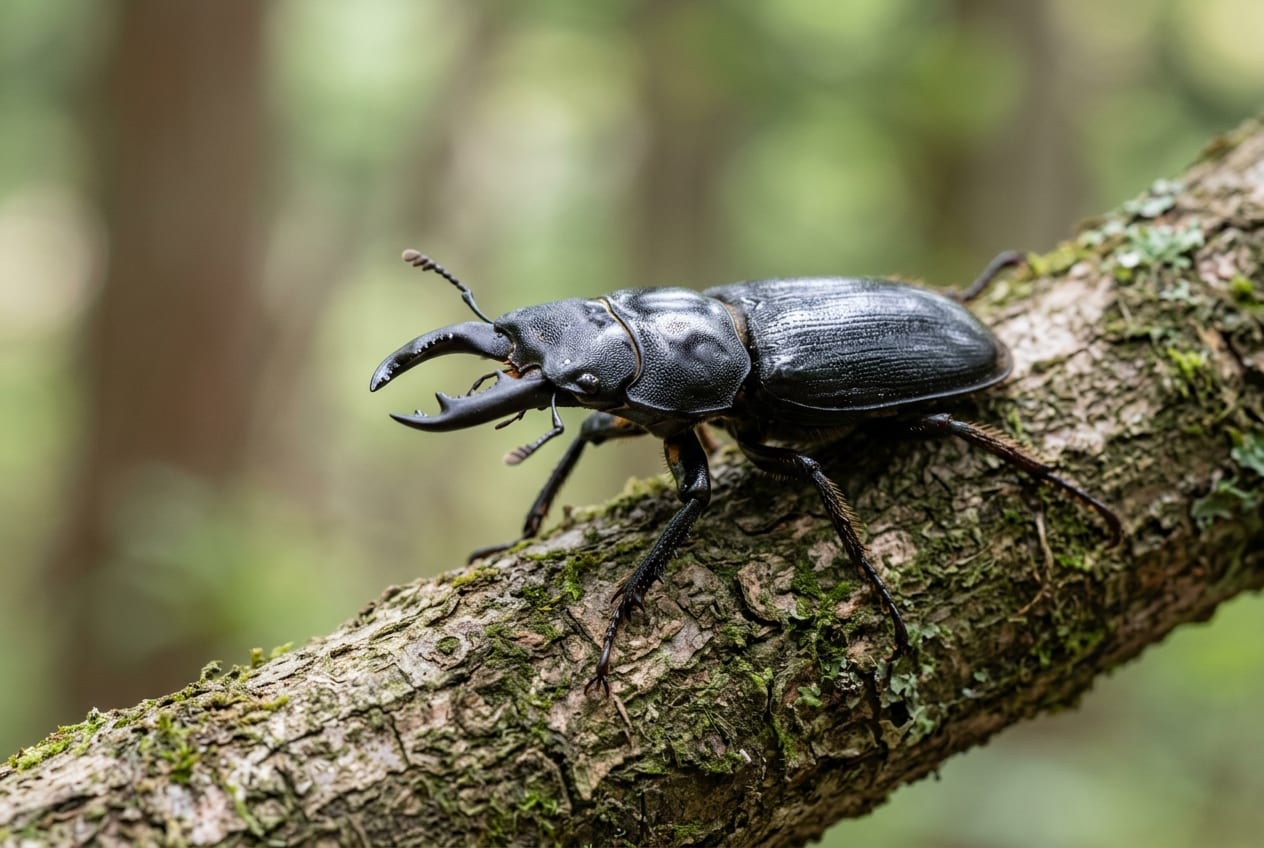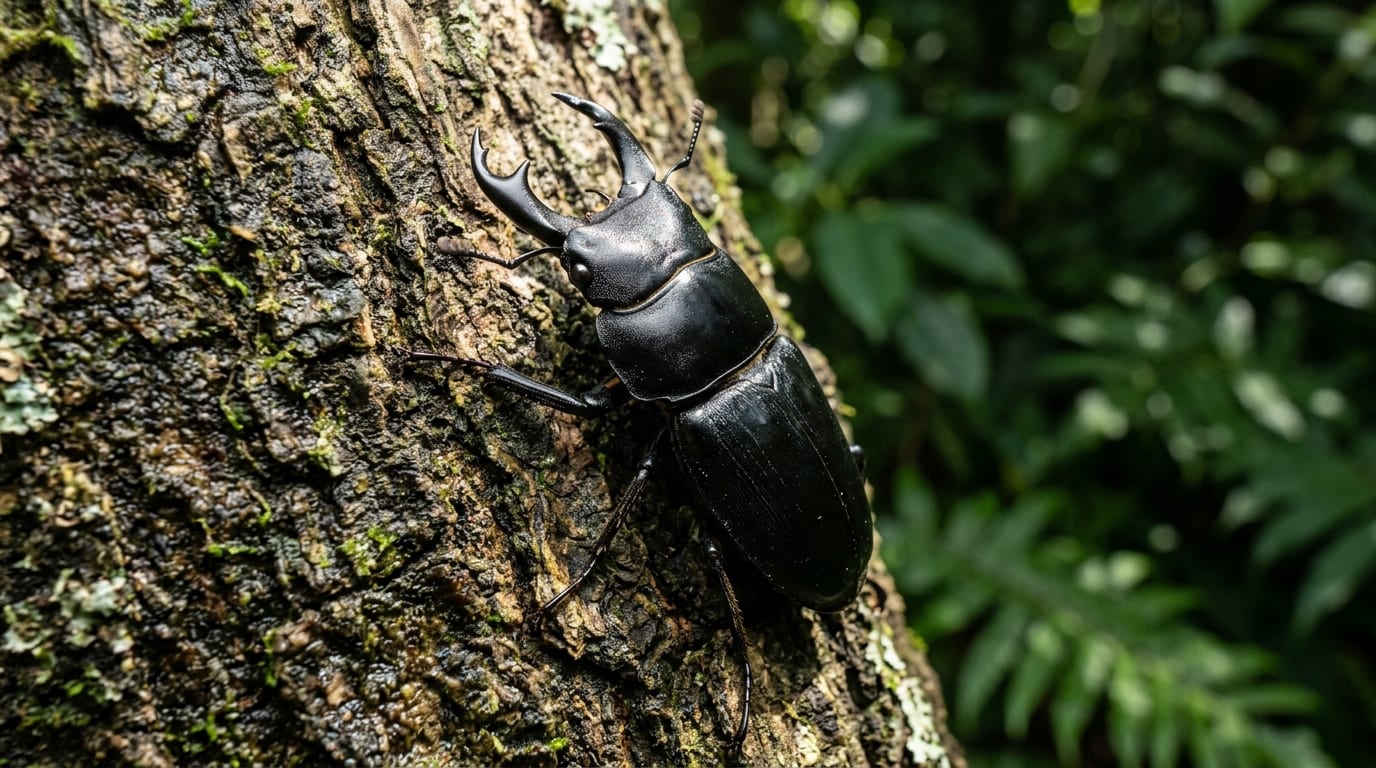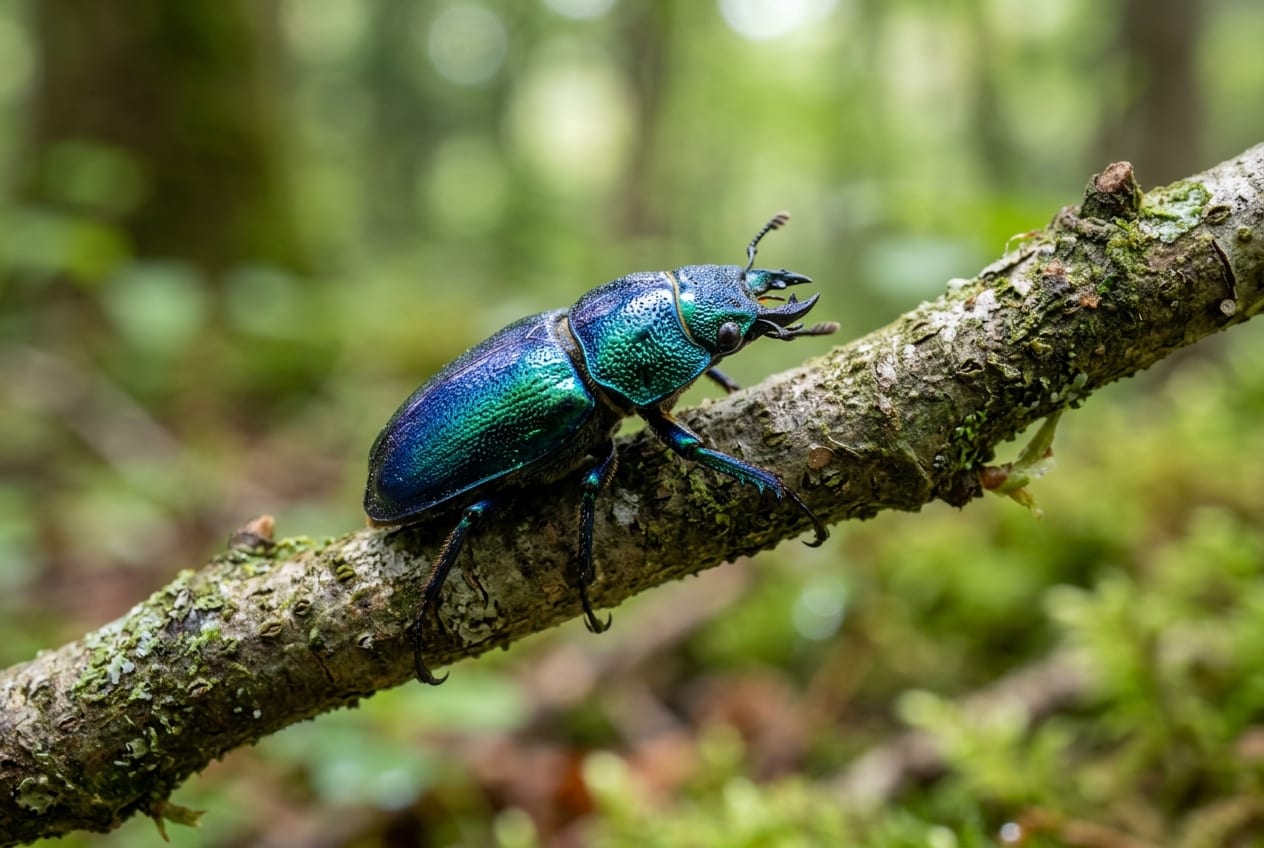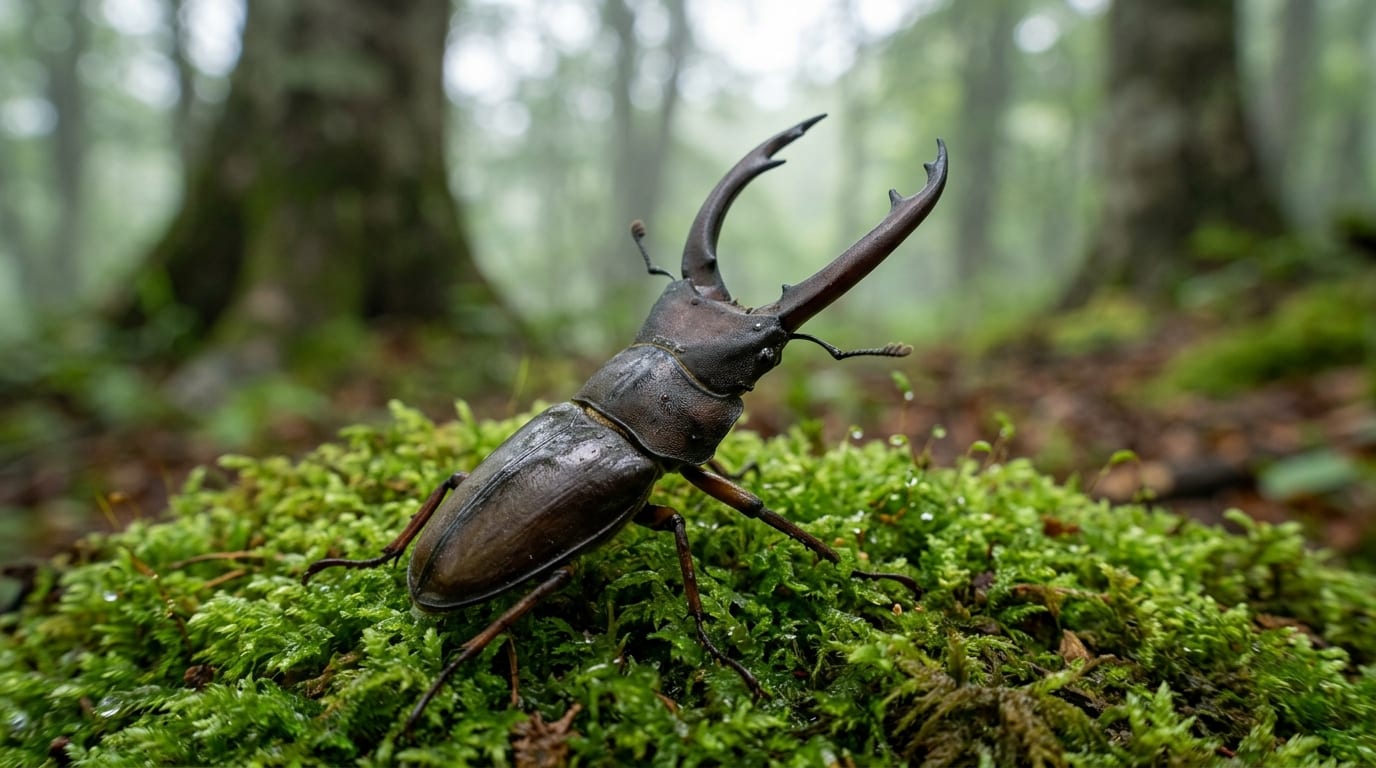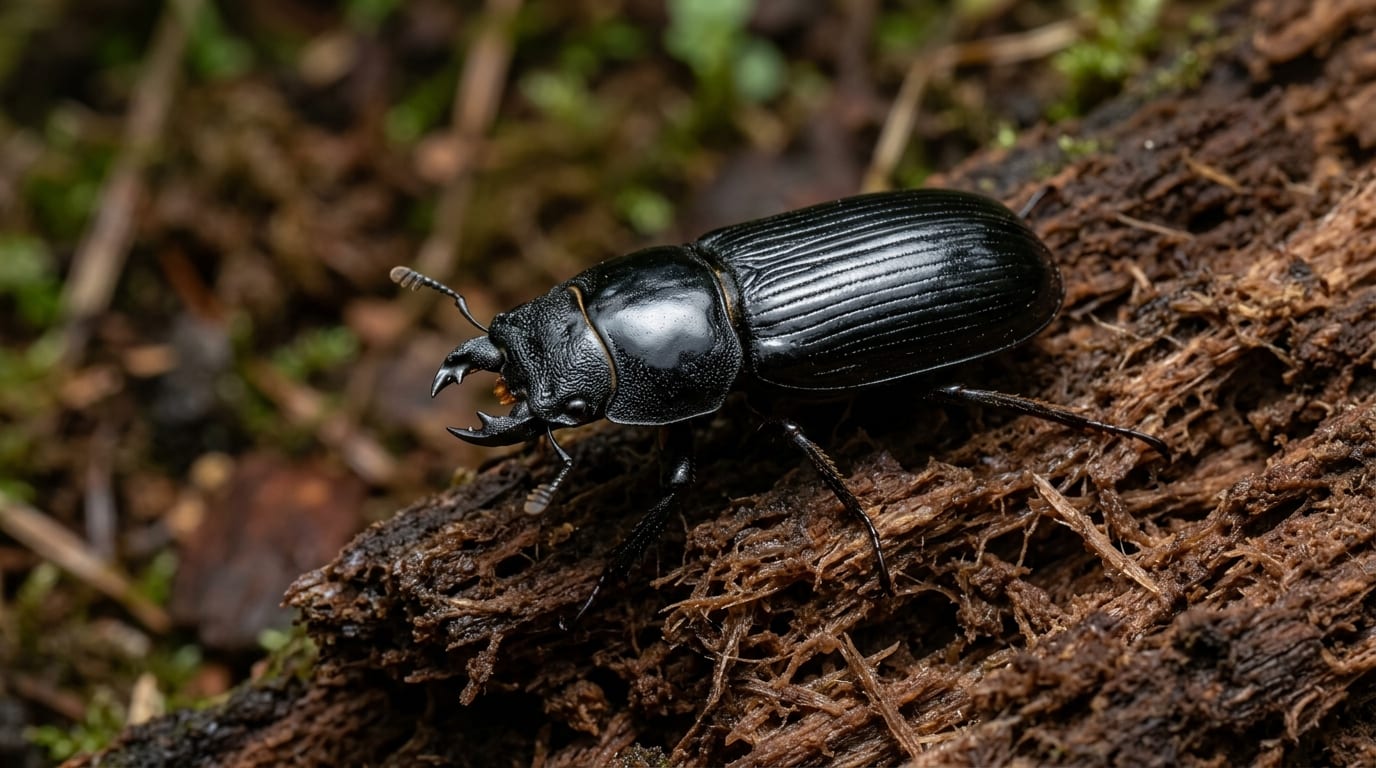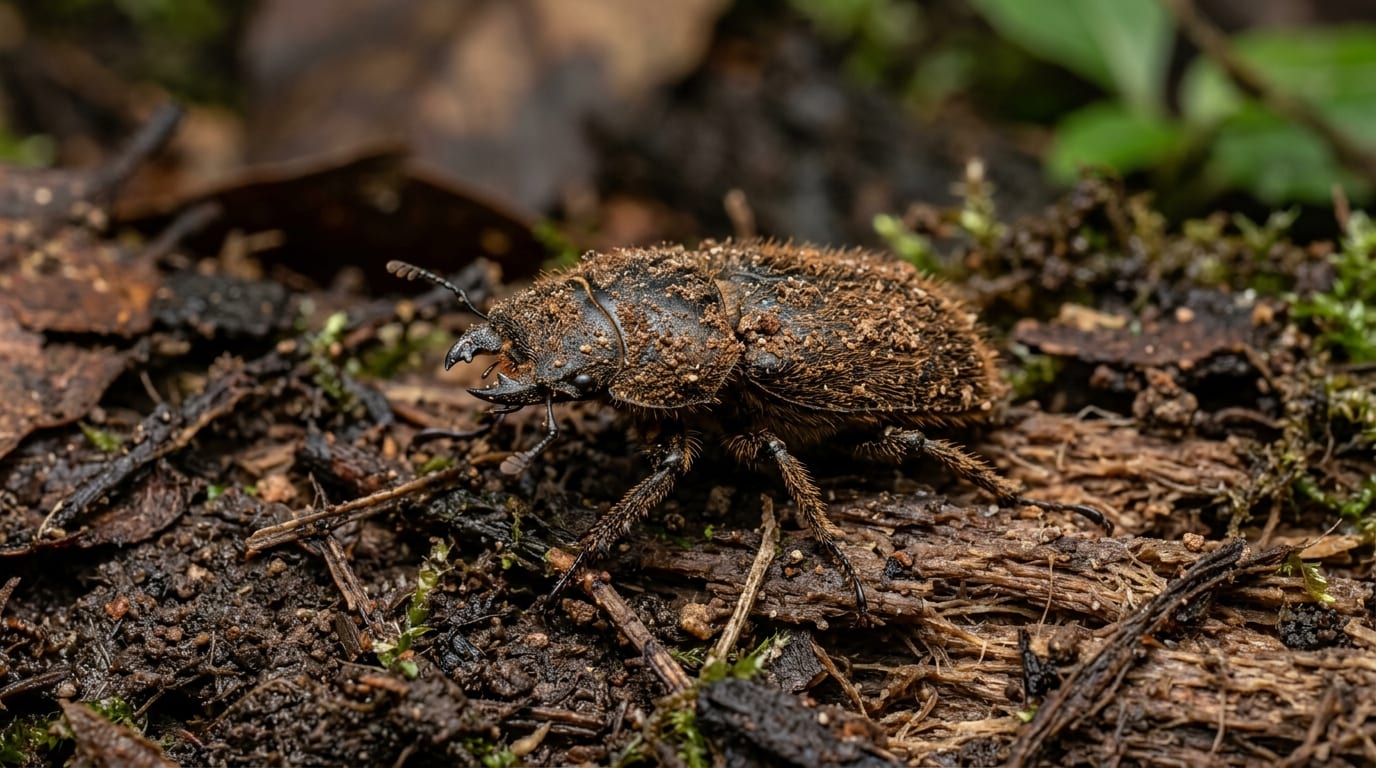
AI-generated image
Japanese Rusty Stag Beetle
AdvancedDorcus japonicus
A small stag beetle of the subgenus Velutinodorcus found only on Tokunoshima. It is around 20 mm long with modest mandibles, and soil clinging to the hairs that cover the body gives it a rusty brown look. Captive-bred stock is what circulates in Japan.
Difficulty
Advanced
Temperature
20〜28℃
Lifespan
Adults 1-2 years
Size
Males around 20mm; captive record 29.0mm, wild record 26.2mm
Humidity
60〜80%
Diet
Adults take sap and beetle jelly; larvae feed on rotten wood
About
Dorcus japonicus is a small stag beetle confined to Tokunoshima in Kagoshima Prefecture and placed in the subgenus Velutinodorcus. It is around 20 mm long and the mandibles are not strongly developed. The body is covered in hairs, and soil caught in them gives the beetle an overall rusty brown appearance, which is the origin of its Japanese name. Small as the mandibles are, their basic structure, including the inner teeth, resembles that of Dorcus hopei. Takehiko Nakane and Shun'ichi Makino described the species in 1985 in a Gekkan-Mushi paper on the Dorcus velutinus group of Japan and Taiwan. It is known as one of the least frequently collected of Japan's stag beetles, and the specimen records held by GBIF come only from places on Tokunoshima such as Isen and Amagi. The 2025 edition of BE-KUWA lists a captive record of 29.0 mm and a wild record of 26.2 mm, and what is seen in Japan is chiefly stock bred over generations in captivity.
Source: Wikipedia (CC BY-SA 4.0)
Lifespan of the Japanese Rusty Stag Beetle
The Japanese Rusty Stag Beetle lives Adults 1-2 years.
Size of the Japanese Rusty Stag Beetle
The Japanese Rusty Stag Beetle grows to Males around 20mm; captive record 29.0mm, wild record 26.2mm.
Basic Info
Origin
Japan (Tokunoshima, Kagoshima Prefecture)
Lifespan
Adults 1-2 years
Size
Males around 20mm; captive record 29.0mm, wild record 26.2mm
Care Specifications
SolitaryBreeding: Hard
Sources: Dorcus - Wikipedia (JA; subgenus Velutinodorcus; range, size, the soil-covered hairs and mandible structure of Dorcus japonicus) / Lucanidae - Wikipedia (JA; distribution across the Nansei islands, placing Dorcus japonicus on Tokunoshima) / GBIF species page for Dorcus japonicus Nakane & Makino, 1985 (original description and specimen localities) / BE-KUWA Certified Breeding Records (Mushi-sha, FY2025 edition PDF, JA)
Breeding Records & Localities
Captive record (♂)
29 mm
Wild record (♂)
26.2 mm
Record source: BE-KUWA 2025 edition, captive records for medium and large Japanese stag beetles (Japanese rusty stag: captive 29.0 mm, registered 2024; dream maximum 32 mm; wild 26.2 mm, Masashi Hosoguchi). The same edition's small-specimen table lists a captive 14.1 mm (2019) and a wild 17.7 mm (Tsuneyoshi Kizaki, 2010).
Notable localities
Tokunoshima
All 32 specimen records held by GBIF are from Kagoshima Prefecture, and those with a named locality come only from places on Tokunoshima such as Isen and Amagi.
Generation codes
- WD
- Wild-caught
- WF1
- Offspring of a wild-caught female
- F1〜
- Captive generations (same locality)
- CBF1
- Cross-locality captive-bred (reset)
Sources: BE-KUWA Certified Breeding Records (Mushi-sha, FY2025 edition PDF, JA) / GBIF occurrence records for Dorcus japonicus (localities)
References & Sources
Edited & verified by: BreederDirect editorial team
The taxonomic, regulatory, and husbandry data on this page are compiled and verified against the authoritative primary sources below.
Primary sources
- Wikipedia
- CITES Appendix (checklist.cites.org)
- Ministry of the Environment: list of National Endangered Species of Wild Fauna and Flora (only three Lucanidae are listed)
- e-Gov: Natural Parks Act (permission to take animals and plants in special zones)
- Ministry of the Environment: Amami Gunto National Park
- Lucanidae - Wikipedia (JA; distribution across the Nansei islands, placing Dorcus japonicus on Tokunoshima)
- GBIF species page for Dorcus japonicus Nakane & Makino, 1985 (original description and specimen localities)
- BE-KUWA Certified Breeding Records (Mushi-sha, FY2025 edition PDF, JA)
Taxonomy & Authority
Accepted name: Dorcus japonicus Nakane & Makino, 1985
Authority databases: GBIF
Nomenclature follows global taxonomic authority databases.
Regulations & Conservation Status
Not CITES-listed
Domestic law: The species is endemic to Tokunoshima, an island within Amami Gunto National Park and inside the World Natural Heritage site 'Amami-Oshima Island, Tokunoshima Island, Northern part of Okinawa Island, and Iriomote Island'. Inside a national park's special zones the Natural Parks Act requires permission to take animals or plants, and local authorities at collecting sites may restrict collecting by ordinance. The beetle is not designated as a National Endangered Species under the Act on Conservation of Endangered Species; among the Lucanidae only Neolucanus insulicola donan, Neolucanus okinawanus and Neolucanus protogenetivus hamaii are listed. What circulates is chiefly captive-bred stock, and anyone handling wild-caught beetles must check the rules for the collecting site.
Sources: CITES Appendix (checklist.cites.org) / Ministry of the Environment: list of National Endangered Species of Wild Fauna and Flora (only three Lucanidae are listed) / e-Gov: Natural Parks Act (permission to take animals and plants in special zones) / Ministry of the Environment: Amami Gunto National Park
Regulations may change. Always verify the latest information with the relevant authorities.
Japanese Rusty Stag Beetle Listings
Loading latest listingsFind listings for this species