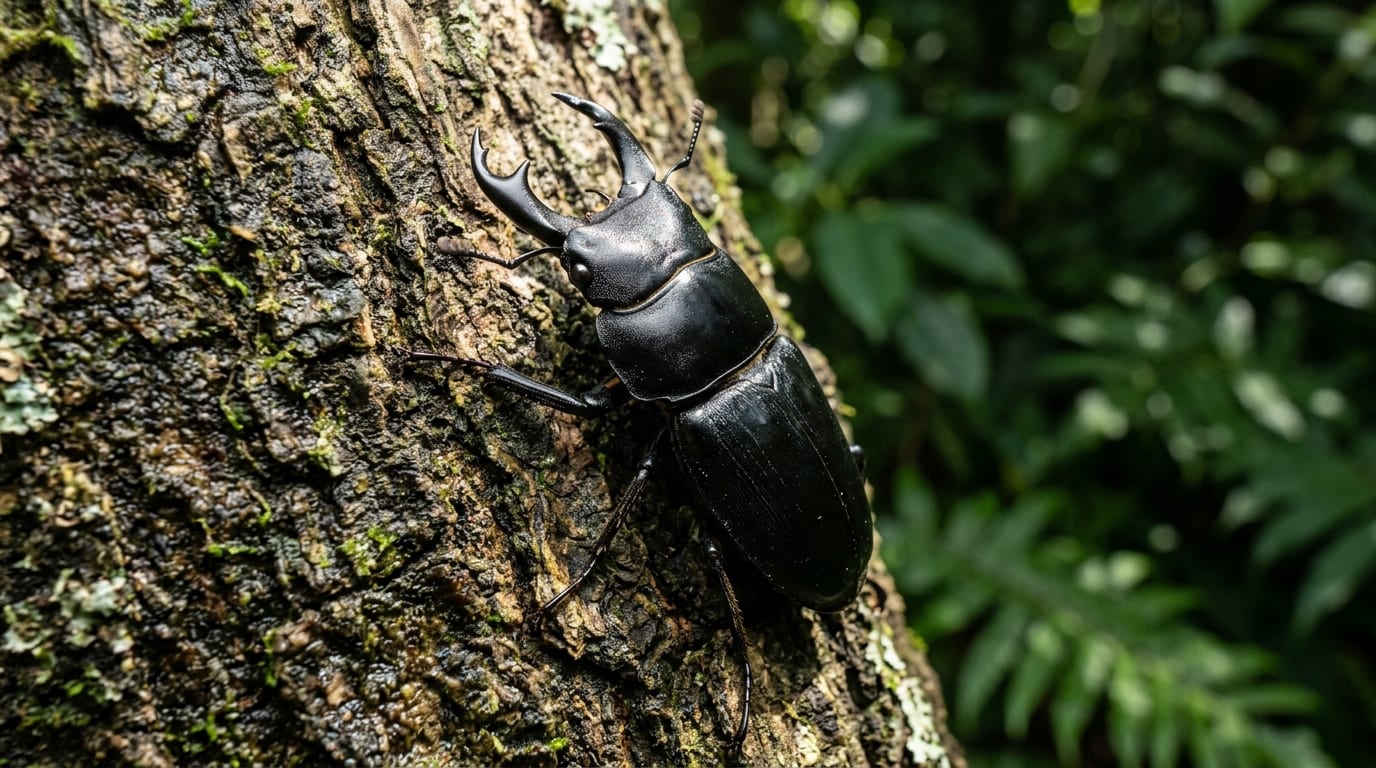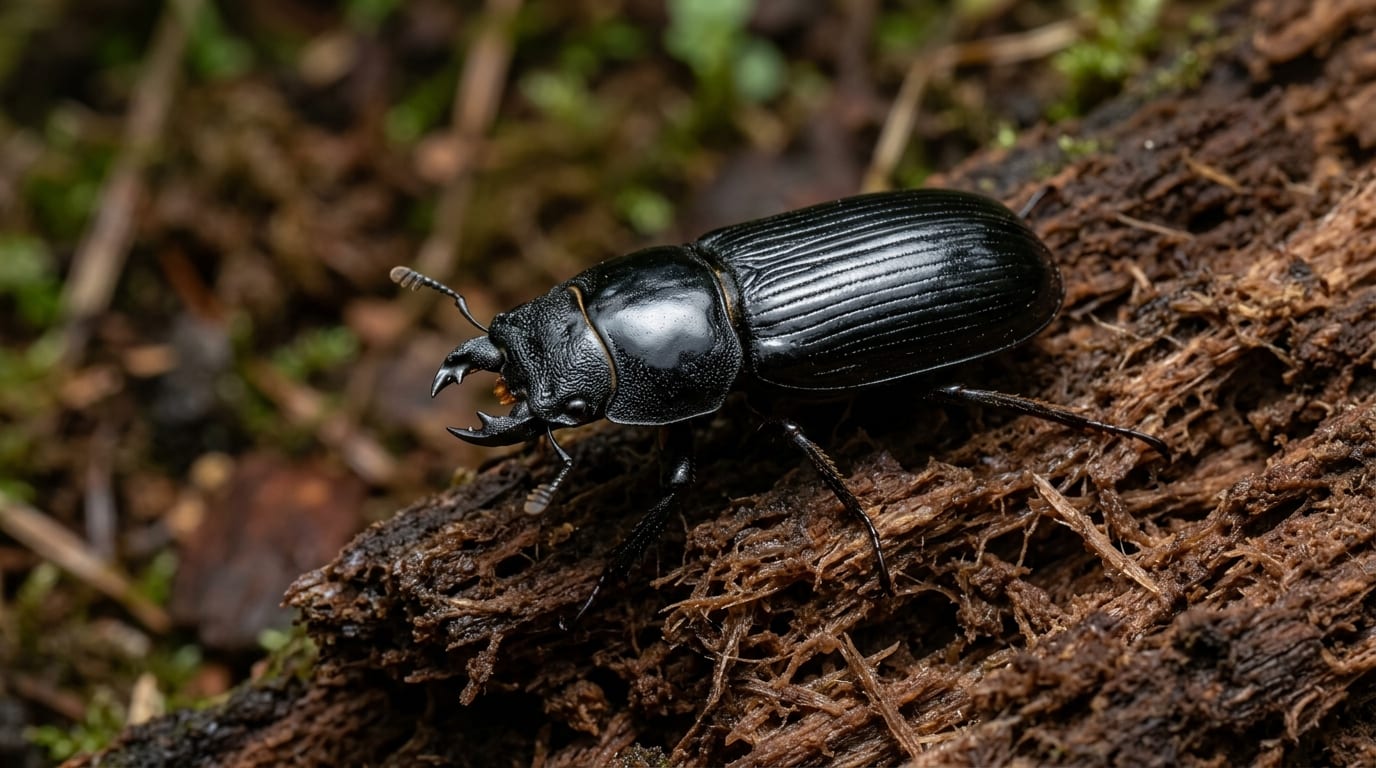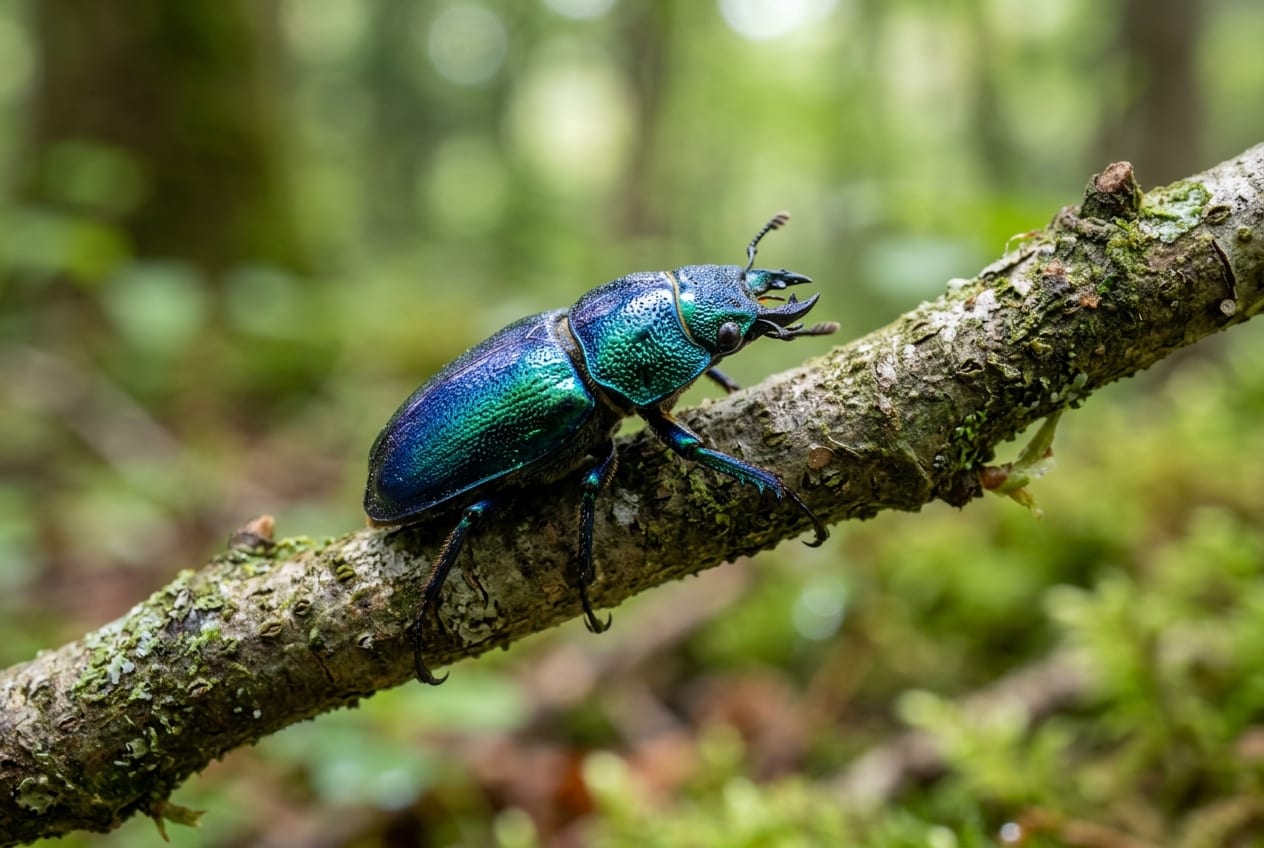
AI-generated image
Japanese Blue Stag Beetle
AdvancedPlatycerus delicatulus
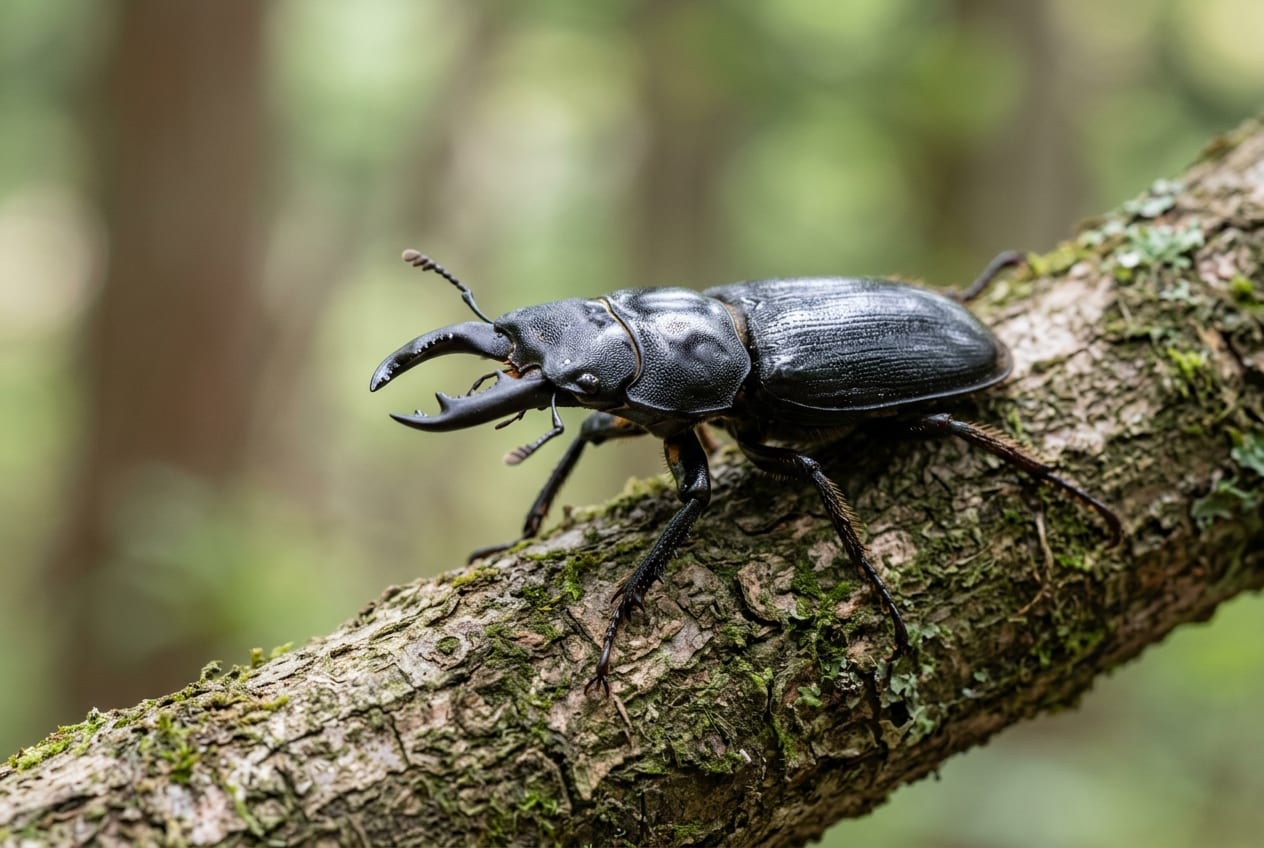
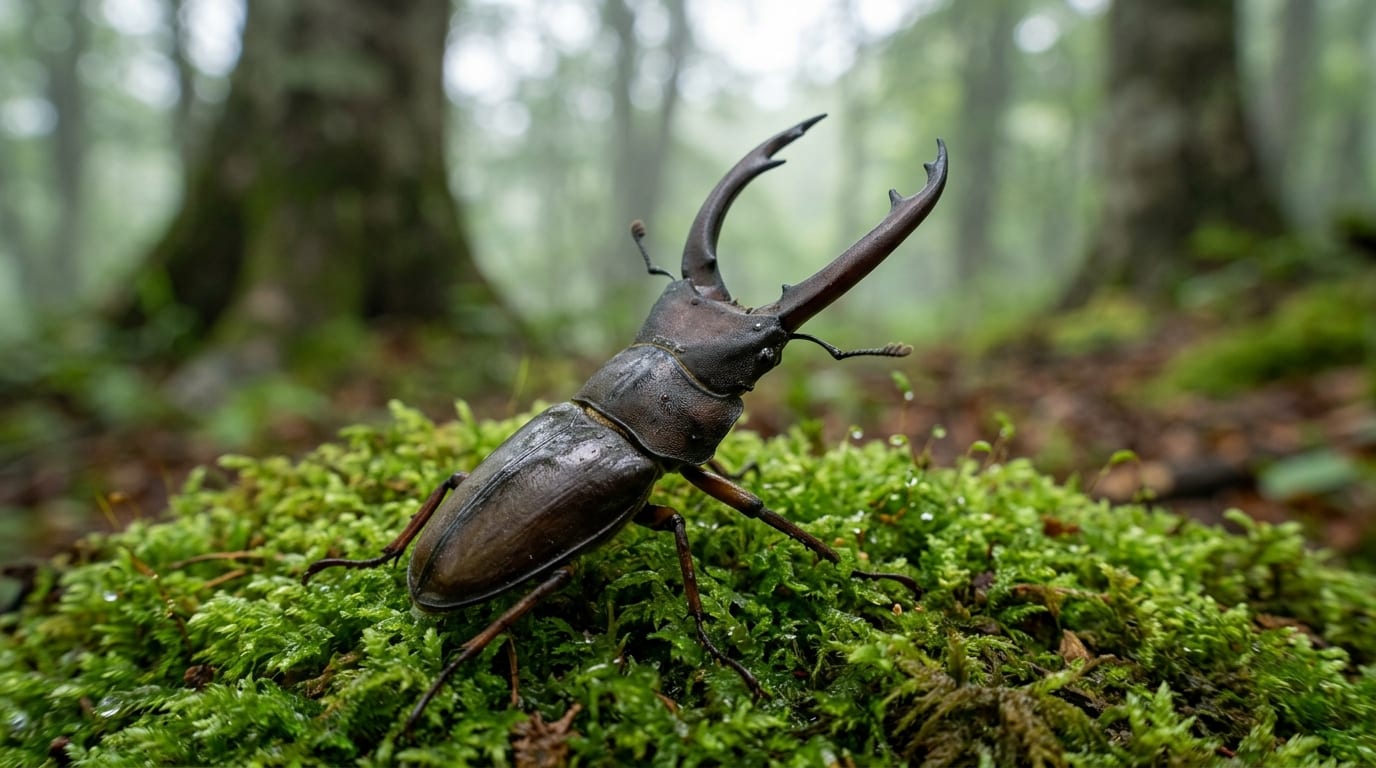
About 13 mm long and the largest Platycerus in Japan. Males are green while females vary through coppery red, blue and black. It appears in high-elevation beech forest from spring into early summer.
Difficulty
Advanced
Temperature
20〜28℃
Lifespan
Adults 8 months to 1 year
Size
About 13mm
Humidity
60〜80%
Diet
Larvae eat rotten wood; adults take sap from the buds of beech and similar trees
About
Platycerus delicatulus is the largest of the four Platycerus species in Japan, about 13 mm long. Males are green and females range through coppery red, blue and black, and the lapis-like sheen has earned the genus a keen following among collectors. Unlike most stag beetles it appears in high-elevation beech forest from spring into early summer, and in winter it is usually collected by splitting standing dead trunks and fallen logs to find adults overwintering in their pupal chambers. It resembles P. kawadai but is less glossy, and the hind corners of the pronotum are rounded rather than pointed. The larvae develop in soft but relatively dry rotten wood of large diameter. Unlike the related P. acuticollis it is rarely recorded flying to beech buds. Because the adults are small and short-lived and temperature control is essential in warm lowland cities, the genus drew no attention during the stag beetle boom from the 1990s on. The species is listed as near threatened in Yamaguchi and Fukuoka prefectures.
Source: Wikipedia (CC BY-SA 4.0)
Lifespan of the Japanese Blue Stag Beetle
The Japanese Blue Stag Beetle lives Adults 8 months to 1 year.
Size of the Japanese Blue Stag Beetle
The Japanese Blue Stag Beetle grows to About 13mm.
Basic Info
Origin
Japan (Honshu, Shikoku and Kyushu; the subspecies unzendakensis on Mt Unzen and Mt Tara)
Lifespan
Adults 8 months to 1 year
Size
Care Specifications
References & Sources
Edited & verified by: BreederDirect editorial team
The taxonomic, regulatory, and husbandry data on this page are compiled and verified against the authoritative primary sources below.
Taxonomy & Authority
Accepted name: Platycerus delicatulus Lewis, 1883
Synonyms: Platycerus delicatulus delicatulus, Platycerus delicatulus unzendakensis
Authority databases: GBIF
Nomenclature follows global taxonomic authority databases.
Regulations & Conservation Status
Not CITES-listed
Sources: CITES Appendix (checklist.cites.org)
Regulations may change. Always verify the latest information with the relevant authorities.
Japanese Blue Stag Beetle Listings
Loading latest listingsFind listings for this species