AI-generated image
Spotted Stag Beetle
AdvancedAesalus asiaticus
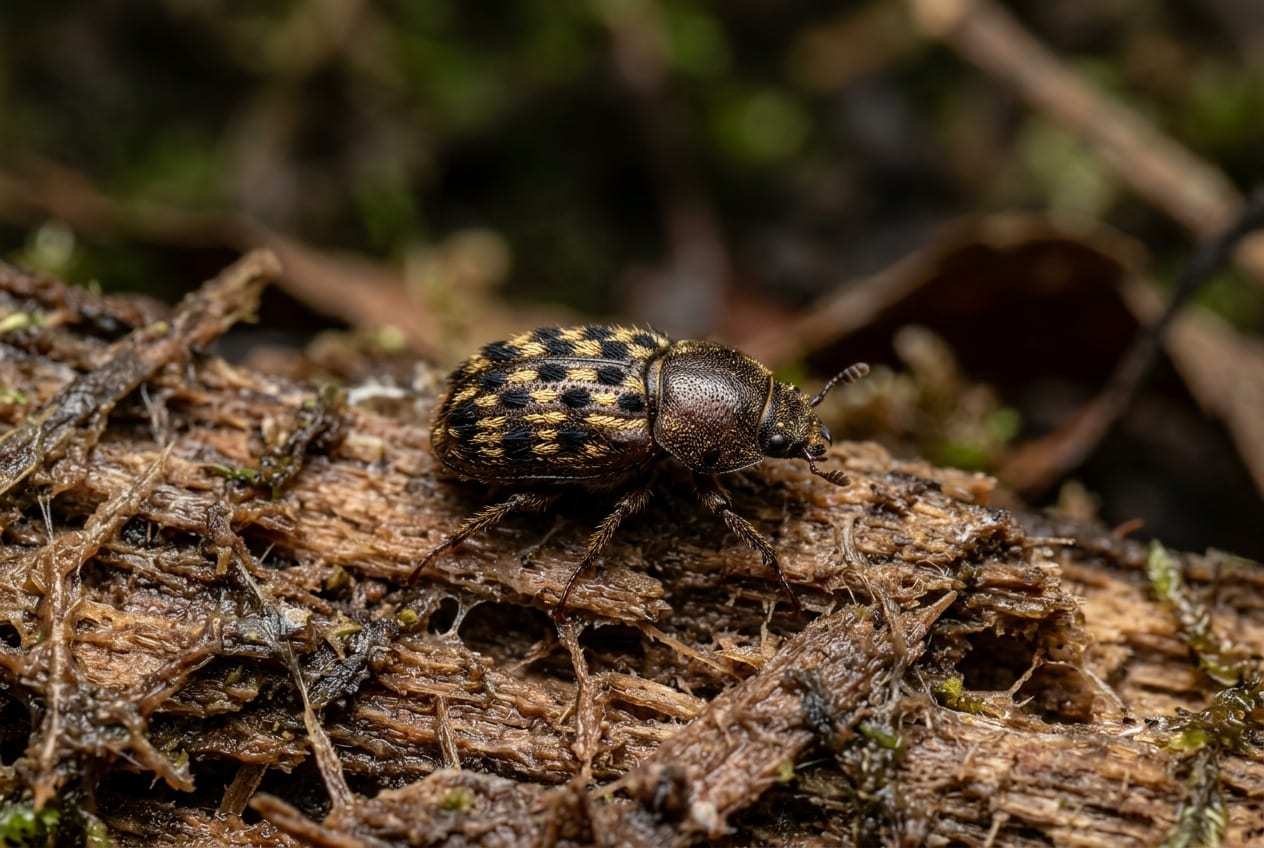
A tiny stag beetle of only about 5 mm. The body is tall and stubbily oval, brown overall, with five alternating rows of black and gold spots that are in fact tufts of hair.
Difficulty
Advanced
Temperature
20〜28℃
Lifespan
Adults 3-6 months
Size
About 5mm
Humidity
60〜80%
Diet
Both larvae and adults live in well brown-rotted broadleaf wood
About
Aesalus asiaticus is a tiny stag beetle of only about 5 mm; a congener, A. quadridens, is the smallest stag beetle in the world. The body is tall and stubbily oval rather than flattened as in most stag beetles. It is brown overall with five alternating rows of black and gold spots, which are tufts of hair. It occurs on higher ground from Hokkaido to Kyushu, from low hills below 500 m up to alpine ground above 1,000 m. Unlike small mountain species such as Platycerus acuticollis and Ceruchus lignarius, its larvae develop without trouble at lowland temperatures, so it is even found in hot springs that stay warm and humid all year. Adults and larvae alike occur in damp, well brown-rotted broadleaf wood, and they are most numerous in Japanese andromeda and camellia in the coastal subalpine zone. The larvae take a year, and the new adults overwinter in the pupal chamber and become active from late March.
Source: Wikipedia (CC BY-SA 4.0)
Lifespan of the Spotted Stag Beetle
The Spotted Stag Beetle lives Adults 3-6 months.
Size of the Spotted Stag Beetle
The Spotted Stag Beetle grows to About 5mm.
Basic Info
Origin
Japan (higher ground from Hokkaido to Kyushu, with records also from Sado, Toshima, Mikurajima, Tsushima, Shimo-Amakusa, Yakushima and Tanegashima)
Lifespan
Adults 3-6 months
Size
About 5mm
Care Specifications
Breeding Records & Localities
Notable localities
HokkaidoHonshuShikokuKyushuSadoTsushimaYakushimaTanegashima
Regional subspecies
- Aesalus asiaticus asiaticus(This entry) — Mainland Hokkaido to Kyushu and many offshore islands
- Aesalus asiaticus sawaii — Yakushima; the gold tufts are largely absent
No captive record for this species appears in the Japanese stag beetle record tables of the BE-KUWA 2025 edition, so no figure is given.
Generation codes
- WD
- Wild-caught
- WF1
- Offspring of a wild-caught female
- F1〜
- Captive generations (same locality)
- CBF1
- Cross-locality captive-bred (reset)
References & Sources
Edited & verified by: BreederDirect editorial team
The taxonomic, regulatory, and husbandry data on this page are compiled and verified against the authoritative primary sources below.
Taxonomy & Authority
Accepted name: Aesalus asiaticus Lewis, 1883
Synonyms: Aesalus asiaticus asiaticus, Aesalus asiaticus sawaii
Authority databases: GBIF
Nomenclature follows global taxonomic authority databases.
Regulations & Conservation Status
Not CITES-listed
Sources: CITES Appendix (checklist.cites.org)
Regulations may change. Always verify the latest information with the relevant authorities.
Spotted Stag Beetle Listings
Loading latest listingsFind listings for this species