Source: Wikimedia Commons
Bell Cricket
BeginnerMeloimorpha japonica
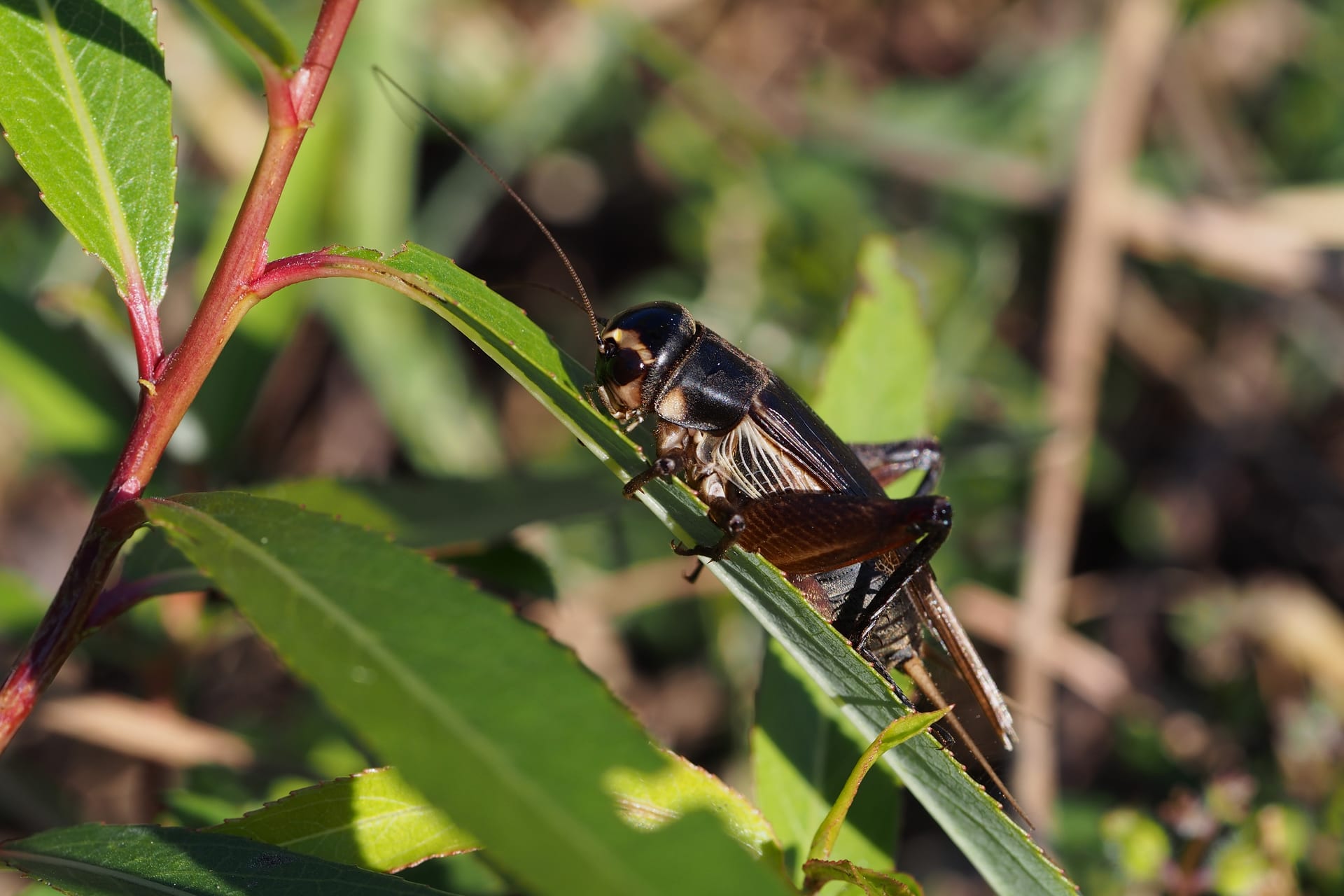
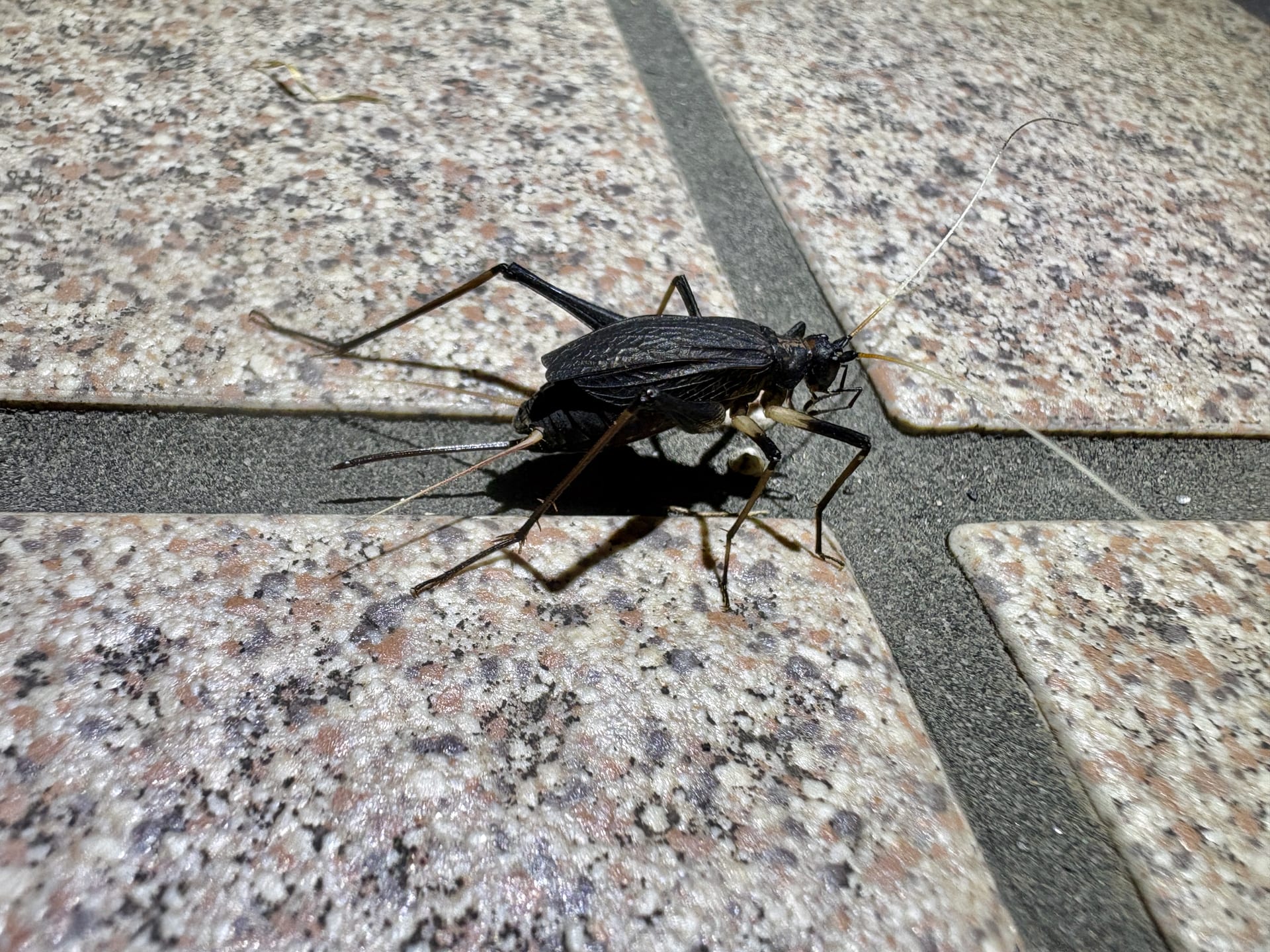
A cricket long called the king of singing insects for its clear voice. The male raises his broad wings vertically and sings in fine, continuous strokes. It is very easy to keep and has been enjoyed in Japan since the Heian period.
Difficulty
Beginner
Temperature
20〜28℃
Size
17-25mm
Humidity
60〜80%
Diet
Vegetables such as cucumber and aubergine, plus animal protein such as dried bonito flakes
About
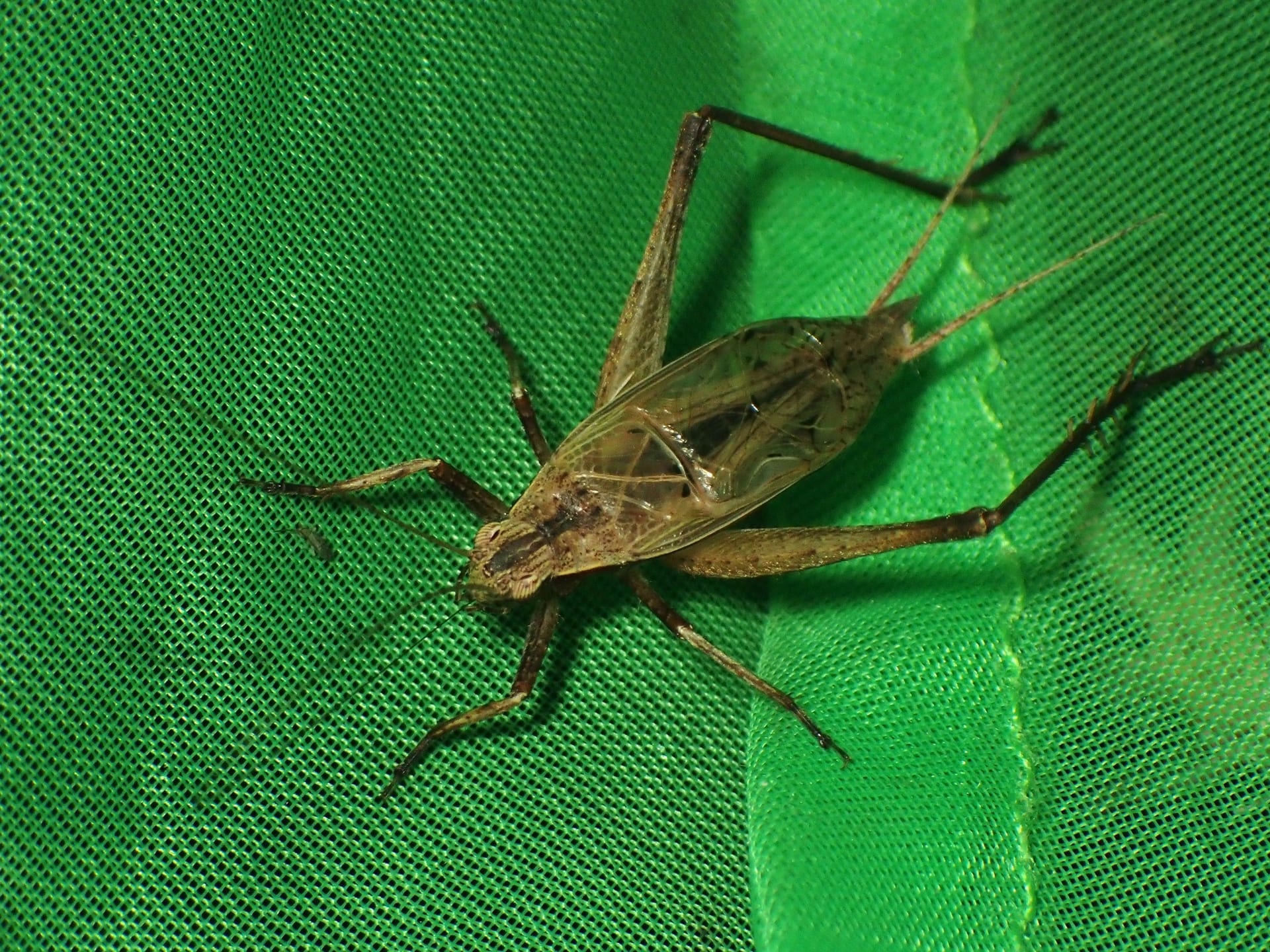
The bell cricket (Meloimorpha japonica) is a singing insect of 17-25 mm with a small head, compound eyes and reduced ocelli. The wings are broad and shaped like melon seeds; four are present just after eclosion, but the insect then sheds the hind pair with its hind legs. The male's wings have strong veins, part of one thickened vein forming a file, and he raises them vertically to sing in fine continuous strokes. It lives on the ground at forest edges and in shaded stands of pampas grass, is mainly nocturnal and hides under cover by day. Its legs are longer and thinner than those of other ground-dwelling species, so it does not dig but simply hides. The female inserts her ovipositor into soil to lay, and the eggs overwinter. Eclosion begins in late July, the song is heard through September, and almost all wild adults are dead by early October. No subspecies are recognised.
Source: Wikipedia (CC BY-SA 4.0)
Size of the Bell Cricket
The Bell Cricket grows to 17-25mm.
Basic Info
Origin
Japan (Honshu south of the southern Tohoku region, Shikoku and Kyushu), northeastern China and Korea
Size
17-25mm
Temperature
20〜28℃
Humidity
60〜80%
Diet
Vegetables such as cucumber and aubergine, plus animal protein such as dried bonito flakes
Care Specifications
References & Sources
Edited & verified by: BreederDirect editorial team
The taxonomic, regulatory, and husbandry data on this page are compiled and verified against the authoritative primary sources below.
Taxonomy & Authority
Accepted name: Meloimorpha japonica (Haan, 1844)
Synonyms: Meloimorpha japonicus, Homoeogryllus japonicus, Meloimorpha japonica
Authority databases: GBIF
Nomenclature follows global taxonomic authority databases.
Regulations & Conservation Status
Not CITES-listed
Sources: CITES Appendices (species not listed)
Regulations may change. Always verify the latest information with the relevant authorities.
Bell Cricket Listings
Loading latest listingsFind listings for this species