Source: Wikimedia Commons
Water Stick Insect
IntermediateRanatra chinensis
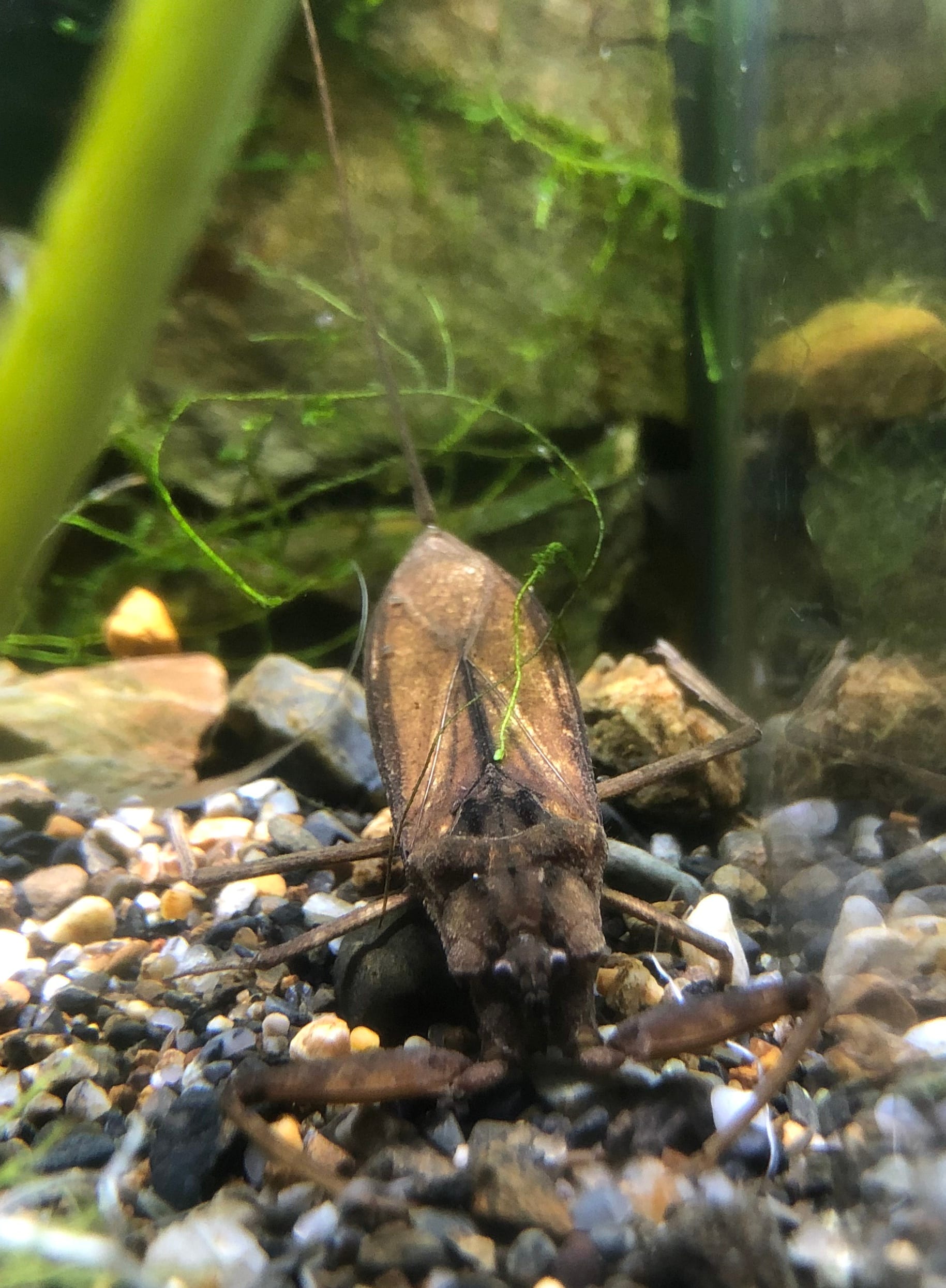
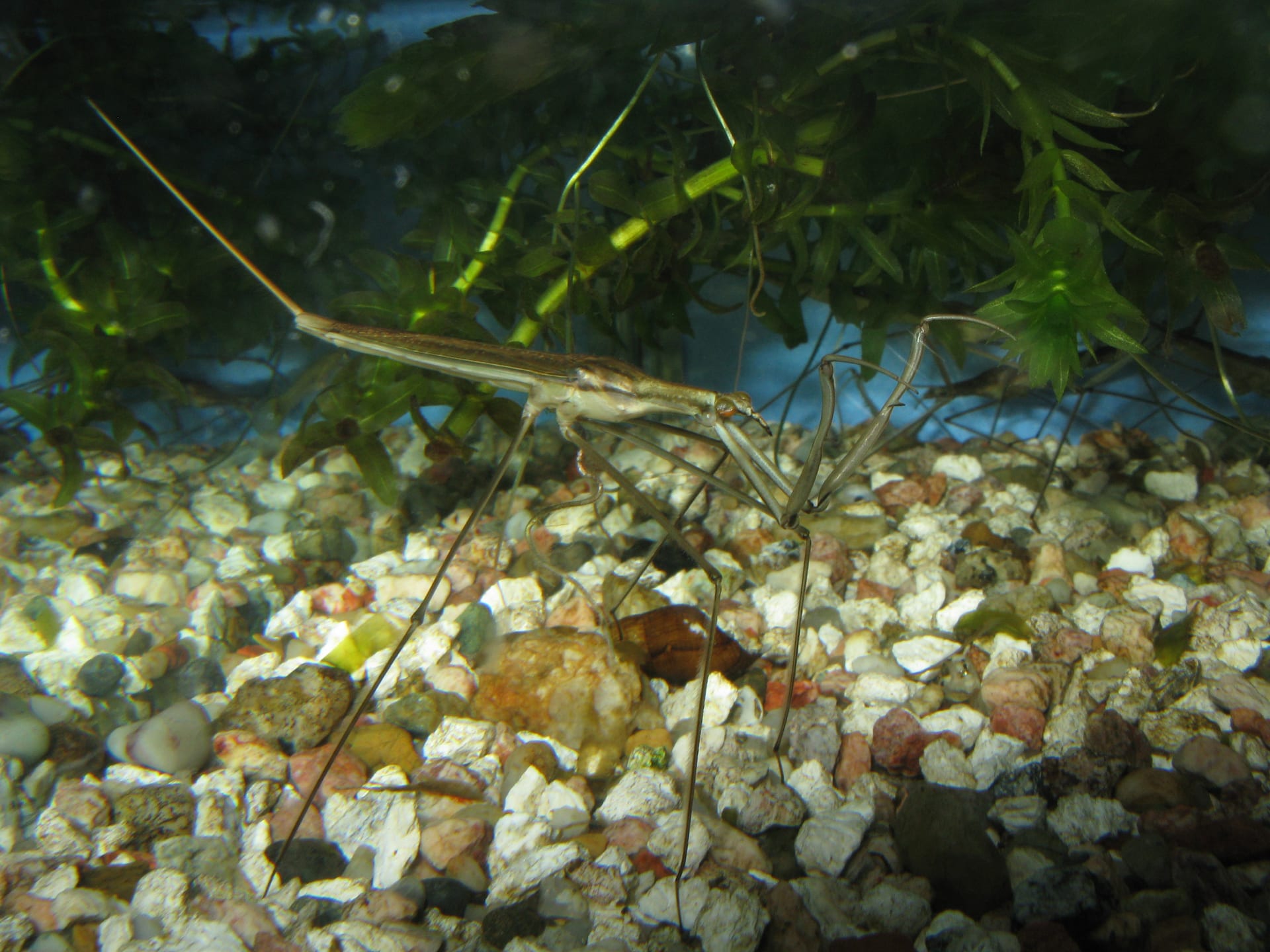
A slender aquatic bug with raptorial front legs like a mantis and a breathing tube longer than its body. It flies better than any other Japanese water bug, moving to new waters often and even in daylight.
Difficulty
Intermediate
Temperature
20〜28℃
Lifespan
Adults 8 months to 1 year
Size
40-50mm
Humidity
60〜80%
Diet
Small fish, tadpoles, aquatic insects and other live prey
About
Ranatra chinensis is a water bug of 40-50 mm whose slender body and raptorial front legs recall a mantis, although the two are entirely unrelated. The breathing tube at the tip of the abdomen is longer than the body in males and about as long as the body in females. It lives in paddies and ponds and tends to prefer deeper water than the water scorpion that shares the same habitat, which is taken as niche partitioning. Perhaps because of its slender build it flies better than any other Japanese water bug, and it flies often even by day, so it readily colonises restored waters and artificial ponds. In the water it moves slowly, holding still among plants and dead stems in camouflage while it waits. Prey is pierced with the rostrum, injected with digestive fluid and sucked out, a process that can continue for more than fifteen hours with a large catch. It tolerates some pollution but not pesticides, and has declined across the country.
Source: Wikipedia (CC BY-SA 4.0)
Lifespan of the Water Stick Insect
The Water Stick Insect lives Adults 8 months to 1 year.
Size of the Water Stick Insect
The Water Stick Insect grows to 40-50mm.
Basic Info
Origin
All of Japan, plus Taiwan, Korea, the Russian Far East and China
Lifespan
Adults 8 months to 1 year
Size
40-50mm
Care Specifications
References & Sources
Edited & verified by: BreederDirect editorial team
The taxonomic, regulatory, and husbandry data on this page are compiled and verified against the authoritative primary sources below.
Taxonomy & Authority
Accepted name: Ranatra chinensis Mayr, 1865
Authority databases: GBIF
Nomenclature follows global taxonomic authority databases.
Regulations & Conservation Status
Not CITES-listed
Sources: CITES Appendices (species not listed)
Regulations may change. Always verify the latest information with the relevant authorities.
Water Stick Insect Listings
Loading latest listingsFind listings for this species