Source: Wikimedia Commons
Japanese Tiger Beetle
AdvancedCicindela japonica
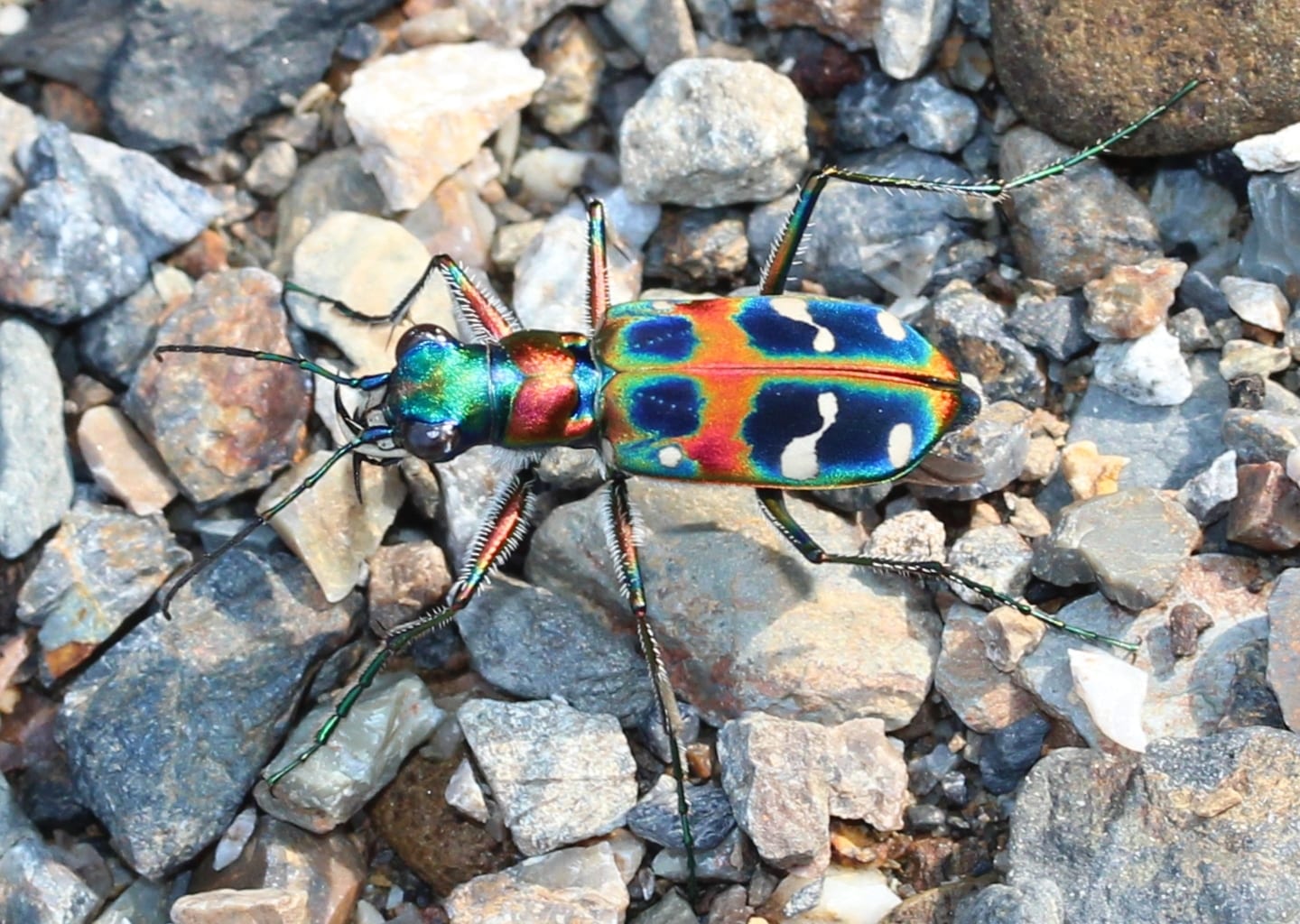
The largest tiger beetle in Japan, combining a metallic green head with black-purple elytra marked by white spots and a red band. It flies a short way ahead of an approaching person and then turns back to look, which is why it is called the path-shower.
Difficulty
Advanced
Temperature
20〜28℃
Lifespan
Adults 10 months to 1 year
Size
About 20mm
Humidity
60〜80%
Diet
Small insects and other live prey
About
Cicindela japonica reaches about 20 mm as an adult and is the largest tiger beetle in Japan. The head is metallic green, the elytra a velvety black-purple bearing white spots, and a red band crosses both the pronotum and the middle of the elytra. The underside is metallic blue-green, and some people find the beetle smells faintly of fruit. It is common on sunny forest tracks and riverbanks where the ground stays damp, and also turns up in city parks. When a person approaches it flies one or two metres, lands and often looks back, which has earned it the Japanese names michishirube and michioshie, both meaning path-shower. Large compound eyes and sharp mandibles let it catch small insects. The larva digs a vertical cylindrical burrow in firm bare ground, caps it with its flat head and ambushes passing prey, dragging it inside; hooked projections on its back grip the burrow wall to hold it in place. Adults overwinter together in the soil.
Source: Wikipedia (CC BY-SA 4.0)
Lifespan of the Japanese Tiger Beetle
The Japanese Tiger Beetle lives Adults 10 months to 1 year.
Size of the Japanese Tiger Beetle
The Japanese Tiger Beetle grows to About 20mm.
Basic Info
Origin
Japan (southern Honshu, Shikoku, Kyushu, Tsushima, Tanegashima and Yakushima)
Lifespan
Adults 10 months to 1 year
Size
About 20mm
Care Specifications
References & Sources
Edited & verified by: BreederDirect editorial team
The taxonomic, regulatory, and husbandry data on this page are compiled and verified against the authoritative primary sources below.
Taxonomy & Authority
Accepted name: Cicindela japonica Thunberg, 1781
Synonyms: Cicindela chinensis japonica
Authority databases: GBIF
Nomenclature follows global taxonomic authority databases.
Regulations & Conservation Status
Not CITES-listed
Sources: CITES Appendix (checklist.cites.org)
Regulations may change. Always verify the latest information with the relevant authorities.
Japanese Tiger Beetle Listings
Loading latest listingsFind listings for this species