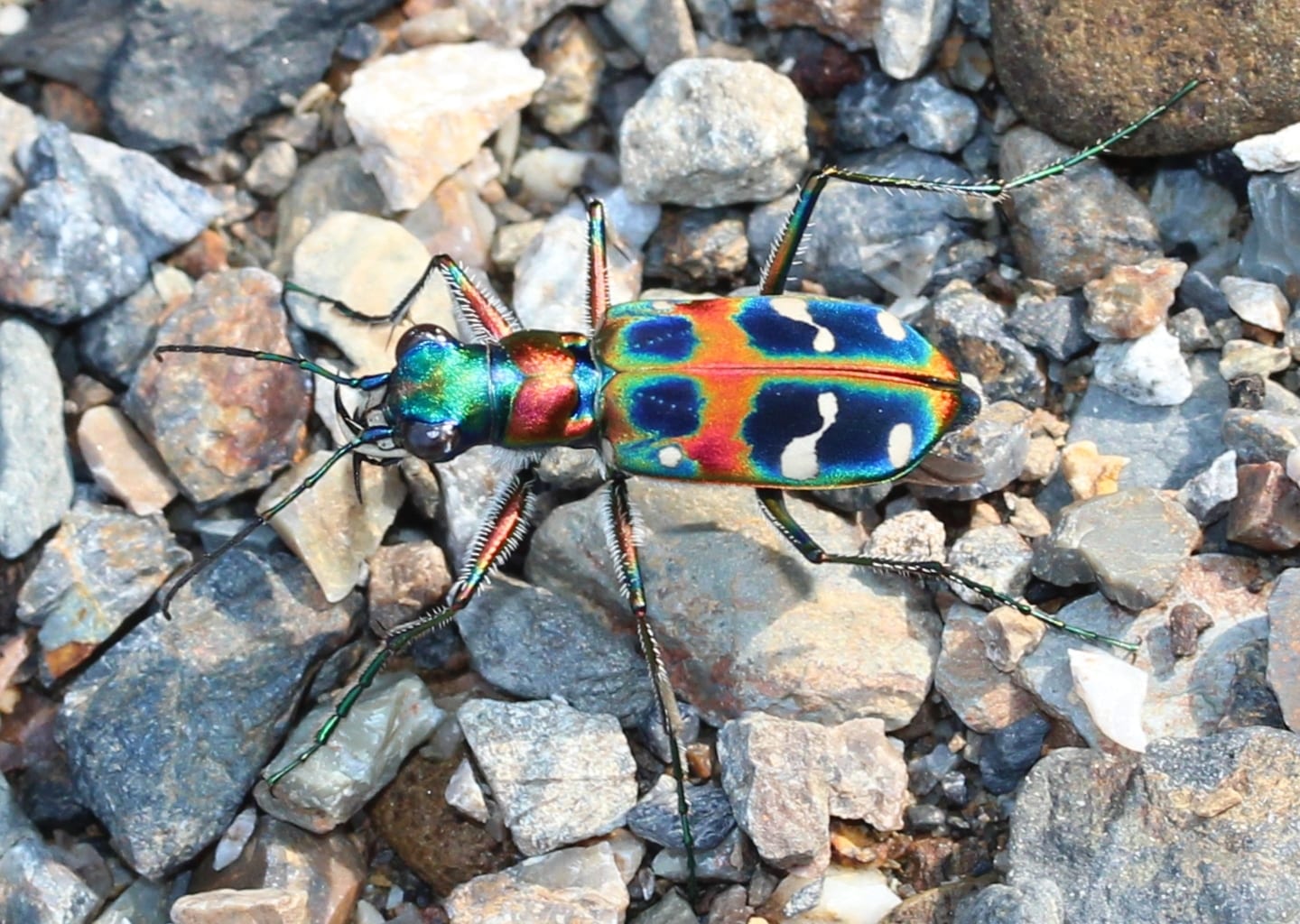
 © Alpsdake / CC BY-SA 3.0
Japanese Tiger Beetle
With a metallic green head and glossy black-purple wing covers marked with white spots and a red band, the Japanese Tiger Beetle is one of Japan's largest tiger beetle species. When approached, it darts a short distance ahead, lands, and turns to look back — a habit that earned it the nickname "Michioshie," or "way-teacher." Its striking colors and quick movements make it endlessly fascinating to watch, but as a predator that hunts live prey, it calls for a properly set-up habitat and consistent care, making it best suited to keepers with some insect-keeping experience already.
View Japanese Tiger Beetle encyclopedia →0% commission on your first sales!Register by September 30, 2026 and your first 2 sales are commission-free!
Breeder Wanted!
List on BreederDirect and sell directly to customers nationwide!
6 Transparency Standards You Can Trust
When listing Insects, Breeders disclose the following. We guarantee transparency on growth stage and breeding unit.
- Life Stage Clarity
- Generation Info
- Real Photos
- Breeding Unit
- Country of Origin
- Body Length (mm)
Browse all 296 breeds
Verified breeders wanted for Insects
Breeders are signing up now ahead of launch. Subscribe to be notified when new listings go live.
Getting alerts is free with a member account. When new listings match your saved search, we'll notify you by email and in-app.
Browse other categories
Verified breeders (preview)
Japanese Tiger Beetle key facts
- Care level
- Advanced
- Lifespan
- Adults 10 months to 1 year
- Size
- About 20mm
- Diet
- Small insects and other live prey
- Temperature & Humidity
- It lives where the ground is sunlit but damp, and adults overwinter together in the soil. In captivity provide a substrate that is dry at the surface and damp below.
- Breeding & Egg-laying
- The larva lives in a vertical cylindrical burrow dug into firm bare ground, so breeding calls for a deep layer of soil packed hard enough that the burrow will not collapse. Because it ambushes prey from the burrow, a steady supply of small live insects is a precondition.
- Cohabitation
- The adult is an agile predator and will eat others of its kind if housed together. Keep it singly and do not put it with other insects.
- Lifespan & Rearing Period
- Adults overwinter together in the soil and so live from one year into the next.
- Health & Notes
- It will take only live prey, so a keeper needs a supply of feeder insects that does not run out. Its mandibles are sharp and it may bite if handled. Although it is a familiar beetle that even lives in city parks, its larvae depend on burrows in firm bare ground, so collecting should be kept to a minimum.
About Japanese Tiger Beetle
The Japanese Tiger Beetle pairs a metallic green head with glossy black-purple, white-spotted wing covers. Known as the "way-teacher" for flying just ahead of onlookers, it's one of Japan's largest tiger beetles and best suited to experienced keepers.
7 things to know before welcoming a Japanese Tiger Beetle
1Best Suited to Experienced Keepers
As a predatory hunter of live prey, this beetle requires a properly maintained habitat and consistent feeding effort, making it a better fit for keepers who already have some insect-keeping experience.
2Quick and Alert by Nature
It senses movement easily and darts a short distance away before landing and turning back — the behavior behind its "way-teacher" nickname. Handle it gently, as it isn't a beetle that tolerates being startled.
3Needs Live Insect Prey
Being carnivorous, it won't eat prepared insect food and needs live, small insects to hunt. Make sure you can reliably source live prey before bringing one home.
4Prefers Sunny, Dry Ground
This species is active on sunny, dry patches of ground in the wild, so its enclosure should offer a basking spot and dry substrate to feel at home.
5Handle Carefully Around Its Jaws
Despite its small size, it has sharp mandibles that can pinch if grabbed carelessly by hand. It's safer to guide it with a container rather than picking it up directly.
6Adults Reach About 20mm
Adults grow to roughly 20mm, making this one of the larger tiger beetle species. Despite its size, it moves quickly, so a reasonably spacious enclosure suits it well.
7Prepare the Enclosure in Advance
Before bringing one home, set up an enclosure with dry substrate, a hiding spot, and a sunny basking area so it can settle in smoothly after the move.
Frequently asked questions about Japanese Tiger Beetle
- Q.Is this beetle suitable for beginners?
- A.The Japanese Tiger Beetle is considered an advanced-level insect. Because it needs live prey and careful habitat upkeep, it's best to gain some insect-keeping experience first.
- Q.What should I feed it?
- A.As a carnivore, it needs live small insects to hunt and won't eat prepared or dead food. Make sure you can keep a steady supply of live prey on hand.
- Q.Is it safe to handle with bare hands?
- A.It has sharp mandibles and may pinch if grabbed carelessly. It's safer to guide it using a container or tweezers instead of picking it up directly.
- Q.How big does it get?
- A.Adults reach about 20mm, making it one of the larger tiger beetle species, known for its quick, agile movements.
- Q.Why is it called the "way-teacher"?
- A.When approached, it flies a short distance ahead, lands, and turns to look back, repeating this pattern as if leading the way — which is how it earned this nickname.
Useful tools for Japanese Tiger Beetle care
Learn more about Japanese Tiger Beetle in the encyclopedia
View Japanese Tiger Beetle encyclopedia entry →
Care difficulty, lifespan, size and diet — all basics covered.
More in this category
Can't find the one you're looking for?
Post your wishes for free and breeders with matching animals will contact you with introductions.