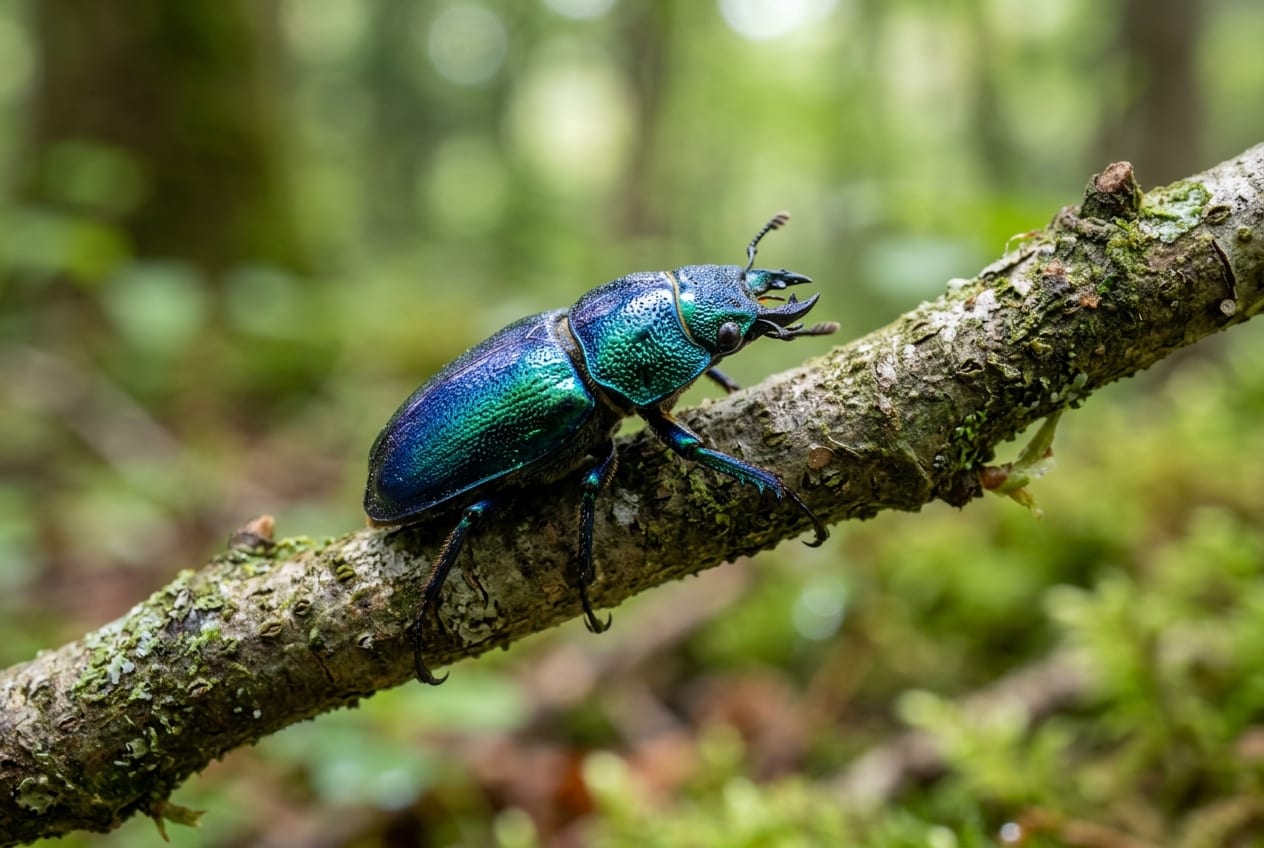
Japanese Blue Stag Beetle
The Japanese Blue Stag Beetle (Rurikuwagata) measures around 13mm — small among stag beetles, yet the largest species in Japan's native Blue Stag Beetle genus. Its signature feature is a striking blue-tinged sheen: males typically show deep green, while females display copper, blue, or black tones, each individual showing its own variation depending on the light. They emerge in beech forests at higher elevations from spring through early summer, and in colder months, adults can be found overwintering inside rotting wood. Because keeping them well requires closely matching their natural temperature, humidity, and breeding-log setup, this species is generally recommended for experienced keepers rather than beginners.
View Japanese Blue Stag Beetle encyclopedia →0% commission on your first sales!Register by September 30, 2026 and your first 2 sales are commission-free!
Breeder Wanted!
List on BreederDirect and sell directly to customers nationwide!
BreederDirect's 6 Transparency Commitments
When listing Insects, Breeders disclose the following. We guarantee transparency on growth stage and breeding unit.
- Life Stage Clarity
- Generation Info
- Real Photos
- Breeding Unit
- Country of Origin
- Body Length (mm)
Browse all 336 breeds
Verified breeders wanted for Insects
Breeders are signing up now ahead of launch. Subscribe to be notified when new listings go live.
Getting alerts is free with a member account. When new listings match your saved search, we'll notify you by email and in-app.
Browse other categories
Verified breeders (preview)
Japanese Blue Stag Beetle key facts
- Care level
- Advanced
- Lifespan
- Adults 8 months to 1 year
- Size
- About 13mm
- Diet
- Larvae eat rotten wood; adults take sap from the buds of beech and similar trees
- Temperature & Humidity
- It lives in cool, high-elevation beech forest, and temperature control is described as essential in warm lowland cities. Whether summer heat can be kept off the beetles decides whether they can be kept at all.
- Breeding & Egg-laying
- The larvae develop in soft but relatively dry rotten wood, in standing dead trunks and fallen logs of large diameter. The related P. acuticollis instead uses wet rotten wood lying on the forest floor, so even within the genus the preferred state of the wood differs.
- Cohabitation
- It is a small beetle of about 13 mm and the male's mandibles are not enlarged, but it is still kept one to a container. Species in this genus are hard to tell apart, so beetles of different species or localities should not share a container.
- Lifespan & Rearing Period
- Adults appear from spring into early summer and, being small, are short-lived. Through autumn and winter they sit as adults in their pupal chambers, and these are the beetles found when wood is split.
- Health & Notes
- The species is listed as near threatened in Yamaguchi and Fukuoka prefectures. Members of the genus are separated on subtle colour, the shape of the pronotum and the genitalia, so a stereo microscope is needed for a reliable identification and even sexing is difficult. Do not mix beetles from different localities.
About Japanese Blue Stag Beetle
The Japanese Blue Stag Beetle grows to about 13mm — the largest in Japan's native blue stag beetle genus — prized for its shimmering blue sheen, rich color variation, and high-elevation beech-forest origins.
7 things to know before welcoming a Japanese Blue Stag Beetle
1Built for Experienced Keepers
The Japanese Blue Stag Beetle is considered a demanding species to keep, requiring careful temperature and humidity control along with a properly prepared breeding setup. It's best suited to keepers who already have stag beetle experience.
2Sensitive to Heat
Because this species naturally lives in beech forests at higher elevations, it doesn't tolerate hot, humid conditions well. Keeping it in a cool spot during summer helps mirror its natural habitat.
3Overwinters as an Adult
In the wild, adults spend winter inside rotting logs rather than dying off after breeding. Keepers should plan for a cooler, dormancy-like period in the beetle's yearly care routine.
4Striking Color Variation
Males typically show deep green while females range through copper, blue, and black tones, with real variation from one individual to the next. Each beetle's blue-tinged sheen looks slightly different depending on the light.
5Small but Notable at 13mm
At around 13mm, it's on the smaller side among Japanese stag beetles, yet it's the largest species within Japan's native Blue Stag Beetle genus. Its size doesn't diminish its striking presence.
6Breeding Needs the Right Wood
Anyone hoping to breed this species needs to prepare suitable rotting logs or breeding substrate in advance. Getting the temperature and humidity wrong can make egg-laying and larval development difficult.
7Prepare the Setup First
Before bringing one home, it helps to have a proper enclosure, insect substrate, and a thermometer/hygrometer ready to go. Think ahead about where to place the setup so you can keep conditions close to its natural habitat.
Frequently asked questions about Japanese Blue Stag Beetle
- Q.How long does a Japanese Blue Stag Beetle live?
- A.Lifespan varies with the individual and how it's kept, so there's no single fixed figure. Consistent care — steady temperature and humidity, along with regular feeding — supports its overall health.
- Q.Is this a good beetle for beginners?
- A.The Japanese Blue Stag Beetle is generally considered a species for experienced keepers, since it needs careful temperature and humidity control plus proper breeding preparation. It's best to gain some stag beetle experience before taking one on.
- Q.How big does it get?
- A.It reaches around 13mm, which is small for a stag beetle. Even so, it's the largest species within Japan's native Blue Stag Beetle genus.
- Q.Do individuals vary in color?
- A.Yes. Males are typically deep green while females range through copper, blue, and black, giving each beetle its own blue-tinged shine. No two individuals look quite the same.
- Q.Is it subject to CITES?
- A.No, the Japanese Blue Stag Beetle is not subject to CITES.
Useful tools for Japanese Blue Stag Beetle care
Learn more about Japanese Blue Stag Beetle in the encyclopedia
View Japanese Blue Stag Beetle encyclopedia entry →
Care difficulty, lifespan, size and diet — all basics covered.
More in this category
Can't find the one you're looking for?
Post your wishes for free and breeders with matching animals will contact you with introductions.