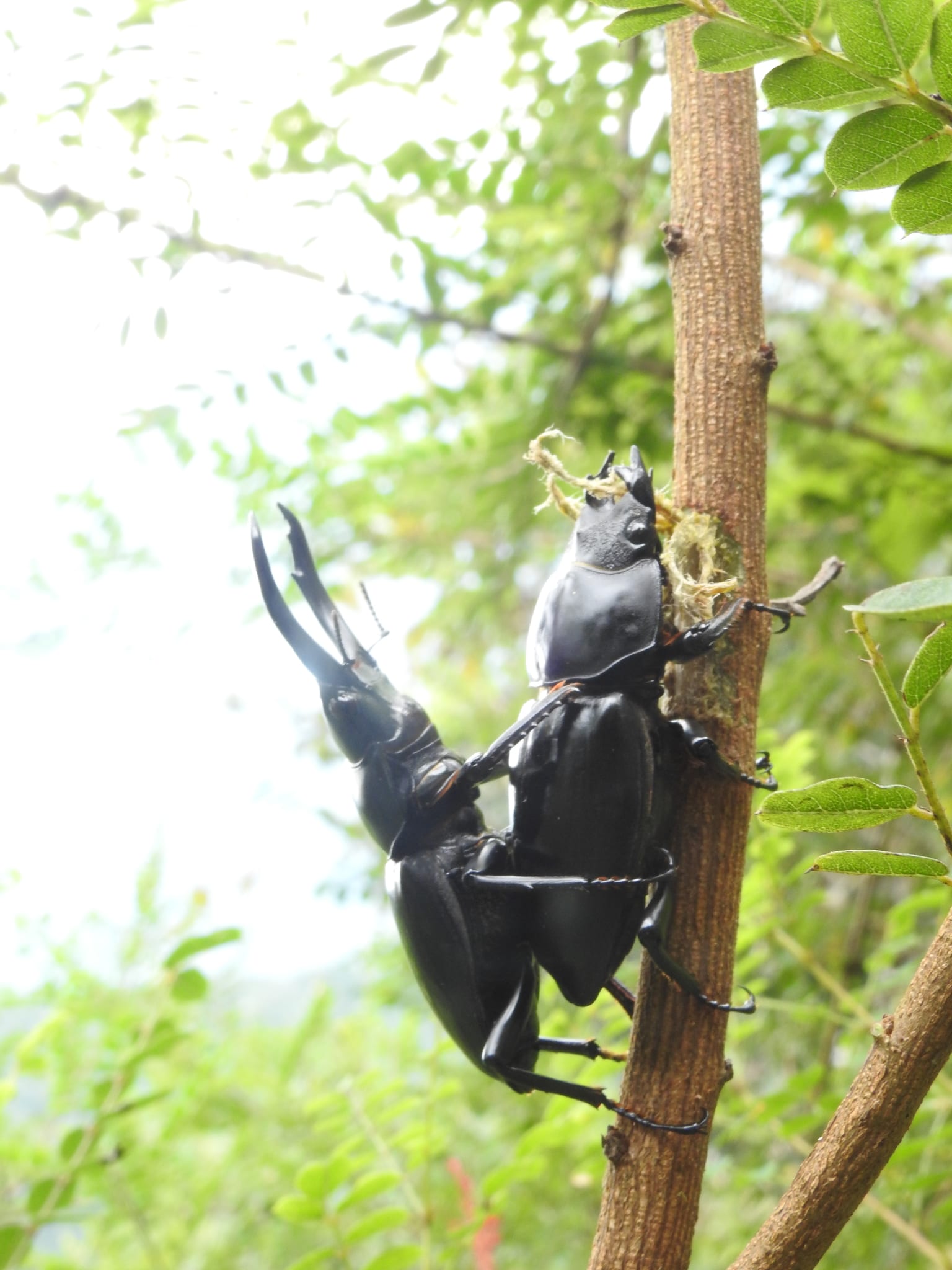
 © H01 (iNaturalist) / CC BY 4.0
Nepal lesser stag beetle
The Nepal lesser stag beetle is one of the largest lesser stag beetles in the world, native to the Himalayan region. Males carry long, straight mandibles paired with a glossy sheen reminiscent of Dorcus stag beetles, giving the species an unmistakably bold presence within its group. Large specimens can approach 80mm, a size that leaves a strong impression on anyone who sees one. Because it naturally lives in cool highland climates, keeping it in Japan's typical room conditions is challenging, and careful temperature control is essential — which is why it's considered a species for experienced keepers. Its striking silhouette and refined coloring make it an appealing target for enthusiasts looking to deepen their knowledge of lesser stag beetles.
View Nepal lesser stag beetle encyclopedia →0% commission on your first sales!Register by September 30, 2026 and your first 2 sales are commission-free!
Breeder Wanted!
List on BreederDirect and sell directly to customers nationwide!
6 Transparency Standards You Can Trust
When listing Insects, Breeders disclose the following. We guarantee transparency on growth stage and breeding unit.
- Life Stage Clarity
- Generation Info
- Real Photos
- Breeding Unit
- Country of Origin
- Body Length (mm)
Browse all 336 breeds
Verified breeders wanted for Insects
Breeders are signing up now ahead of launch. Subscribe to be notified when new listings go live.
Getting alerts is free with a member account. When new listings match your saved search, we'll notify you by email and in-app.
Browse other categories
Verified breeders (preview)
Nepal lesser stag beetle key facts
- Care level
- Advanced
- Lifespan
- Little data
- Size
- Up to nearly 80mm (captive records 78.4mm male, 52.5mm female; wild record 80.0mm male)
- Diet
- Adults take sap or beetle jelly; larvae eat rotten wood, fungus media or fermented substrate
- Temperature & Humidity
- It lives in cool zones, and Japan's summer heat is what makes it difficult. Numeric data are scarce, but keeping it cool and away from heat is essential.
- Breeding & Egg-laying
- Little is published on breeding this species. As a Dorcus, provide a laying log or fermented substrate and keep the set-up cool.
- Cohabitation
- Males fight with their long mandibles, so keep adults singly and together only for mating.
- Lifespan & Rearing Period
- Larval duration and adult lifespan are poorly documented.
- Health & Notes
- Check the scientific name and locality so it is not confused with D. arrowi (arched mandibles) or D. donckieri (deep reddish-brown wing cases). Importing foreign stag and rhinoceros beetles is regulated by the Plant Protection Act and the Invasive Alien Species Act (species-name certificate), with each species needing clearance from the Plant Protection Station, so domestically bred stock is the safe choice. Never release captive beetles.
About Nepal lesser stag beetle
The Nepal lesser stag beetle is one of the world's largest lesser stag beetles, with long straight mandibles and a glossy sheen; large males approach 80mm. A cool-highland species best suited to experienced keepers in Japan. Not subject to CITES.
7 things to know before welcoming a Nepal lesser stag beetle
1Needs Cool Conditions
This species requires careful temperature management, as it comes from cool highland habitats and doesn't tolerate heat well. In Japan's summer room temperatures, keepers should use cooling fans or a cool storage spot to keep it comfortable.
2Best for Experienced Keepers
With limited husbandry records and a tendency to struggle under poor temperature control, this species is considered suited to experienced keepers. First-time keepers may want to build experience with hardier species before taking one on.
3One of the Largest
Adults can reach nearly 80mm, making this one of the largest lesser stag beetles in the world. Captive records show 78.4mm for males and 52.5mm for females, while a wild-caught male has been recorded at 80.0mm.
4Long, Straight Mandibles
Males have long, straight mandibles rather than curved ones, paired with a glossy sheen reminiscent of Dorcus stag beetles for a distinctive look. Mandible length and thickness can vary noticeably between individuals.
5Lifespan Data Is Limited
Because the species is kept relatively rarely, there isn't much consolidated data on its lifespan. After bringing one home, it's worth observing the individual closely and keeping your own care notes.
6A True Highland Species
Having evolved in the cool highlands of the Himalayas, this beetle isn't naturally suited to Japan's lowland climate. Before bringing one home, confirm your temperature management setup and prepare the environment in advance.
7Prepare Before You Bring One Home
Since this is a species for experienced keepers, have a space with temperature control and the right supplies ready before acquiring one. If you have questions, it's a good idea to check with the seller about the beetle's condition and care history beforehand.
Frequently asked questions about Nepal lesser stag beetle
- Q.Can beginners keep this species?
- A.This is generally considered a species for experienced keepers, since it comes from cool highland habitats and can be tricky to manage at typical Japanese room temperatures. It suits keepers who already have beetle-keeping experience and access to proper temperature control.
- Q.How large does it grow?
- A.Large males can reach nearly 80mm, making this one of the biggest lesser stag beetles in the world. Captive records show 78.4mm for males and 52.5mm for females, while a wild male has been recorded at 80.0mm.
- Q.How long does it live?
- A.There isn't much consolidated data on lifespan for this species, since it's kept relatively rarely. After bringing one home, it's a good idea to observe the individual closely and keep your own notes on its condition.
- Q.What should I know about temperature management?
- A.Since this species comes from the cool Himalayan highlands, it can struggle in Japan's warm summer room temperatures. It's important to prepare cooling measures in advance, such as a cooling fan or a naturally cool spot to keep it.
- Q.What does it look like?
- A.Males have long, straight mandibles rather than curved ones, combined with a glossy sheen reminiscent of Dorcus stag beetles. The overall body has a refined luster that gives it a distinctive presence among lesser stag beetles.
Useful tools for Nepal lesser stag beetle care
Learn more about Nepal lesser stag beetle in the encyclopedia
View Nepal lesser stag beetle encyclopedia entry →
Care difficulty, lifespan, size and diet — all basics covered.
More in this category
Can't find the one you're looking for?
Post your wishes for free and breeders with matching animals will contact you with introductions.