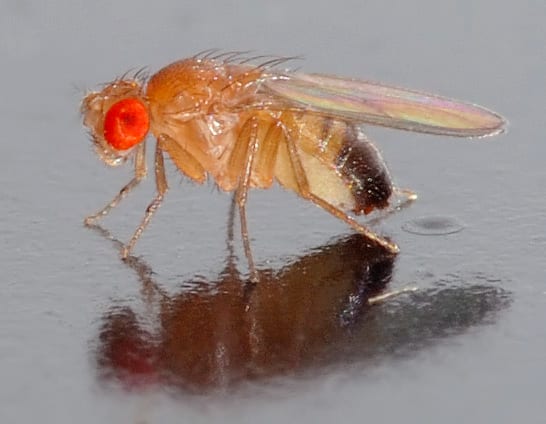
 © André Karwath aka Aka / CC BY-SA 2.5
Common fruit fly
The common fruit fly is a tiny fly, just 2-3mm long, recognizable by its yellowish body and bright red eyes. The flightless strain commonly kept by hobbyists can't take off, so it simply wanders around inside its container, making it easy to observe and handle. Because of its small size, it's a popular live food choice for young mantis nymphs and small frogs that need bite-sized prey. Rated beginner-friendly to keep, it thrives in a simple culture container with breeding medium, making it a practical staple for anyone who wants a steady, low-maintenance feeder insect on hand.
View Common fruit fly encyclopedia →0% commission on your first sales!Register by September 30, 2026 and your first 2 sales are commission-free!
Breeder Wanted!
List on BreederDirect and sell directly to customers nationwide!
6 Transparency Standards You Can Trust
When listing Insects, Breeders disclose the following. We guarantee transparency on growth stage and breeding unit.
- Life Stage Clarity
- Generation Info
- Real Photos
- Breeding Unit
- Country of Origin
- Body Length (mm)
Browse all 336 breeds
Verified breeders wanted for Insects
Breeders are signing up now ahead of launch. Subscribe to be notified when new listings go live.
Getting alerts is free with a member account. When new listings match your saved search, we'll notify you by email and in-app.
Browse other categories
Verified breeders (preview)
Common fruit fly key facts
- Care level
- Beginner-friendly
- Lifespan
- Adults about 2 months (laboratory conditions)
- Size
- 2-3mm long
- Temperature
- 20〜30℃
- Diet
- Yeast (fermenting medium, ripe fruit)
- Temperature & Humidity
- Keep at 20-30C and never below 15C. Development speeds up with warmth; at about 25C the next generation of adults appears roughly two weeks after the parents go in.
- Enclosure
- Use lidded 300-600ml tubs with a hole in the lid covered by tissue, which lets air in but keeps flies in. Add plastic or wood strips on top of the medium as perches; as fermentation softens the medium, flies drown without them.
- Food & Feeding
- A medium can be made from beer and instant mashed potato powder with vinegar and a little dried yeast. Laboratories use yeast, cornmeal and sucrose set with agar. Adding fruit or sugar tends to make cultures smell.
- Breeding & Egg-laying
- Tap 15-30 adults into a fresh tub and larvae appear in the medium within days. At 25C development runs about 1 day as an egg, 4 as a larva and 5 as a pupa. Start a new tub every one to two weeks and keep several going so the supply never breaks.
- Lifespan & Rearing Period
- Adults live about two months. The medium dries and runs out in one to two weeks; if the flies will not be fed off soon, add a little fresh medium to keep them alive longer.
- Health & Notes
- Keep lids tight so none escape. Seal spent medium and surplus flies before disposal and never dump them outdoors. A medium that is too wet or grows mould will smell, so retire that tub early.
About Common fruit fly
A tiny (2-3mm), flightless strain of the common fruit fly, easily cultured in a simple container as beginner-friendly live food for young mantises and small frogs.
7 things to know before welcoming a Common fruit fly
1Tiny at Just 2-3mm
Adults measure just 2-3mm, making this one of the smallest flies commonly kept as feeder insects, with a yellowish body and bright red eyes. That tiny size makes them an easy catch for young mantis nymphs and small frogs that can't handle larger prey.
2A Flightless Strain
The strain typically available has underdeveloped wings and cannot fly, so opening the container lid doesn't risk a swarm taking off. Even if some escape, they can only crawl, which makes handling indoors considerably less stressful.
3Adults Live About 2 Months
Lab-reared records put the adult lifespan at around two months. Since you'll want a steady supply of live food, it helps to think of care as running an ongoing breeding cycle rather than keeping a single batch alive.
4Beginner-Friendly to Keep
This species is rated beginner-friendly and doesn't require specialized equipment to get started. That said, keeping a reliable feeder colony going still means staying on top of daily container upkeep.
5Needs a Culture Container and Medium
The basic setup is a small container holding a culture medium that doubles as food for the flies. Choose a container that seals well, and aim for a balance of ventilation and humidity to keep the culture healthy.
6Temperature Affects Breeding Pace
Room temperature has a noticeable effect on how quickly the flies breed and turn over generations, so keep an eye on where you place the container. Avoid spots that swing to extreme heat or cold, and aim for a stable, moderate temperature instead.
7Match Prey Size to Your Feeder
Because these flies are so small, they suit predators with tiny mouths, such as young mantis nymphs and small frogs. As your animal grows, watch for the point where it's ready to move on to larger live food.
Frequently asked questions about Common fruit fly
- Q.How big is the common fruit fly?
- A.Adults are only about 2-3mm long, making it one of the smallest flies kept as feeder insects. Its yellowish body and bright red eyes are its most recognizable features, and its tiny size suits predators with small mouths.
- Q.Can they fly away and escape?
- A.The strain typically sold has underdeveloped wings and can't actually fly. Even if some get out of the container, they can only crawl, so the risk of them flying off is low.
- Q.How long do adults live?
- A.Lab-reared records put the adult lifespan at around two months. To keep a steady supply as live food, you'll need to maintain an ongoing breeding cycle rather than rely on a single batch.
- Q.What animals are they good food for?
- A.They're well suited as live food for young mantis nymphs, small frogs, and other animals with mouths too small for larger prey. Their 2-3mm size matches what these smaller predators can comfortably eat.
- Q.Is this species hard to keep?
- A.It's rated beginner-friendly to keep. With a culture container, breeding medium, and attention to temperature, it's manageable without any specialized equipment.
Useful tools for Common fruit fly care
Learn more about Common fruit fly in the encyclopedia
View Common fruit fly encyclopedia entry →
Care difficulty, lifespan, size and diet — all basics covered.
More in this category
Can't find the one you're looking for?
Post your wishes for free and breeders with matching animals will contact you with introductions.