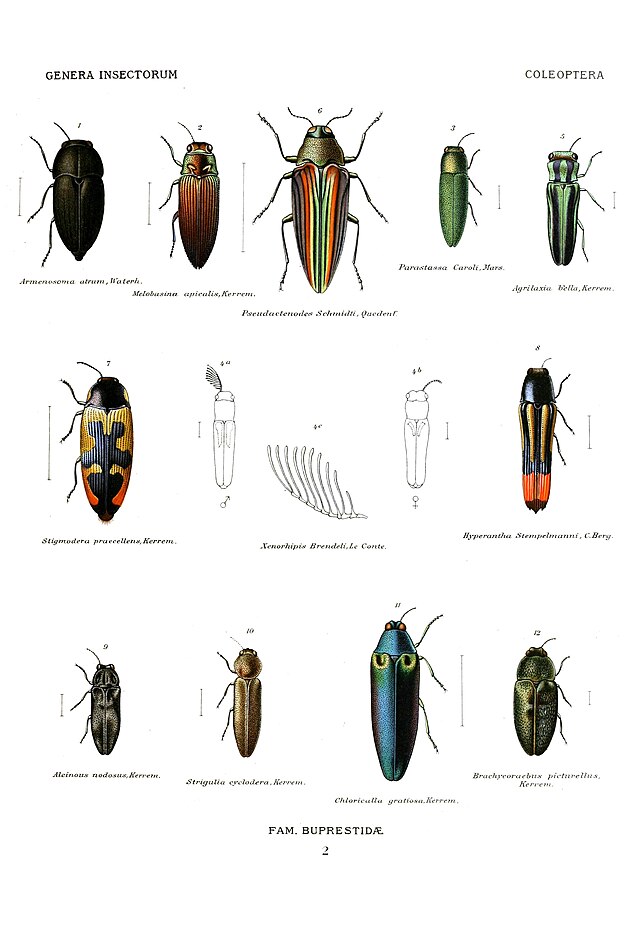
Japanese Jewel Beetle
The Japanese jewel beetle is famous for wing cases that shimmer green and coppery-gold depending on the angle of light. Its iridescent shell was historically used to decorate the Tamamushi Shrine in Nara, a piece still admired today. Adults feed on the leaves of hackberry and similar trees and are most active on sunny days, darting between branches. Sightings have become less common in urban areas in recent years, and keeping them well requires attention to temperature, humidity, and a steady supply of the right leaves — this makes the species better suited to experienced keepers.
View Japanese Jewel Beetle encyclopedia →0% commission on your first sales!Register by September 30, 2026 and your first 2 sales are commission-free!
Breeder Wanted!
List on BreederDirect and sell directly to customers nationwide!
6 Transparency Standards You Can Trust
When listing Insects, Breeders disclose the following. We guarantee transparency on growth stage and breeding unit.
- Life Stage Clarity
- Generation Info
- Real Photos
- Breeding Unit
- Country of Origin
- Body Length (mm)
Browse all 296 breeds
Verified breeders wanted for Insects
Breeders are signing up now ahead of launch. Subscribe to be notified when new listings go live.
Getting alerts is free with a member account. When new listings match your saved search, we'll notify you by email and in-app.
Browse other categories
Verified breeders (preview)
Japanese Jewel Beetle key facts
- Care level
- Advanced
- Lifespan
- Adult 1-2 months / Larva 2-3 years
- Size
- 30-41mm
- Temperature
- 22〜28℃
- Diet
- Hackberry leaves (adult) / Dead wood (larva)
- Enclosure
- Mesh cage. Add hackberry branches
- Food
- Fresh hackberry leaves essential. Hard to substitute
- Larva Care
- Lay eggs in dead hackberry. Larval stage 2-3 years long
- Notes
- Active during day. High temps shorten lifespan
About Japanese Jewel Beetle
An overview of the Japanese jewel beetle's iridescent beauty, temperament, and care basics — plus key points to know before bringing one home and answers to common questions.
7 things to know before welcoming a Japanese Jewel Beetle
1Best Suited to Experienced Keepers
The Japanese jewel beetle calls for careful temperature and humidity control along with a reliable food source, placing it in the advanced-keeper category. It's best approached by those with prior insect-keeping experience.
2Adults Have a Short Lifespan
Adult beetles typically live only one to two months, while the larval stage lasts a much longer two to three years. Keep in mind that the time you can actually observe the adult form is fairly brief.
3Feeds on Hackberry Leaves
Adults feed mainly on hackberry (Enoki) leaves. Before bringing one home, make sure you can consistently provide a source of fresh leaves.
4Adult Body Size
Adults grow to roughly 30–41mm, a fairly substantial size among Japanese beetles that makes the iridescent wing cases especially striking.
5Sun-Loving Behavior
They're most active flying about on sunny days. In captivity, provide a spot with adequate light and warmth to match this natural preference.
6Declining Urban Sightings
Urban sightings are said to have declined in recent years, likely linked to changes in habitat. When acquiring one, take time to carefully check the individual's condition.
7CITES Status
The Japanese jewel beetle is not listed under CITES.
Frequently asked questions about Japanese Jewel Beetle
- Q.Is it safe to handle a Japanese jewel beetle?
- A.They aren't known to be harmful to humans, but beetles have delicate bodies, so avoid squeezing or dropping them. Handle them slowly and gently if you place one on your hand.
- Q.Will the wing cases keep their shine in captivity?
- A.The shimmer comes from structural coloration in the wing cases and will remain as long as the beetle stays healthy. Keeping the enclosure clean with proper temperature and humidity helps preserve that brilliance.
- Q.Can they be raised on leaves other than hackberry?
- A.Since adults feed mainly on hackberry leaves, suitable substitutes are limited. It's important to confirm you can secure a steady supply of hackberry leaves before bringing one home.
- Q.Does care differ between the larval and adult stages?
- A.Since the larval stage spans two to three years while the adult stage lasts just one to two months, care priorities shift with each life stage. Adjust the environment to suit whichever stage the beetle is in.
- Q.Is this a good choice for a first-time insect keeper?
- A.Since the Japanese jewel beetle is considered suited to experienced keepers, it's not the best pick for someone new to insect keeping. Building experience with easier species first is recommended.
Useful tools for Japanese Jewel Beetle care
Learn more about Japanese Jewel Beetle in the encyclopedia
View Japanese Jewel Beetle encyclopedia entry →
Care difficulty, lifespan, size and diet — all basics covered.
More in this category
Can't find the one you're looking for?
Post your wishes for free and breeders with matching animals will contact you with introductions.