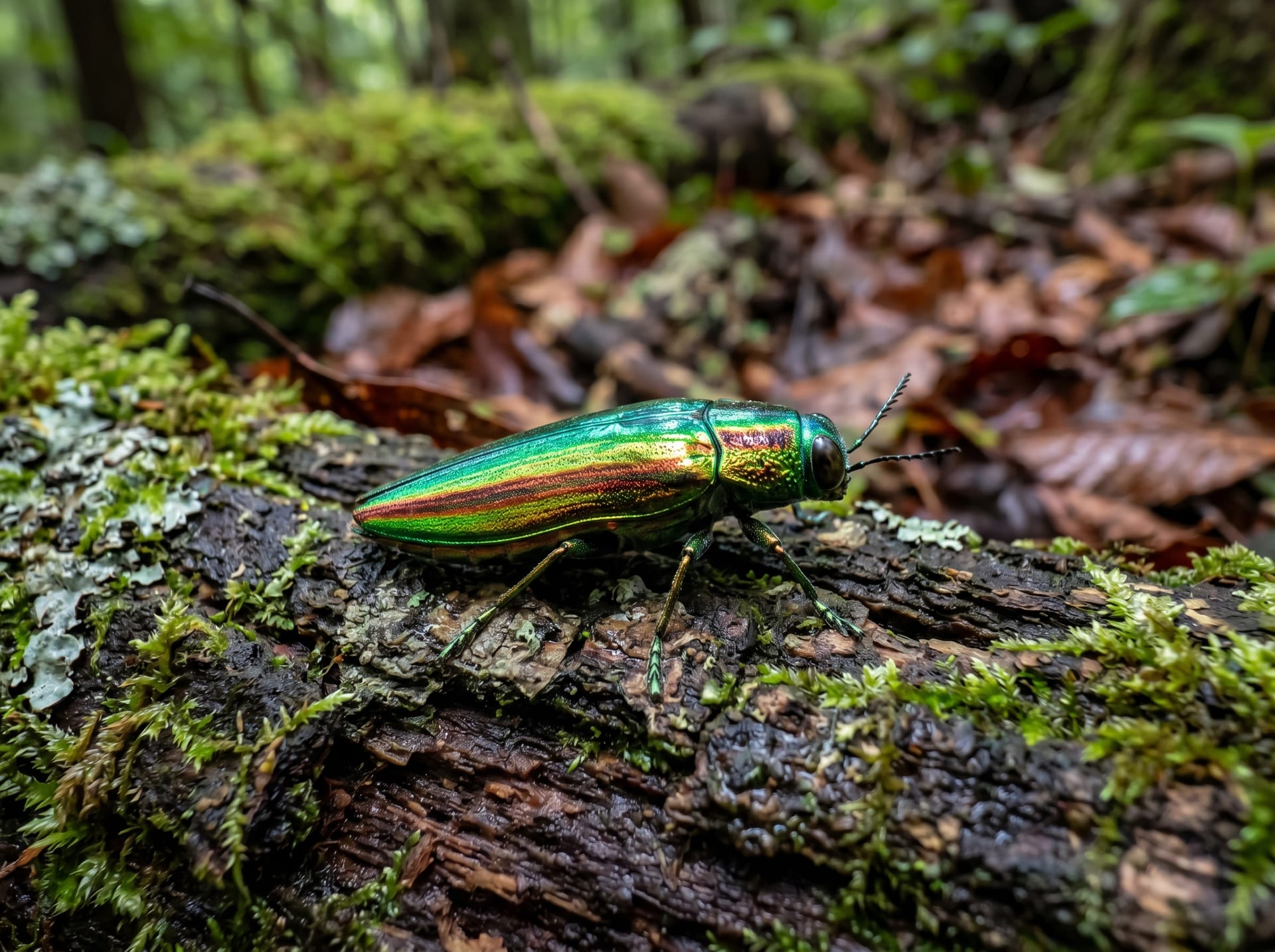
AI-generated image
Japanese Jewel Beetle
AdvancedChrysochroa fulgidissima
Japanese beetle with iridescent rainbow wings. Famous for ancient 'Tamamushi Shrine' decoration. Adults eat hackberry leaves. Declining in urban areas.
Difficulty
Advanced
Temperature
22〜28℃
Lifespan
Adult 1-2 months / Larva 2-3 years
Size
30-41mm
Humidity
50〜70%
Diet
Hackberry leaves (adult) / Dead wood (larva)
About
The jewel beetle (Chrysochroa fulgidissima) is a beautiful Japanese beetle of the family Buprestidae with iridescent wings. Its metallic sheen shifts between green and red depending on the angle of light, and it has long been used in decoration, famously in the Tamamushi Shrine at Horyu-ji Temple. Adults appear in summer and feed on leaves of trees such as hackberry and zelkova. In recent years urban habitat loss has made it less commonly seen. In captivity, securing the host tree leaves is important, with a bright, warm environment provided. Its vivid color persists even in dried specimens, making it a prized, beautiful insect native to Japan.
Source: Wikipedia (CC BY-SA 4.0)
Lifespan of the Japanese Jewel Beetle
The Japanese Jewel Beetle lives Adult 1-2 months / Larva 2-3 years.
Size of the Japanese Jewel Beetle
The Japanese Jewel Beetle grows to 30-41mm.
Temperature & humidity for the Japanese Jewel Beetle
The ideal temperature for the Japanese Jewel Beetle is 22〜28℃.
Basic Info
Origin
Japan and East Asia
Lifespan
Adult 1-2 months / Larva 2-3 years
Size
30-41mm
References & Sources
Edited & verified by: BreederDirect editorial team
The taxonomic, regulatory, and husbandry data on this page are compiled and verified against the authoritative primary sources below.
Primary sources
Taxonomy & Authority
Accepted name: Chrysochroa fulgidissima (Schönherr, 1817)
Synonyms: Buprestis elegans Thunberg, 1789, Buprestis fulgida Olivier, 1790, Buprestis fulgidissima Schönherr, 1817, Chrysochroa coeruleocephala Motschulsky, 1861, Chrysochroa elegans (Thunberg, 1789), Chrysochroa fulgida (Olivier, 1790)
Authority databases: GBIF
Nomenclature follows global taxonomic authority databases.
Regulations & Conservation Status
Not CITES-listed
Japanese jewel beetle Chrysochroa fulgidissima (Buprestidae). Not listed on CITES.
Sources: CITES Appendix (checklist.cites.org)
Regulations may change. Always verify the latest information with the relevant authorities.
Japanese Jewel Beetle Listings
Loading latest listingsFind listings for this species