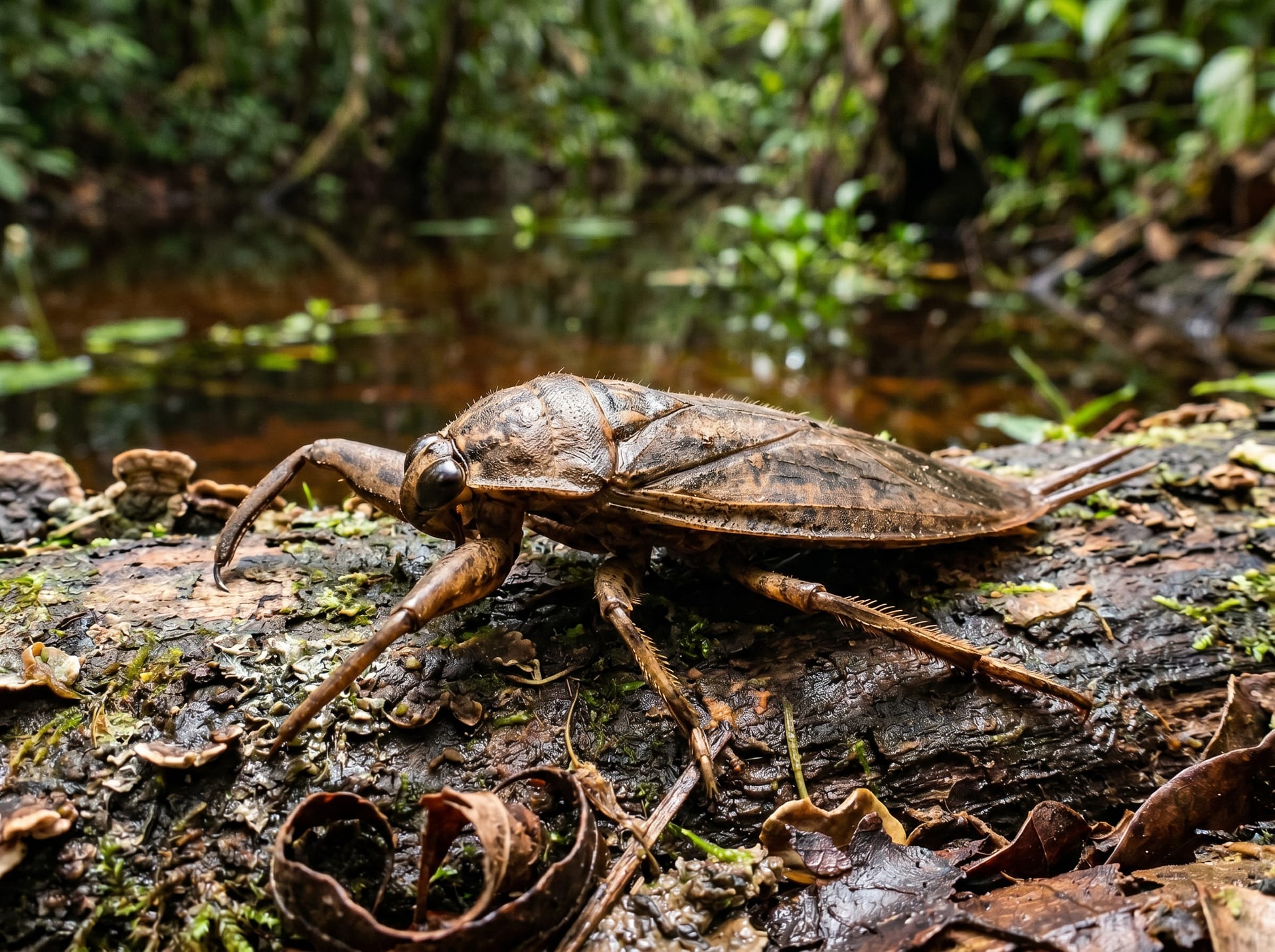
AI-generated image
Giant Water Bug
AdvancedLethocerus deyrollei
Japan's largest aquatic insect at ~65mm. Captures prey with front legs, injecting digestive fluid. Classified as Vulnerable. Some breeders contribute to conservation through captive breeding.
Difficulty
Advanced
Temperature
18〜28℃
Lifespan
1-3 years
Size
55-68mm
Humidity
60〜90%
Diet
Live prey: medaka, loaches, tadpoles
About
The giant water bug (Lethocerus deyrollei) is the largest aquatic insect in Japan, reaching about 65 mm. A powerful predator, it seizes fish and frogs with raptorial forelegs and injects digestive fluids to consume their body fluids. In Japan it is listed as Vulnerable due to habitat loss, and some breeders work on captive propagation for conservation. Husbandry uses an aquarium with sufficient water depth, plus footing and emergent structures for breathing. Live prey such as small fish is offered. Managing water quality and temperature is important, and overcrowding is avoided to prevent cannibalism. It is a valuable aquatic insect emblematic of Japans countryside wetlands.
Source: Wikipedia (CC BY-SA 4.0)
Lifespan of the Giant Water Bug
The Giant Water Bug lives 1-3 years.
Size of the Giant Water Bug
The Giant Water Bug grows to 55-68mm.
Temperature & humidity for the Giant Water Bug
The ideal temperature for the Giant Water Bug is 18〜28℃.
Basic Info
Origin
Japan and East Asia
Lifespan
1-3 years
Size
55-68mm
References & Sources
Edited & verified by: BreederDirect editorial team
The taxonomic, regulatory, and husbandry data on this page are compiled and verified against the authoritative primary sources below.
Taxonomy & Authority
Accepted name: Lethocerus deyrollei (Vuillefroy, 1864)
Synonyms: Lethocerus deyrollei, Belostoma aberrans Mayr, 1871, Lethocerus deyrollei (Vuillefroy, 1864)
Authority databases: GBIF
Nomenclature follows global taxonomic authority databases.
Regulations & Conservation Status
Domestic law: The Japanese giant water bug (Lethocerus deyrollei) was designated a Class II Nationally Rare Species of Wild Fauna and Flora under Japan's Act on Conservation of Endangered Species of Wild Fauna and Flora on 10 February 2020. Capture and transfer for the purpose of sale or distribution are prohibited (the restriction applies to wild individuals; listed as Vulnerable (VU) on the Ministry of the Environment Red List). Not listed under CITES.
Sources: Ministry of the Environment Domestic Rare Wildlife Species List (Law for the Conservation of Endangered Species of Wild Fauna and Flora) / CITES Appendix (checklist.cites.org)
Regulations may change. Always verify the latest information with the relevant authorities.
Giant Water Bug Listings
Loading latest listingsFind listings for this species