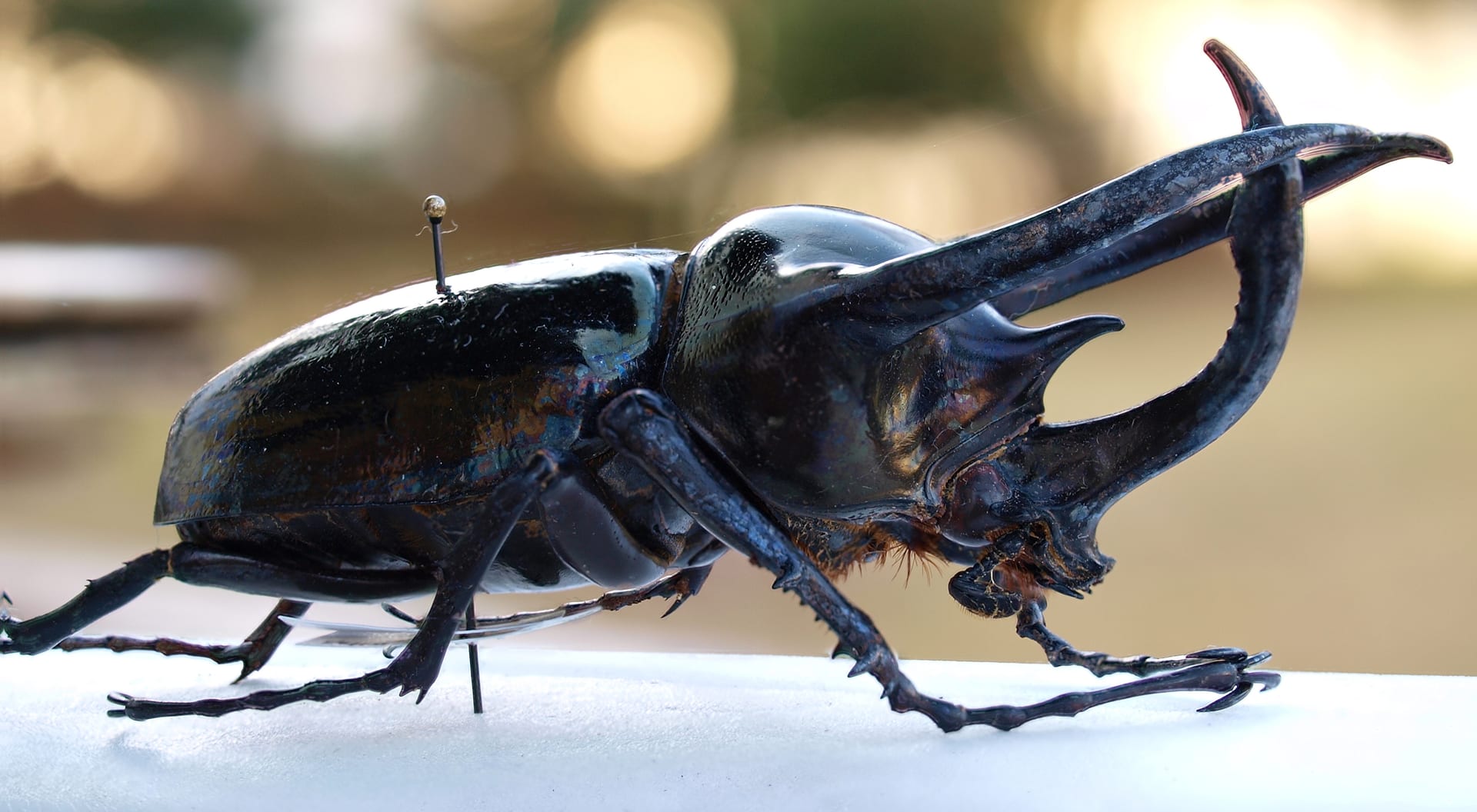
 © JohnSka / CC BY-SA 3.0
Atlas Beetle (Malay)
The Malay Atlas Beetle is a subspecies of the Atlas beetle native to the Malay Peninsula, Sumatra, and Borneo. Males carry three horns on a striking greenish-bronze body, and while somewhat smaller than the Caucasus beetle, they make up for it with a feisty, spirited temperament. Long popular as a gateway species into foreign rhinoceros beetle keeping, it is easy to find and straightforward to care for, making it a great first choice for beginners drawn to bold, three-horned beetles.
View Atlas Beetle (Malay) encyclopedia →0% commission on your first sales!Register by September 30, 2026 and your first 2 sales are commission-free!
Breeder Wanted!
List on BreederDirect and sell directly to customers nationwide!
6 Transparency Standards You Can Trust
When listing Insects, Breeders disclose the following. We guarantee transparency on growth stage and breeding unit.
- Life Stage Clarity
- Generation Info
- Real Photos
- Breeding Unit
- Country of Origin
- Body Length (mm)
Browse all 296 breeds
Verified breeders wanted for Insects
Breeders are signing up now ahead of launch. Subscribe to be notified when new listings go live.
Getting alerts is free with a member account. When new listings match your saved search, we'll notify you by email and in-app.
Browse other categories
Verified breeders (preview)
About Atlas Beetle (Malay)
A three-horned, greenish-bronze subspecies of Atlas beetle from the Malay Peninsula, Sumatra, and Borneo. Smaller than the Caucasus beetle but feistier, and a popular starter species for foreign rhinoceros beetle keeping.
7 things to know before welcoming a Atlas Beetle (Malay)
1A Feisty Temperament
Compared to the Caucasus beetle, Malay Atlas Beetles have a more aggressive temperament, and housing multiple beetles together can lead to fights that damage legs or horns. It's best to keep them singly, or provide plenty of hiding spots and space if housed together.
2Adults Have a Short Lifespan
Adults typically live only 5 to 6 months, much shorter than the 1 to 2 years spent as larvae. Keep this shorter adult lifespan in mind when planning how you'll enjoy observing and caring for your beetle.
3Size Varies by Individual
Body size varies widely — males range from 60 to 120mm and females from 25 to 60mm across the species as a whole, with Malay-origin males reaching up to about 100mm. The final size of your beetle won't be clear until it finishes growing.
4Three Horns Are the Highlight
Males sport three horns — one on the head and two on the thorax — paired with a greenish-bronze body for a striking, powerful look. Because the horns are delicate, be careful not to knock them against tank decorations or during handling.
5Enclosure and Substrate
Adults do best with a reasonably deep layer of insect substrate, sturdy footing, and a climbing branch to prevent them from getting stuck on their backs. If raising larvae, use fermented substrate and replace it periodically to keep conditions clean.
6Feeding Is Simple
Adults thrive on commercial insect jelly, especially varieties with a sweet scent similar to natural tree sap. Replace the jelly regularly before it dries out or spoils so food is always available.
7A Great Beginner Species
This species is considered beginner-friendly, and beetles can be raised without major issues as long as basic temperature control and feeding are kept up. It has long served as an entry point for those trying foreign rhinoceros beetles for the first time.
Frequently asked questions about Atlas Beetle (Malay)
- Q.How is it different from the Caucasus beetle?
- A.The Malay Atlas Beetle is smaller than the Caucasus beetle but tends to have a feistier temperament. Both share the three-horned body plan, but they differ in native range, body color, and typical behavior.
- Q.Is this a good first foreign rhinoceros beetle for beginners?
- A.Yes, it's rated as beginner-friendly and can be kept successfully with basic temperature management and feeding. It's widely available as an entry species, so care information is easy to find.
- Q.How long do adults live?
- A.Adults typically live around 5 to 6 months. The larval stage lasts much longer, about 1 to 2 years, so raising one from a larva takes considerable time before it reaches adulthood.
- Q.Can multiple beetles be kept together without fighting?
- A.Because of their feisty temperament, keeping multiple beetles in the same enclosure can lead to fights, not just between males but sometimes involving females too. Single housing is generally recommended.
- Q.How do males and females differ in appearance?
- A.Males have three horns across the head and thorax, while females lack horns and are smaller overall. Across the species, females run about 25 to 60mm, noticeably smaller than males at 60 to 120mm.
Useful tools for Atlas Beetle (Malay) care
Learn more about Atlas Beetle (Malay) in the encyclopedia
View Atlas Beetle (Malay) encyclopedia entry →
Care difficulty, lifespan, size and diet — all basics covered.
Atlas Beetle (Malay) related articles
Imported Beetle Comparison Guide|Breeding and Appeal of Caucasus Beetles, Atlas Beetles, and Giant Beetles
Compare the differences between Caucasus and Atlas beetles (horn protrusions, body color, size, price, larval period) in a table, and explain how to distinguish them and which to choose. Also introduces difficulty levels and larval rearing methods for large imported beetles, including Elephant beetles.
How to Care for Atlas Beetles | Lifespan, Larval Period, Adult Care, and Breeding Guide
A comprehensive guide to keeping Atlas beetles, Southeast Asian large rhinoceros beetles. Covers whether care is difficult (WD individuals, tarsal claw loss, emergence timing mismatches), why they're inexpensive, adult lifespan and larval duration, hand-pairing and egg-laying setup, and tips for mat changes and temperature management.
Atlas Beetle Care Guide | How to Raise the Southeast Asian Rhinoceros Beetle with Three Horns
Guide to raising the large Southeast Asian rhinoceros beetle "Atlas Beetle (Chalcosoma atlas)". Explains the differences from Caucasus Beetles, fermented substrate management for larvae, temperature and humidity settings, adult lifespan and tips for activation, and detailed larval management techniques to maximize size.
More in this category
Can't find the one you're looking for?
Post your wishes for free and breeders with matching animals will contact you with introductions.