Atlas Beetle Care Guide | How to Raise the Southeast Asian Rhinoceros Beetle with Three Horns
Guide to raising the large Southeast Asian rhinoceros beetle "Atlas Beetle (Chalcosoma atlas)". Explains the differences from Caucasus Beetles, fermented substrate management for larvae, temperature and humidity settings, adult lifespan and tips for activation, and detailed larval management techniques to maximize size.
Key Takeaways
Guide to raising the large Southeast Asian rhinoceros beetle "Atlas Beetle (Chalcosoma atlas)". Explains the differences from Caucasus Beetles, fermented substrate management for larvae, temperature and humidity settings, adult lifespan and tips for activation, and detailed larval management techniques to maximize size.
What Kind of Insect is the Atlas Beetle?
✍️
BreederDirect Editorial
The BreederDirect editorial team specializes in care information for animals, covering veterinary care and breeding to deliver beginner-friendly guides.
Find Insects on BreederDirect
Buy directly from verified breeders
Browse Related Listings
Find Insects listings related to this article on BreederDirect. Buy directly from verified breeders.
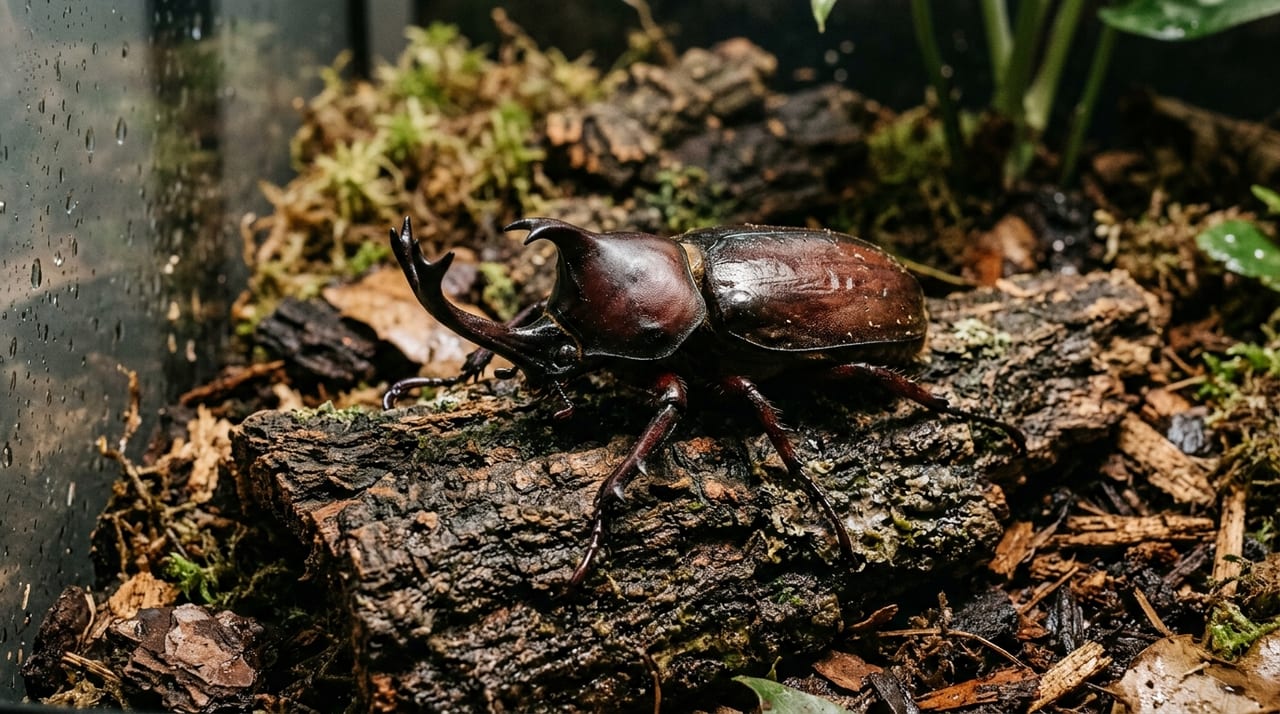
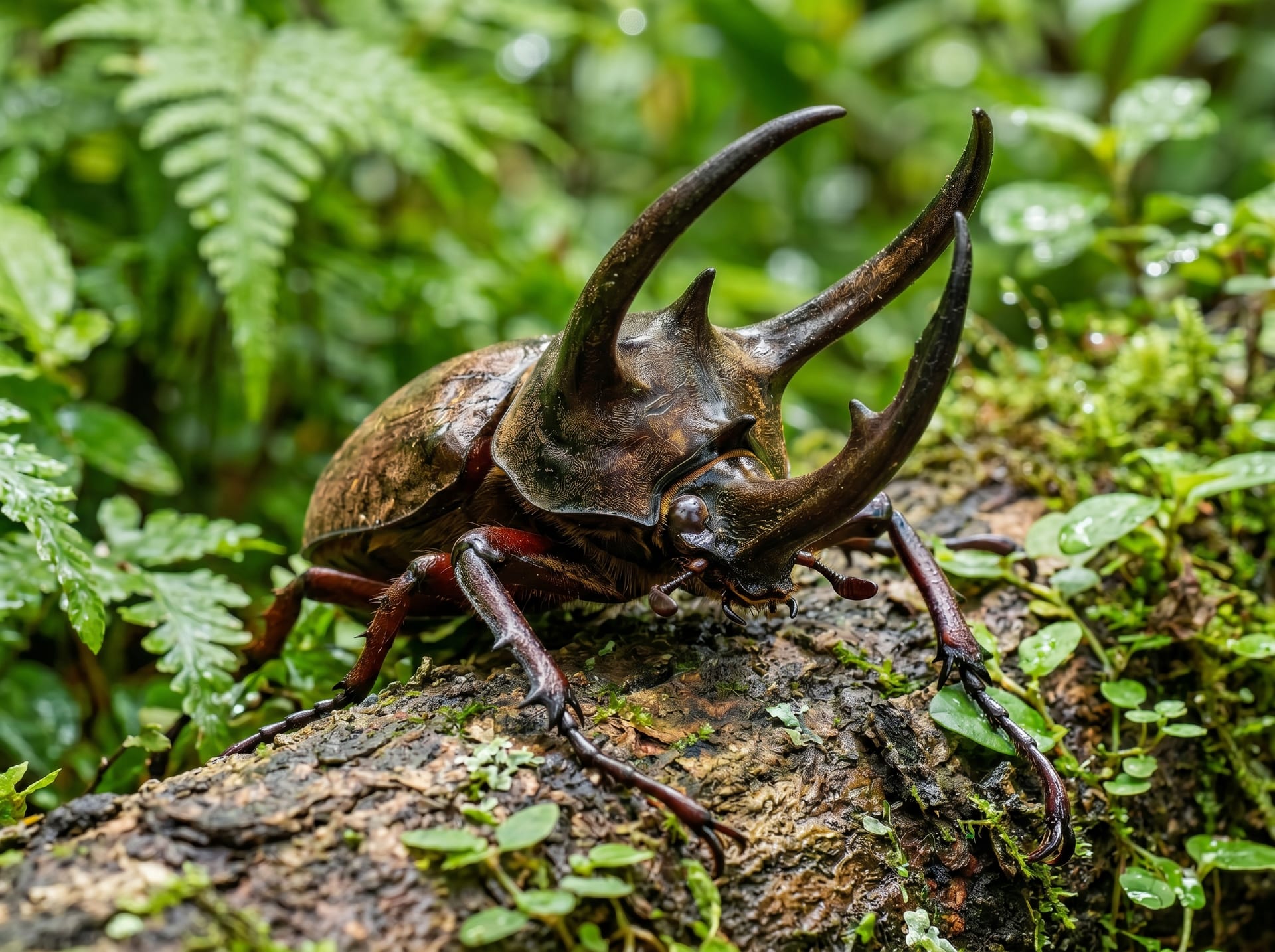
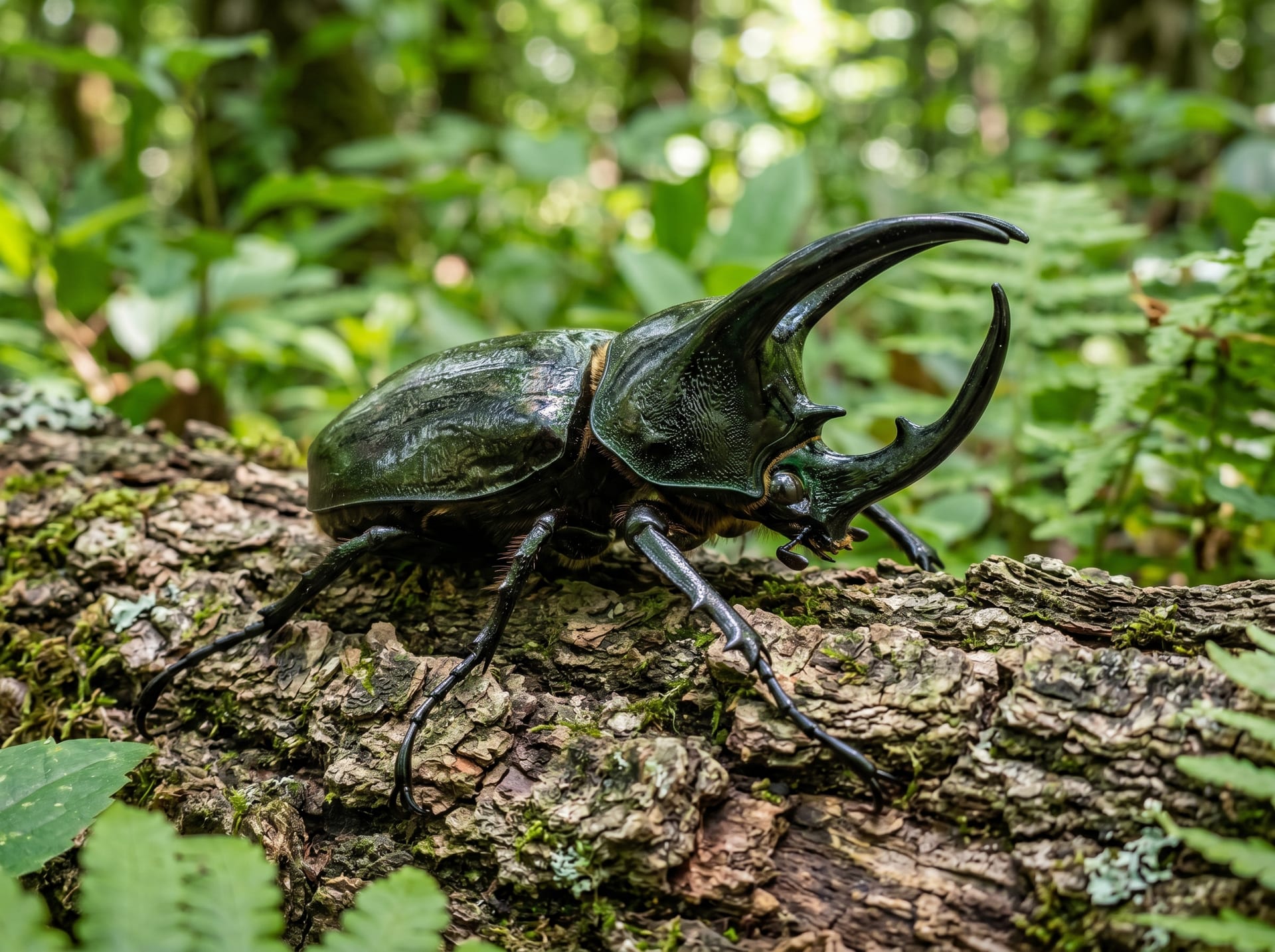
The Atlas Beetle (Chalcosoma atlas) is a large rhinoceros beetle widely distributed throughout Southeast Asia, including Indonesia, Malaysia, Thailand, and Sumatra. Its most distinctive feature is possessing three curved long horns—one on the head and two on the thorax (pronotum)—and its majestic appearance appeals not only to beetle enthusiasts but also to beginners raising foreign rhinoceros beetles for the first time.
Adult males reach approximately 60–95 mm in body length, depending on origin and individual variation. While smaller than the closely related Caucasus Beetle (Chalcosoma chiron), specimens with all three horns well-developed have an undeniable powerful presence. Due to high availability and relatively affordable pricing, it is recommended as an "introductory species for raising foreign rhinoceros beetles," even for beginners.
Differences from Caucasus Beetles and How to Choose
The "Caucasus Beetle," a close relative, is often confused with the Atlas Beetle, but they differ in breeding difficulty, size, and availability.
Item
Atlas Beetle
Caucasus Beetle
Maximum body length (male)
~90–95 mm
~120–130 mm
Larval period
10–14 months
12–18 months
Adult lifespan
2–4 months
2–4 months
Required breeding space
Somewhat small
Large
Availability/Price
Relatively affordable
Somewhat expensive
Horn characteristics
3 (fine and delicate)
3 (thick and long)
The Atlas Beetle requires less substrate and smaller container volumes than the Caucasus Beetle, and is more affordable, making it ideal as a first step in gaining experience with large foreign rhinoceros beetles. Conversely, if you aim to raise larger beetles, the classic route is to challenge yourself with Caucasus Beetles once you've gained breeding experience.
Key Points for Larval Care
The larval period lasts approximately 10–14 months, and with proper environmental conditions, you can rear large specimens.
Choosing Fermented Substrate
Use highly fermented "fully matured beetle substrate" or "tertiary fermented substrate." Commercial fully matured substrate for foreign rhinoceros beetles (such as Pro Jelly Beetle Substrate or black soil-based fully matured substrate) is suitable. The moisture level should be approximately "firm when squeezed tightly in your hand, but crumbling slightly when pressed lightly with your finger." Substrate that is too dry will inhibit larval growth, while excessive moisture can lead to decomposition and fruit fly infestations.
Bottle and Container Management
From first instar through second instar, keep larvae individually in 500 mL to 2 L clear bottles. By the third instar, body weight reaches 15–25 g, so transition to larger 5–10 L bottles or containers. Substrate changes should be done roughly every 1–2 months. Once a pupation cell (oval-shaped chamber) is visible, cease substrate changes and keep the container stationary. During substrate changes, observe the larva's coloration and shape; yellowing indicates pre-pupation.
Temperature and Humidity Management
The ideal temperature range is 20–26°C. Temperatures exceeding 30°C can damage larvae and pupae. During summer, air conditioning is essential; if using cooling packs or coolers as alternatives, ensure temperature fluctuations remain minimal. In winter, activity drops significantly below 15°C, so consider heating mats or an incubator for warmth. Maintain humidity at 60–70%.
Pupa and Emergence Management
The pupal period lasts approximately 2–3 months. If the pupation cell is damaged, assist emergence using toilet paper tubes or commercial artificial pupation chambers. When using artificial pupation chambers, ensure the pupa is oriented correctly (dorsal side up).
Immediately after emergence, the wings are white and soft; keep the container stationary for 2–3 weeks until the exoskeleton hardens. Unnecessary handling during this period risks wing deformation or leg loss. For 2–4 weeks after emergence, there is a dormancy period before "post-emergence feeding" begins, so provide jelly and wait for natural feeding to commence.
Adult Care and Feeding
Adult lifespans are relatively short at 2–4 months, so providing high-quality, stress-free conditions is essential.
Cage and Layout
A 40–50 cm plastic breeding container is suitable. Choose a lid with a locking mechanism. Atlas Beetles are strong and can easily lift lightweight lids to escape. Furnish the container with climbing wood, cork bark, and insect substrate; place plenty of footholds so beetles can right themselves if they flip over.
Feeding
The staple diet is insect jelly (high-protein type, 16–18 g), replaced with fresh jelly daily. Bananas and pineapples are also enjoyed but spoil quickly and require careful hygiene management. Using a dedicated jelly holder prevents the beetle from tipping the jelly over.
Temperature and Multi-specimen Management
The ideal adult temperature is 25–28°C. Males kept together in the same container will fight with their horns and injure each other, so always house them individually. Even when housing males and females together for breeding purposes, monitor carefully to prevent injury to the female.
Breeding Procedure (Mating and Egg-Laying Setup)
Once 2–3 weeks have passed since post-emergence feeding begins and adults are actively consuming jelly, breeding season is at hand.
Mating (Pairing)
The hand-pairing method is most reliable. Place the male on top of the female's back, and once mating behavior is confirmed, maintain the position for approximately 10–20 minutes. For greater certainty, repeat the process several times on subsequent days. Cohabitation methods risk male injury to females, so avoid prolonged confinement.
Egg-Laying Setup
For the egg-laying container (a 25–30 L large container is recommended), pack fully matured fermented substrate firmly to a depth of 30–40 cm, with the top 5–10 cm loosely bedded. Place the female alone in the container and maintain conditions at approximately 25°C in darkness. Remove the female 3–4 weeks after egg-laying begins, and harvest larvae one month later by breaking down the substrate.
First instar larvae are small and fragile, so immediately after collection, transfer them to 500 mL clear bottles and initially provide primary fermented substrate with lower fermentation levels.
The Atlas Beetle is an ideal introductory species for raising foreign rhinoceros beetles, combining the distinctive three-horned form, the rarity of Southeast Asian origin, and ease of availability. As long as you maintain proper temperature control and perform regular substrate changes, even beginners can successfully aim to rear large specimens to emergence. If purchasing directly from a breeder, you can also verify lineage and origin information, so select a trustworthy specimen and challenge yourself to breeding.