Five-Horned Beetle (Eupatorus gracilicornis) Care Guide | Breeding and Larval Management of Southeast Asian Five-Horned Beetles
A comprehensive guide to caring for the Five-Horned Beetle (Eupatorus gracilicornis), characterized by three horns on the head and two on the thorax, totaling five distinctive horn protrusions. Essential care topics for this tropical species include temperature management (maintaining 22–27°C), breeding setup using high-fermentation substrate, larval rearing in fermentation medium, and preventing emergence defects. This practical guide is suitable for intermediate-level hobbyists keeping exotic beetles and covers the beautiful five-horned species in detail.
Key Takeaways
A comprehensive guide to caring for the Five-Horned Beetle (Eupatorus gracilicornis), characterized by three horns on the head and two on the thorax, totaling five distinctive horn protrusions. Essential care topics for this tropical species include temperature management (maintaining 22–27°C), breeding setup using high-fermentation substrate, larval rearing in fermentation medium, and preventing emergence defects. This practical guide is suitable for intermediate-level hobbyists keeping exotic beetles and covers the beautiful five-horned species in detail.
Related Species
What is the Five-Horned Beetle?
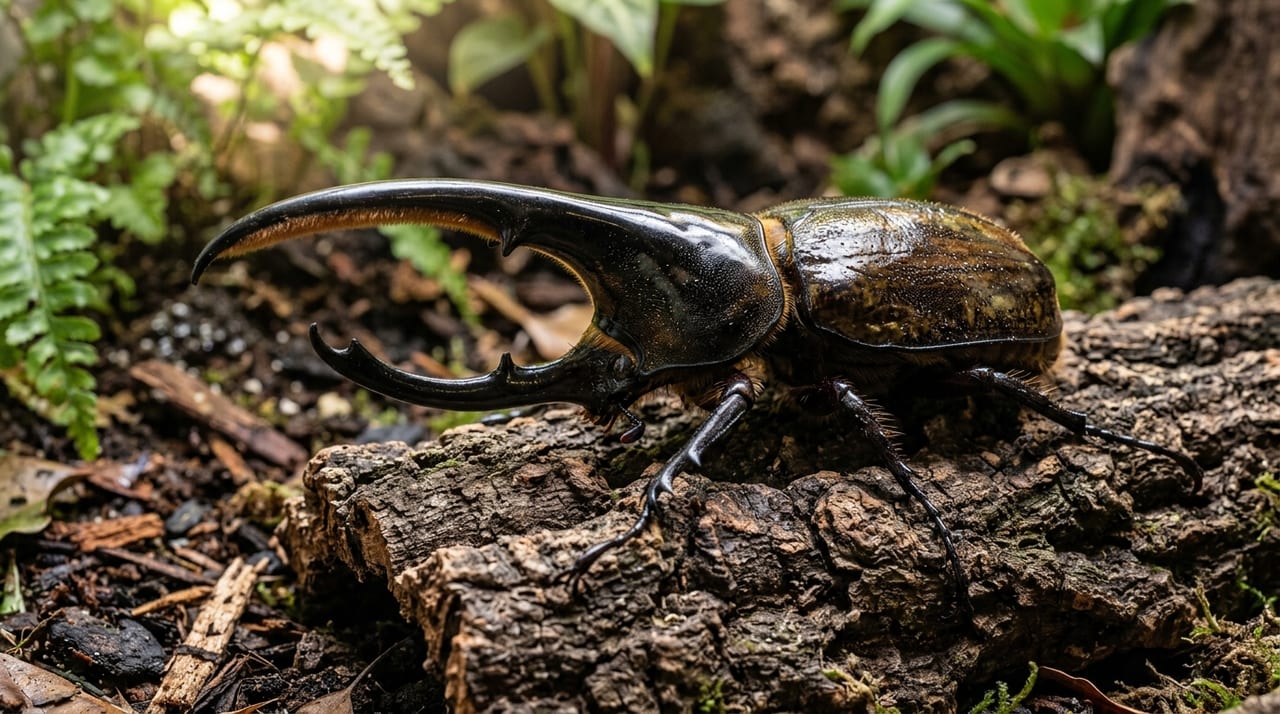
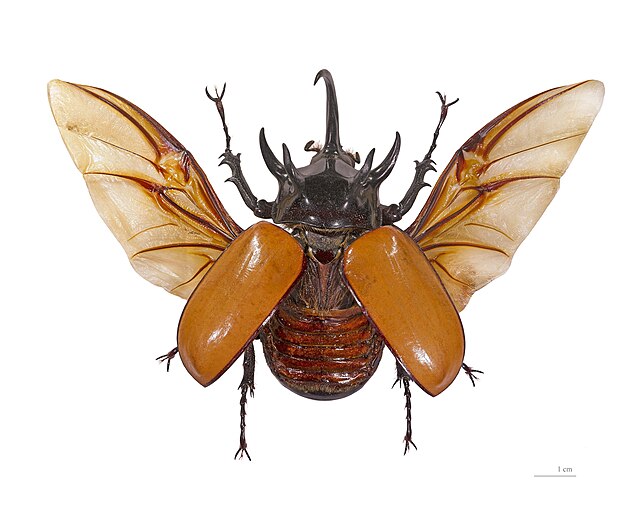
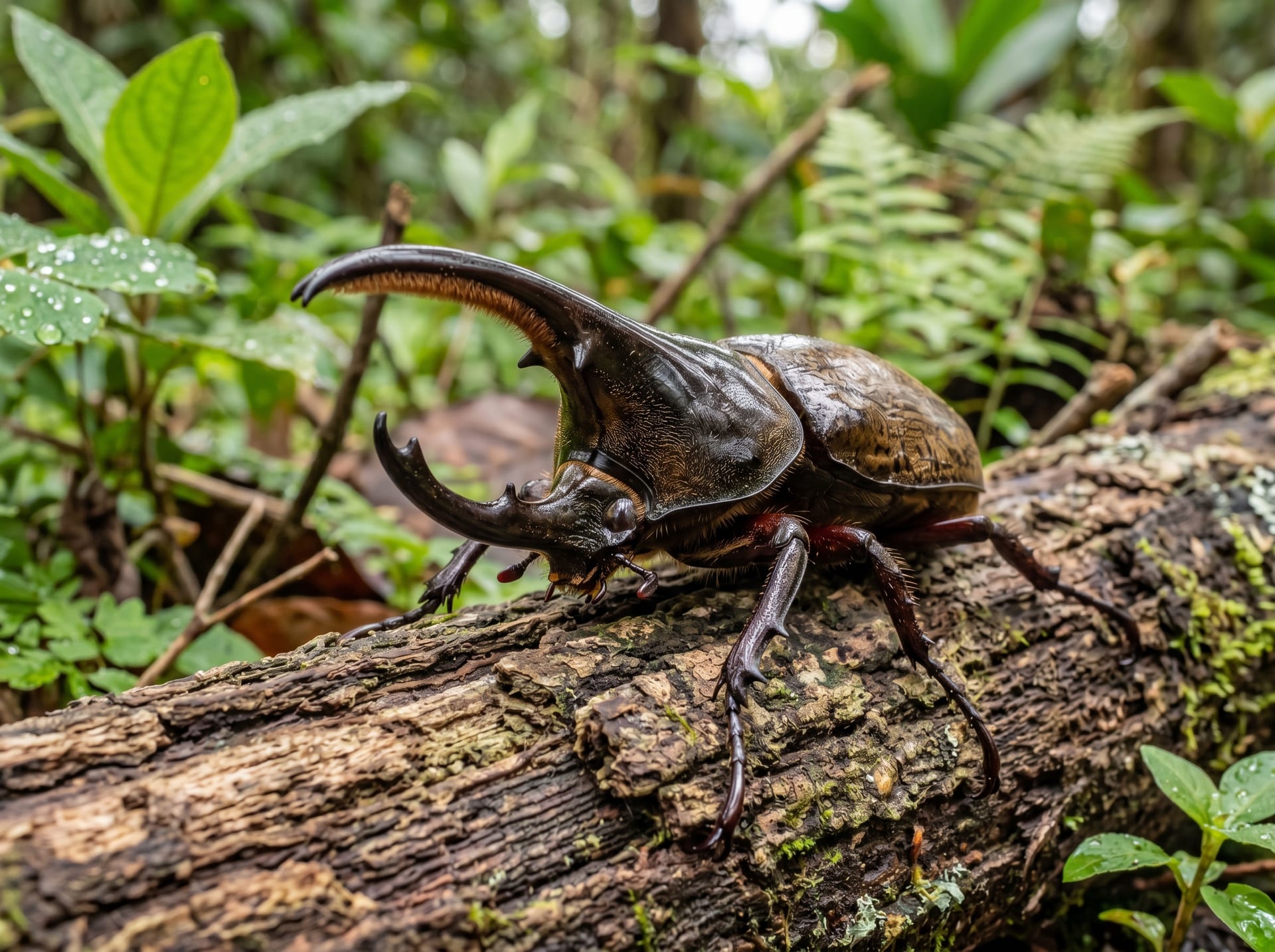
The Five-Horned Beetle (Eupatorus gracilicornis) is a large beetle of the Coryphocerus subfamily native to Southeast Asia (Thailand, Myanmar, Malay Peninsula, etc.). True to its name "Gohon-zuno" (five horns), it features three horns on the head and two on the thorax, totaling five distinctive protrusions—its most striking characteristic.
Basic Information
| Item | Details |
|---|---|
| Scientific Name | Eupatorus gracilicornis |
| Alternative Names | Five-Horned Beetle, Coryphocerus |
| Male Body Length | 50–80mm (including horn length) |
| Female Body Length | 35–50mm |
| Origin | Thailand, Myanmar, Malay Peninsula |
| Difficulty Level | Intermediate (temperature management is critical) |
Related Species
The genus Eupatorus includes several other closely related species besides gracilicornis. Among Japanese hobbyists, popular species include "Eumorph Beetles (Eupatorus beccarii)" and "Brown Eumorph Beetles," which are also well-regarded.
Basic Adult Care
Enclosure
Adult beetles should be housed in well-ventilated plastic containers or specialized beetle/stag beetle enclosures.
- Male solitary housing: approximately 30cm W × 20cm D × 20cm H
- Breeding pair (male and female): 35cm W × 25cm D × 25cm H or larger
Substrate (Bedding)
A thin layer of 3–5cm of bedding is sufficient for adult management. Place 1–2 pieces of wood (bark or decaying wood) to provide shelter and reduce stress.
Temperature Management
The Five-Horned Beetle is tropical in origin, making temperature control the most critical aspect of care.
- Adult optimal temperature: 22–27°C (activity and health decline below 20°C)
- Larval optimal temperature: 22–25°C (applicable to both fungal substrate and fermentation medium)
- During Japanese winters, use insulated boxes (styrofoam), heating panels, or wine coolers to maintain temperature
Feeding
Use insect jelly (16g–32g with high protein and sugar content). Fresh fruits such as banana, watermelon, and apple are readily consumed but spoil quickly and require frequent replacement. Adult consumption of jelly is relatively high.
Setting Up a Breeding Tank
The Five-Horned Beetle primarily breeds in substrate. Creating an environment conducive to female egg-laying is key to successful breeding.
Required Materials
- Breeding enclosure: 35cm W × 25cm D × 25cm H or larger (deep container)
- Breeding substrate: High-fermentation, nutrient-enriched fermentation medium (for Hercules beetles or domestic beetles)
- Anti-tipping materials: Bark, wood pieces
Breeding Tank Setup Procedure
- Pack the breeding substrate firmly to a depth of 15–20cm on the bottom
- Keep the top 3–5cm lightly packed (females prefer softer layers)
- Place anti-tipping materials
- Substrate moisture: compress with your hand until it holds its shape (slightly firm)
- Introduce a matured pair 1–2 months or more after the post-emergence feeding phase (post-eclosion feeding)
Breeding Temperature and Duration
- Optimal breeding temperature: 24–26°C
- Time to egg confirmation: can excavate eggs in 4–6 weeks
Expected clutch size: 20–40 eggs in optimal conditions. After excavation, eggs or first-instar larvae are transferred individually to small plastic cups (120–200ml) for substrate management.
Larval Rearing Management
Larval Rearing Options
Five-Horned Beetle larvae are reported to be more stable when kept in fermentation medium rather than fungal substrate.
| Rearing Method | Advantages | Disadvantages |
|---|---|---|
| Fermentation Medium (Beetle type) | Stable, fewer failures | Slightly smaller final size |
| Fungal Substrate (Oyster mushroom type) | Larger adults possible | Some lines carry mortality risk |
| Fungal-to-Medium Transition | Large size + stable pupation | Complex management |
Larval Stage-Specific Management
- First-instar larvae (post-hatch–2 months): Rear in 120–500ml plastic cups with fermentation medium
- Second-instar larvae: Transfer to 800ml containers (fungal substrate or high-fermentation medium)
- Third-instar larvae (until pre-pupation): Individual rearing in 1400–2300ml containers
- Pre-pupation to pupation: Once the pupation chamber forms, do not disturb
Larval Rearing Tips
- Temperature: Maintain a steady 22–25°C (sudden changes increase mortality risk)
- Substrate replacement: Change when deteriorated or darkened (approximately every 3–4 months)
- Never excavate before pupation (disrupting the pupation chamber causes emergence defects)
Common Problems and Solutions
No Eggs or Few Eggs
- Incomplete post-emergence feeding: Allow adults 1–2 months post-emergence feeding before breeding
- Substrate quality or moisture: Use high-nutrient fermentation medium (Hercules beetle type), with moisture level that holds shape when compressed
- Low temperature: Verify 22–27°C range
Sudden Larval Death
- Low temperature (below 20°C): Ensure proper heating
- Gas buildup in substrate: Fresh high-fermentation medium should be vented (3–5 days) before use
- Excessive moisture: Maintain proper substrate moisture levels
Emergence Defects
- Undersized pupation chamber: Replace containers before larvae reach maximum size
- Temperature fluctuations: Keep 22–24°C stable during pupation and emergence
- Collapsed pupation chamber: Transfer to an artificial pupation chamber (made from floral foam or toilet paper tubes)
Adult Lifespan and Rearing Duration
Under proper care, Five-Horned Beetles have an adult lifespan of approximately 3–6 months. The larval period varies by temperature but averages 1–1.5 years at 22–25°C management. Accounting for the entire cycle from egg to adult emergence, expect approximately 1.5–2 years.
Summary
The Five-Horned Beetle is a standout species among exotic beetles, prized for its unique five-horn configuration. While it is tropical in origin, making temperature management (22–27°C) critical, it is otherwise relatively straightforward to rear. Breeding setup requires only high-nutrient fermentation medium in a deep enclosure, and larval rearing is stable in fermentation medium. With proper temperature control equipment in place, this attractive species is well within the reach of intermediate-level exotic beetle hobbyists.