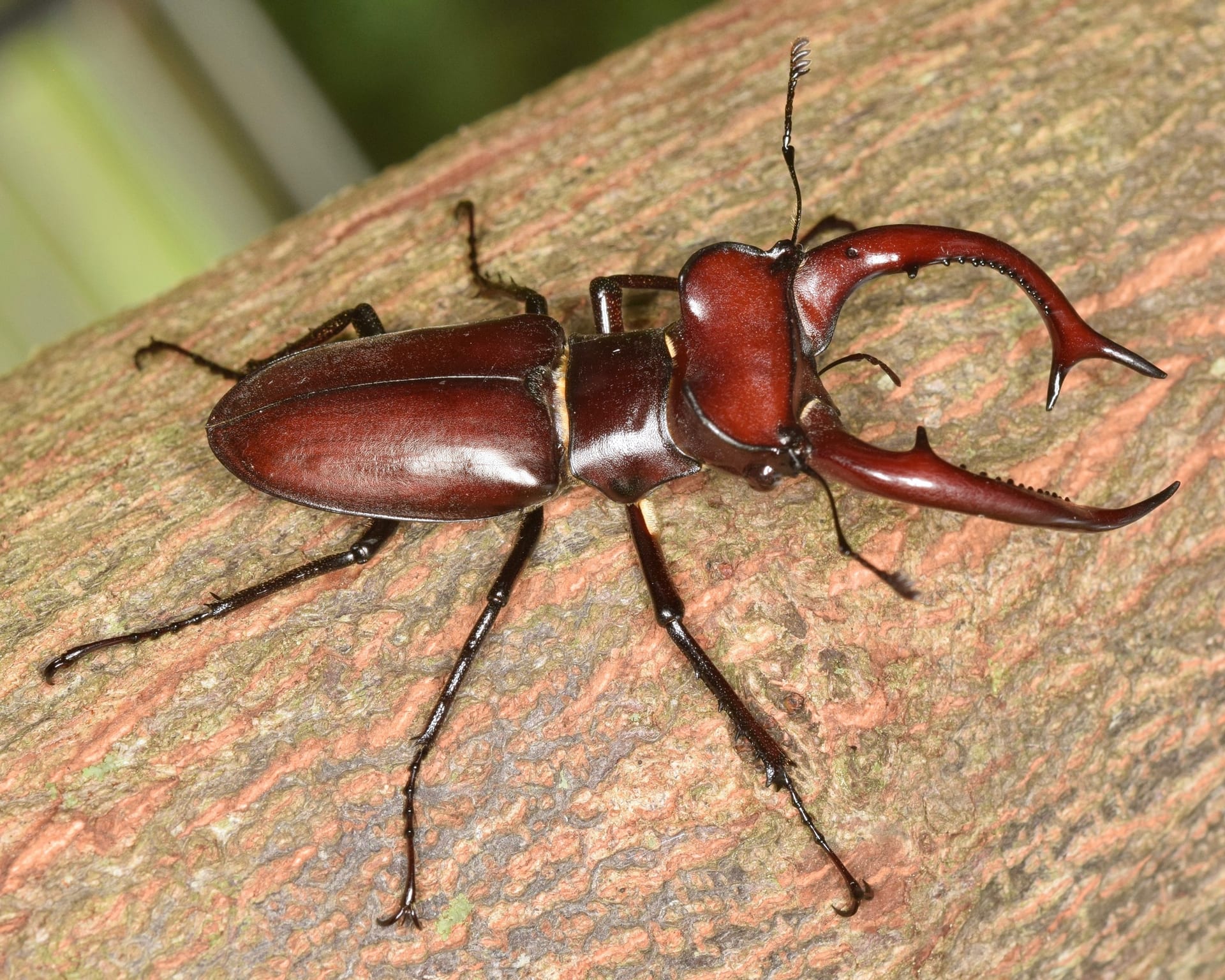
 © skitterbug / CC BY 4.0
American Stag Beetle
The American stag beetle is native to eastern North America and is recognized as the largest stag beetle species found on the continent. Compared to Japan's Lucanus species or the European stag beetle, it's somewhat smaller in build, but its sweeping, curved mandibles still make a strong impression. Its species name, elaphus, comes from the Greek word for deer, a nod to those antler-like jaws. Temperament tends to be relatively calm, yet raising the larvae calls for careful attention to temperature and humidity, making this a beetle best suited to experienced keepers who enjoy a hands-on challenge.
View American Stag Beetle encyclopedia →0% commission on your first sales!Register by September 30, 2026 and your first 2 sales are commission-free!
Breeder Wanted!
List on BreederDirect and sell directly to customers nationwide!
6 Transparency Standards You Can Trust
When listing Insects, Breeders disclose the following. We guarantee transparency on growth stage and breeding unit.
- Life Stage Clarity
- Generation Info
- Real Photos
- Breeding Unit
- Country of Origin
- Body Length (mm)
Browse all 336 breeds
Verified breeders wanted for Insects
Breeders are signing up now ahead of launch. Subscribe to be notified when new listings go live.
Getting alerts is free with a member account. When new listings match your saved search, we'll notify you by email and in-app.
Browse other categories
Verified breeders (preview)
American Stag Beetle key facts
- Care level
- Advanced
- Lifespan
- Adults 2-3 months
- Size
- Captive record 67.2mm, wild record 65.0mm
- Diet
- Adults take beetle jelly; larvae eat fermented substrate
- Temperature & Humidity
- In the related Japanese L. maculifemoratus, egg-laying is said to be straightforward below 25C and cool rearing suits the raising of large beetles, so keep this species cool along the same lines. Keep the substrate at a moisture that forms a ball when squeezed.
- Breeding & Egg-laying
- The BE-KUWA 2025 edition gives a captive record of 67.2mm for foreign stag beetles (Takehiro Yamamoto, registered 2009; wild record 65.0mm, expected maximum 71mm). Lucanus species have long larval periods and many rest after eclosion, so years can pass between egg-laying and an active adult.
- Cohabitation
- Adults are kept singly and put together only for pairing. Males fight with their mandibles and must always be separated. Do not mix it with other North American Lucanus such as L. capreolus or L. placidus.
- Lifespan & Rearing Period
- Adults of the genus Lucanus are generally short-lived while the larval stage is long.
- Health & Notes
- In Japanese it is also called Elaphus miyama kuwagata. Its range is sometimes given as the Lake Ontario area, but it is wider than that, with records across the eastern part of the continent. Importing foreign stag beetles falls under the Plant Protection Act, and whether a given species may enter depends on the country it comes from, so domestically bred stock is the safe choice.
About American Stag Beetle
Native to eastern North America, this is the continent's largest stag beetle species. Its mandibles are modest but striking, and raising the larvae takes real care — a rewarding pick for experienced keepers.
7 things to know before welcoming a American Stag Beetle
1Advanced-Level Care
The American stag beetle is considered an advanced-level species because its larvae require careful, attentive management. It's best suited to keepers who already have some hands-on experience or are ready to research thoroughly before starting.
2Larval Climate Control
During the larval stage, sudden shifts in temperature or humidity can be stressful, so it helps to keep the rearing container away from direct sunlight or air-conditioning drafts. Check the substrate regularly so it doesn't dry out or become overly damp.
3Mandibles and Size
Recorded body length reaches 67.2mm for captive-bred individuals and 65.0mm in the wild. That's somewhat smaller than Japanese or European Lucanus species, but the beetle's curved mandibles still make a strong visual impression.
4Generally Calm Temperament
Temperament is generally calm, but the mandibles are powerful enough that a pinch can hurt. When handling, support the body firmly and keep your fingers clear of the jaws.
5Native to Eastern North America
This species is native to eastern North America, where it's recognized as the largest stag beetle found on the continent. Its species name, elaphus, is Greek for deer — a reference to those antler-like mandibles.
6Prepping the Enclosure
Before bringing one home, it helps to set up a space where temperature and humidity stay stable, along with quality larval substrate or fungus-based mat. Since this is an advanced-level species, researching care methods in advance is worthwhile.
7Nocturnal Adult Behavior
Adults tend to be nocturnal, often staying still in sheltered spots during the day. Offering insect jelly and observing quietly in a calm environment works well.
Frequently asked questions about American Stag Beetle
- Q.Can beginners keep this species?
- A.The American stag beetle is generally considered an advanced-level species. Because larval care requires careful temperature and humidity management, it's best to gain some experience first or research thoroughly before bringing one home.
- Q.How large does this beetle typically grow?
- A.Recorded lengths reach 67.2mm for captive-bred beetles and 65.0mm in the wild. That's somewhat smaller than Japanese or European Lucanus species.
- Q.Is this beetle aggressive?
- A.Temperament is generally calm, but the mandibles are strong, so care is needed to avoid getting pinched. Support the body firmly whenever you handle it.
- Q.Are there any import or ownership restrictions?
- A.The American stag beetle is not listed under CITES.
- Q.What should I feed this beetle?
- A.Adults are commonly fed store-bought insect jelly. Larvae are usually raised on specialized substrate or fungus-based material that requires careful temperature and humidity control, which is part of why this species is considered advanced-level.
Useful tools for American Stag Beetle care
Learn more about American Stag Beetle in the encyclopedia
View American Stag Beetle encyclopedia entry →
Care difficulty, lifespan, size and diet — all basics covered.
More in this category
Can't find the one you're looking for?
Post your wishes for free and breeders with matching animals will contact you with introductions.