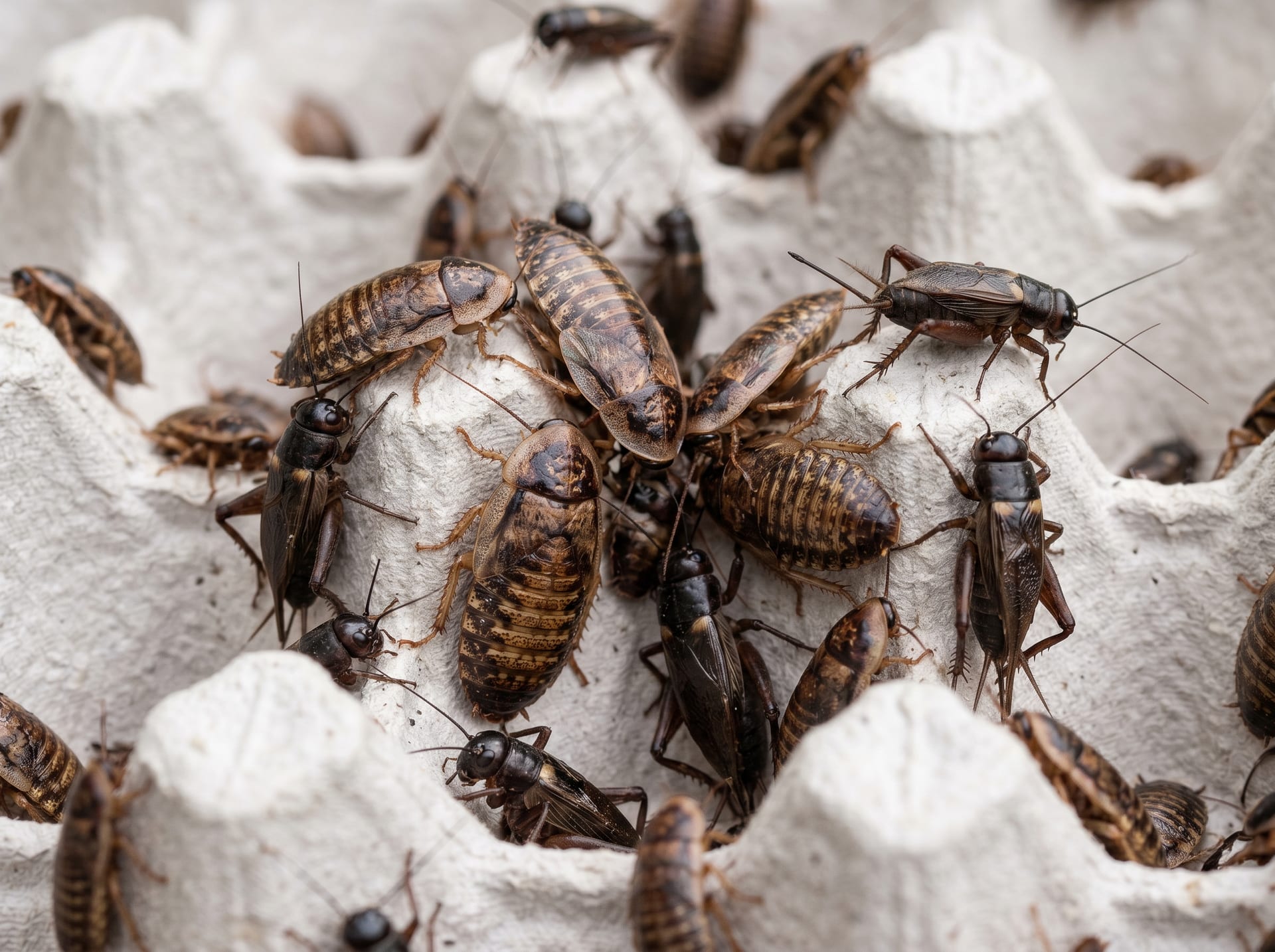
Cricket / Dubia / Red Runner
Crickets, dubia roaches, and red roaches are widely used feeder and pet insects among reptile, amphibian, and invertebrate keepers. Each species offers distinct traits, allowing you to choose based on your target animal and husbandry goals. Whether you prioritize ease of breeding, low odor, or feeding response, there is an option to suit your needs.
View Cricket / Dubia / Red Runner encyclopedia →0% commission on your first sales!Register by September 30, 2026 and your first 2 sales are commission-free!
Breeder Wanted!
List on BreederDirect and sell directly to customers nationwide!
6 Transparency Standards You Can Trust
When listing Insects, Breeders disclose the following. We guarantee transparency on growth stage and breeding unit.
- Life Stage Clarity
- Generation Info
- Real Photos
- Breeding Unit
- Country of Origin
- Body Length (mm)
Browse all 26 breeds
Verified breeders wanted for Insects
Breeders are signing up now ahead of launch. Subscribe to be notified when new listings go live.
Getting alerts is free with a member account. When new listings match your saved search, we'll notify you by email and in-app.
Browse other categories
Verified breeders (preview)
About Cricket / Dubia / Red Runner
Crickets, dubia roaches, and red roaches are among the most widely used feeder insects by reptile, amphibian, and invertebrate keepers worldwide. House and banded crickets originate from Asia and the Middle East, valued for their lively movement that triggers strong predatory instincts. The dubia roach, native to South America, has become a favorite for its low odor, calm temperament, and inability to climb smooth walls, making colony management straightforward. Red roaches from Turkmenistan breed quickly and offer excellent nutritional value, making them ideal for sustaining mid-sized colonies. All three species are high in protein and relatively low in fat, with nutritional content that can be further enhanced through gut-loading and vitamin dusting. Beyond their role as feeders, they offer genuine interest as colony animals, letting keepers observe fascinating social and reproductive behaviors up close.
7 things to know before welcoming a Cricket / Dubia / Red Runner
1Know Each Species' Traits
Crickets (banded or house) are lively and stimulate strong feeding responses but produce noise and odor. Dubia roaches are slow-moving and nearly odorless, making them easy to handle, while red roaches fall between the two. Choose the species that best matches your setup and the animal you are feeding.
2Temperature Is Key to Breeding
All three are warm-weather insects that thrive best between 25–32°C. Cool temperatures reduce activity, and dubia and red roaches will stop reproducing below their threshold. A heat mat or ceramic bulb is essential for maintaining stable temperatures and a steady breeding colony.
3Prevent Escapes Carefully
Crickets jump easily and escape through small gaps, requiring secure lids. Dubia roaches cannot climb smooth surfaces, making them easier to contain in standard plastic bins. Red roaches can climb vertical surfaces, so a sealed container with a ventilated lid is essential to prevent unwanted escapes into living spaces.
4Gut-Load for Better Nutrition
The nutritional value of feeder insects depends largely on what they have eaten before being offered. Gut-load them with leafy greens, vegetables, fruits, or commercial gut-load food for 24–48 hours before feeding. Combine this with calcium and vitamin dusting to support the long-term health of the animals you keep.
5Manage Colony Density
Overcrowding leads to stress, cannibalism, and disease outbreaks. For dubia roaches, maintain a ratio of roughly 1 male to 5 females for efficient reproduction. With crickets, using egg cartons and size-sorting enclosures reduces cannibalism and helps maintain a healthier colony.
6Provide Water Safely
Open water dishes pose a drowning risk, especially for crickets. Provide moisture through water-rich vegetables like cucumber and carrot, or use commercial water gel crystals. Adding a sponge or cotton ball to any shallow dish further reduces the risk. Proper hydration management significantly lowers colony mortality rates.
7Plan for Odor and Noise
Banded crickets chirp loudly at night, and house crickets also produce noise, so avoid keeping large colonies in bedrooms or living rooms. Dubia and red roaches are silent, and with proper cleaning and ventilation their odor remains minimal. Planning your housing location and airflow setup in advance makes for a much more comfortable keeping experience.
Frequently asked questions about Cricket / Dubia / Red Runner
- Q.Are crickets or dubia roaches easier to keep?
- A.Dubia roaches are generally easier to manage due to their low odor, inability to climb smooth surfaces, and longer lifespan. Crickets live for only about 8 weeks and can be noisy, but their active movement often provokes stronger feeding responses. Choose based on your enclosure setup and the species you are feeding.
- Q.Will red roaches breed if they escape indoors?
- A.In most Japanese households, especially during cooler months, red roaches are unlikely to establish a wild colony. However, in warm climates or heated rooms they could potentially survive longer. Always use sealed containers and promptly retrieve any escapees to avoid any risk.
- Q.What size feeder insect should I offer my animal?
- A.A good rule of thumb is to offer feeders no wider than the space between the animal's eyes. Insects that are too large can cause digestive issues or even injury. Gradually increase the feeder size as your animal grows to support safe and healthy feeding.
- Q.How many individuals do I need to start a colony?
- A.For dubia roaches, starting with around 10 adult males and 50 adult females is a commonly recommended baseline for a stable colony. With crickets, beginning with 50–100 adults helps ensure a consistent breeding cycle. Starting with too few individuals often leads to supply gaps, so a larger initial group is advisable.
- Q.Why do my crickets keep dying off quickly?
- A.The most common causes are excess humidity, overcrowding, poor ventilation, and drowning in water dishes. Crickets are highly sensitive to ammonia buildup from waste in damp conditions. Regular cleaning, adequate airflow, and replacing open water dishes with water gel or vegetables are the most effective ways to reduce die-off rates.
Useful tools for Cricket / Dubia / Red Runner care
Learn more about Cricket / Dubia / Red Runner in the encyclopedia
View Cricket / Dubia / Red Runner encyclopedia entry →
Care difficulty, lifespan, size and diet — all basics covered.
Cricket / Dubia / Red Runner related articles
Guide to Cricket Farming and Live Food Cost Reduction | DIY Breeding for Reptiles, Amphibians, and Insectivorous Birds
Learn DIY breeding and maintenance of crickets (European house crickets and two-spotted crickets). A practical guide covering equipment setup, maintenance costs, egg-laying, hatching, and mortality reduction tips—reduce your monthly live food costs by 50–80%.
Guide to Breeding Feeder Insects | Intensive Production Systems and Optimization for Crickets, Dubia Roaches, and Black Soldier Flies
Detailed explanation of space optimization through vertical stacking layouts, temperature/humidity zoning, waste management and sanitation maintenance, life cycle optimization from egg to adult, staggered batch management, gut loading, and methods for tracking system operation metrics.
Complete Guide to Raising Bell Crickets | Enjoying Their Chirping as an Autumn Tradition
A comprehensive guide to raising bell crickets. Learn how to choose the right housing and substrate, feed them properly, manage breeding and hatching, raise nymphs, and maintain them to enjoy their beautiful chirping long into the season—all explained in beginner-friendly terms.
Beginner's Guide to Edible Insects | Food Use and Breeding of Crickets and Mealworms
From basic knowledge of edible insects to breeding, processing, and cooking food-grade crickets and mealworms. This guide covers the safety, regulations, and how to get started with edible insects as a sustainable protein source with low environmental impact.
Guide to Breeding Crickets and Mealworms at Home | How to Secure Feeder Insects Reliably at Low Cost
A comprehensive guide to breeding feeder insects (crickets and mealworms) at home. Covers breeding container setup, egg management, gut-loading (nutritional enhancement), escape prevention, and odor control in practical detail.
More in this category
Can't find the one you're looking for?
Post your wishes for free and breeders with matching animals will contact you with introductions.