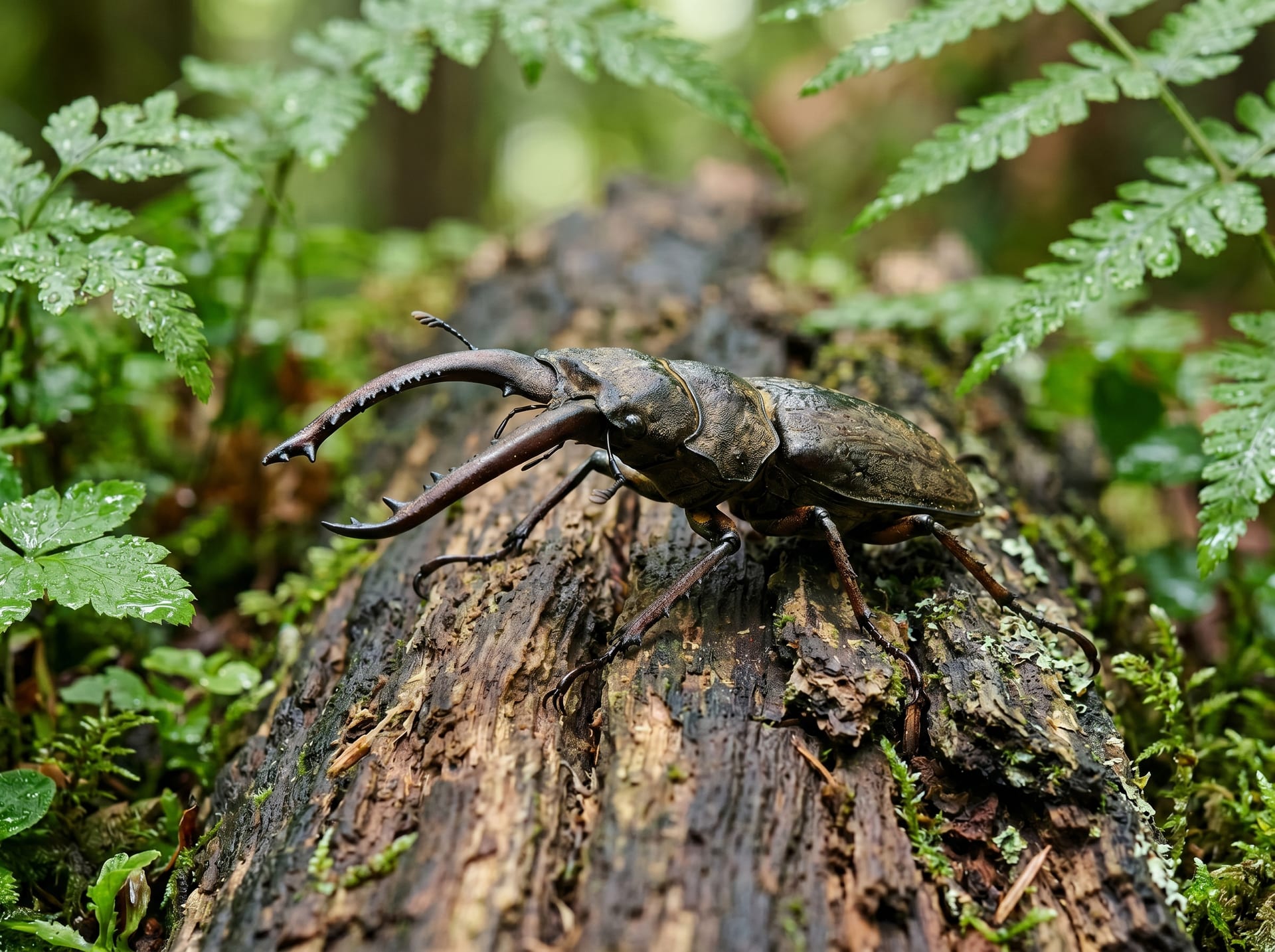
Giraffa Stag Beetle
Worlds largest stag beetle. Massive 120mm mandibles are overwhelming. Flores Island specimens are largest and most popular.
View Giraffa Stag Beetle encyclopedia →0% commission on your first sales!Register by September 30, 2026 and your first 2 sales are commission-free!
Breeder Wanted!
List on BreederDirect and sell directly to customers nationwide!
6 Transparency Standards You Can Trust
When listing Insects, Breeders disclose the following. We guarantee transparency on growth stage and breeding unit.
- Life Stage Clarity
- Generation Info
- Real Photos
- Breeding Unit
- Country of Origin
- Body Length (mm)
Browse all 26 breeds
Verified breeders wanted for Insects
Breeders are signing up now ahead of launch. Subscribe to be notified when new listings go live.
Getting alerts is free with a member account. When new listings match your saved search, we'll notify you by email and in-app.
Browse other categories
Verified breeders (preview)
Giraffa Stag Beetle key facts
- Care level
- Intermediate
- Lifespan
- Adult 6-12 months, larva 8-12 months
- Size
- Up to 120mm
- Diet
- Beetle jelly (adult), fermented substrate (larva)
- Temperature
- 22-27°C
- Larval care
- Fermented substrate or mushroom bottle
- Mandibles
- Large mandibles but generally docile
- Adult care
- Careful pairing — females may be killed
- Notes
- Large size requires good larval nutrition and temperature
About Giraffa Stag Beetle
The Giraffa Stag Beetle (Prosopocoilus giraffa) is the world's largest stag beetle, distributed across the islands of Southeast Asia, including Indonesia and the Philippines. Specimens from Flores Island, Indonesia are especially prized for their sheer size — the mandibles can account for more than half the beetle's total body length, creating a silhouette unlike any other insect. Its name is a nod to the giraffe, referencing those extraordinary, elongated jaws. In terms of temperament, the species is relatively calm, and handling is possible, though caution is always warranted given the strength of its mandibles. What makes keeping this beetle so rewarding is the combination of its commanding visual presence and the depth of experience that comes with attempting to breed it. Raising larvae through to adulthood offers daily discoveries, and the satisfaction of successfully eclosing a large male is a highlight of the hobby.
7 things to know before welcoming a Giraffa Stag Beetle
1Size Varies by Origin
The Flores Island subspecies is known to produce the largest individuals, followed closely by the Palawan Island population. Body size, mandible shape, and coloration differ by locality, so always check the origin information when purchasing.
2Adult Lifespan Is Short
Adults typically live only 6 to 12 months, which is shorter than the larval stage of 8 to 12 months. Avoid disturbing the beetle right after eclosion; wait until it begins feeding on its own before handling it, as this helps extend its lifespan.
3Large Enclosure Required
Due to their large size, a container of at least 60cm is recommended. In cramped enclosures, they can become stressed and may attempt to force their way out with their powerful mandibles, so always ensure the lid is securely fastened.
4Temperament Varies by Individual
Males have powerful mandibles that can cause a painful pinch, so handle them by gently picking them up from behind. Females are generally calmer, but their leg spines can scratch if startled, so careful handling is still advised.
5Larvae Need Fermented Mat
Larvae are best raised in finely textured, twice-fermented substrate rather than fungal logs. Replace the substrate every 2 to 3 months, watching for deterioration or dryness, to support healthy larval development.
6Optimal Temp Around 25°C
As a tropical species, maintaining a temperature of 20 to 28°C year-round is ideal. During Japanese winters, temperatures that drop too low will cause the beetle to become sluggish, and extreme cold can be fatal, so consider using a panel heater or insulation.
7Jelly Is the Staple Food
The main diet for adults is high-protein, high-sugar insect jelly. High-protein jelly is especially beneficial during the recovery period after eclosion or egg-laying. Avoid fresh fruit as it spoils quickly and attracts flies; jelly-based feeding keeps the enclosure clean and manageable.
Frequently asked questions about Giraffa Stag Beetle
- Q.What is the difference between Flores Island and other localities?
- A.Flores Island specimens are considered the largest among all localities, with especially well-developed mandibles. Other origins such as Sulawesi and the Philippines are also appealing, but if maximum size is your goal, Flores Island is the standard choice.
- Q.Can beginners attempt breeding?
- A.With proper fermented mat and temperature management, this species is relatively beginner-friendly for breeding. However, because the female can be injured during pairing, make sure you understand how to observe mating and separate the pair at the right moment before attempting it.
- Q.Is it safe to house males and females together?
- A.Cohabitation outside of mating is generally not recommended. The male's mandibles can injure the female, and competition over food or egg-laying sites may cause conflict. For routine care, it is safer to house them in separate enclosures.
- Q.Can I feed it immediately after purchase?
- A.Newly eclosed individuals may still be in a pre-feeding stage and will not eat yet. Place insect jelly in the enclosure and wait patiently until the beetle begins feeding on its own. Full care and breeding should begin only after post-eclosion feeding is confirmed.
- Q.Which is better for larvae — fermented mat or fungal bottles?
- A.Fermented mat is the standard method for raising Giraffa larvae and delivers consistent results. While fungal bottles can also be used, there is a risk of larval death if the fungal species is not a good match. For beginners, fermented mat is the safer and more reliable option.
Useful tools for Giraffa Stag Beetle care
Learn more about Giraffa Stag Beetle in the encyclopedia
View Giraffa Stag Beetle encyclopedia entry →
Care difficulty, lifespan, size and diet — all basics covered.
More in this category
Can't find the one you're looking for?
Post your wishes for free and breeders with matching animals will contact you with introductions.