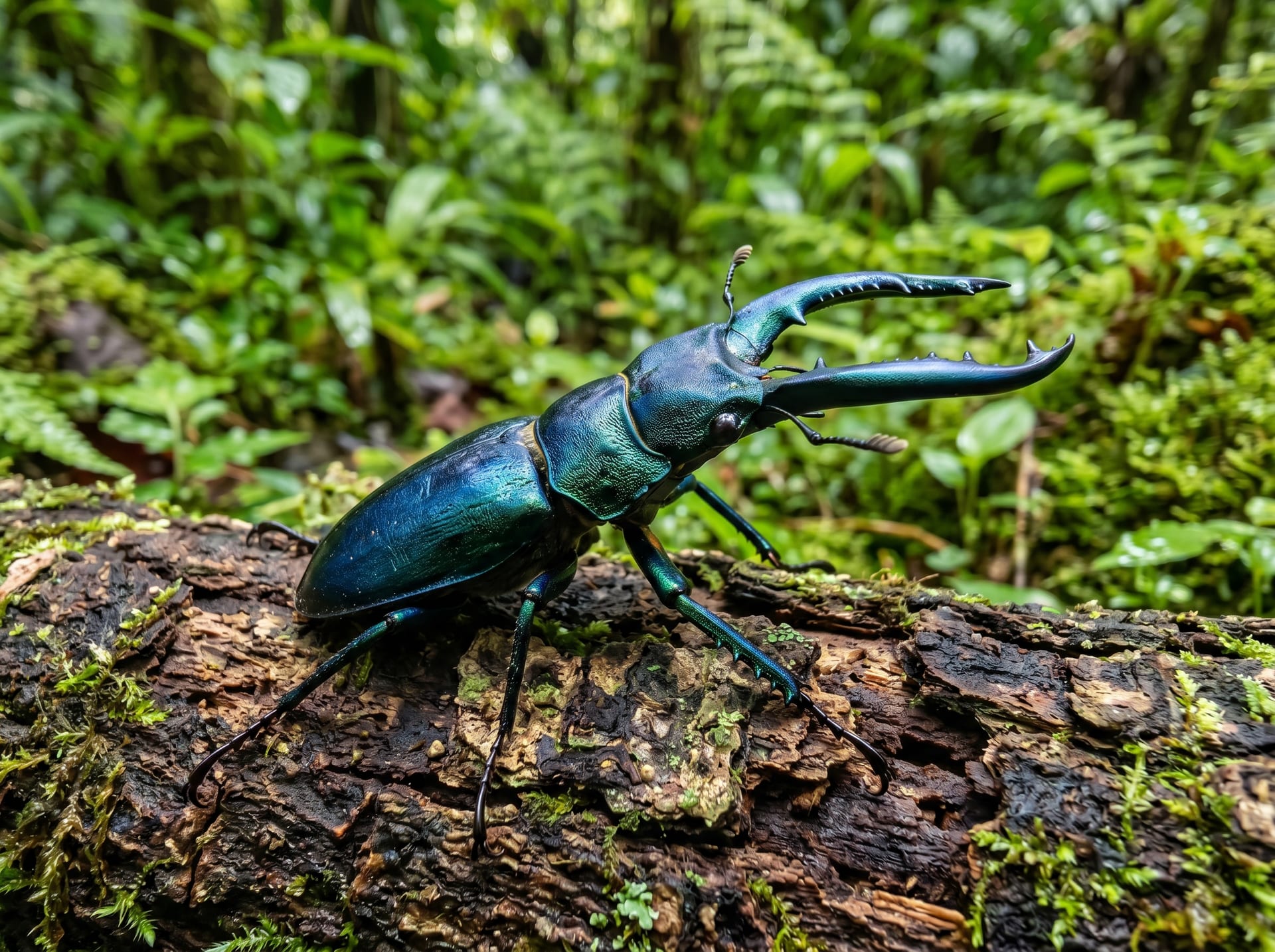
Metallic Stag Beetle
A stag beetle with extremely long mandibles relative to body length. Beautiful metallic sheen and slender body.
View Metallic Stag Beetle encyclopedia →0% commission on your first sales!Register by September 30, 2026 and your first 2 sales are commission-free!
Breeder Wanted!
List on BreederDirect and sell directly to customers nationwide!
6 Transparency Standards You Can Trust
When listing Insects, Breeders disclose the following. We guarantee transparency on growth stage and breeding unit.
- Life Stage Clarity
- Generation Info
- Real Photos
- Breeding Unit
- Country of Origin
- Body Length (mm)
Browse all 26 breeds
Verified breeders wanted for Insects
Breeders are signing up now ahead of launch. Subscribe to be notified when new listings go live.
Getting alerts is free with a member account. When new listings match your saved search, we'll notify you by email and in-app.
Browse other categories
Verified breeders (preview)
Metallic Stag Beetle key facts
- Care level
- Intermediate
- Lifespan
- Adult 3-8 months
- Size
- 30-90mm
- Diet
- Insect jelly
- Notes
- 大顎が非常に長く体長の半分以上
- Temperature
- 温度は22〜26℃が適温
- Lighting
- メタリックな光沢が美しい
- Breeding
- 材産みのため産卵木を用意
- Housing
- 幼虫はマットでも菌糸でも育つ
About Metallic Stag Beetle
The Cyclommatus metallifer, commonly known as the Metallic Stag Beetle, is a tropical species native primarily to Sulawesi, Indonesia. Its most striking feature is its dramatically elongated mandibles — on large males, these can surpass the total body length, creating an almost sculptural silhouette. The beetle's slender frame shimmers with a vivid metallic sheen, earning it a devoted following among collectors who prize aesthetic beauty in insects. In the wild it feeds on tree sap within tropical rainforests, active mostly at night. In captivity, adults are straightforward to maintain on insect jelly, and breeding is approachable with fermented substrate or mycelium bottles. While the adult lifespan is relatively brief, many keepers find great reward in raising individuals from egg to eclosion, making this species an enduring favorite for both beginners and seasoned enthusiasts alike.
7 things to know before welcoming a Metallic Stag Beetle
1Mandible Length Variation
Male mandibles are disproportionately long relative to body size, varying significantly between individuals. In large specimens over 70mm, mandibles alone can account for 70–80% of total body length. Check photos and measurements before purchasing to find an individual with the shape and size you prefer.
2Enclosure Size
Their extremely long mandibles can get caught on decorations, restricting movement. A simple setup with just a feeding dish and a piece of driftwood works best even in a small to medium enclosure. Choose a container with a secure, fungus-gnat-resistant lid for easier maintenance.
3Never House Males Together
Males housed together will fight aggressively, often resulting in lost mandibles or legs. A single male can cohabit with a female outside of breeding, but monitor the female for signs of stress. Separating the pair after mating typically extends the lifespan of both individuals.
4Feed Only Insect Jelly
High-protein, high-sugar insect jelly is the staple diet. Avoid fruit and sugar water as they spoil quickly and attract mites. Because long mandibles make it hard to reach into standard jelly cups, use a shallow dish or cut the jelly in half to make feeding easier.
5Temperature and Humidity
The ideal temperature range is 23–28°C; sustained temperatures above 30°C can shorten lifespan. They are also sensitive to dryness, so lightly mist the substrate about once a week to maintain moderate humidity. Indoor keeping with air conditioning, away from direct sunlight, is ideal during summer.
6Breeding and Larval Care
For egg-laying, use a combination of soft oak logs and fermented substrate. Once the female starts chewing the log, leave her undisturbed and excavate the log after 4 to 6 weeks to collect larvae. Raise larvae in fungal mycelium bottles or fermented substrate; they take several months to about a year to reach adulthood.
7Short Adult Lifespan
Adults live only 3 to 8 months, and many individuals sold in stores are already several months post-eclosion. Always ask the seller for the eclosion date and the date feeding began so you can estimate remaining lifespan. With attentive daily care, you can make the most of every day with these remarkable beetles.
Frequently asked questions about Metallic Stag Beetle
- Q.Can broken or chipped mandibles heal?
- A.Unlike mammals, insects cannot regenerate lost body parts. A beetle with chipped mandibles can usually still feed and live normally, though its competitiveness in breeding situations may be reduced. Careful handling is the best prevention.
- Q.Can males and females be kept together all the time?
- A.Constant cohabitation is generally not recommended, as it can stress the female and lead to exhaustion from repeated mating. Once mating is confirmed, separate them promptly so the female can focus her energy on egg-laying.
- Q.How long does larval rearing take?
- A.Larval development typically takes around 4 to 8 months depending on temperature and individual variation. Rearing in mycelium bottles tends to accelerate growth and can produce larger adults. After eclosion, allow another 1–2 months for the beetle to fully mature before breeding.
- Q.Is a special permit required to keep this species?
- A.Captive-bred individuals sold domestically can generally be kept without special permits. However, importing wild-caught specimens may be subject to CITES and other regulations. Always purchase from reputable sellers who can confirm the legal origin of their stock.
- Q.Is the Cyclommatus metallifer suitable for beginners?
- A.Adult care is relatively straightforward if you maintain stable temperatures and replace jelly regularly. However, the risk of injury from mandibles warrants caution, and breeding requires some knowledge of mycelium bottle management. Starting with an adult pair and observing their behavior is a good first step.
Useful tools for Metallic Stag Beetle care
Learn more about Metallic Stag Beetle in the encyclopedia
View Metallic Stag Beetle encyclopedia entry →
Care difficulty, lifespan, size and diet — all basics covered.
Metallic Stag Beetle related articles
See more Metallic Stag Beetle articles →More in this category
Can't find the one you're looking for?
Post your wishes for free and breeders with matching animals will contact you with introductions.