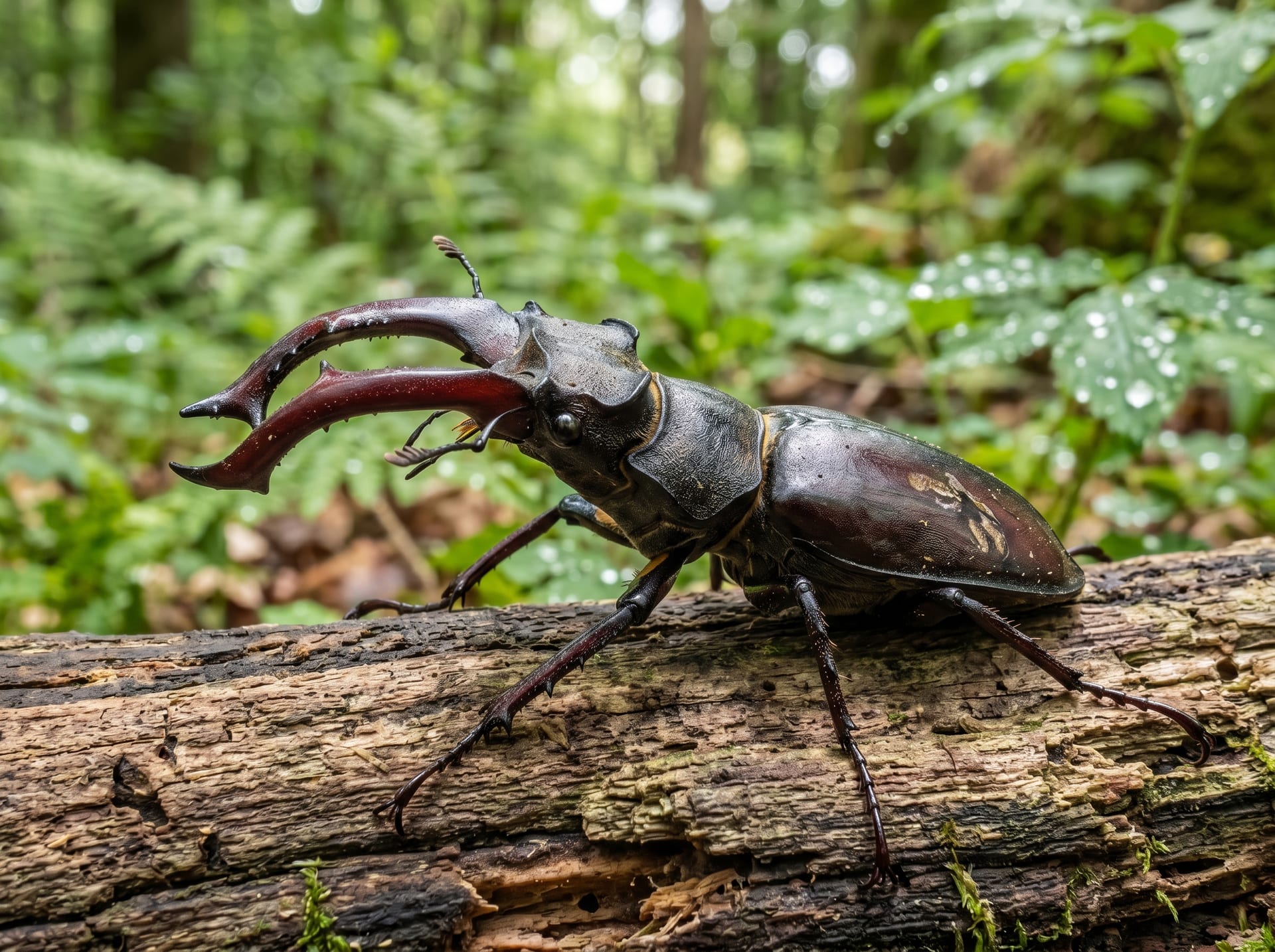
Giant Stag Beetle
The king of Japanese stag beetles. Thick mandibles and jet-black body. Larvae grow large on fungus bottles. Long-lived at 2-3 years.
View Giant Stag Beetle encyclopedia →0% commission on your first sales!Register by September 30, 2026 and your first 2 sales are commission-free!
Breeder Wanted!
List on BreederDirect and sell directly to customers nationwide!
6 Transparency Standards You Can Trust
When listing Insects, Breeders disclose the following. We guarantee transparency on growth stage and breeding unit.
- Life Stage Clarity
- Generation Info
- Real Photos
- Breeding Unit
- Country of Origin
- Body Length (mm)
Browse all 26 breeds
Verified breeders wanted for Insects
Breeders are signing up now ahead of launch. Subscribe to be notified when new listings go live.
Getting alerts is free with a member account. When new listings match your saved search, we'll notify you by email and in-app.
Browse other categories
Verified breeders (preview)
Giant Stag Beetle key facts
- Care level
- Intermediate
- Lifespan
- Adult 2-3 years / Larva ~1 year
- Size
- 25-85mm
- Temperature
- 18〜25℃
- Diet
- Jelly (adult) / Fungus bottle (larva)
- Enclosure
- Small-medium case. Anti-fungus gnat filter recommended
- Breeding
- Females lay in egg wood (oak/konara)
- Larva Care
- Individual fungus bottles 800-1400ml
- Notes
- Cool temps are key to large size. Keep below 25°C
About Giant Stag Beetle
The ookuwa stag beetle (Dorcus hopei binodulosus) inhabits the deciduous forests of Honshu, Shikoku, and Kyushu, and has long been revered as the "king of Japanese stag beetles." Once so prized that wild-caught specimens commanded high prices, the species is now widely available thanks to well-established captive-breeding techniques, and dedicated breeders continue to develop large-body lineages. Its most striking feature is a pair of thick, curved mandibles; exceptional males can exceed 75 mm in total length. The deep, lustrous black body has strong ornamental appeal whether displayed as a live pet or a specimen. Temperamentally, it is one of the calmer Japanese stag beetles, and individuals accustomed to handling can be walked on the hand. One of the great pleasures of the hobby is feeding larvae in fungal substrate bottles to encourage impressive adult size, then watching the full metamorphosis to adulthood. Adults live 2–3 years, hibernating through multiple winters and making the ookuwa a long-term companion enjoyed by beginners and advanced breeders alike.
7 things to know before welcoming a Giant Stag Beetle
1Enclosure Size Guide
A medium-sized enclosure (around 30 cm) with a fruit-fly-proof lid works well for one adult pair. Separating the male and female after mating reduces stress on the female. For breeding, use a deeper case filled with a laying log and fermented substrate.
2Temperature Management
Dorcus hopei is sensitive to heat; ideally keep temperatures below 25°C in summer. Exposure above 30°C can cause lethargy and weaken the beetle. Use air conditioning or cool packs, and keep the enclosure away from direct sunlight.
3Fungal Bottle Larval Rearing
Fungal substrate bottles inoculated with Pleurotus eryngii or Trametes versicolor strains are effective for growing large larvae. Swap bottles every 2–3 months, or sooner when frass covers most of the bottle. The larval stage lasts 1–2 years, so patient management is key to achieving large adult size.
4Adult Diet and Hydration
Offer high-protein beetle jelly 2–3 times per week for adult care. Nutrient-rich insect jelly is considered beneficial for longevity and reproduction. Fruits such as banana or apple are also accepted, but spoil quickly and must be replaced frequently.
5Overwintering Care
Dorcus hopei naturally hibernates in winter and becomes inactive around 10°C. During overwintering, maintain substrate moisture to prevent desiccation, and avoid disturbing the beetle unnecessarily. It will resume activity naturally as temperatures rise in spring.
6Pairing and Breeding Setup
For egg-laying, soak an oak or Quercus serrata log until soft and bury it halfway in substrate. Remove the male after confirming mating so the female can focus on laying. Holes appearing in the log indicate egg-laying; excavate the log after 1–2 months to collect larvae.
7Estimated Costs
Adult pair prices range from a few thousand to tens of thousands of yen depending on origin and size. A starter setup (enclosure, substrate, jelly, laying log) typically costs around ¥3,000–¥8,000. If rearing larvae in fungal bottles, budget an additional ¥500–¥1,500 per bottle replacement.
Frequently asked questions about Giant Stag Beetle
- Q.Is air conditioning absolutely necessary?
- A.Adult beetles can tolerate brief periods near 30°C, but an environment around 25°C is ideal. Larvae — especially those in fungal substrate bottles — are sensitive to heat; above 28°C the fungus degrades and mortality risk rises, making summer temperature control important.
- Q.Can males and females be kept together?
- A.Permanent cohabitation is not recommended, as males can injure females. The standard practice is to house them together only briefly (1 to a few hours) for supervised mating, then separate them promptly once mating is confirmed.
- Q.How long does it take to raise from larva to adult?
- A.It typically takes 1–2 years from hatching to adult emergence. Under fungal-bottle care at 20–23°C, some individuals emerge in as little as one year, but allowing two full years tends to produce larger adults for those aiming for maximum size.
- Q.What should I feed adult beetles?
- A.Commercially available beetle jelly (sold for stag and rhinoceros beetles) is the most convenient and nutritionally balanced option. High-protein jelly is often recommended to help females recover condition before and after egg-laying. Watermelon and other fruits are accepted but can cause loose droppings due to high water content, so use them only as an occasional supplement.
- Q.What are the keys to successful egg-laying?
- A.The standard setup uses thoroughly soaked, moderately soft oak logs lightly covered with fermented substrate. Place the container in a quiet, dark location and maintain 23–25°C to encourage egg-laying. Transfer the female to the breeding setup about 2–3 weeks after confirming mating.
Useful tools for Giant Stag Beetle care
Learn more about Giant Stag Beetle in the encyclopedia
View Giant Stag Beetle encyclopedia entry →
Care difficulty, lifespan, size and diet — all basics covered.
Giant Stag Beetle related articles
See more Giant Stag Beetle articles →More in this category
Can't find the one you're looking for?
Post your wishes for free and breeders with matching animals will contact you with introductions.