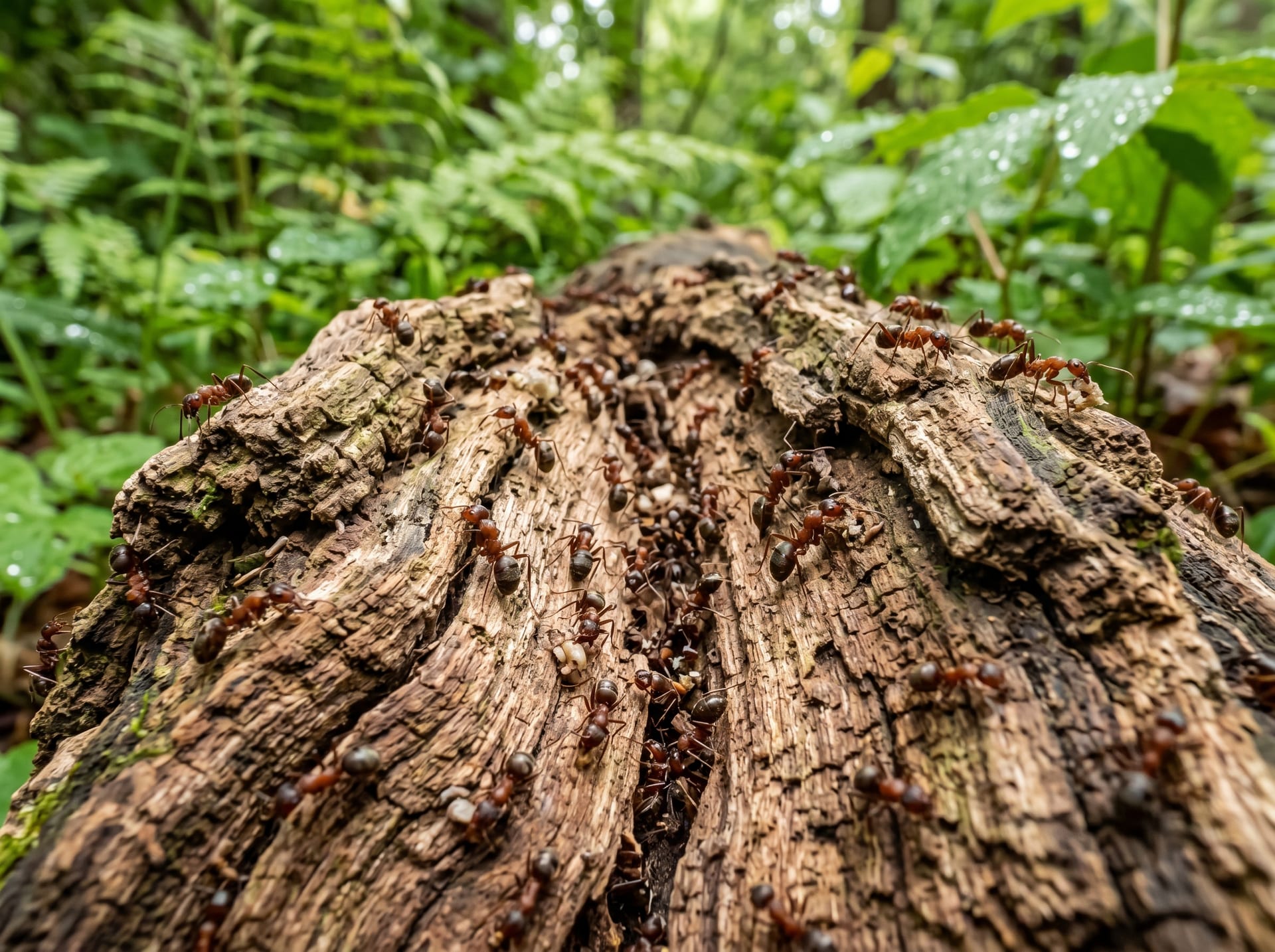
Ant
Ants are highly social insects, and ant-keeping (known as myrmecology hobbyist culture) — observing a queen-centered colony through a formicarium — has grown into a uniquely intellectual hobby. Colony behavior, nest architecture, and social dynamics vary greatly by species, offering endless fascination. Their compact housing requirements make them an ideal pet for those with limited space.
0% commission on your first sales!Register by September 30, 2026 and your first 2 sales are commission-free!
Breeder Wanted!
List on BreederDirect and sell directly to customers nationwide!
6 Transparency Standards You Can Trust
When listing Insects, Breeders disclose the following. We guarantee transparency on growth stage and breeding unit.
- Life Stage Clarity
- Generation Info
- Real Photos
- Breeding Unit
- Country of Origin
- Body Length (mm)
Browse all 26 breeds
Verified breeders wanted for Insects
Breeders are signing up now ahead of launch. Subscribe to be notified when new listings go live.
Getting alerts is free with a member account. When new listings match your saved search, we'll notify you by email and in-app.
Browse other categories
Verified breeders (preview)
About Ant
Ants are among Earth's most successful insects, having developed complex social structures over 100 million years of evolution. More than 300 species are found in Japan alone, with Camponotus japonicus, Camponotus obscuripes, and Lasius japonicus among the most popular kept species. Body size varies from under 1mm to several centimeters depending on species, and coloration ranges from black and red to yellow and metallic hues. Each colony operates with a clear division of roles among queen, workers, and males, all instinctively contributing to nest expansion, brood care, and foraging. The greatest appeal of ant-keeping lies in observing this miniature society in real time through transparent glass or acrylic enclosures. The hobby has grown rapidly in recent years, supported by specialized equipment and active keeper communities. With minimal daily care requirements and no noise, ants are an ideal pet even in apartments.
7 things to know before welcoming a Ant
1Escape Prevention First
Ants can escape through the tiniest gaps, so escape-proofing your formicarium is critical. Applying a PTFE (Teflon) barrier or baby powder to the inner walls and lid edges prevents ants from climbing out. Address escape prevention before introducing any colony, as a loose ant can establish a feral nest indoors.
2Start with a Queen
A successful ant colony starts with a mated queen. Worker-only groups cannot reproduce and will die off within weeks. The best way to start is to collect a queen during her nuptial flight season or purchase one from a reputable ant-keeping supplier.
3Separate Nest and Foraging Area
An ideal formicarium separates the nest chamber from a foraging arena. Keep the nest dark and slightly humid, while the arena stays drier and well-lit for observation. This division mirrors the ants' natural habitat and supports stable colony development.
4Feed Protein and Sugar
Ants require both protein and sugar in their diet. Insects such as crickets or mealworms supply protein, while diluted honey or insect jelly provides sugar. The ratio shifts depending on colony growth — increase protein when larvae are present to support brood development.
5Temperature and Humidity
Optimal temperature varies by species; common Japanese species like Lasius niger and Tetramorium caespitum thrive at roughly 20–28°C. Maintain moderate humidity (around 60–70%) in the nest area by adding small amounts of water regularly. Avoid overwatering, as excess moisture promotes mold growth.
6Winter Dormancy Required
Many Japanese ant species require a winter dormancy period. Skipping hibernation can shorten the queen's lifespan and reduce egg production the following spring. From around November, gradually lower the temperature to 5–15°C and keep the colony in a cool, dark location for two to three months.
7Colony Growth Takes Time
A colony started from a single queen can take one to two years or more to reach a few dozen to a few hundred workers. During the founding stage — the first several months — the queen relies on her fat reserves, so feeding is unnecessary. Patient, low-disturbance observation during this period is key to long-term success.
Frequently asked questions about Ant
- Q.Can I keep just a single ant?
- A.A single worker ant is short-lived and cannot sustain a colony. The standard approach is to start with a single queen ant and grow the colony from her eggs and larvae upward.
- Q.How do I deal with escaped ants?
- A.For small numbers, lure them with moist cotton or use ant-specific insecticide along escape routes. However, addressing escapes before they can reproduce is critical, making daily prevention measures the best strategy.
- Q.How should I manage ants in winter?
- A.Most domestic Japanese species become less active and enter dormancy in winter. Storing them at around 10°C in a refrigerator or cool dark place for 12–16 weeks stimulates increased egg-laying the following spring. Tropical species should be kept at around 25°C year-round.
- Q.Where can I obtain a queen ant?
- A.You can collect newly-mated queens from the ground outdoors after mating flights in May–July, or purchase a starter kit from a breeder or ant specialty shop. For beginners, buying from a reputable breeder is the safer and more reliable option.
- Q.How long do ants live?
- A.Queen ants can live from 5 to over 20 years depending on species and are the key to colony survival. Worker ants typically live several months to about one year. As long as the queen remains healthy, the colony continues, making long-term keeping very much achievable.
Useful tools for Ant care
Ant related articles
Flipping Over Prevention Guide for Japanese Rhinoceros Beetles & Stag Beetles|How to Choose Climbing Logs and Anti-Tipping Supplies
A guide explaining anti-tipping measures to prevent the common accident where Japanese rhinoceros beetles and stag beetles flip over, become unable to right themselves, and weaken. We cover how to choose and install climbing logs, cork, and charcoal; how to position homemade alternatives like wooden chopsticks, fallen leaves, and netting; and the correct technique for righting a flipped beetle.
Leaf-Cutter Ant Colony Care Guide | Fungal Garden Management, Feeding, Equipment & Legal Regulations
A comprehensive guide to keeping leaf-cutter ant colonies (Atta/Acromyrmex genus)—the "agricultural ants" that cultivate fungi on harvested leaves. Covers legal compliance with the Plant Protection Act, establishing colonies from starter queens, managing fungal garden (substrate) temperature and humidity (80–90% RH), selecting pesticide-free leaves and avoiding pesticide contamination, troubleshooting issues like green mold and fungal garden shrinkage, and gradually expanding equipment as colonies grow. This article consolidates all essential knowledge for leaf-cutter ant keeping.
Antheraea yamamai and Caligula japonica Larval Rearing Guide | How to Raise Japan's Largest Wild Silkmoths in Cases
Antheraea yamamai (Japanese giant silkmoth) and Caligula japonica (Japanese oak silkmoth) are large wild silkmoths native to Japan, known as beautiful moths. This guide provides detailed explanations for beginners on the lifecycle from larval collection through food plant preparation, molt management, pupation, and adult emergence, as well as the key differences between species.
Ant Keeping Guide for Beginners | How to Choose Breeding Kits, Obtaining a Queen Ant, and Colony Management
A beginner's guide to ant keeping. Introduces types and selection of breeding kits, methods for obtaining a queen ant, how to feed, and the growth process of colonies.
Ant Keeping (Ant Husbandry) Beginner's Guide | How to Start Observing Your Colony
Explaining how to keep ants. Introducing how to obtain a queen ant, how to build a nest (formicarium), and how to manage your colony.
More in this category
Can't find the one you're looking for?
Post your wishes for free and breeders with matching animals will contact you with introductions.