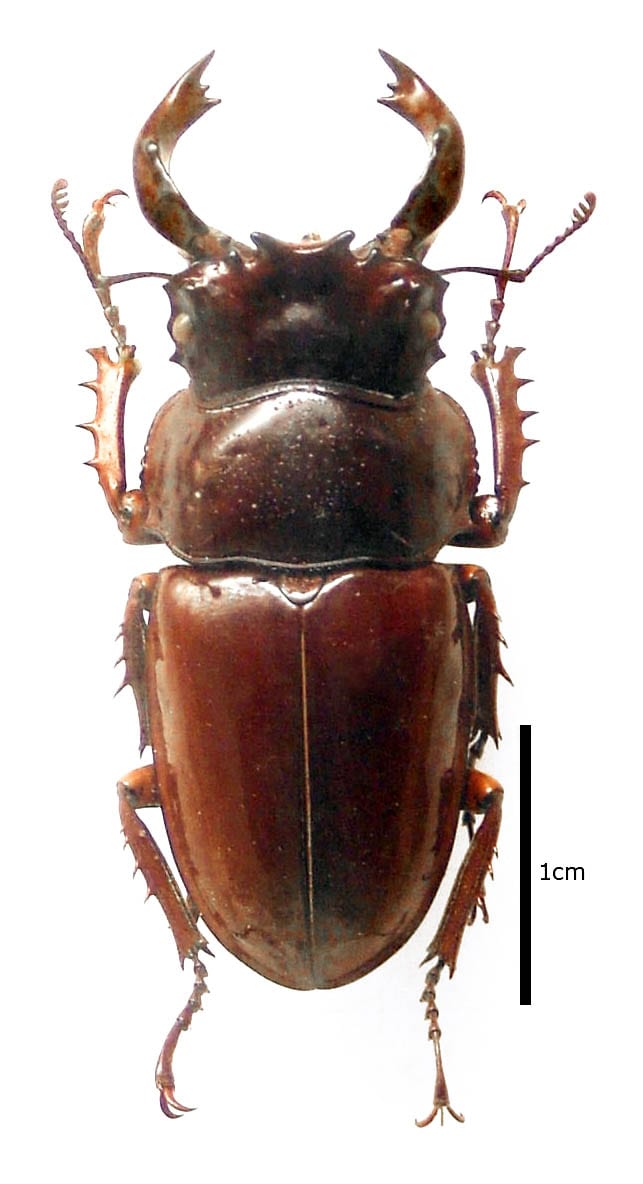
 © Sarefo / CC BY-SA 3.0
Tarandus Giant Shining Stag Beetle
The Tarandus Giant Shining Stag Beetle is Africa's largest stag beetle, and the sole species that makes up its own genus. Its body is coated in a lacquer-like sheen, with a broad, stocky build that gives it an unmistakable sense of heft, and its mandibles deliver an exceptionally strong pinch. Because it's considered suited to intermediate keepers, it makes a natural next step for anyone who has already gained some experience raising other beetle species.
View Tarandus Giant Shining Stag Beetle encyclopedia →0% commission on your first sales!Register by September 30, 2026 and your first 2 sales are commission-free!
Breeder Wanted!
List on BreederDirect and sell directly to customers nationwide!
6 Transparency Standards You Can Trust
When listing Insects, Breeders disclose the following. We guarantee transparency on growth stage and breeding unit.
- Life Stage Clarity
- Generation Info
- Real Photos
- Breeding Unit
- Country of Origin
- Body Length (mm)
Browse all 296 breeds
Verified breeders wanted for Insects
Breeders are signing up now ahead of launch. Subscribe to be notified when new listings go live.
Getting alerts is free with a member account. When new listings match your saved search, we'll notify you by email and in-app.
Browse other categories
Verified breeders (preview)
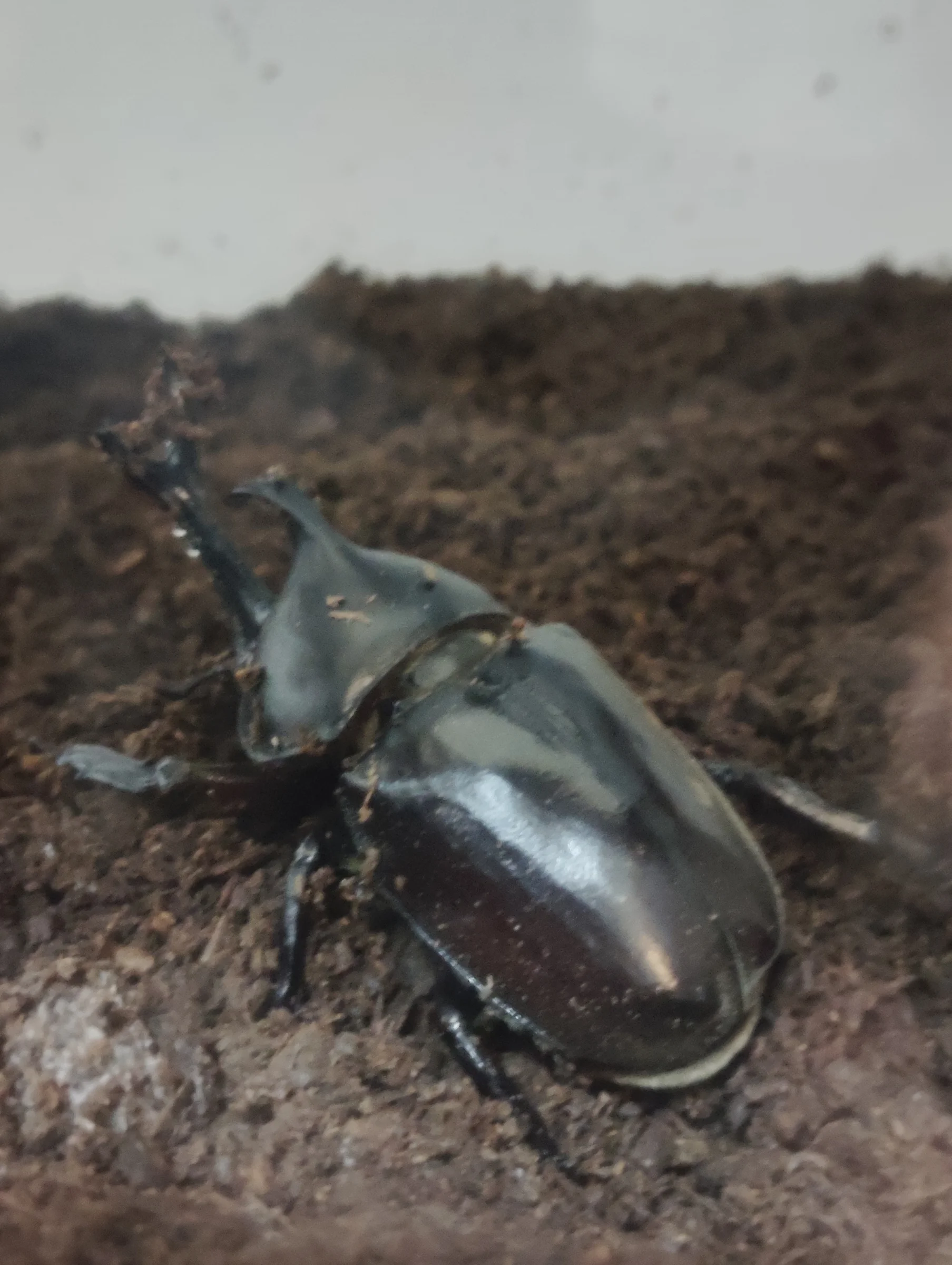
Tarandus Giant Shining Stag Beetle key facts
- Care level
- Intermediate
- Lifespan
- A few months as an adult
- Size
- Males 46-92mm, females 36-56mm (captive record 98.0mm, wild record 93.0mm)
- Diet
- Adults take tree sap and beetle jelly; larvae are reared in Coriolus mycelium bottles
- Temperature & Humidity
- Keep the substrate on the dry side; a temperature somewhere in the twenties Celsius is considered right. It is a beetle of the central African rainforest, and the Coriolus medium it is reared on degrades quickly.
- Breeding & Egg-laying
- Rearing the adults was never the problem, but breeding the larvae was long considered difficult until it emerged that, as with Allotopus, the beetle lays into Coriolus or Ganoderma logs and into Coriolus medium, and that the larvae grow readily in Coriolus mycelium bottles. With the right materials it is now fairly easy to keep. The captive record of 98.0 mm exceeds the wild record of 93.0 mm.
- Cohabitation
- It will fight not only its own kind but other stag beetles and even Augosoma centaurum, and usually overwhelms anything smaller or weaker. Both sexes grip very hard, so the beetles are never housed together and handling calls for care.
- Lifespan & Rearing Period
- The larvae grow in Coriolus mycelium bottles, but the medium degrades quickly and needs watching. Once past the early stages the larvae are hardy. The adults live a few months.
- Health & Notes
- When provoked it vibrates its head and produces a sound between head and thorax. The related M. regius is often treated as a synonym or a subspecies of this beetle, so the two should not be crossed or housed together. Importing live Scarabaeoidea requires the species identification certificate.
About Tarandus Giant Shining Stag Beetle
The Tarandus Giant Shining Stag Beetle is Africa's largest stag beetle and the only species in its genus, known for a lacquer-like sheen, a broad heavy build, and a powerful mandible grip. Best suited to intermediate keepers.
7 things to know before welcoming a Tarandus Giant Shining Stag Beetle
1Feisty Temperament, Strong Grip
This species has an exceptionally strong mandible grip and a somewhat feisty temperament. Be careful of your fingers when handling it directly, and consider using tools rather than bare hands until you're more experienced.
2Choosing an Enclosure for Its Build
Its broad, lacquer-like sheened body gives it a real sense of heft. Choose an enclosure with enough width and a stable footing to match its build, so it has room to move comfortably.
3Temperature Care for an African Species
As a species native to the African continent, it's best kept at a temperature range close to its natural habitat. Avoid extreme cold and sudden temperature swings, and aim for a stable environment.
4Adult Lifespan Is a Few Months
Adults are active for only a few months, a much shorter span than the larval stage. Since this time is limited, careful temperature control and daily attention after bringing one home really matter.
5Difficulty Level: Intermediate
This species is considered suited to intermediate keepers, so some basic experience with insect care will help things go smoothly. First-timers should review the basics of temperature and humidity management beforehand.
6Housing Is Best Kept Solitary
Housing multiple individuals together can lead to conflicts, given how strong their mandible grip is. It's best to keep one beetle per enclosure and manage them individually.
7Do Your Homework Before Bringing One Home
It's a distinctive species, being the sole member of its genus. Setting up the enclosure and tools in advance, and understanding its temperament and mandible strength beforehand, will help you start off calmly.
Frequently asked questions about Tarandus Giant Shining Stag Beetle
- Q.Can beginners keep this species?
- A.This species is generally considered suited to intermediate keepers. Having some basic experience with insect care will help you feel more confident bringing one home.
- Q.How long do adults live?
- A.Adults are active for roughly a few months. That's shorter than the larval stage, so daily care after bringing one home matters.
- Q.How much do males and females differ in size?
- A.Males typically range from 46 to 92mm and females from 36 to 56mm, with males growing notably larger. Records of 98.0mm in captivity and 93.0mm in the wild have also been reported.
- Q.Is this species covered by CITES?
- A.The Tarandus Giant Shining Stag Beetle is not covered by CITES. This is provided for reference when considering this species.
- Q.What does it look like?
- A.Its body has a striking lacquer-like sheen along with a broad, heavy build. The mandibles also deliver a very strong pinch, adding to its impressive overall look.
Useful tools for Tarandus Giant Shining Stag Beetle care
Learn more about Tarandus Giant Shining Stag Beetle in the encyclopedia
View Tarandus Giant Shining Stag Beetle encyclopedia entry →
Care difficulty, lifespan, size and diet — all basics covered.
More in this category
Can't find the one you're looking for?
Post your wishes for free and breeders with matching animals will contact you with introductions.