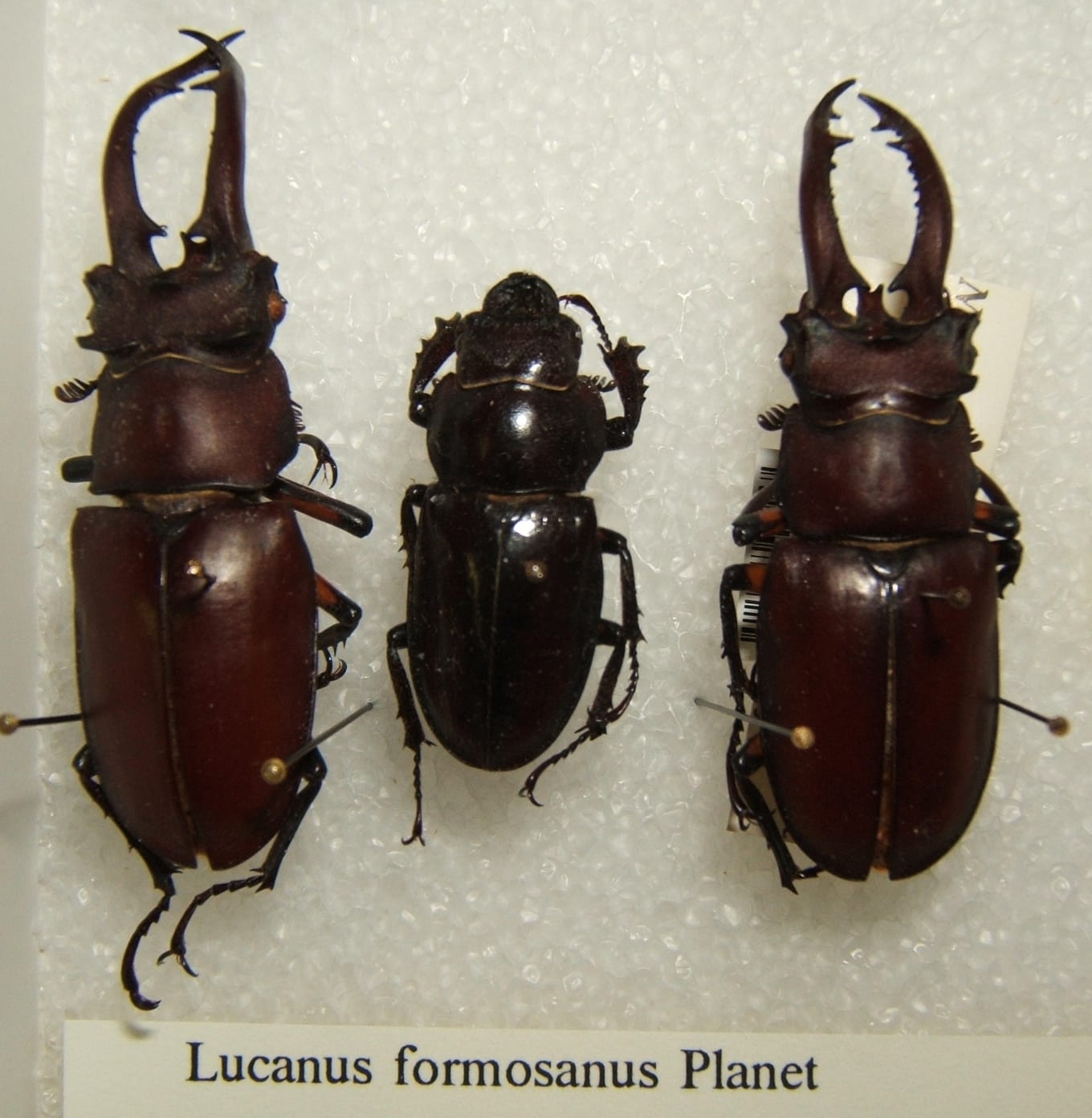
 © Shawn Hanrahan / CC BY-SA 2.5
Taiwanese Stag Beetle
The Taiwanese Stag Beetle is a large stag beetle native to Taiwan, typically growing to 45-80mm in body length. Males show three distinct mandible forms - northern, central, and southern - depending on their region of origin, so no two lineages look quite the same. Its body shape closely resembles that of Dorcus hopei binodulosus (Hermann's stag beetle) and Dorcus curvidens (planet stag beetle) relatives, which makes side-by-side comparison part of the fun. Keeping this species well often calls for careful attention to temperature and breeding setup, and it's generally considered a beetle for more experienced keepers. It suits anyone who has already kept other stag or rhinoceros beetles and wants a species to study more closely.
View Taiwanese Stag Beetle encyclopedia →0% commission on your first sales!Register by September 30, 2026 and your first 2 sales are commission-free!
Breeder Wanted!
List on BreederDirect and sell directly to customers nationwide!
6 Transparency Standards You Can Trust
When listing Insects, Breeders disclose the following. We guarantee transparency on growth stage and breeding unit.
- Life Stage Clarity
- Generation Info
- Real Photos
- Breeding Unit
- Country of Origin
- Body Length (mm)
Browse all 296 breeds
Verified breeders wanted for Insects
Breeders are signing up now ahead of launch. Subscribe to be notified when new listings go live.
Getting alerts is free with a member account. When new listings match your saved search, we'll notify you by email and in-app.
Browse other categories
Verified breeders (preview)
Taiwanese Stag Beetle key facts
- Care level
- Advanced
- Lifespan
- Adults 2-3 months
- Size
- 45-80mm (captive record 83.0mm, wild record 85.0mm)
- Diet
- Adults take beetle jelly; larvae eat fermented substrate
- Temperature & Humidity
- The congeneric Japanese L. maculifemoratus is said to lay readily when kept below 25C, and cool rearing suits those aiming for large beetles. Keep the substrate at a moisture that forms a ball when squeezed.
- Breeding & Egg-laying
- The BE-KUWA 2025 edition gives a captive record of 83.0mm for foreign stag beetles (Fu Nien-Tse, registered 2024; wild record 85.0mm, expected maximum 91mm). Lucanus species have long larval periods and many rest after eclosion, so years can pass between egg-laying and an active adult.
- Cohabitation
- Adults are kept singly and put together only for pairing. Males fight with their mandibles and must always be separated. Mandible form differs by locality, so keep the northern, central and southern lines apart.
- Lifespan & Rearing Period
- Adults of the genus Lucanus are generally short-lived while the larval stage is long.
- Health & Notes
- Male mandible form changes with locality, so beetles of the same species need not match; check the stated origin when buying. Despite the similar Japanese name, the Taiwanese deer stag beetle (Rhaetulus crenatus crenatus) is a different genus and species. Importing foreign stag beetles falls under the Plant Protection Act, and whether a given species may enter depends on the country it comes from, so domestically bred stock is the safe choice.
About Taiwanese Stag Beetle
Taiwan's native large stag beetle, 45-80mm long, with mandible shape varying by region. An overview for keepers considering this advanced-level species.
7 things to know before welcoming a Taiwanese Stag Beetle
1Mandible Shape Varies by Origin
Male mandible shape falls into northern, central, or southern types depending on locality. Since this changes the beetle's overall look, it helps to check which type you're getting before bringing one home.
2A Wide Size Range
Adult body length ranges widely from about 45 to 80mm, so individuals can look quite different from one another. Captive-bred records reach 83.0mm and wild records reach 85.0mm, giving keepers something to aim for if they enjoy raising larger specimens.
3Best Suited to Experienced Keepers
This species is generally regarded as challenging to keep. It's best approached after gaining experience with temperature, humidity control, and breeding setups through other stag beetle species first.
4Distinguishing from Similar Species
Because its body shape resembles Hermann's stag beetle and the planet stag beetle, it's worth double-checking the species name on any listing or label before purchasing. Comparing them side by side helps reveal the differences.
5Preparing the Enclosure in Advance
Having the basic setup ready in advance - a suitable case, substrate, and climbing branches - makes the transition smoother. Since this species tends to be sensitive to temperature swings, it's also worth checking the room temperature where the enclosure will be placed.
6Temperament and Handling
Males with well-developed mandibles are strong and not suited to being housed together with other beetles. Keeping them singly is standard practice, and care should be taken to avoid being pinched when handling them.
7Regulatory Status
The Taiwanese Stag Beetle is not subject to CITES. There's no need to worry about special legal procedures when bringing one home.
Frequently asked questions about Taiwanese Stag Beetle
- Q.Can beginners keep this species?
- A.This species is generally considered challenging to keep. It's recommended to gain experience with temperature and humidity management through other stag beetles first.
- Q.How large does it grow?
- A.Adults typically reach about 45-80mm in body length. Sizes vary considerably between individuals, with a captive-bred record of 83.0mm and a wild record of 85.0mm.
- Q.Why does mandible shape differ between individuals?
- A.Mandible shape is grouped into northern, central, and southern types based on locality within Taiwan. Even within the same species, appearance can differ noticeably depending on where the beetle originates.
- Q.How do I tell it apart from similar species?
- A.Its body shape resembles Hermann's stag beetle and the planet stag beetle. It's a good idea to carefully check the species name listed before purchasing.
- Q.Is it okay to keep multiple beetles together?
- A.Males with developed mandibles are powerful, and housing them together can lead to fighting or injury. It's generally recommended to keep each beetle in its own enclosure.
Useful tools for Taiwanese Stag Beetle care
Learn more about Taiwanese Stag Beetle in the encyclopedia
View Taiwanese Stag Beetle encyclopedia entry →
Care difficulty, lifespan, size and diet — all basics covered.
More in this category
Can't find the one you're looking for?
Post your wishes for free and breeders with matching animals will contact you with introductions.