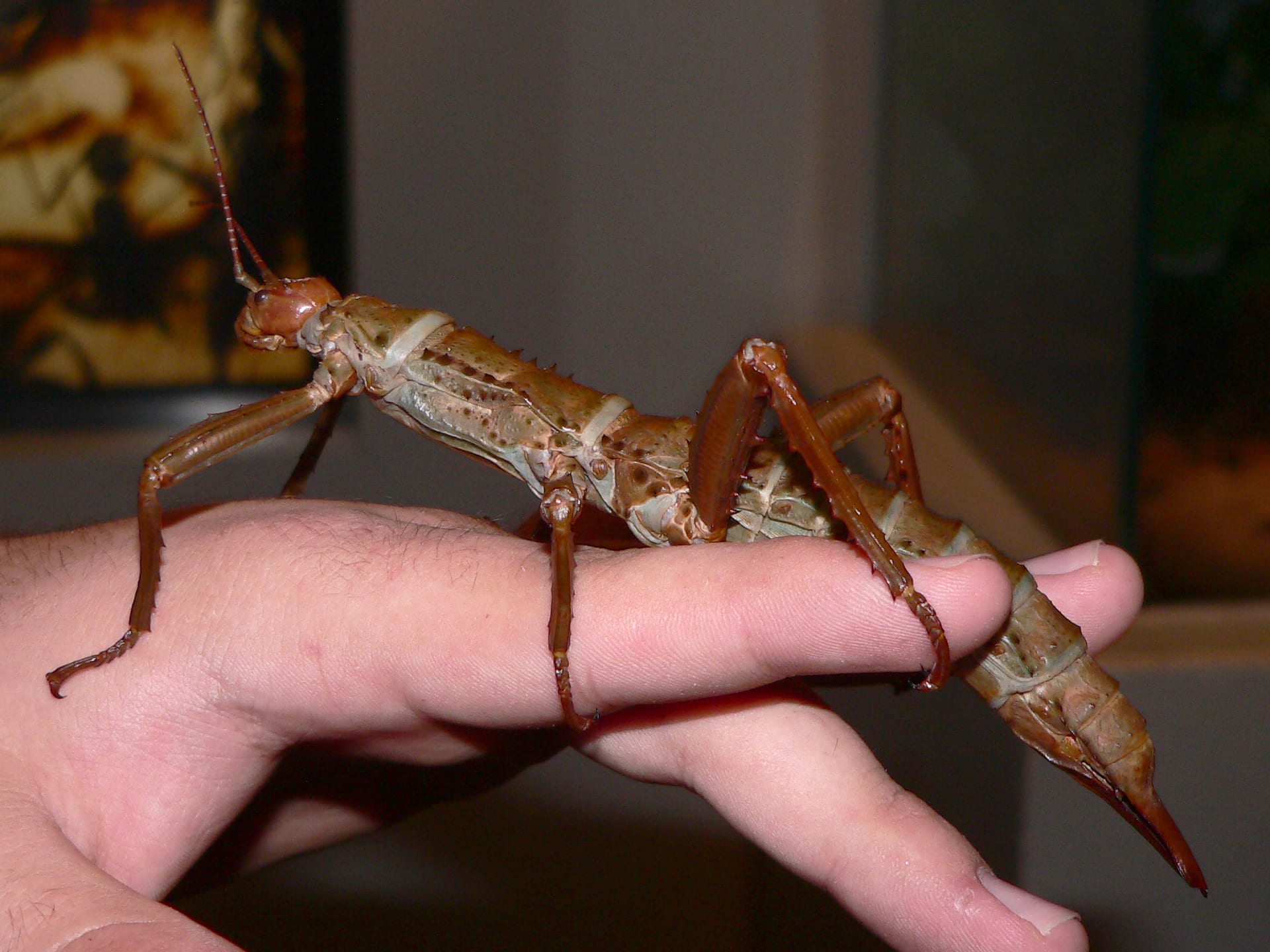
 © Greg Hume / CC BY-SA 3.0
Thorny Devil Stick Insect
The Thorny Devil Stick Insect is a large stick insect native to the forests of New Guinea, New Caledonia, and the Solomon Islands. With a body that mimics bark or a piece of dead wood, it clings motionlessly to branches, showcasing the insect world's remarkable art of camouflage. Both males and females are wingless and covered in spines from head to tail. Males in particular carry a pair of thick, sharply curved spines on their hind legs — so sturdy that local people have traditionally used them as fishhooks. Females grow noticeably larger than males, giving them a bold, substantial presence. Slow-moving by day and more active after dark, this species rewards patient observers and makes a rewarding choice for intermediate-level insect keepers.
View Thorny Devil Stick Insect encyclopedia →0% commission on your first sales!Register by September 30, 2026 and your first 2 sales are commission-free!
Breeder Wanted!
List on BreederDirect and sell directly to customers nationwide!
6 Transparency Standards You Can Trust
When listing Insects, Breeders disclose the following. We guarantee transparency on growth stage and breeding unit.
- Life Stage Clarity
- Generation Info
- Real Photos
- Breeding Unit
- Country of Origin
- Body Length (mm)
Browse all 296 breeds
Verified breeders wanted for Insects
Breeders are signing up now ahead of launch. Subscribe to be notified when new listings go live.
Getting alerts is free with a member account. When new listings match your saved search, we'll notify you by email and in-app.
Browse other categories
Verified breeders (preview)
Thorny Devil Stick Insect key facts
- Care level
- Intermediate
- Lifespan
- Adults 1-2 years
- Size
- Males under 9-10cm, females about 14cm
- Diet
- The leaves of eucalyptus, ficus, bramble, raspberry, rose, cherry laurel and guava
- Temperature & Humidity
- It comes from warm, humid rainforest, so mist the enclosure against drying. Provide bark or a hollow to stand in for the daytime retreats it uses in the wild.
- Breeding & Egg-laying
- It normally reproduces sexually, the eggs hatching four and a half to six and a half months later, and turns to parthenogenesis when no males are present. The eggs are about 8.2mm long and 4mm wide, somewhat cylindrical, ranging from brown to grey, with a rough, shiny surface. The female uses her ovipositor to lay in soft soil. Nymphs hatch brown at 30-40mm and, being defenceless, climb to the top of the food plants and gather there. Males fight hard for mating rights.
- Cohabitation
- It shelters in groups by day in the wild, so several can share an enclosure, but males fight over mating and need room if more than one is kept. The spines on the male's hind legs are formidable, so take care not to be gripped when handling.
- Lifespan & Rearing Period
- Across stick insects as a whole, lifespans range from a few months to at most three years depending on the species. The egg stage alone runs four and a half to six and a half months, so a generation takes time.
- Health & Notes
- The import of insects, foreign stick insects included, is regulated under Japan's Plant Protection Act, and whether a given species may enter depends on the country it comes from. What circulates in Japan is captive-bred stock, so buy from a clear source and never let one loose outdoors. The eggs look like plant seeds, so always check the substrate for them before discarding it.
About Thorny Devil Stick Insect
A large stick insect native to New Guinea that mimics tree bark. Males have distinctive curved spines on their hind legs, traditionally used as fishhooks — an intermediate-level pick for insect keepers.
7 things to know before welcoming a Thorny Devil Stick Insect
1Bark-like camouflage
Its body mimics the color and texture of bark or dead wood so closely that it can vanish against a branch. It spends far more time still than moving, so newcomers may need a moment to spot it.
2Watch the male's spines
Males carry a pair of thick, sharply curved spines on their hind legs, sturdy enough to pinch painfully if you're not careful. Handle them gently and avoid gripping or provoking the legs.
3Nocturnal habits
During the day it stays motionless, becoming active — walking and feeding — after dark. If you want to watch it in action, check the enclosure in the evening or at night.
4Tall enclosure needed
As a bark-dwelling insect, it does best in a tall enclosure that gives it room to climb and hang safely while molting. Since females can grow to around 14 cm, allow generous vertical space.
5Keep fresh foliage on hand
Its main diet is foliage, so you'll need a steady supply of fresh leaves. Wilted leaves are less appealing, so replace them regularly.
6Leave it be during molting
When molting, it hangs from a secure spot and sheds its old exoskeleton slowly. Vibration or handling during this process can cause the molt to fail, so it's best to leave it undisturbed.
7Know its defensive display
When startled or provoked, it may arch its body and raise its spiny hind legs in a defensive display. This is a natural protective behavior, so approach it calmly to avoid triggering it.
Frequently asked questions about Thorny Devil Stick Insect
- Q.How big does it grow?
- A.Males reach just under 9–10 cm, while females grow to around 14 cm. Females are noticeably larger than males at maturity.
- Q.How can you tell males and females apart?
- A.Females grow noticeably larger than males, so the size difference is clear in adults. Males are also distinguished by the thick, curved spines on their hind legs.
- Q.How difficult is it to keep?
- A.This species is considered suitable for intermediate keepers. Some experience helps with managing temperature, humidity, and a steady supply of fresh leaves.
- Q.Is it regulated under CITES?
- A.The Thorny Devil Stick Insect is not covered by CITES.
- Q.Is it safe to handle with bare hands?
- A.You can handle it, but the spines on a male's hind legs can pinch painfully if you're not careful. It may also adopt a defensive posture if startled, so handle it gently.
Useful tools for Thorny Devil Stick Insect care
Learn more about Thorny Devil Stick Insect in the encyclopedia
View Thorny Devil Stick Insect encyclopedia entry →
Care difficulty, lifespan, size and diet — all basics covered.
More in this category
Can't find the one you're looking for?
Post your wishes for free and breeders with matching animals will contact you with introductions.