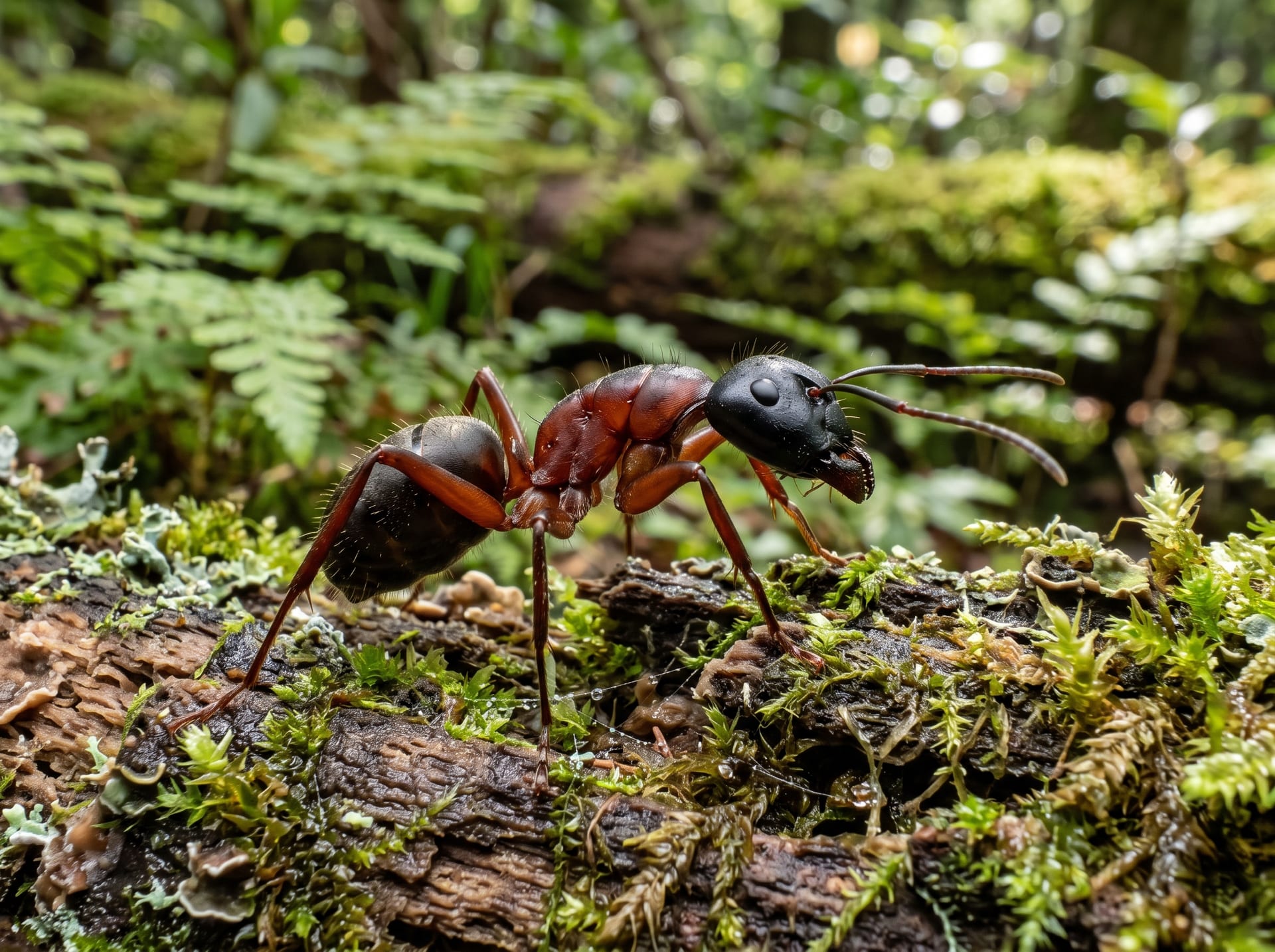
Mikado Carpenter Ant
With a glossy, dark body and strikingly orange legs, the Mikado Carpenter Ant is an arboreal species that nests inside dead bamboo and rotting wood in the wild. Colonies have an interesting habit of spreading out into small satellite nests some distance from the main nest. Being nocturnal, they stay quiet during the day and become active after dark, making evening observation especially rewarding. Workers grow to about 8-11mm and queens to roughly 15mm, giving the colony a solid, substantial presence typical of carpenter ants. This species is considered suitable for intermediate keepers, best enjoyed once you're familiar with the basics of ant-keeping.
View Mikado Carpenter Ant encyclopedia →0% commission on your first sales!Register by September 30, 2026 and your first 2 sales are commission-free!
Breeder Wanted!
List on BreederDirect and sell directly to customers nationwide!
6 Transparency Standards You Can Trust
When listing Insects, Breeders disclose the following. We guarantee transparency on growth stage and breeding unit.
- Life Stage Clarity
- Generation Info
- Real Photos
- Breeding Unit
- Country of Origin
- Body Length (mm)
Browse all 296 breeds
Verified breeders wanted for Insects
Breeders are signing up now ahead of launch. Subscribe to be notified when new listings go live.
Getting alerts is free with a member account. When new listings match your saved search, we'll notify you by email and in-app.
Browse other categories
Verified breeders (preview)
Mikado Carpenter Ant key facts
- Care level
- Intermediate
- Lifespan
- Queens 10-20 years
- Size
- Workers 8-11mm, queens about 15mm
- Temperature
- 23〜25℃
- Diet
- Sugars (honeydew, sugar water) and insects (omnivorous)
- Temperature & Humidity
- Keep at 23-25C, never above 30C. As an arboreal nester it tends to prefer a slightly drier nest than soil species, but never let the water source run dry. Honshu stock overwinters indoors unheated.
- Breeding & Egg-laying
- Start a new queen alone in a test tube for founding. Wild colonies are dispersed in small units, so collecting a queenright colony is difficult; starting from a new queen is the practical route.
- Cohabitation
- Monogynous; cannot be housed with other colonies or species. A potential host of Polyrhachis lamellidens, so never keep them together.
- Lifespan & Rearing Period
- Wild nest units hold fewer than about 300 workers, and colonies rarely become large in captivity either.
- Health & Notes
- Being nocturnal, it may not forage by day. Feed in the evening and remove leftovers the next morning to prevent mold.
About Mikado Carpenter Ant
A guide to the Mikado Carpenter Ant, a nocturnal, arboreal carpenter ant with a glossy body and orange legs. Learn about its bamboo and deadwood nesting habits, satellite nests, and care as an intermediate-level species.
7 things to know before welcoming a Mikado Carpenter Ant
1Arboreal Nesting Setup
In the wild, this species nests inside dead bamboo and rotting wood up in trees. Providing a nesting material with a similar texture and humidity helps the colony settle in comfortably.
2Nocturnal Behavior
This ant is nocturnal and tends to stay quiet and out of sight during the day. If you want to watch active behavior, check in on the colony after dark with the lights dimmed.
3Forms Satellite Nests
Colonies often build small satellite nests away from the main nest and spread out across them. Giving the setup some extra space makes it easier to observe this natural habit.
4Glossy Body with Orange Legs
A glossy body paired with striking orange legs is this ant's signature look. The sheen catches the light beautifully, making it an engaging species to simply watch.
5Suited to Intermediate Keepers
This species is considered suitable for intermediate keepers. If you're new to ant-keeping, it helps to first learn the basics of temperature, humidity, and feeding with an easier species before taking this one on.
6Expected Adult Size
Workers grow to about 8-11mm, while queens reach roughly 15mm. That solid, substantial build is part of the appeal of keeping a carpenter ant species.
7Secure Escape Prevention
As a larger, stronger carpenter ant, escape-proofing the enclosure deserves extra attention. Check your escape-prevention method before bringing the colony home.
Frequently asked questions about Mikado Carpenter Ant
- Q.Can beginners keep this species?
- A.This species is rated as suitable for intermediate keepers, so first-time ant keepers may want to start with an easier species and build up experience before taking this one on.
- Q.Is it inactive during the day?
- A.Yes, this ant is nocturnal and tends to stay quietly inside the nest during the day. For a better chance of seeing active behavior, observe the colony at night.
- Q.How big does it get?
- A.Workers reach about 8-11mm and queens grow to roughly 15mm, giving the colony the solid presence typical of carpenter ants.
- Q.What kind of nest environment does it need?
- A.In the wild, colonies nest in dead bamboo and rotting wood and spread out into satellite nests. Providing nesting material and space that reflect this habit helps the colony settle in.
- Q.Is this species subject to CITES?
- A.This species is not subject to CITES.
Useful tools for Mikado Carpenter Ant care
Learn more about Mikado Carpenter Ant in the encyclopedia
View Mikado Carpenter Ant encyclopedia entry →
Care difficulty, lifespan, size and diet — all basics covered.
More in this category
Can't find the one you're looking for?
Post your wishes for free and breeders with matching animals will contact you with introductions.