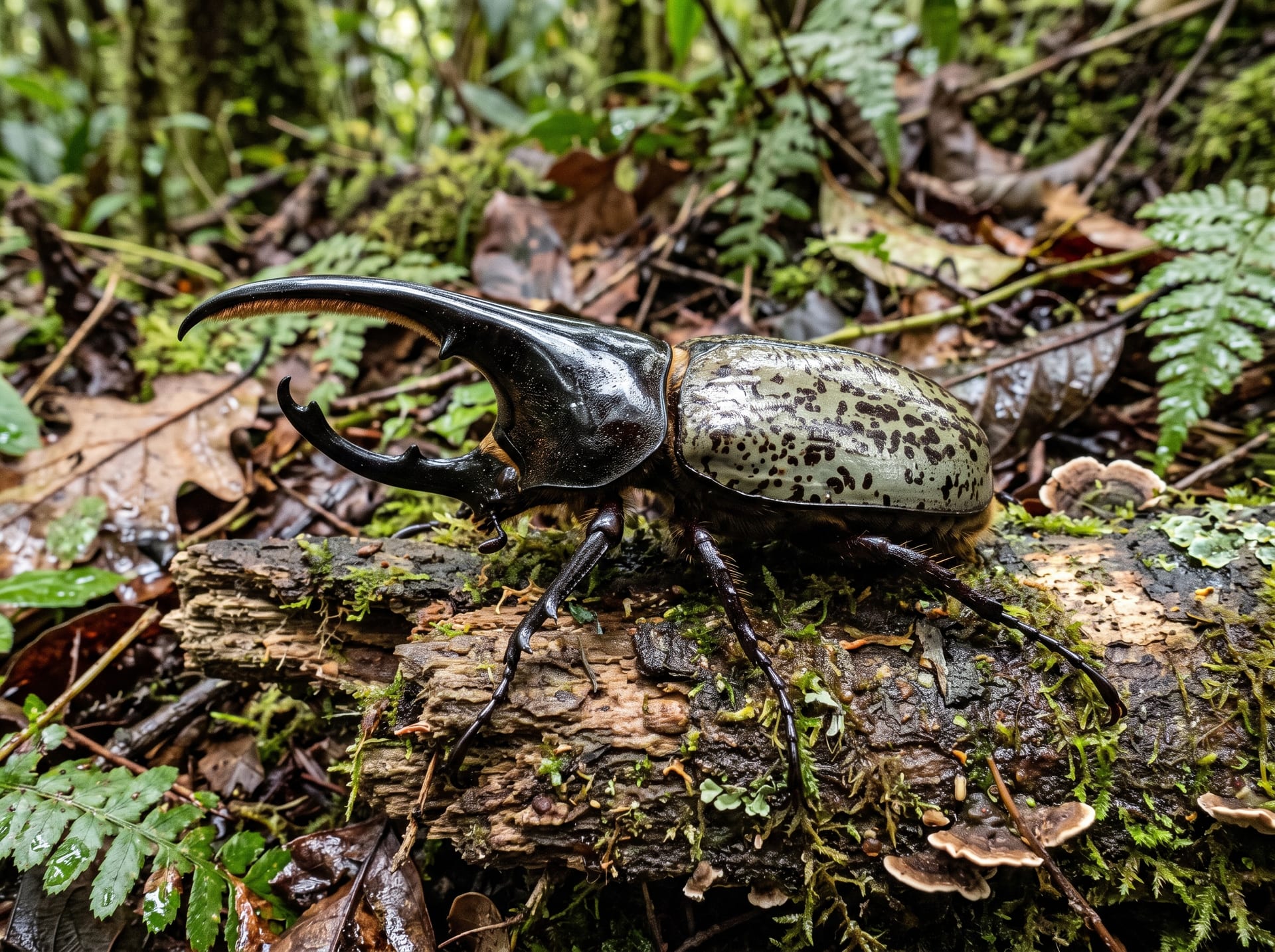
Moron's Rhinoceros Beetle
Moron's Rhinoceros Beetle is endemic to Mexico's Rostuestras mountain range and found nowhere else in the wild. It closely resembles a related species, but males stand out with a notably dark, sharply defined head and pronotum. Some captive-raised individuals have grown past 105mm, making this one of the larger beetles in its group and a favorite among keepers chasing size. Its temperament is fairly calm, and watching a larva develop into an imposing adult is much of the appeal — a species best suited to keepers with some prior experience.
View Moron's Rhinoceros Beetle encyclopedia →0% commission on your first sales!Register by September 30, 2026 and your first 2 sales are commission-free!
Breeder Wanted!
List on BreederDirect and sell directly to customers nationwide!
6 Transparency Standards You Can Trust
When listing Insects, Breeders disclose the following. We guarantee transparency on growth stage and breeding unit.
- Life Stage Clarity
- Generation Info
- Real Photos
- Breeding Unit
- Country of Origin
- Body Length (mm)
Browse all 296 breeds
Verified breeders wanted for Insects
Breeders are signing up now ahead of launch. Subscribe to be notified when new listings go live.
Getting alerts is free with a member account. When new listings match your saved search, we'll notify you by email and in-app.
Browse other categories
Verified breeders (preview)
Moron's Rhinoceros Beetle key facts
- Care level
- Advanced
- Lifespan
- Adults 4-8 months
- Size
- Males 53-84.5mm (53-96mm in some references), females 55-60.4mm
- Temperature
- 18℃
- Diet
- Adults take beetle jelly; larvae eat fermented substrate
- Temperature & Humidity
- It comes from the elevated Santa Martha massif; keep the substrate at a moisture that forms a ball when squeezed.
- Breeding & Egg-laying
- The female builds an egg chamber in firmly packed substrate at the base of the container. The BE-KUWA 2025 edition gives a captive record of 105.1mm (Koji Takao, registered 2011, expected maximum 108mm), ahead of the 98.2mm of the nominate D. hyllus.
- Cohabitation
- Adults are kept singly and put together only for pairing. Males fight with their horns and must always be separated. Its range is narrow, so do not mix it with D. hyllus or with beetles from other localities.
- Lifespan & Rearing Period
- A captive record registered in 2011 shows that it has been bred through generations in Japan.
- Health & Notes
- It occurs only in a limited massif in southern Veracruz and is not widely available. Sources differ on its rank, so note that beetles listed under the subspecies name Dynastes hyllus moroni are the same animal. Importing foreign rhinoceros beetles falls under the Plant Protection Act, and whether a given species may enter depends on the country it comes from, so domestically bred stock is the safe choice.
About Moron's Rhinoceros Beetle
A guide to Moron's Rhinoceros Beetle, a beetle endemic to Mexico known for the male's dark head and pronotum and its potential to grow impressively large — best suited to intermediate keepers.
7 things to know before welcoming a Moron's Rhinoceros Beetle
1Best Suited to Intermediate Keepers
Moron's Rhinoceros Beetle is generally considered better suited to intermediate keepers rather than complete beginners. A working knowledge of temperature and humidity control and substrate care will help them thrive.
2A Mexican Endemic Species
This beetle is endemic to Mexico's Rostuestras mountain range and found nowhere else in the wild. It closely resembles a related species, but males are distinguished by a strikingly dark, sharply defined head and pronotum.
3Males Can Grow Impressively Large
Adult males typically measure around 53 to 96mm, though captive-raised individuals have been recorded past 105mm. Keepers who enjoy raising larvae toward maximum size often find this species especially rewarding.
4A Relatively Calm Temperament
Compared to many beetles, this species is fairly calm-natured. Males will still use their horns to spar with one another, though, so it's best to house them separately rather than together.
5Temperature and Humidity Control Matter
This species doesn't tolerate high heat, excess humidity, or sudden temperature swings well. Good ventilation and steady conditions, checked regularly, go a long way toward keeping them healthy.
6Feeding and Larval Care
Adults are fed standard insect jelly, while larvae are raised on fermented beetle mat. How well a larva is fed and cared for has a major influence on its eventual adult size.
7What to Prepare Before Bringing One Home
Having a rearing case, insect mat, insect jelly, and a thermo-hygrometer ready in advance makes the transition smoother. You can start with either an adult or a larva.
Frequently asked questions about Moron's Rhinoceros Beetle
- Q.How is Moron's Rhinoceros Beetle different from the similar Hyllus beetle?
- A.Moron's Rhinoceros Beetle is endemic to Mexico's Rostuestras mountain range and closely resembles a related species, but males can be told apart by their notably dark, sharply defined head and pronotum.
- Q.Is this beetle suitable for beginners?
- A.It's generally regarded as a species for intermediate keepers rather than complete beginners. Some prior experience with temperature and humidity management and larval care is helpful before taking one on.
- Q.How large does it grow?
- A.Adult males typically reach around 53 to 96mm. Captive-raised individuals have occasionally been recorded past 105mm, which is part of why the species appeals to keepers aiming for large specimens.
- Q.Can I keep multiple males together in one case?
- A.It's best to avoid this, since males will spar with their horns when housed together. Keeping each male in its own case is the standard approach.
- Q.Are there legal restrictions on keeping this species?
- A.Moron's Rhinoceros Beetle is not subject to CITES.
Useful tools for Moron's Rhinoceros Beetle care
Learn more about Moron's Rhinoceros Beetle in the encyclopedia
View Moron's Rhinoceros Beetle encyclopedia entry →
Care difficulty, lifespan, size and diet — all basics covered.
More in this category
Can't find the one you're looking for?
Post your wishes for free and breeders with matching animals will contact you with introductions.