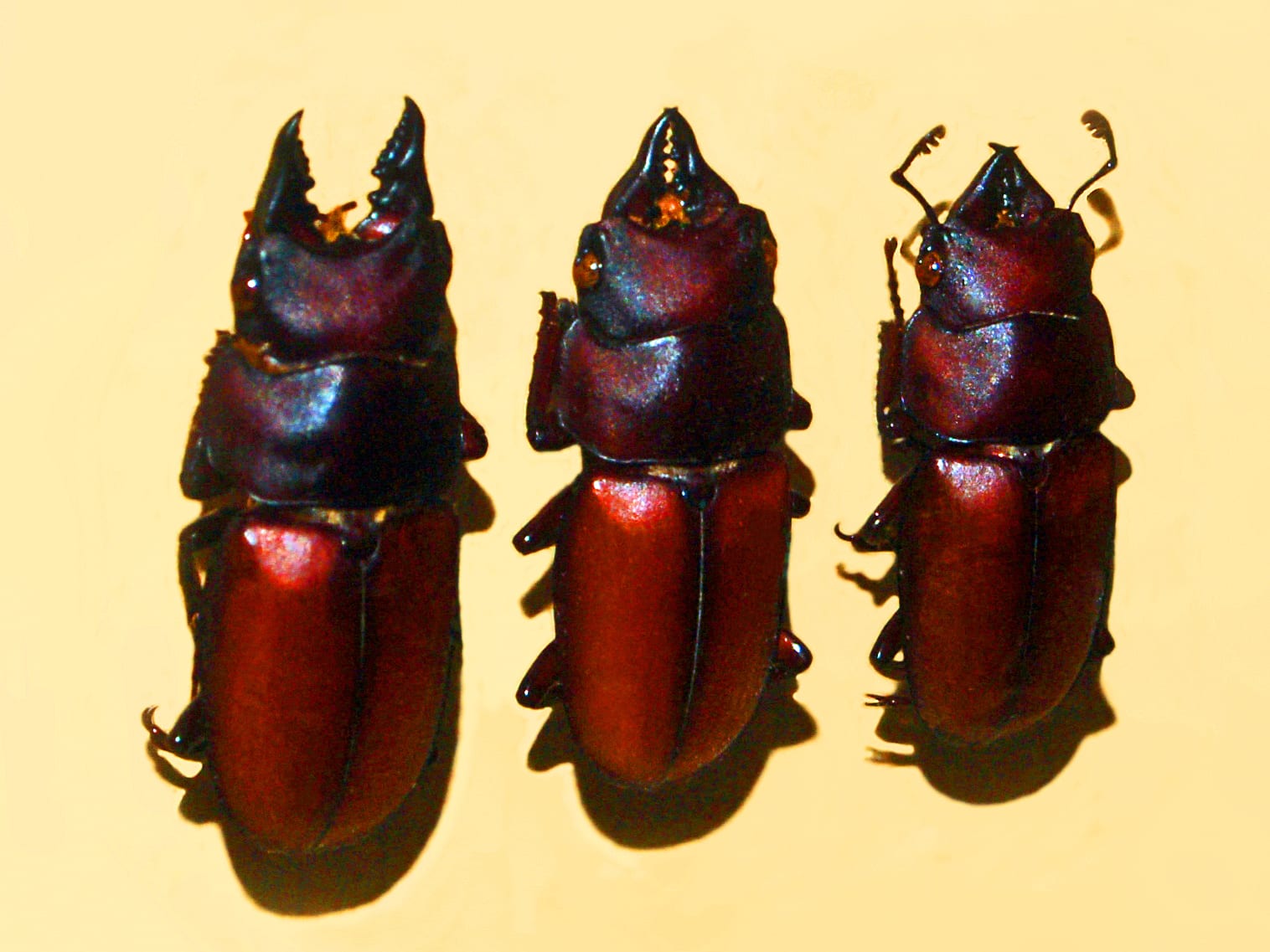
 © Hectonichus / CC BY-SA 3.0
Antelope Saw Stag Beetle
The Antelope Saw Stag Beetle is an African stag beetle native to the tropical forests stretching from West Africa to the Congo Basin. Its standout feature is the male's mandibles, which curve dramatically outward in a shape reminiscent of antelope horns, giving the species a presence unlike almost any other stag beetle. Because most examples circulating in Japan are preserved specimens rather than live insects, husbandry knowledge for this species is still limited. That makes it a rewarding project for experienced keepers willing to observe closely and build their own care routine as they go.
View Antelope Saw Stag Beetle encyclopedia →0% commission on your first sales!Register by September 30, 2026 and your first 2 sales are commission-free!
Breeder Wanted!
List on BreederDirect and sell directly to customers nationwide!
6 Transparency Standards You Can Trust
When listing Insects, Breeders disclose the following. We guarantee transparency on growth stage and breeding unit.
- Life Stage Clarity
- Generation Info
- Real Photos
- Breeding Unit
- Country of Origin
- Body Length (mm)
Browse all 296 breeds
Verified breeders wanted for Insects
Breeders are signing up now ahead of launch. Subscribe to be notified when new listings go live.
Getting alerts is free with a member account. When new listings match your saved search, we'll notify you by email and in-app.
Browse other categories
Verified breeders (preview)
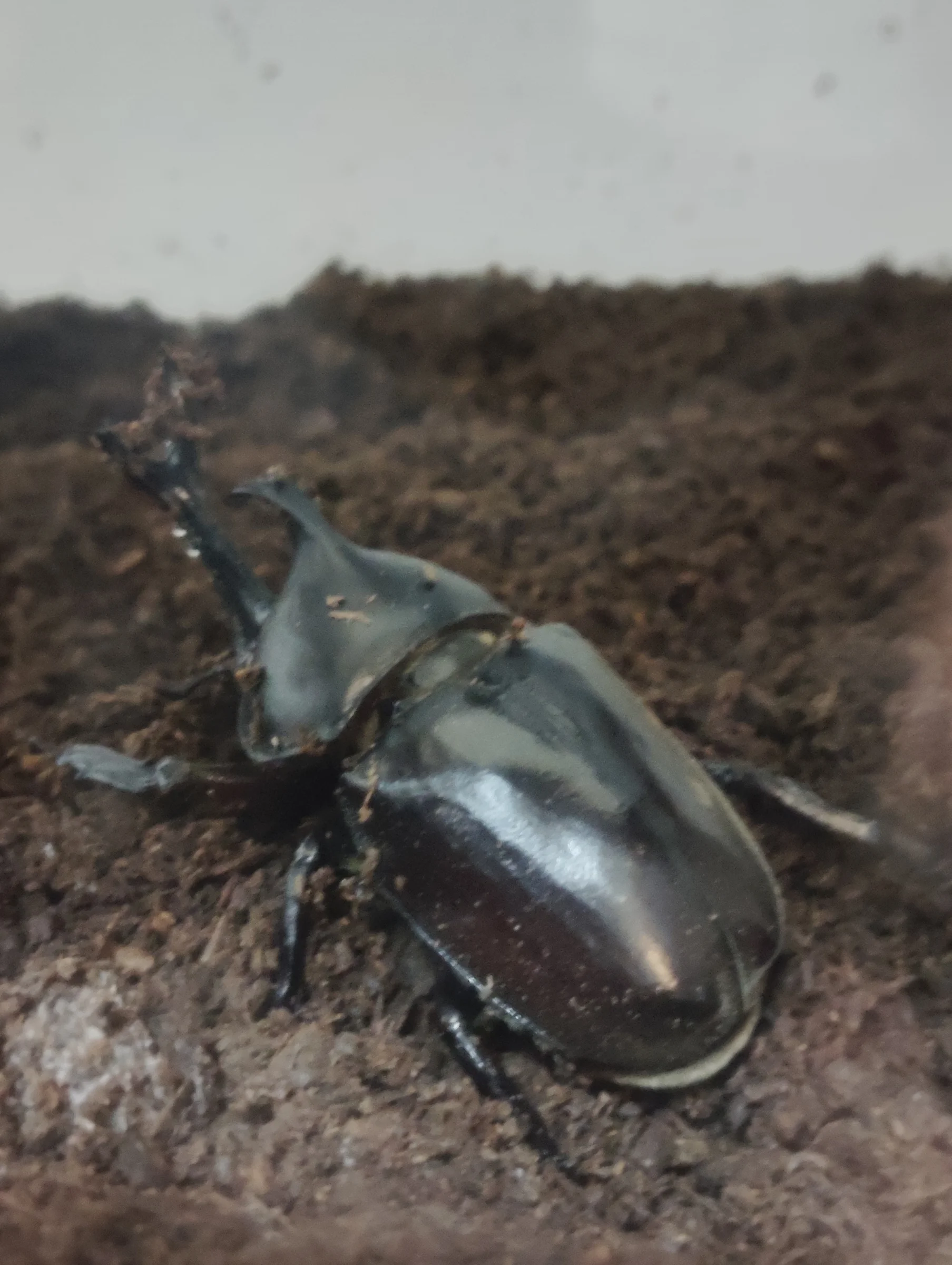
Antelope Saw Stag Beetle key facts
- Care level
- Advanced
- Lifespan
- Adults 2-3 months
- Diet
- Sap of broadleaf trees; beetle jelly
- Temperature & Humidity
- Records come from lowland and montane rainforest. As with other large African saw stags, room temperature and a substrate that never dries out completely are the safe default.
- Breeding & Egg-laying
- Hardly any breeding reports have been published. Following the general method for the genus, use an egg-laying set of firmly packed, fully fermented substrate with a log added only as a support. Larvae are then raised on fermented substrate.
- Cohabitation
- As with stag beetles generally, males fight hard, so keep them singly. House a pair together only briefly for mating and separate them once it has been observed. Do not mix the species with others.
- Lifespan & Rearing Period
- Captive records are few, so plan on the general pattern for saw stags: a few months as an adult and a larval period of about a year.
- Health & Notes
- Live stock rarely appears on the market, and importing it requires the species identification certificate demanded for live Scarabaeoidea. Do not cross beetles of uncertain origin with other localities or related species, and check on purchase whether what is offered is a live beetle or a set specimen.
About Antelope Saw Stag Beetle
An African stag beetle from the tropical forests of West Africa to the Congo Basin, known for the male's antelope-horn-shaped mandibles. Live-keeping information is limited in Japan, making it best suited to experienced keepers.
7 things to know before welcoming a Antelope Saw Stag Beetle
1Antelope-Horn Jaws
The male's most striking feature is a pair of mandibles that curve outward like antelope horns. The exact curve and thickness vary between individuals, and the look changes subtly as the beetle matures, which is a big part of the species' appeal to collectors.
2African Rainforest Native
This species comes from tropical forests stretching from West Africa to the Congo Basin. Because its natural habitat differs so much from Japan's climate, temperature and humidity should be managed with that origin in mind.
3Best for Experienced Keepers
This species is considered suitable for advanced keepers. Documented husbandry experience in Japan is still limited, so you'll often need to adapt general stag beetle care rather than follow a proven, species-specific routine.
4Limited Care Information
Most specimens circulating domestically are preserved rather than live, so live-keeping information is still sparse. Watch your beetle closely after bringing it home and be ready to adjust quickly if you notice any change.
5Mind Temperature & Humidity
As a tropical rainforest species, it's best kept away from extreme cold or dryness. At the same time, make sure the enclosure has enough ventilation to avoid excess moisture buildup.
6Keep Males Separated
Like many saw stag beetles, males can fight fiercely with their mandibles if housed together. To avoid injuries, it's safest to keep one beetle per enclosure.
7Prepare Before You Bring One Home
Since reliable information on this species is limited, gather the basics — an enclosure, substrate, and insect jelly — before your beetle arrives. Once it's home, avoid rushing and adjust its environment gradually as you observe how it settles in.
Frequently asked questions about Antelope Saw Stag Beetle
- Q.Can beginners keep this species?
- A.This species is generally recommended for experienced keepers. Since documented live-keeping information in Japan is still limited, it's best to have some stag beetle care experience before taking one on.
- Q.What kind of enclosure setup does it need?
- A.Aim to reflect its native tropical forest habitat by avoiding extreme cold or dryness. At the same time, make sure the enclosure is ventilated well enough to prevent excess moisture from building up.
- Q.Can multiple beetles share one enclosure?
- A.Housing males together is not recommended, since they may fight using their mandibles. It's best to keep one beetle per enclosure.
- Q.Why are the male's mandibles curved like that?
- A.The outward curve of the male's mandibles, resembling antelope horns, is the species' defining trait and the source of its common name. The degree of curvature varies from one individual to another.
- Q.Is any special legal process required to keep or purchase this species?
- A.This species is not subject to CITES.
Useful tools for Antelope Saw Stag Beetle care
Learn more about Antelope Saw Stag Beetle in the encyclopedia
View Antelope Saw Stag Beetle encyclopedia entry →
Care difficulty, lifespan, size and diet — all basics covered.
More in this category
Can't find the one you're looking for?
Post your wishes for free and breeders with matching animals will contact you with introductions.