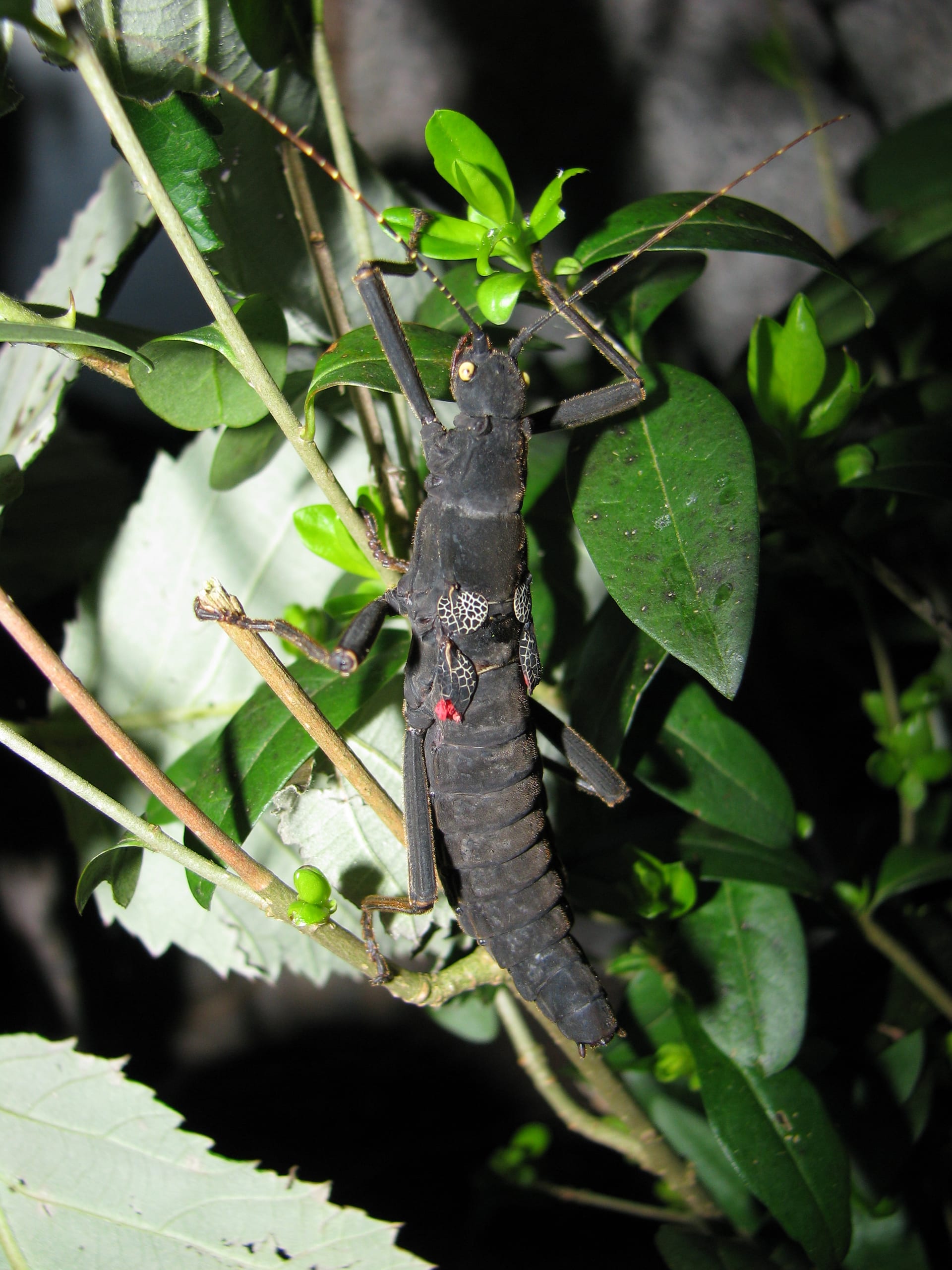
 © Drägüs / CC BY-SA 3.0
Black Beauty Stick Insect
The Black Beauty Stick Insect is a striking phasmid found naturally only in a small area of northern Peru. Its velvety black body is set off by bright yellow eyes, a red upper lip, and red hindwings that flash into view, creating a bold visual contrast. Most individuals are slow-moving and calm, making them satisfying to simply watch and observe over time. They can be kept comfortably at room temperature, which makes them approachable for beginners, but they can spray a defensive fluid when startled or handled roughly, so it pays to handle them gently and with care.
View Black Beauty Stick Insect encyclopedia →0% commission on your first sales!Register by September 30, 2026 and your first 2 sales are commission-free!
Breeder Wanted!
List on BreederDirect and sell directly to customers nationwide!
6 Transparency Standards You Can Trust
When listing Insects, Breeders disclose the following. We guarantee transparency on growth stage and breeding unit.
- Life Stage Clarity
- Generation Info
- Real Photos
- Breeding Unit
- Country of Origin
- Body Length (mm)
Browse all 296 breeds
Verified breeders wanted for Insects
Breeders are signing up now ahead of launch. Subscribe to be notified when new listings go live.
Getting alerts is free with a member account. When new listings match your saved search, we'll notify you by email and in-app.
Browse other categories
Verified breeders (preview)
About Black Beauty Stick Insect
The Black Beauty Stick Insect is a striking phasmid native only to Peru, with a velvety black body, yellow eyes, and red hindwings. It can be kept at room temperature, making it a good choice for beginner insect keepers.
7 things to know before welcoming a Black Beauty Stick Insect
1Comfortable at Room Temperature
Although native to a warm, humid region, this species can be kept at normal room temperature without special heating equipment. Just avoid extreme cold or dryness, and mist the enclosure occasionally to maintain reasonable humidity.
2Watch for Defensive Spray
When startled or handled roughly, this stick insect can spray a defensive fluid from its body. It can irritate the eyes, so avoid forcing handling and keep your face away when interacting with it.
3Bold Colors, Gentle Nature
The velvety black body, yellow eyes, and red upper lip are thought to serve as a warning to predators, but the insect itself is calm and not aggressive. As long as you avoid triggering the defensive spray, it's easy to observe peacefully.
4Keep Fresh Leaves on Hand
This species feeds mainly on plant leaves, so a steady supply of fresh foliage is essential. Wilted leaves are less appealing to it, so replace them regularly or keep cuttings in water to maintain freshness.
5Slow and Docile Movement
Movement is generally slow, and the insect tends to stay still and calm rather than act aggressively. It can be sensitive to noise and vibration, so it's best to place the enclosure in a quiet spot.
6Leave It Alone During Molting
Like other insects, it molts repeatedly as it grows, and its body becomes especially soft and vulnerable just before and after each molt. Avoid shaking or touching the enclosure during this time.
7Balance Ventilation and Humidity
The enclosure needs good airflow while still retaining enough moisture, which can be managed with substrate and occasional misting. Avoid sealed, poorly ventilated containers, as they can lead to mold and excess humidity buildup.
Frequently asked questions about Black Beauty Stick Insect
- Q.Is this species suitable for beginners?
- A.Yes, it can be kept at room temperature and is generally considered beginner-friendly. If you have basic insect-keeping knowledge, it's an approachable species to start with.
- Q.How large does it grow?
- A.Adults reach about 55–70mm for females and 40–50mm for males. Females generally grow larger than males in this species.
- Q.What happens if it feels threatened?
- A.If strongly disturbed, it may spray a defensive fluid from its body. This can irritate the eyes or mucous membranes, so it's best to handle it gently and carefully.
- Q.What should it be fed?
- A.It mainly eats plant leaves, so it's important to always have fresh foliage available. Wilted leaves are less readily eaten, so replace them frequently.
- Q.Can it be housed with other insects?
- A.It's generally best to keep this species on its own rather than with other insects. Mixing species can lead to problems from defensive spraying or added stress, so separate enclosures are the safer choice.
Useful tools for Black Beauty Stick Insect care
Learn more about Black Beauty Stick Insect in the encyclopedia
View Black Beauty Stick Insect encyclopedia entry →
Care difficulty, lifespan, size and diet — all basics covered.
More in this category
Can't find the one you're looking for?
Post your wishes for free and breeders with matching animals will contact you with introductions.