Kumejima Rhinoceros Beetle
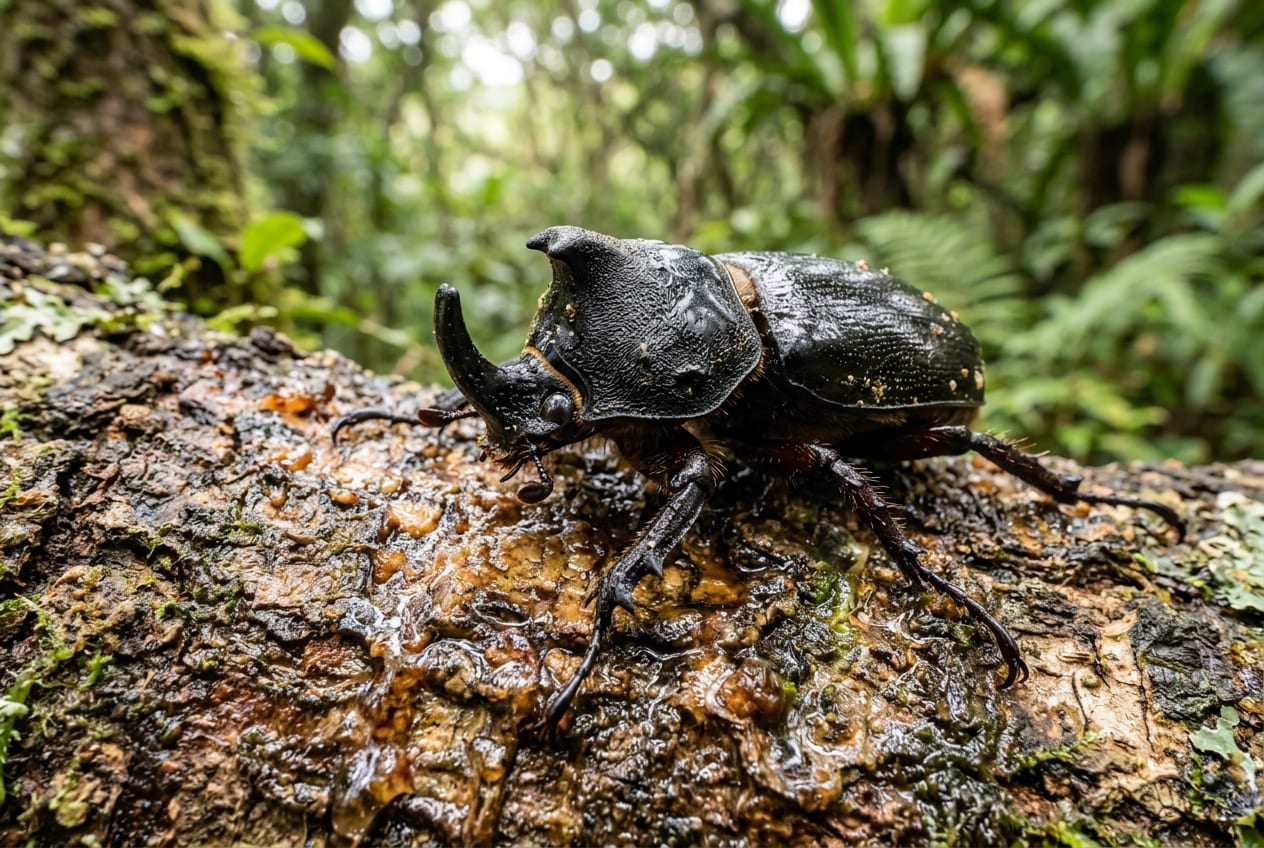
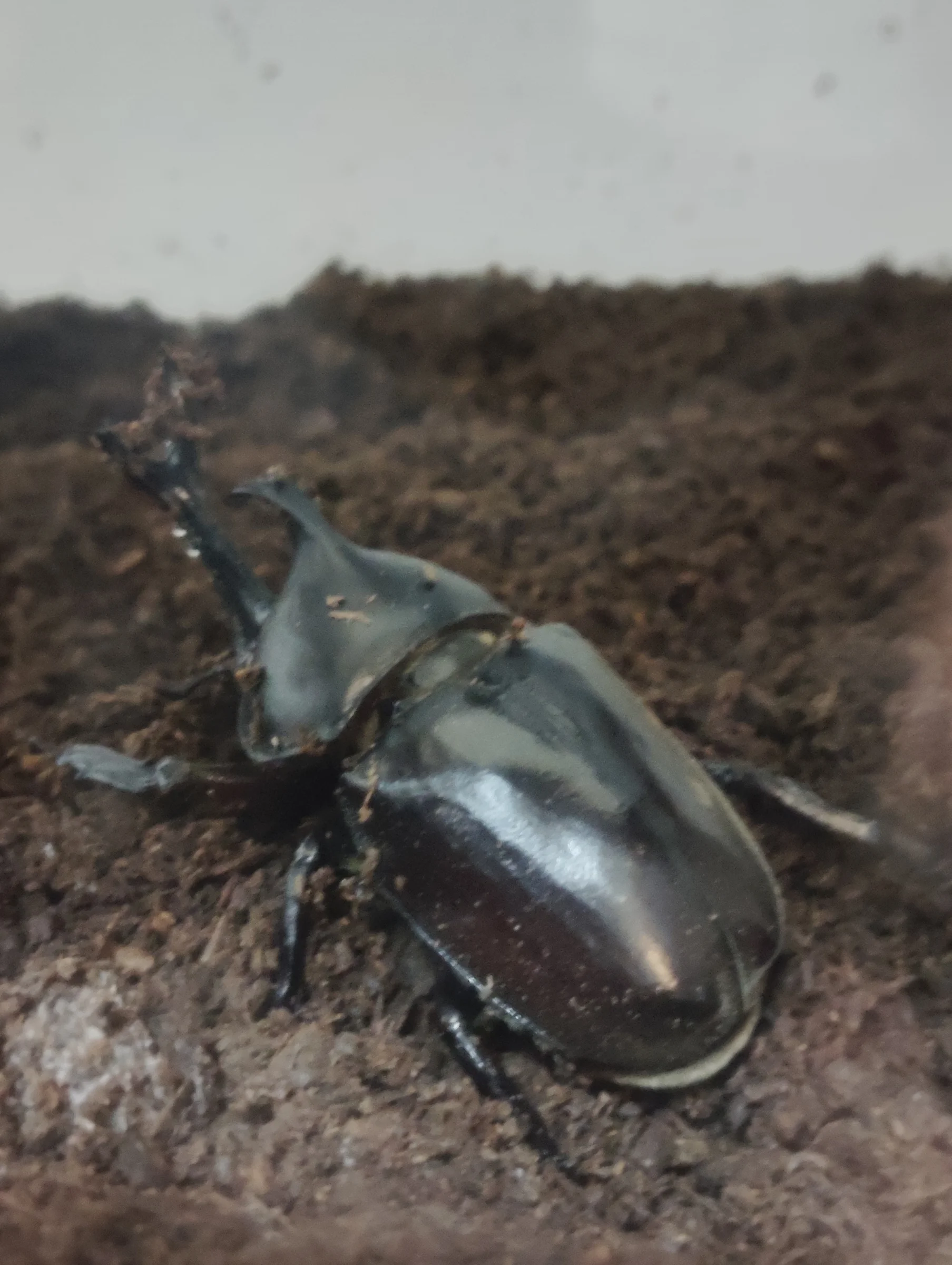
The Kumejima Rhinoceros Beetle is a rare subspecies found only on Kumejima Island in Okinawa Prefecture, Japan. Males stand out for their deep black, glossy body and for having noticeably shorter head and thorax horns than other rhinoceros beetle subspecies. Because the horns are smaller, the overall silhouette feels compact and well-balanced, making it an interesting beetle to observe closely. Its temperament is generally calm, and its strong legs let it grip surfaces firmly. Since this subspecies is confined to the limited habitat of Kumejima Island, it's an insect worth learning about and caring for thoughtfully. It's considered an intermediate-level species, so some background in basic beetle care — such as temperature and humidity management — will help you keep it comfortably.
View Kumejima Rhinoceros Beetle encyclopedia →0% commission on your first sales!Register by September 30, 2026 and your first 2 sales are commission-free!
Breeder Wanted!
List on BreederDirect and sell directly to customers nationwide!
6 Transparency Standards You Can Trust
When listing Insects, Breeders disclose the following. We guarantee transparency on growth stage and breeding unit.
- Life Stage Clarity
- Generation Info
- Real Photos
- Breeding Unit
- Country of Origin
- Body Length (mm)
Browse all 296 breeds
Verified breeders wanted for Insects
Breeders are signing up now ahead of launch. Subscribe to be notified when new listings go live.
Getting alerts is free with a member account. When new listings match your saved search, we'll notify you by email and in-app.
Browse other categories
Verified breeders (preview)
Kumejima Rhinoceros Beetle key facts
- Care level
- Intermediate
- Lifespan
- 1-3 months as an adult
- Size
- 40-50mm (excluding the male horn)
- Diet
- Adults take sap of Mallotus, Machilus, Castanopsis and citrus, plus beetle jelly; larvae feed on leaf mould
- Temperature & Humidity
- It lives in subtropical evergreen broadleaf forest, though Kumejima is drier than northern Okinawa Island. As with the mainland form, never let the substrate freeze solid, and avoid constant warmth, which brings the beetles on too early.
- Breeding & Egg-laying
- In the wild almost no humus layer forms on the forest floor, so the larvae grow in pockets of humus in tree hollows. In captivity an egg-laying set of packed fermented substrate is used. The larvae eat leaf mould and will not touch living wood or wood that has not begun to break down.
- Cohabitation
- Males fight with their horns, so keep adults apart. This subspecies is endemic to Kumejima and must not be housed or crossed with the Okinawa or mainland forms.
- Lifespan & Rearing Period
- Adults emerge in early summer. They spend about two weeks underground after eclosion before coming to the surface. Adults live one to three months, depending heavily on temperature and food.
- Health & Notes
- Small individuals are said to be hard to tell from the Okinawa subspecies, so do not treat beetles without locality data as belonging to this one. The Okinawa red list rates it vulnerable and its habitat is restricted, so keep collecting to a minimum and do not release captive stock into the wild.
About Kumejima Rhinoceros Beetle
A guide to the Kumejima Rhinoceros Beetle, a rare subspecies found only on Kumejima Island — covering its features, temperament, care difficulty, and what to know before bringing one home.
7 things to know before welcoming a Kumejima Rhinoceros Beetle
1Endemic to Kumejima Island
The Kumejima Rhinoceros Beetle is a subspecies found only on Kumejima Island in Okinawa Prefecture. Because its habitat is so limited, its population is thought to be small, making it a rare subspecies you won't find anywhere else.
2Notably Short Horns
Males have a striking black, glossy body, but their head horn is even shorter than that of the Okinawa subspecies, and the thorax horn is extremely small. This is a subspecies to appreciate more for its glossy coloring and sturdy build than for horn size.
3A Short Adult Lifespan
Adults typically live for about one to three months. To help it spend that limited time in good condition, be sure to manage temperature and humidity and replace food regularly after bringing it home.
4Best Suited to Intermediate Keepers
The Kumejima Rhinoceros Beetle is considered an intermediate-level species to keep. Some prior experience with basic rhinoceros beetle care will make it easier to manage substrate, temperature, and humidity.
5Adult Size at a Glance
Adults measure roughly 40 to 50mm, excluding the male's horns. Picturing the balance between the visual impact of the horns and the beetle's compact body length ahead of time will help you prepare the right enclosure.
6Mind the Subtropical Origins
Since Kumejima Island has a warm climate, it's reassuring to keep the enclosure somewhere that won't get too cold during cooler months. Avoiding extreme temperature swings is an important part of day-to-day care.
7Getting Ready Before Bringing One Home
Before bringing one home, prepare basic supplies such as an enclosure, insect substrate, and a food dish. Since males have horns, housing them individually is generally recommended to avoid fights with other beetles.
Frequently asked questions about Kumejima Rhinoceros Beetle
- Q.Where does the Kumejima Rhinoceros Beetle live?
- A.The Kumejima Rhinoceros Beetle is a subspecies found only on Kumejima Island in Okinawa Prefecture. Because its habitat is so limited, its population is thought to be small.
- Q.Can beginners keep this beetle?
- A.This subspecies is considered an intermediate-level pet, best suited to those with some prior rhinoceros beetle care experience. First-time keepers should research proper care thoroughly before bringing one home.
- Q.How long do adults live?
- A.Adults typically live for about one to three months. To help it thrive during that short time, manage temperature and humidity carefully and replace food regularly.
- Q.How is it different from other subspecies?
- A.Compared to the Okinawa subspecies, males of the Kumejima Rhinoceros Beetle have an even shorter head horn and an extremely small thorax horn. Its glossy black body gives it a compact overall appearance.
- Q.How big do adults get?
- A.Adults measure roughly 40 to 50mm, excluding the male's horns. They can look larger with the horns included, but the body length itself is on the compact side.
Useful tools for Kumejima Rhinoceros Beetle care
Learn more about Kumejima Rhinoceros Beetle in the encyclopedia
View Kumejima Rhinoceros Beetle encyclopedia entry →
Care difficulty, lifespan, size and diet — all basics covered.
More in this category
Can't find the one you're looking for?
Post your wishes for free and breeders with matching animals will contact you with introductions.