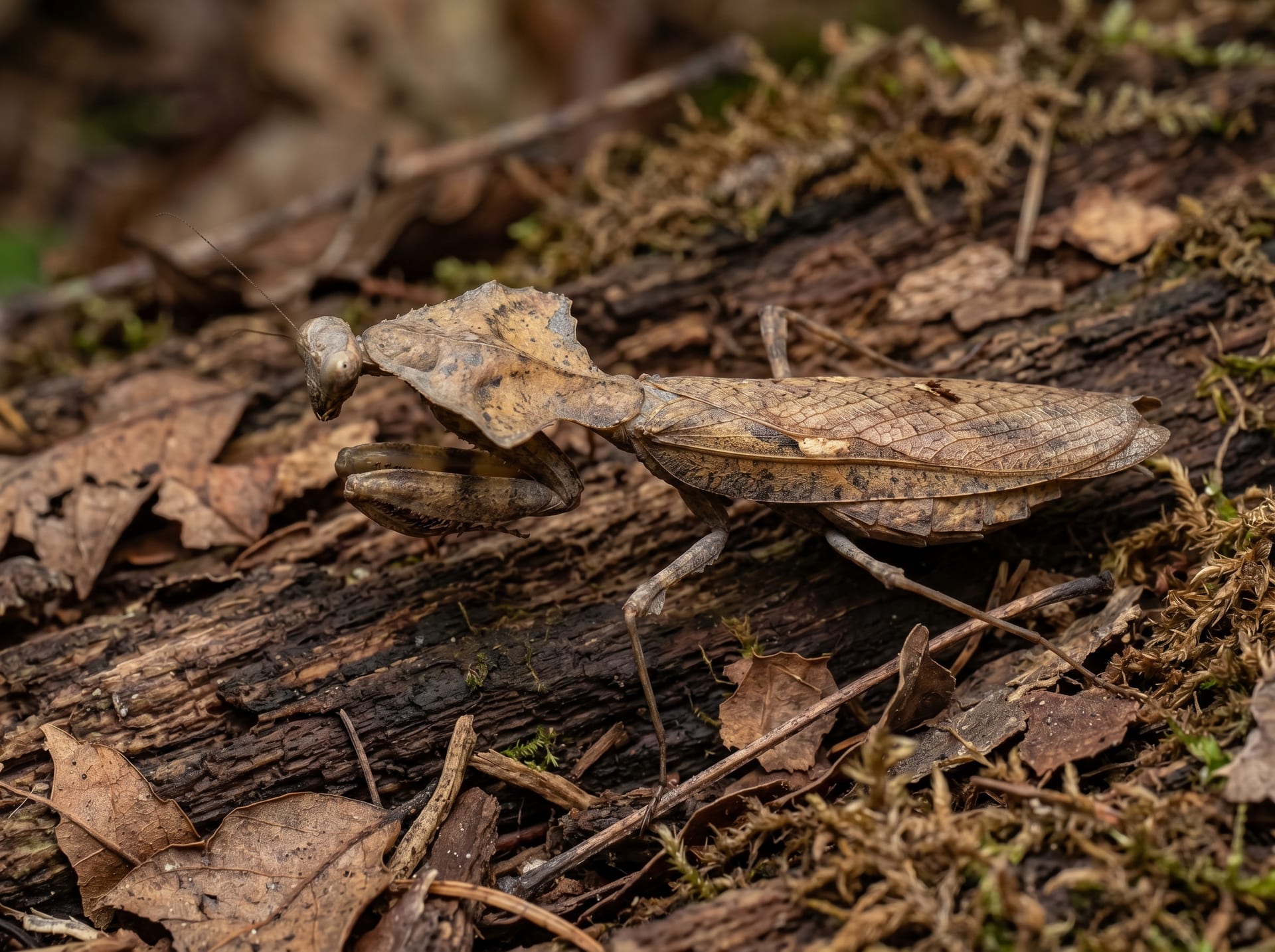
Dead Leaf Mantis
The Dead Leaf Mantis is a large mantis species native to the forests of Southeast Asia, named for its uncanny resemblance to a dried, curled leaf. Its brown body even mimics leaf veins and ragged, decaying edges, making it one of the most convincing masters of disguise in the insect world. Rather than darting about, it tends to stay motionless for long stretches, patiently waiting in the leaf litter or on branches. Watching one requires a bit of patience, but that stillness is part of its charm — a quiet, almost sculptural presence that rewards close observation.
View Dead Leaf Mantis encyclopedia →0% commission on your first sales!Register by September 30, 2026 and your first 2 sales are commission-free!
Breeder Wanted!
List on BreederDirect and sell directly to customers nationwide!
6 Transparency Standards You Can Trust
When listing Insects, Breeders disclose the following. We guarantee transparency on growth stage and breeding unit.
- Life Stage Clarity
- Generation Info
- Real Photos
- Breeding Unit
- Country of Origin
- Body Length (mm)
Browse all 296 breeds
Verified breeders wanted for Insects
Breeders are signing up now ahead of launch. Subscribe to be notified when new listings go live.
Getting alerts is free with a member account. When new listings match your saved search, we'll notify you by email and in-app.
Browse other categories
Verified breeders (preview)
About Dead Leaf Mantis
A guide to the Dead Leaf Mantis, a Southeast Asian species famous for its leaf-like camouflage. Learn about its traits, temperament, difficulty level, and lifespan before bringing one home.
7 things to know before welcoming a Dead Leaf Mantis
1A Master of Camouflage
The Dead Leaf Mantis looks uncannily like a dried leaf and spends most of its time staying still in cover. Since it isn't an active mover, it suits keepers who enjoy quiet observation over frequent interaction.
2Suited to Intermediate Keepers
This species is generally considered suitable for intermediate keepers who already understand basic temperature, humidity, and feeding routines. First-time insect keepers should research care requirements thoroughly before bringing one home.
3A Lifespan of 8–14 Months
As an adult, this mantis typically lives around 8 to 14 months. This is a general guideline for the species, and individual lifespans can vary.
4Females Reach 70–90mm
Adult females grow to a substantial 70–90mm in length. Choose an enclosure sized generously enough to accommodate their full adult size.
5Keep Them Alone
Mantises are prone to cannibalism, so each individual should be housed separately rather than grouped together. This is especially important when there is a size difference between individuals.
6Handle Molting with Care
Like other mantises, this species molts several times as it grows, and it should not be disturbed or handled around molting time. A failed molt can cause lasting physical problems, so keeping the environment calm matters.
7Prepare the Setup in Advance
Before bringing one home, set up perches, climbable branches, and a well-ventilated enclosure. It also helps to arrange a reliable source of feeder insects ahead of time.
Frequently asked questions about Dead Leaf Mantis
- Q.Is the Dead Leaf Mantis suitable for beginners?
- A.This species is generally considered best suited to intermediate keepers, so some prior insect-keeping experience is helpful. It's recommended to understand the basics of temperature, humidity, and solitary housing before bringing one home.
- Q.How long does this mantis typically live?
- A.As an adult, it typically lives around 8 to 14 months. Individual lifespans can vary, so this is best treated as a general guideline.
- Q.Do males and females differ in size?
- A.In mantises generally, females tend to grow larger than males, and adult females of this species reach around 70–90mm. Males are typically smaller in comparison.
- Q.Can multiple mantises be kept together?
- A.Because mantises are prone to cannibalism, keeping multiple individuals together is not recommended. Each one should be housed separately in its own enclosure.
- Q.Are there any legal restrictions on keeping this species?
- A.The Dead Leaf Mantis is not subject to CITES. This is a useful point to be aware of if you're considering keeping one.
Useful tools for Dead Leaf Mantis care
Learn more about Dead Leaf Mantis in the encyclopedia
View Dead Leaf Mantis encyclopedia entry →
Care difficulty, lifespan, size and diet — all basics covered.
More in this category
Can't find the one you're looking for?
Post your wishes for free and breeders with matching animals will contact you with introductions.