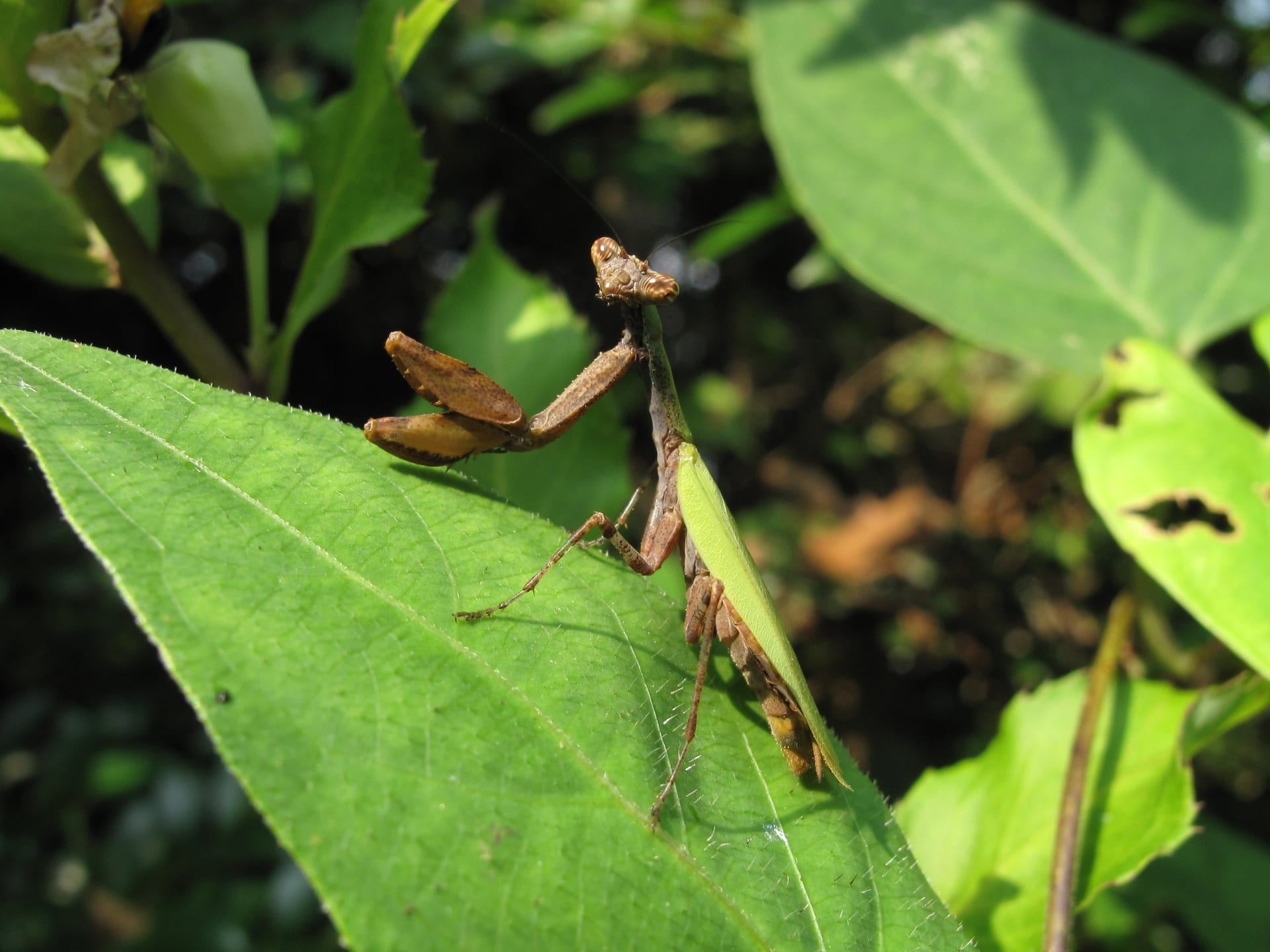
 © Yasunori Koide / CC BY-SA 4.0
Japanese Boxer Mantis
The Japanese Boxer Mantis is a small mantis native to the forests and forest edges of Honshu, Shikoku, and Kyushu. A member of the flower mantis family, it typically measures around 3cm in length, making it one of the more compact mantis species. Its most distinctive trait is thanatosis, or feigning death — when threatened, it freezes completely still to avoid drawing attention from predators, a behavior that's fascinating to watch. As a univoltine species, adults emerge between September and December, letting keepers follow its life cycle through the changing seasons. It closely resembles the Satsuma Boxer Mantis, distinguished mainly by differences in adult emergence timing. Its small, delicate build calls for careful handling, making it best suited to keepers with some prior experience.
View Japanese Boxer Mantis encyclopedia →0% commission on your first sales!Register by September 30, 2026 and your first 2 sales are commission-free!
Breeder Wanted!
List on BreederDirect and sell directly to customers nationwide!
6 Transparency Standards You Can Trust
When listing Insects, Breeders disclose the following. We guarantee transparency on growth stage and breeding unit.
- Life Stage Clarity
- Generation Info
- Real Photos
- Breeding Unit
- Country of Origin
- Body Length (mm)
Browse all 296 breeds
Verified breeders wanted for Insects
Breeders are signing up now ahead of launch. Subscribe to be notified when new listings go live.
Getting alerts is free with a member account. When new listings match your saved search, we'll notify you by email and in-app.
Browse other categories
Verified breeders (preview)
Japanese Boxer Mantis key facts
- Care level
- Intermediate
- Lifespan
- One generation a year; adults appear from September to December
- Size
- Males 25-32 mm, females 25-31 mm
- Temperature
- 20〜25℃
- Diet
- Live insects (small crickets and flies; fruit flies and aphids for early instars)
- Temperature & Humidity
- The preferred range is 20-25 C, with a tolerance of roughly 15-30 C. Mist it or leave water in a shallow dish. As a small species, keep damp tissue in the container and mist finely enough that no large droplets form.
- Breeding & Egg-laying
- The ootheca is squarish and laid in hollows in stone or wood. Glue a collected ootheca to a stick with wood glue, put it in a container and keep it outdoors or in a cold room; a warm room will make it hatch in midwinter. Add damp tissue so it does not dry out.
- Cohabitation
- Like mantises generally it is cannibalistic, so house each one separately. Stand the container upright and add perching twigs. It is small and escapes through gaps, so trap a cloth between container and lid.
- Lifespan & Rearing Period
- It has one generation a year and overwinters as an ootheca, with adults from September to December. The similar Acromantis satsumensis is adult from May to July, so the season separates them.
- Health & Notes
- Even adults are only about 3 cm, so offer prey about a third of the body size. Feed fruit flies and aphids during the first two instars. Horsehair worm infection is known. It feigns death when threatened, so do not assume a motionless individual has died.
About Japanese Boxer Mantis
A small mantis (~3cm) native to forest edges in Honshu, Shikoku, and Kyushu. Known for feigning death when threatened, adults appear from September through December. Best suited to intermediate keepers.
7 things to know before welcoming a Japanese Boxer Mantis
1Thanatosis as self-defense
Feigning death — freezing completely still when it senses danger — is the Japanese Boxer Mantis's signature behavior. It isn't actually weak or hurt when it does this, so it's best to just observe quietly rather than disturb it.
2A compact ~3cm mantis
Even as adults, they measure just 25–32mm (males) and 25–31mm (females), making them one of the smaller mantis species. Their delicate build means they should be handled with extra care.
3One generation per year
This species produces only one generation annually, with adults appearing between September and December. Watching it develop through the seasons is part of the appeal.
4Distinguishing from a lookalike
The closely resembling Satsuma Boxer Mantis can be told apart mainly by differences in adult emergence timing. When acquiring one, it's worth confirming the species name and emergence period listed.
5Forest-edge habitat preferences
In the wild, this species lives in forests and forest edges across Honshu, Shikoku, and Kyushu. Enclosures that provide good airflow and moderate humidity suit it well.
6Best for intermediate keepers
Because of its small, delicate body, this species is generally recommended for keepers with some prior insect-keeping experience rather than absolute beginners. Reviewing basic care requirements beforehand is a good idea.
7Preparing before you bring one home
Set up an appropriately sized enclosure with branches or perches beforehand for a smooth transition. If it plays dead after arrival, avoid handling it and let it resume activity on its own.
Frequently asked questions about Japanese Boxer Mantis
- Q.How big does the Japanese Boxer Mantis get?
- A.Adults measure 25–32mm (males) and 25–31mm (females), with an overall body length of around 3cm. That makes it one of the smaller mantis species.
- Q.What is thanatosis, or playing dead?
- A.It's a behavior where the mantis freezes completely still when it senses danger. It's considered a natural defense response meant to avoid drawing further attention from predators.
- Q.When are adults typically seen?
- A.This species has one generation per year, with adults appearing between September and December. Outside that window, it's found in its nymph stage.
- Q.How do you tell it apart from the Satsuma Boxer Mantis?
- A.The two look very similar, but they're distinguished mainly by the timing of adult emergence. It's a good idea to confirm the listed species name when acquiring one.
- Q.Is this species suitable for beginners?
- A.Because of its small, delicate body, it's generally considered better suited to intermediate keepers. Gaining some basic insect-keeping experience first is recommended.
Useful tools for Japanese Boxer Mantis care
Learn more about Japanese Boxer Mantis in the encyclopedia
View Japanese Boxer Mantis encyclopedia entry →
Care difficulty, lifespan, size and diet — all basics covered.
More in this category
Can't find the one you're looking for?
Post your wishes for free and breeders with matching animals will contact you with introductions.