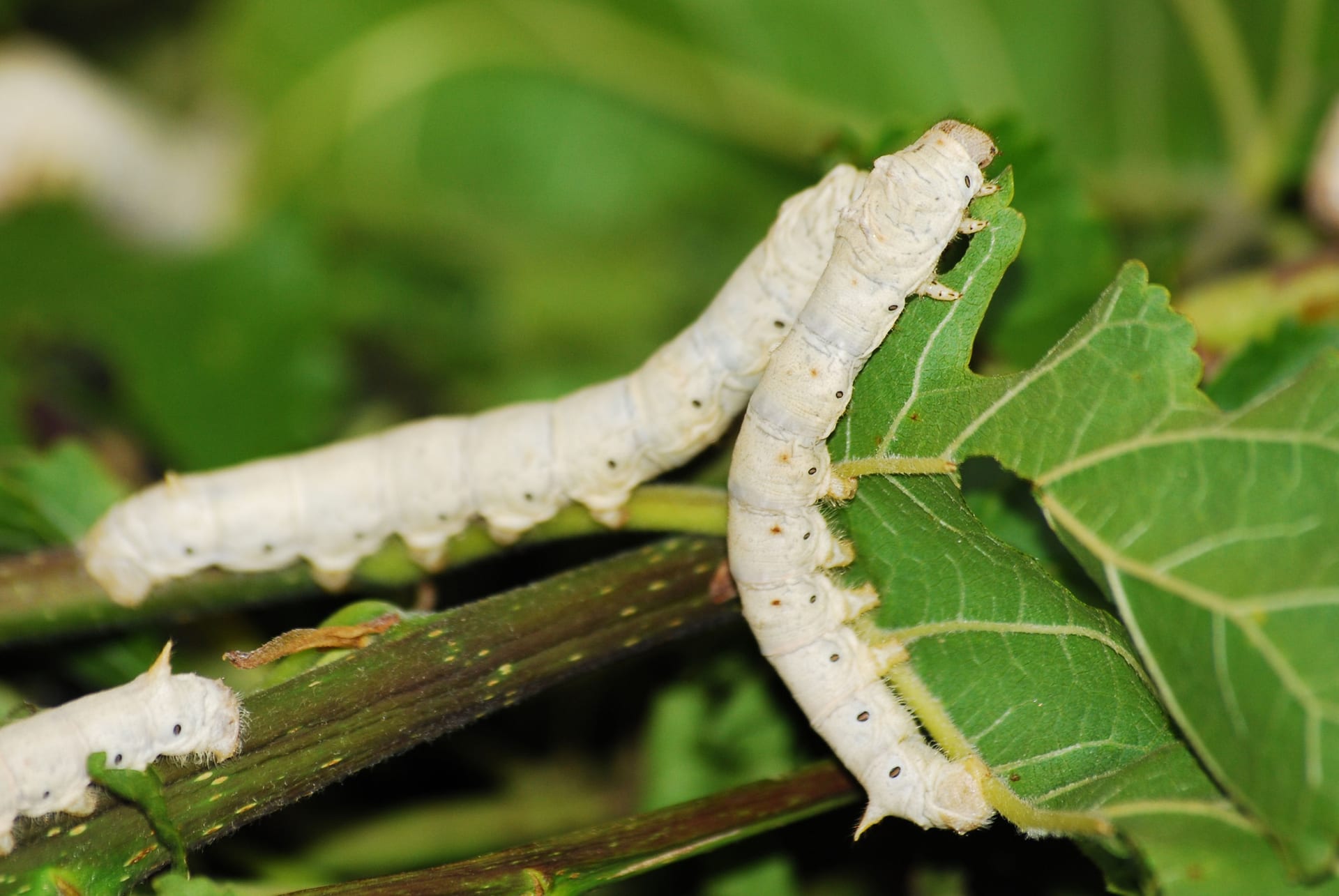
 © Lilly M (Małgorzata Miłaszewska) / CC BY-SA 3.0
Silkworm
The silkworm is a moth species domesticated for silk production, and unlike its wild ancestor, it no longer exists in the wild at all. The soft white larvae feed eagerly on mulberry leaves or artificial diet, molting through five stages before spinning themselves into a cocoon. They move slowly, show no aggression, and produce little odor, making them approachable even for first-time insect keepers. Once they emerge as moths, they have wings but cannot fly, and their mouths are so reduced that they eat nothing at all — living only about a week to ten days, devoted entirely to reproduction before their short life ends. Because keepers can watch the full cycle from egg to cocoon to moth in a short span, silkworms have long been a favorite for educational rearing.
View Silkworm encyclopedia →0% commission on your first sales!Register by September 30, 2026 and your first 2 sales are commission-free!
Breeder Wanted!
List on BreederDirect and sell directly to customers nationwide!
6 Transparency Standards You Can Trust
When listing Insects, Breeders disclose the following. We guarantee transparency on growth stage and breeding unit.
- Life Stage Clarity
- Generation Info
- Real Photos
- Breeding Unit
- Country of Origin
- Body Length (mm)
Browse all 296 breeds
Verified breeders wanted for Insects
Breeders are signing up now ahead of launch. Subscribe to be notified when new listings go live.
Getting alerts is free with a member account. When new listings match your saved search, we'll notify you by email and in-app.
Browse other categories
Verified breeders (preview)
Silkworm key facts
- Care level
- Beginner-friendly
- Lifespan
- Adults 7-10 days without feeding; larvae pass five instars before spinning
- Size
- Adult wingspan 3-5cm
- Temperature
- 25℃
- Humidity
- 70〜80%
- Diet
- Mulberry leaves or commercial artificial diet
- Temperature & Humidity
- Rear at about 25C and 70-80% humidity. A plastic or cardboard box suffices; excess damp invites disease, so moderate humidity with newspaper.
- Breeding & Egg-laying
- Adults mate and lay about 300-500 eggs. Eggs hatch in about 14 days; some strains lay diapause eggs that need a winter chill.
- Cohabitation
- Larvae are reared in groups. Replace mulberry leaves daily and remove frass and leftovers to keep the box clean.
- Lifespan & Rearing Period
- Larvae moult four times to the fifth instar and spin about a week later. Adults do not feed and die within 7-10 days.
- Health & Notes
- A domesticated insect that cannot survive outdoors. As a feeder, larvae raised on artificial diet are available year-round.
About Silkworm
The silkworm is a moth domesticated purely for silk and no longer exists in the wild. Its white larvae feed on mulberry leaves or artificial diet and spin cocoons, while the flightless, non-feeding adult lives only about a week.
7 things to know before welcoming a Silkworm
1A fully domesticated insect
The silkworm is a domesticated descendant of the wild silk moth and no longer exists in nature. Because it cannot survive without human care, keepers should be ready to provide a proper rearing environment from the start.
2Larvae eat mulberry leaves or artificial diet
The white larvae favor fresh mulberry leaves but grow just as well on artificial diet. If you plan to use mulberry leaves, make sure you can keep a steady supply of fresh ones on hand.
3Five larval stages leading to a cocoon
Larvae molt repeatedly as they grow through five stages, then finally spin their own cocoon from silk thread. They become sluggish around each molt, so it's best to observe quietly without disturbing them.
4Adults cannot fly and never eat
The emerged adult moth has wings but cannot fly, and its mouth is too reduced to feed. It lives only about a week to ten days, existing solely to reproduce before its short adult life ends.
5Docile and easy to handle
Silkworms move slowly, pose no danger to people, and produce very little odor. Their calm nature makes them well suited to anyone keeping an insect for the first time.
6Keeping the enclosure clean
Larvae leave behind uneaten food and droppings, so the container needs regular cleaning to stay hygienic. Avoiding excess humidity and ensuring some airflow helps them grow healthily.
7A popular subject for observation
Because keepers can observe the complete life cycle from egg through larva, cocoon, and moth, silkworms are also distributed for educational and feeder use. They suit anyone who wants to closely follow an insect's full development.
Frequently asked questions about Silkworm
- Q.Can beginners keep silkworms?
- A.Yes, silkworms are considered beginner-friendly. As long as you provide mulberry leaves or artificial diet and keep the container clean, they are an approachable species even for first-time insect keepers.
- Q.What should I feed the adult moth?
- A.Adult moths do not eat at all, since their mouths are non-functional. After emerging, they cannot fly and live only about a week to ten days, focused solely on reproduction.
- Q.How long do larvae take before spinning a cocoon?
- A.Larvae molt through five stages as they grow, then spin their own cocoon from silk thread. You can watch them get noticeably larger with each successive stage.
- Q.How large does an adult silkworm moth get?
- A.The adult moth's wingspan measures roughly 3 to 5 cm. Its body is whitish and has a plump, soft-looking appearance.
- Q.Do I need a permit or registration to keep a silkworm?
- A.The silkworm is not subject to CITES.
Useful tools for Silkworm care
Learn more about Silkworm in the encyclopedia
View Silkworm encyclopedia entry →
Care difficulty, lifespan, size and diet — all basics covered.
Silkworm related articles
See more Silkworm articles →More in this category
Can't find the one you're looking for?
Post your wishes for free and breeders with matching animals will contact you with introductions.