Source: Wikimedia Commons
Silkworm
BeginnerBombyx mori
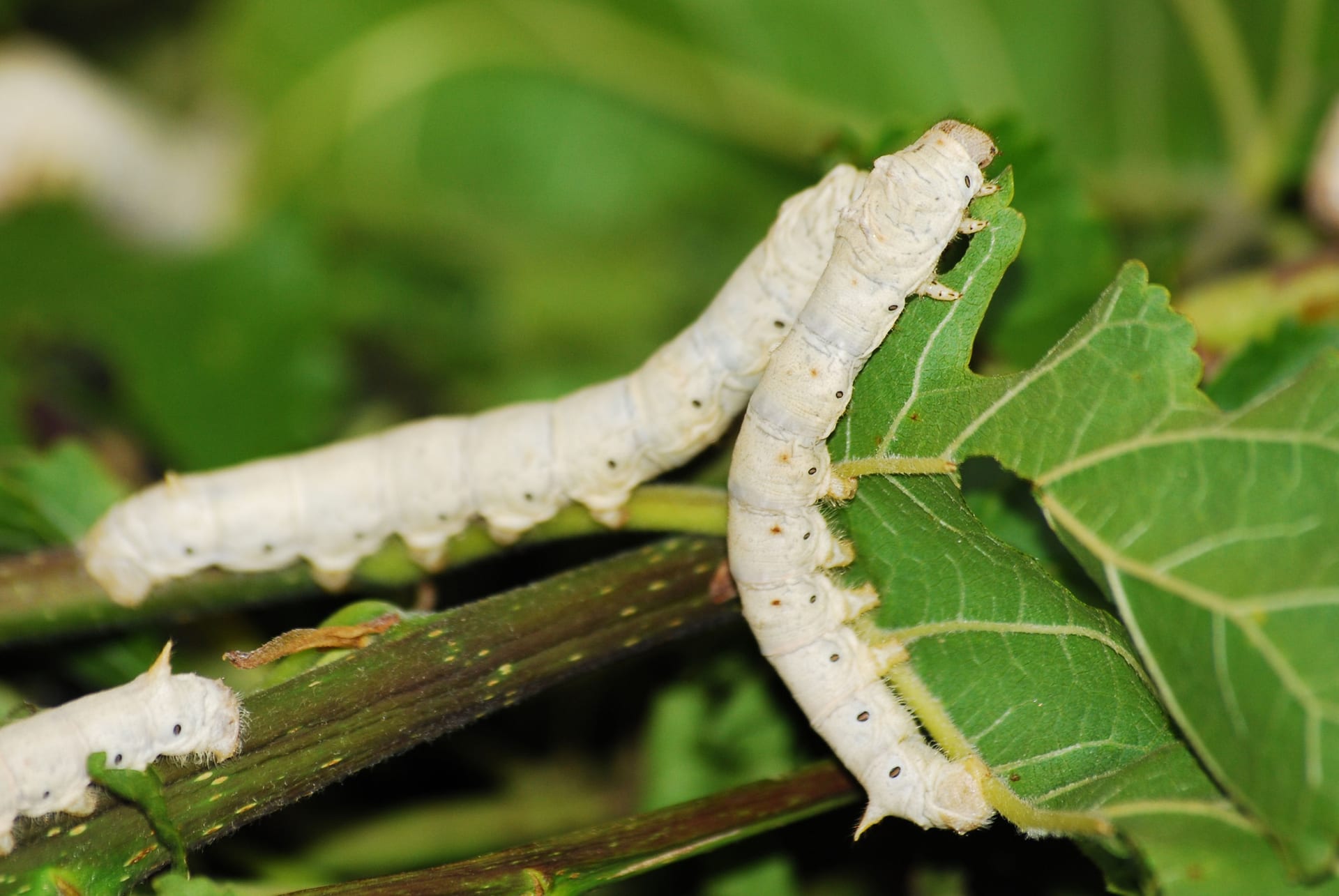
Domesticated silk moth derived from the wild Bombyx mandarina; it no longer exists in the wild. White larvae are raised on mulberry leaves or artificial diet and spin cocoons. Adults cannot fly or feed and die within about a week. Also traded for education and as feeders.
Difficulty
Beginner
Temperature
25℃
Lifespan
Adults 7-10 days without feeding; larvae pass five instars before spinning
Size
Adult wingspan 3-5cm
Humidity
70〜80%
Diet
Mulberry leaves or commercial artificial diet
About
Bombyx mori is a bombycid moth domesticated in China from the wild Bombyx mandarina, with over 5,000 years of sericulture behind it, and is regarded as the only domesticated animal that has completely lost the ability to survive in the wild. Newly hatched larvae are black 'kego'; they eat mulberry leaves, moult four times to reach the fifth and final instar, and rest in a 'min' phase before each moult. About a week into the fifth instar they begin spinning, form a cocoon and pupate inside. Adults are covered in white hair with a wingspan of 3-5cm; their heavy bodies and degenerate flight muscles prevent flight, and although a proboscis is present they do not feed. After mating a female lays about 300 eggs (some sources say around 500) and dies within a few days to ten days. Their weak prolegs make them fall easily, so they cannot live on mulberry trees outdoors. Because the white larvae are easy to see and manage they are a standard school-teaching insect, pupae are ground into fish feed, and reptile keepers use them as feeders available year-round on artificial diet.
Source: Wikipedia (CC BY-SA 4.0)
Lifespan of the Silkworm
The Silkworm lives Adults 7-10 days without feeding; larvae pass five instars before spinning.
Size of the Silkworm
The Silkworm grows to Adult wingspan 3-5cm.
Temperature & humidity for the Silkworm
The ideal temperature for the Silkworm is 25℃. Ideal humidity is 70〜80%.
Rearing needs only a plastic or cardboard box at about 25C and 70-80% humidity, with mulberry leaves or commercial artificial diet.
Basic Info
Care Specifications
PeacefulGroupBreeding: Easy
Sources: Tokyo University of Agriculture and Technology: rearing silkworms / Tokyo Zoo Net, Tama Zoological Park: how to keep silkworms / Wikipedia (ja): Bombyx mori
References & Sources
Edited & verified by: BreederDirect editorial team
The taxonomic, regulatory, and husbandry data on this page are compiled and verified against the authoritative primary sources below.
Taxonomy & Authority
Accepted name: Bombyx mori Linnaeus, 1758
Authority databases: GBIF
Nomenclature follows global taxonomic authority databases.
Regulations & Conservation Status
Not CITES-listed
Sources: CITES Appendices (species not listed)
Regulations may change. Always verify the latest information with the relevant authorities.
Silkworm Listings
Loading latest listingsFind listings for this species