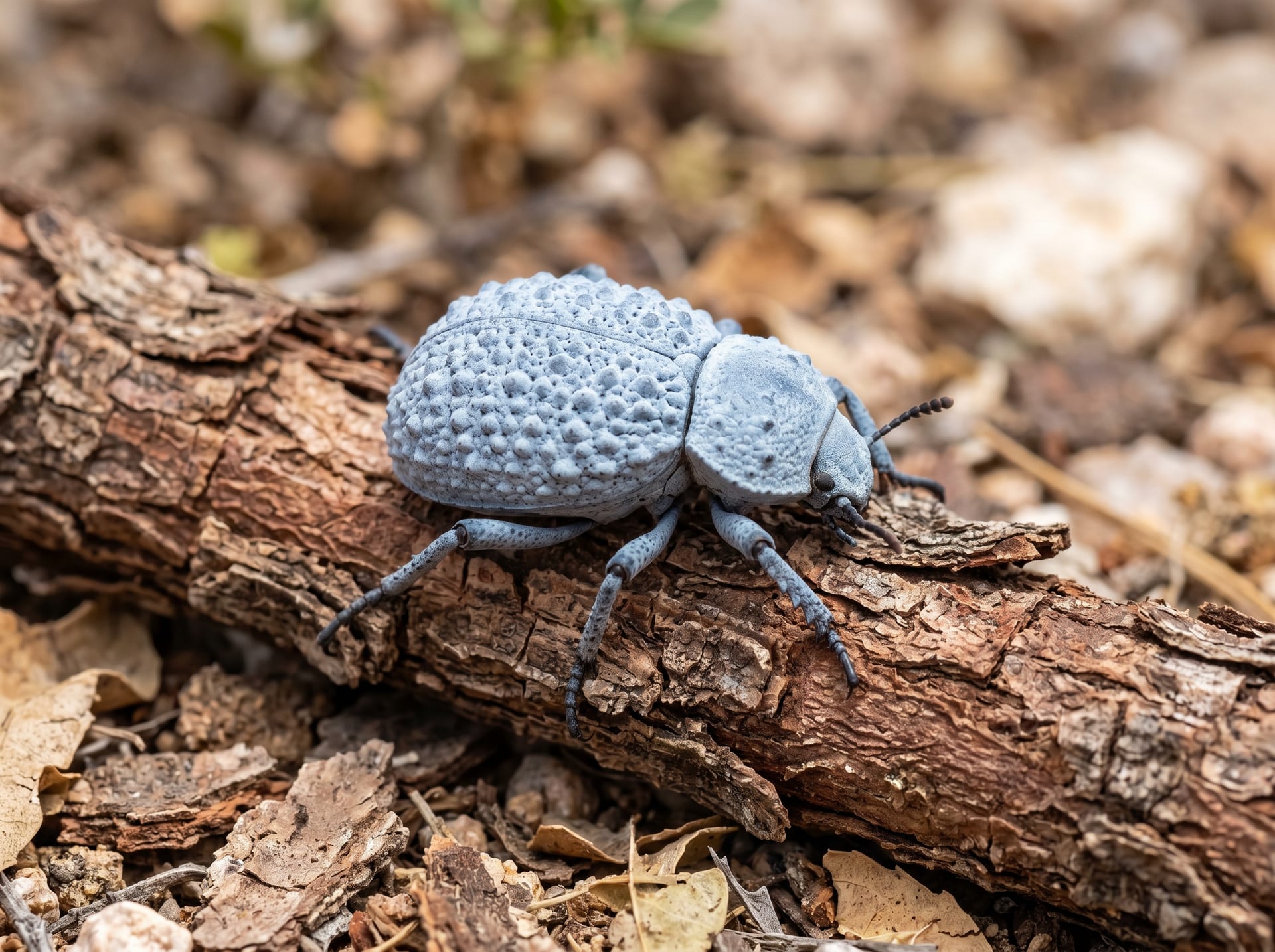
Blue Death-Feigning Beetle
The Blue Death-Feigning Beetle is a desert-dwelling insect from North America, known for the powdery, waxy coating on its body that gives it a distinctive bluish-gray hue. Its namesake trick—flopping over and playing dead the moment it senses danger—is part of what makes it so endearing. Slow-moving and calm by nature, it thrives in dry conditions and doesn't need fussy humidity control. Hardy and long-lived for an insect, it's an easy, low-maintenance choice for anyone new to keeping beetles.
View Blue Death-Feigning Beetle encyclopedia →0% commission on your first sales!Register by September 30, 2026 and your first 2 sales are commission-free!
Breeder Wanted!
List on BreederDirect and sell directly to customers nationwide!
6 Transparency Standards You Can Trust
When listing Insects, Breeders disclose the following. We guarantee transparency on growth stage and breeding unit.
- Life Stage Clarity
- Generation Info
- Real Photos
- Breeding Unit
- Country of Origin
- Body Length (mm)
Browse all 296 breeds
Verified breeders wanted for Insects
Breeders are signing up now ahead of launch. Subscribe to be notified when new listings go live.
Getting alerts is free with a member account. When new listings match your saved search, we'll notify you by email and in-app.
Browse other categories
Verified breeders (preview)
About Blue Death-Feigning Beetle
The Blue Death-Feigning Beetle is a hardy, long-lived desert beetle known for playing dead when threatened—an easy, beginner-friendly insect to keep.
7 things to know before welcoming a Blue Death-Feigning Beetle
1The 'Playing Dead' Trick
When it senses danger, this beetle flips onto its back, tucks in its legs, and goes still—the death-feigning display its name comes from. It can hold this pose for anywhere from a few minutes to much longer, so don't mistake it for illness if you startle one.
2Blue Color and Compact Size
The bluish-gray color comes from a powdery, waxy bloom on the exoskeleton, and adults grow to a compact 18–22mm. Rubbing or handling it too much can wear that layer away and reveal the darker body underneath, so handle it gently.
3Prefers a Dry Setup
As a desert species, it dislikes humidity and does best with dry substrate and good airflow. Avoid misting the enclosure heavily—keeping the substrate on the dry side is the general rule.
4Hardy With a Long Lifespan
It's long-lived for an insect, with a typical lifespan of 5 to 8 years. It's also a hardy species that doesn't demand much day-to-day upkeep, which adds to how easy it is to keep.
5Calm and Slow-Moving
Its temperament is calm, and it rarely bites or acts defensively. It moves slowly, which makes it easy to observe, and multiple beetles can often be housed together.
6A Beetle That Can't Fly
Its hind wings are vestigial, so it can't fly and gets around entirely on foot. That makes escape less of a concern, which is reassuring for first-time keepers.
7Easy, Omnivorous Diet
It's an omnivore that eats a broad range of foods, from vegetable scraps and fruit to prepared insect diets. Since it tolerates dry conditions well, moisture is usually supplied through water-rich foods rather than misting.
Frequently asked questions about Blue Death-Feigning Beetle
- Q.Is it okay to disturb it while it's playing dead?
- A.Playing dead is a natural defensive response, not a sign that something is wrong. Avoid poking or rushing it—just wait quietly and it will start moving again on its own.
- Q.Can multiple beetles be kept in the same enclosure?
- A.Thanks to its calm temperament, this beetle can often be housed with others in the same enclosure. Just make sure the space is large enough for the number of beetles, since crowding can affect cleanliness.
- Q.Does it make noise or produce any odor?
- A.It doesn't have a habit of producing odors or making noise, and it's generally a quiet insect. Since it moves slowly, keeping it indoors is unlikely to be bothersome.
- Q.Does it need humidity control, like misting?
- A.Coming from a desert habitat, it dislikes high humidity, and heavy misting can actually harm its health. Keep the substrate dry and rely on moisture-rich foods like vegetables and fruit instead.
- Q.How long does it live, and what does it eat?
- A.It typically lives around 5 to 8 years, which is long for an insect. It's an omnivore, eating a wide range of foods including vegetable scraps, fruit, and prepared insect diets.
Useful tools for Blue Death-Feigning Beetle care
Learn more about Blue Death-Feigning Beetle in the encyclopedia
View Blue Death-Feigning Beetle encyclopedia entry →
Care difficulty, lifespan, size and diet — all basics covered.
More in this category
Can't find the one you're looking for?
Post your wishes for free and breeders with matching animals will contact you with introductions.