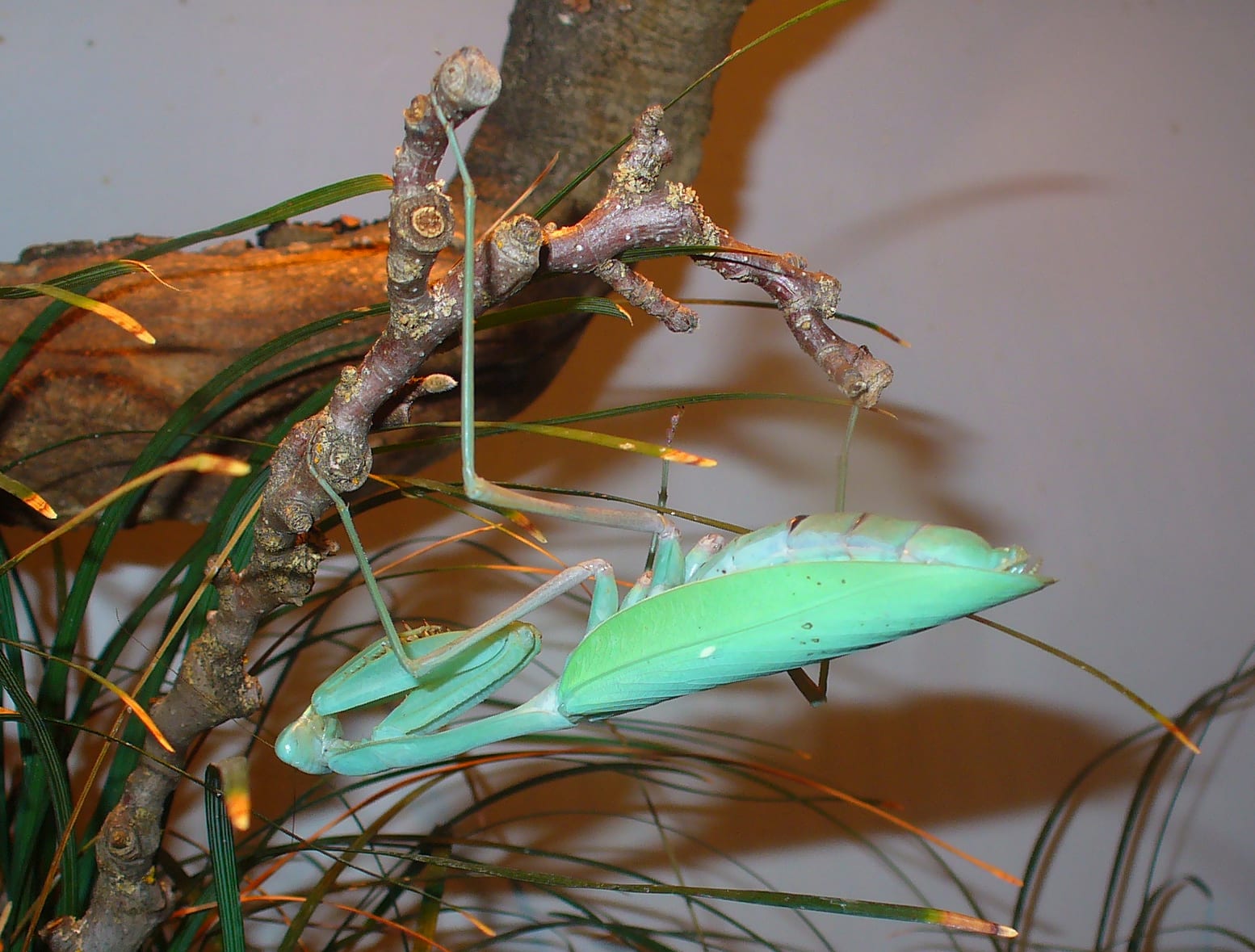
 © H. Zell / CC BY-SA 3.0
Giant Asian Mantis
Native to a wide range spanning South to Southeast Asia, the Giant Asian Mantis is the flagship large species of the Hierodula genus. Adults reach 7-9cm, with females typically growing to 8-9cm and slightly outsizing males at 7-8cm. Coloring varies naturally from green to brown, so no two individuals look quite alike. Hardy and unfussy about food, with breeding that's relatively straightforward, this species has become the classic gateway mantis for anyone trying exotic mantis keeping for the first time. Watching it hold its raptorial forelegs poised, patiently waiting to ambush prey, never gets old.
View Giant Asian Mantis encyclopedia →0% commission on your first sales!Register by September 30, 2026 and your first 2 sales are commission-free!
Breeder Wanted!
List on BreederDirect and sell directly to customers nationwide!
6 Transparency Standards You Can Trust
When listing Insects, Breeders disclose the following. We guarantee transparency on growth stage and breeding unit.
- Life Stage Clarity
- Generation Info
- Real Photos
- Breeding Unit
- Country of Origin
- Body Length (mm)
Browse all 296 breeds
Verified breeders wanted for Insects
Breeders are signing up now ahead of launch. Subscribe to be notified when new listings go live.
Getting alerts is free with a member account. When new listings match your saved search, we'll notify you by email and in-app.
Browse other categories
Verified breeders (preview)
Giant Asian Mantis key facts
- Care level
- Beginner-friendly
- Lifespan
- Adults 6-10 months
- Size
- Females 8-9cm, males 7-8cm
- Temperature
- 24℃
- Humidity
- 40〜65%
- Diet
- Almost anything: crickets, locusts, roaches, flies (fruit flies for nymphs)
- Temperature & Humidity
- Ideal around 24C, though a 20C room works; keep nights above 17C. Humidity of 40-65% is enough, misting every other day for drinking. Excess humidity is a leading cause of death.
- Breeding & Egg-laying
- Two to four weeks after the final moult, introduce the male right after giving the female a large prey item. Mating lasts hours; remove the male as soon as it ends. Females lay 5-8 oothecae, each hatching up to 150-200 nymphs in 6-8 weeks.
- Cohabitation
- An active predator that eats its own kind, so a group cage ends with a single survivor. Well-fed nymphs in a roomy enclosure can stay together until about the fourth instar.
- Lifespan & Rearing Period
- Nymphs reach adulthood after roughly six to eight moults; being large, they need an enclosure at least three times their length in height.
- Health & Notes
- Eats crickets, locusts, roaches and flies, and adults take adult crickets and locusts. It can be handled, but a defensive bite from this large species can break the skin. The Hierodula that has become established in Japan was long confused with this species and was separated as Hierodula chinensis in 2020, so information published under the Giant Asian Mantis name can actually describe that species; check for the name Hierodula membranacea.
About Giant Asian Mantis
A large Hierodula mantis from South and Southeast Asia, growing 7-9cm. Hardy, easy to feed, and simple to breed — a popular entry species with green-to-brown color variation.
7 things to know before welcoming a Giant Asian Mantis
1Enclosure Size and Height
Mantises grow larger with every molt, so choose a roomy enclosure with the adult size (7-9cm) in mind from the start. Molting happens upside-down from the lid or a branch, so give it enough vertical height to fully stretch out during the process.
2Diet and Feeding
This species is an insectivore that readily takes live crickets, dubia roaches, and similar feeder insects. Its hardy, unfussy appetite means beginners can raise it reliably just by matching prey size to the mantis's current size.
3Keep One Per Enclosure
Mantises are territorial and will readily cannibalize one another. Never house more than one in the same enclosure — keep each individual separately.
4Color Varies by Individual
Individuals range from green to brown, and shading varies from one mantis to the next. The tone may look slightly different depending on the enclosure environment, but both colors are simply natural variation within the same species.
5Temperament and Handling
Giant Asian Mantises have a somewhat feisty temperament and may pinch with their raptorial forelegs or bite defensively if handled. It's best to avoid forcing direct handling and instead enjoy watching its behavior.
6Telling Males from Females
Adult females typically grow to 8-9cm, slightly larger than males at 7-8cm. If you're planning to breed them, this size difference can help when selecting individuals.
7Temperature and Humidity
Balancing good ventilation with adequate humidity is key to keeping this species healthy. Avoid letting the enclosure become too dry or too damp, and adjust conditions seasonally with occasional misting.
Frequently asked questions about Giant Asian Mantis
- Q.Can beginners keep a Giant Asian Mantis?
- A.Yes — it's considered a beginner-friendly species thanks to its hardiness and unfussy appetite. Breeding is also relatively straightforward, which is why it's widely chosen as a first exotic mantis for newcomers.
- Q.Do males and females differ in size?
- A.Yes — adult females grow to about 8-9cm, slightly larger than males at 7-8cm. Checking the size at purchase can help you tell the sexes apart.
- Q.Is green or brown coloring better?
- A.Neither is better — both colors are simply natural variation within the same species. Since individuals range from green to brown, you can simply pick whichever tone you like.
- Q.Can I keep multiple mantises in the same enclosure?
- A.No — mantises are prone to cannibalizing each other, so multiple individuals should never share an enclosure. Keeping each one in its own separate container is standard practice.
- Q.Is the Giant Asian Mantis subject to CITES?
- A.No, the Giant Asian Mantis is not subject to CITES. There's nothing else particular to note on this point.
Useful tools for Giant Asian Mantis care
Learn more about Giant Asian Mantis in the encyclopedia
View Giant Asian Mantis encyclopedia entry →
Care difficulty, lifespan, size and diet — all basics covered.
Giant Asian Mantis related articles
See more Giant Asian Mantis articles →More in this category
Can't find the one you're looking for?
Post your wishes for free and breeders with matching animals will contact you with introductions.