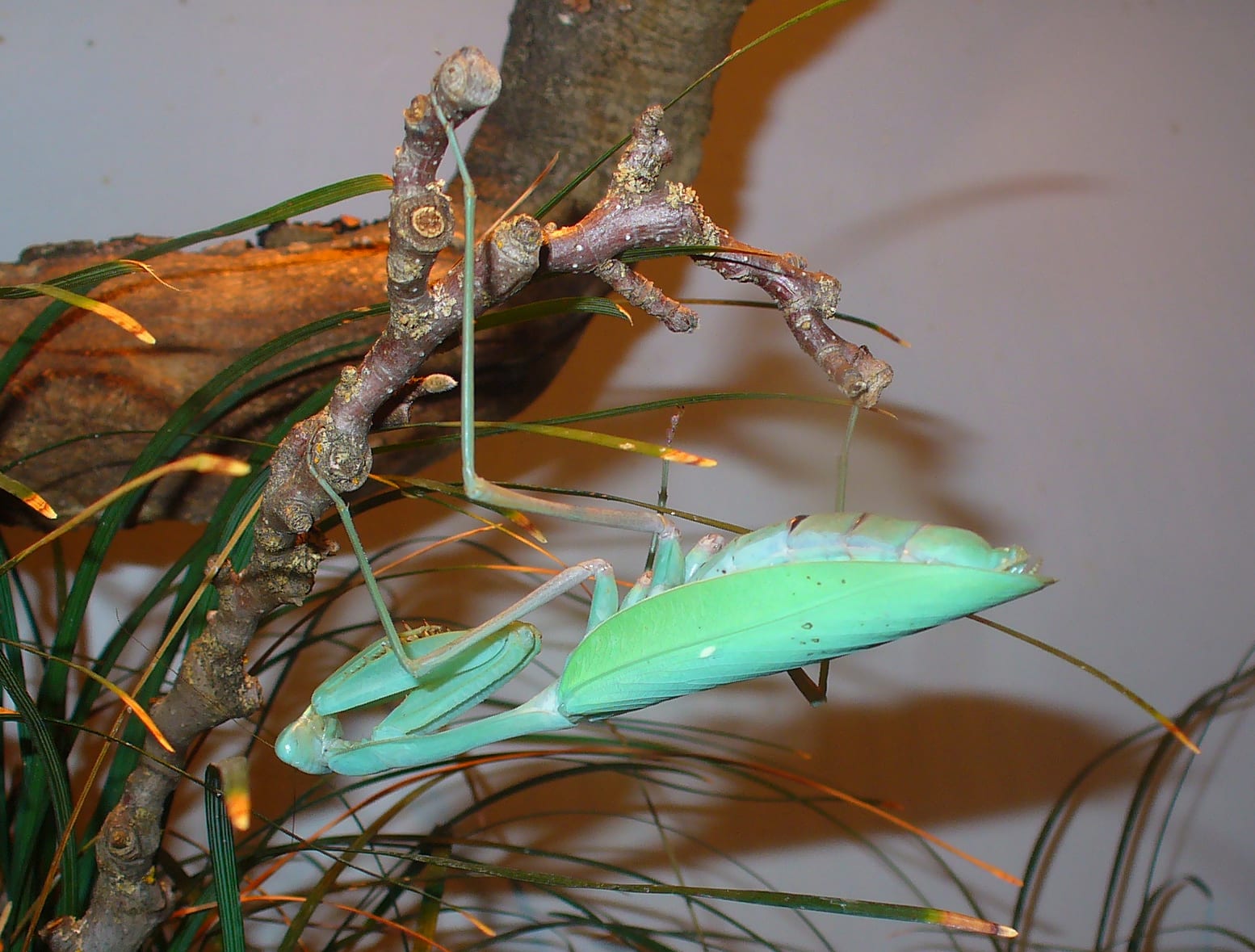
Source: Wikimedia Commons
Giant Asian Mantis
BeginnerHierodula membranacea
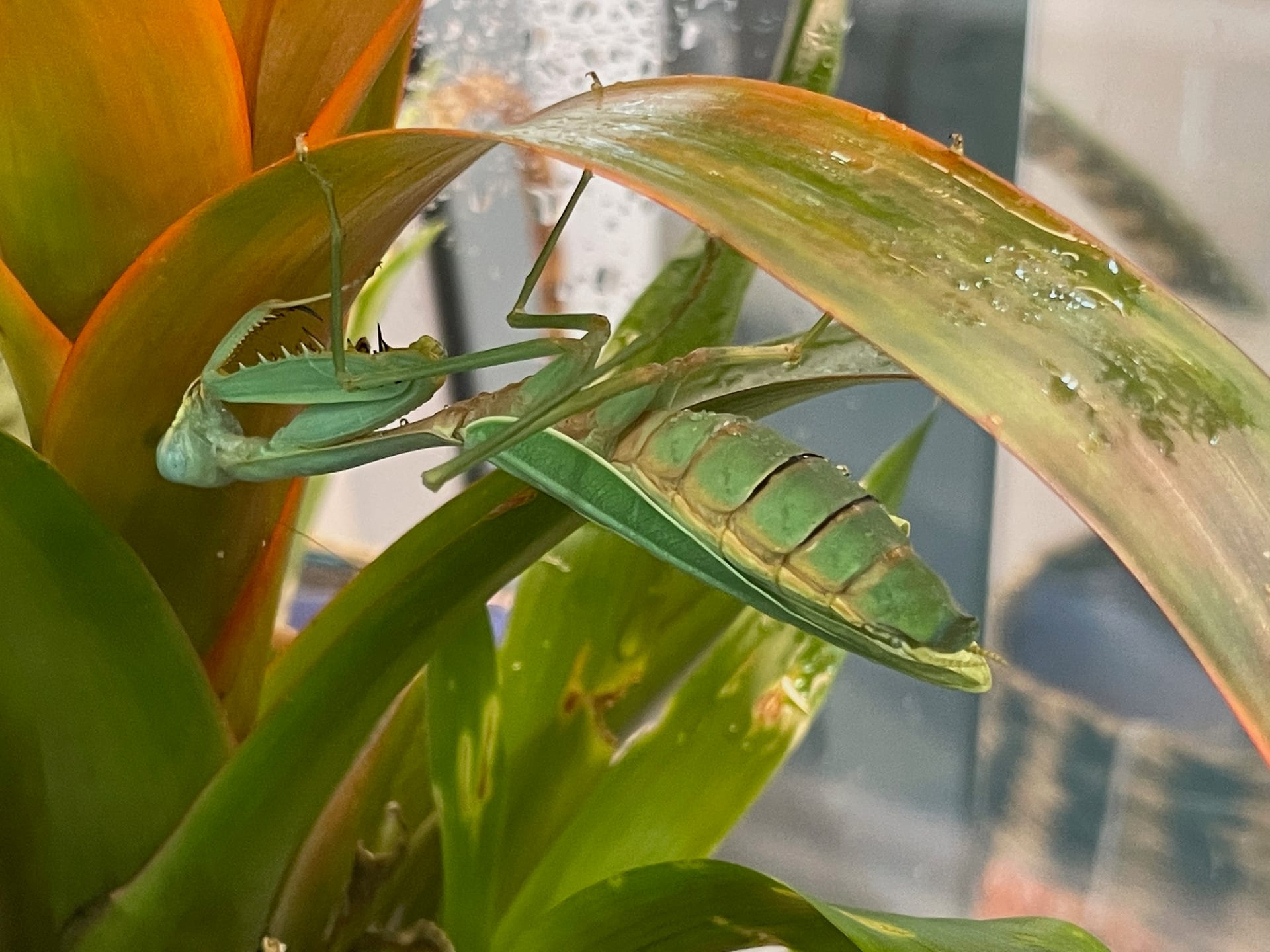
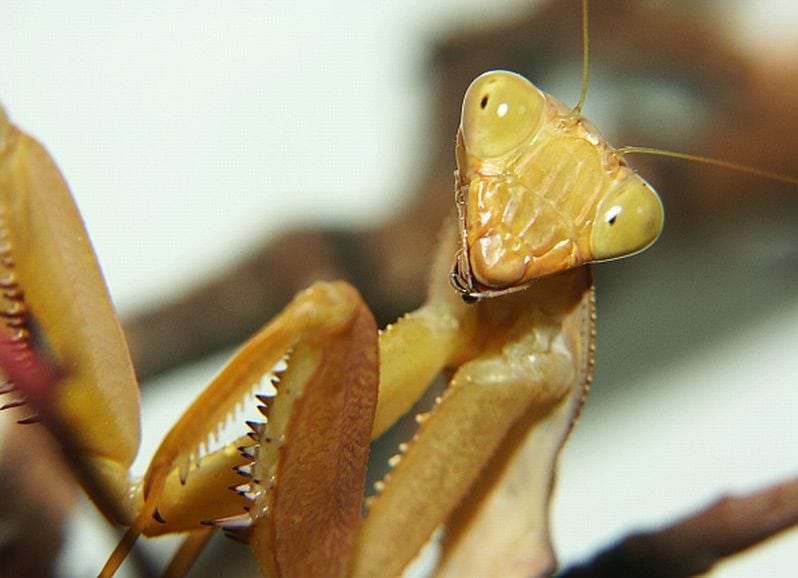
A large Hierodula from South and Southeast Asia, adults reaching 7-9cm. Colour varies from green to brown; hardy, unfussy about food and easy to breed, it is the most widespread beginner exotic mantis.
Difficulty
Beginner
Temperature
24℃
Lifespan
Adults 6-10 months
Size
Females 8-9cm, males 7-8cm
Humidity
40〜65%
Diet
Almost anything: crickets, locusts, roaches, flies (fruit flies for nymphs)
About
The giant Asian mantis (Hierodula membranacea) is the type species of Hierodula, found from South to Southeast Asia. Adults reach 7-9cm excluding the forelegs, making it one of the largest mantises. Colour ranges from green and yellow-green to brown and reddish brown and can change within days depending on conditions. It lives on shrubs and trees in hot, humid climates and tackles large, dangerous prey such as Asian giant hornets. An active hunter that chases prey, it will attack anything up to half its own size, and when cornered it spreads wings and forelegs in threat and may bite. It eats almost anything, including crickets, locusts and roaches. Being cannibalistic it is housed singly from the fourth instar, and the female is fed well before pairing. She lays 5-8 oothecae in her life, each hatching up to 150-200 nymphs after six to eight weeks. Hardy and easily bred, it is among the most widely kept exotic mantises.
Source: Wikipedia (CC BY-SA 4.0)
Lifespan of the Giant Asian Mantis
The Giant Asian Mantis lives Adults 6-10 months.
Size of the Giant Asian Mantis
The Giant Asian Mantis grows to Females 8-9cm, males 7-8cm.
Temperature & humidity for the Giant Asian Mantis
The ideal temperature for the Giant Asian Mantis is 24℃. Ideal humidity is 40〜65%.
Care is easy: about 24C is ideal but it grows at a 20C room temperature, humidity of 40-65% suffices and excess moisture is a leading cause of death.
Basic Info
Origin
Care Specifications
Semi-aggressiveSolitaryBreeding: Easy
Sources: Keeping Insects - Giant Asian Mantis / Hierodula membranacea - Wikipedia (EN)
References & Sources
Edited & verified by: BreederDirect editorial team
The taxonomic, regulatory, and husbandry data on this page are compiled and verified against the authoritative primary sources below.
Taxonomy & Authority
Accepted name: Hierodula membranacea Burmeister, 1838
Authority databases: GBIF
Nomenclature follows global taxonomic authority databases.
Regulations & Conservation Status
Not CITES-listed
Sources: CITES Appendix (checklist.cites.org)
Regulations may change. Always verify the latest information with the relevant authorities.
Giant Asian Mantis Listings
Loading latest listingsFind listings for this species