Source: Wikimedia Commons
Jeweled Flower Mantis
BeginnerCreobroter gemmatus
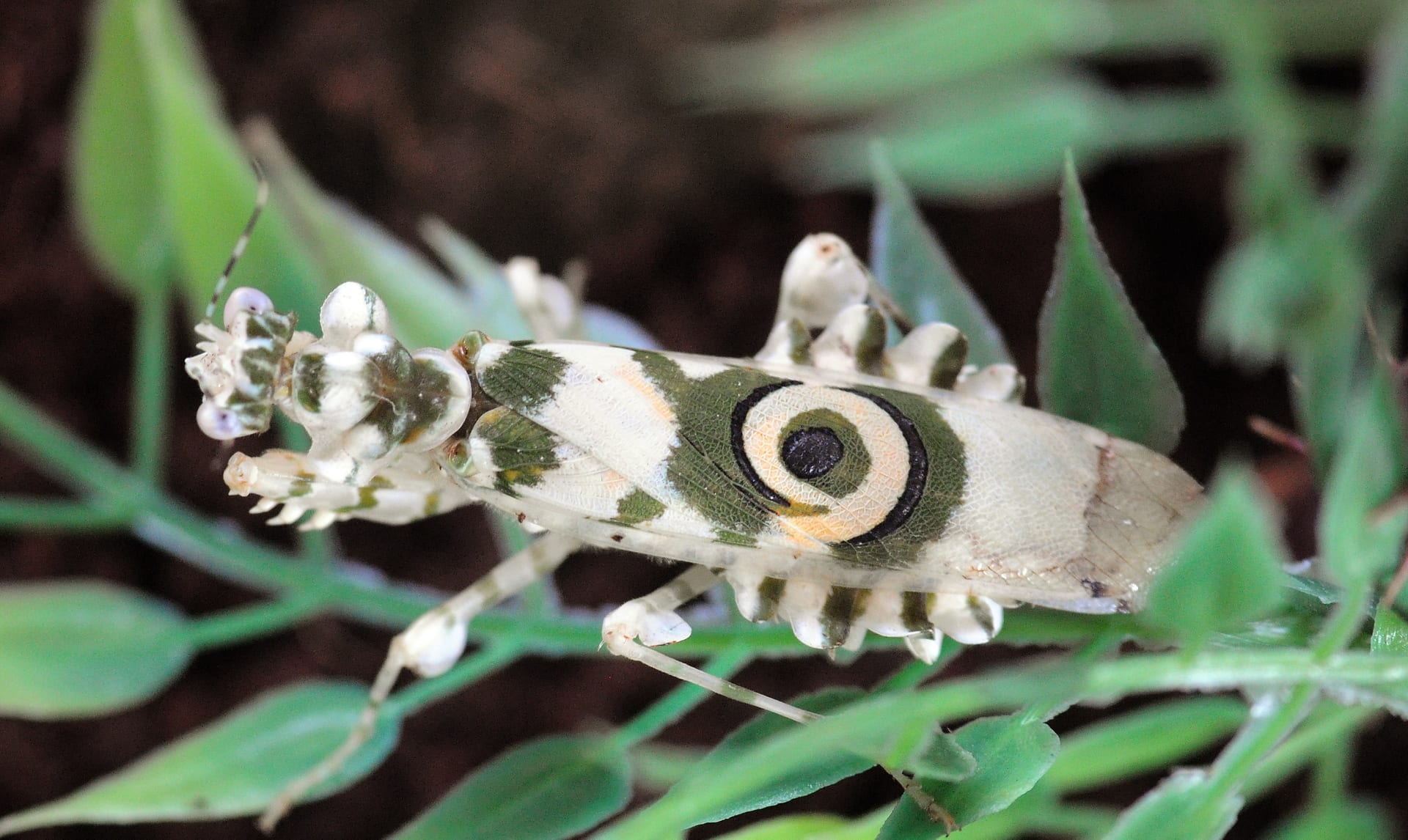
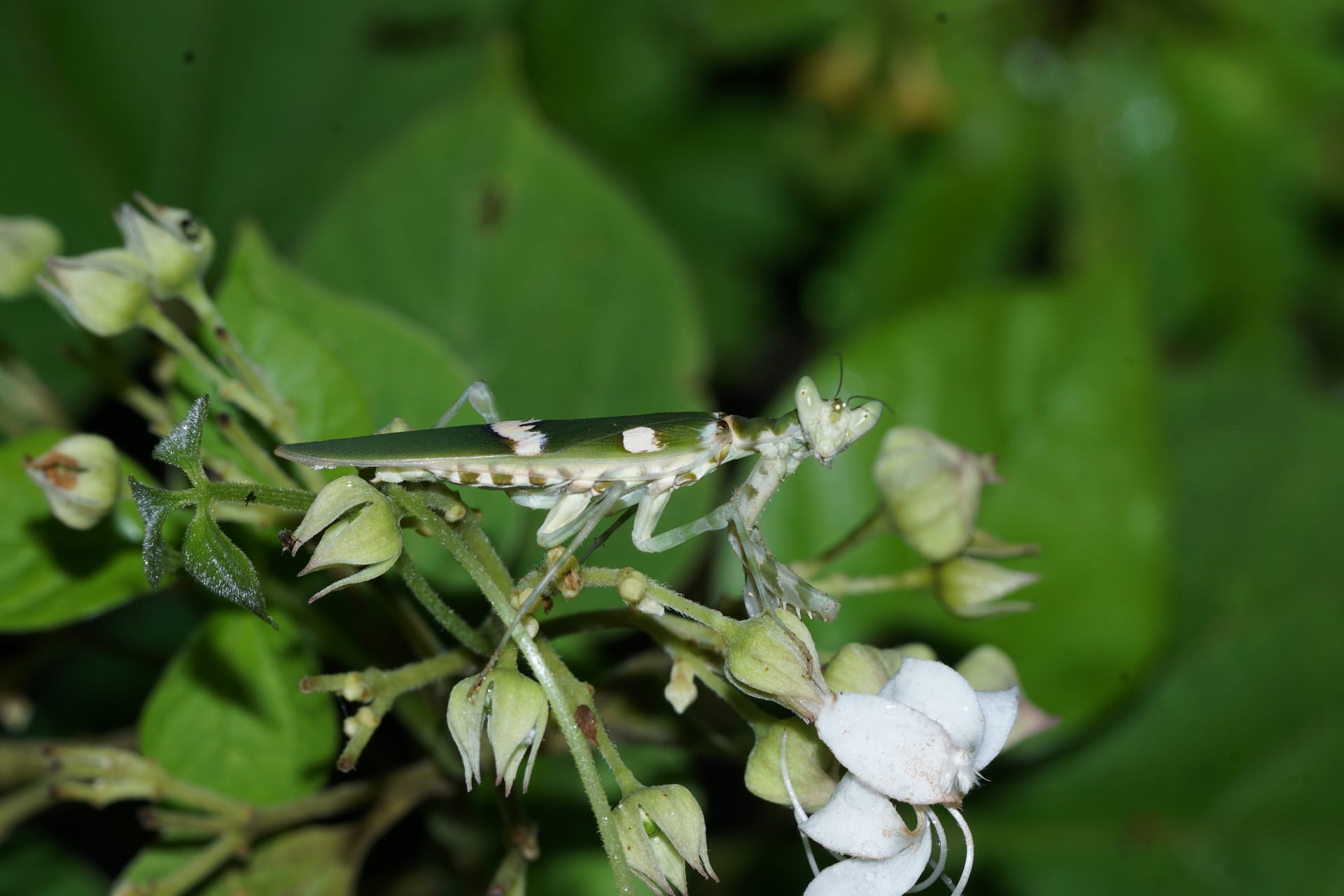
A small flower mantis ranging from South and Southeast Asia into southern China. Green and white with a striking spiral eyespot on each forewing. The smallest yet most widespread Creobroter, and a beginner species that can live on fruit flies alone.
Difficulty
Beginner
Temperature
25℃
Lifespan
About nine months in captivity
Size
Males about 3.8cm, females slightly larger
Humidity
60〜80%
Diet
Fruit flies, house flies, bottle flies and other flying insects
About
Creobroter gemmatus is a small flower mantis ranging from India and Nepal through Thailand, Vietnam and Indonesia to southern China and Hong Kong. It is mainly green and white, with a spiral eyespot on each forewing. Males reach about 3.8cm and females are slightly larger; it is the smallest yet most widespread member of the genus. Adulthood follows eight moults, and maturity takes two to five months depending on food and temperature. A single ootheca holds up to 50 eggs and hatches in roughly five weeks under good conditions. Females can be cannibalistic while males are fairly communal; cannibalism is said to be more frequent than in other flower mantises but is still uncommon. Care guidance for the congeneric Indian flower mantis (C. Being small it needs only about 15 x 10 x 10cm, furnished with plenty of artificial flowers and perches.
Source: Wikipedia (CC BY-SA 4.0)
Lifespan of the Jeweled Flower Mantis
Lifespan in captivity is about nine months.
Size of the Jeweled Flower Mantis
The Jeweled Flower Mantis grows to Males about 3.8cm, females slightly larger.
Temperature & humidity for the Jeweled Flower Mantis
The ideal temperature for the Jeweled Flower Mantis is 25℃. Ideal humidity is 60〜80%.
pictipennis) gives an ideal of about 25C with a workable range of 23-30C, nights down to 17C, humidity of 60-80% and misting about four times a week.
Basic Info
Origin
South and Southeast Asia and southern China (India, Nepal, Thailand, Vietnam, Malaysia, Indonesia, southern China and Hong Kong)
Care Specifications
Semi-aggressiveSolitary
Sources: Creobroter gemmatus - Wikipedia (EN) / Keeping Insects - Indian Flower Mantis, Creobroter pictipennis (congeneric care guidance)
References & Sources
Edited & verified by: BreederDirect editorial team
The taxonomic, regulatory, and husbandry data on this page are compiled and verified against the authoritative primary sources below.
Taxonomy & Authority
Accepted name: Creobroter gemmatus Saussure, 1869
Authority databases: GBIF
Nomenclature follows global taxonomic authority databases.
Regulations & Conservation Status
Not CITES-listed
Sources: CITES Appendix (checklist.cites.org)
Regulations may change. Always verify the latest information with the relevant authorities.
Jeweled Flower Mantis Listings
Loading latest listingsFind listings for this species