Source: Wikimedia Commons
Annam Stick Insect
BeginnerMedauroidea extradentata
A wingless stick insect from Vietnam. Females reach 110 mm and males 75 mm, and the species also reproduces parthenogenetically. It can be kept at room temperature and its ease of culture has made it both a common beginner's species and a feeder insect.
Difficulty
Beginner
Lifespan
Up to one year in culture
Size
Females up to 110mm, males up to 75mm
Humidity
60〜80%
Diet
Mainly the leaves of Rosaceae such as bramble and raspberry, plus strawberry, hazel, oak, firethorn and beech
About
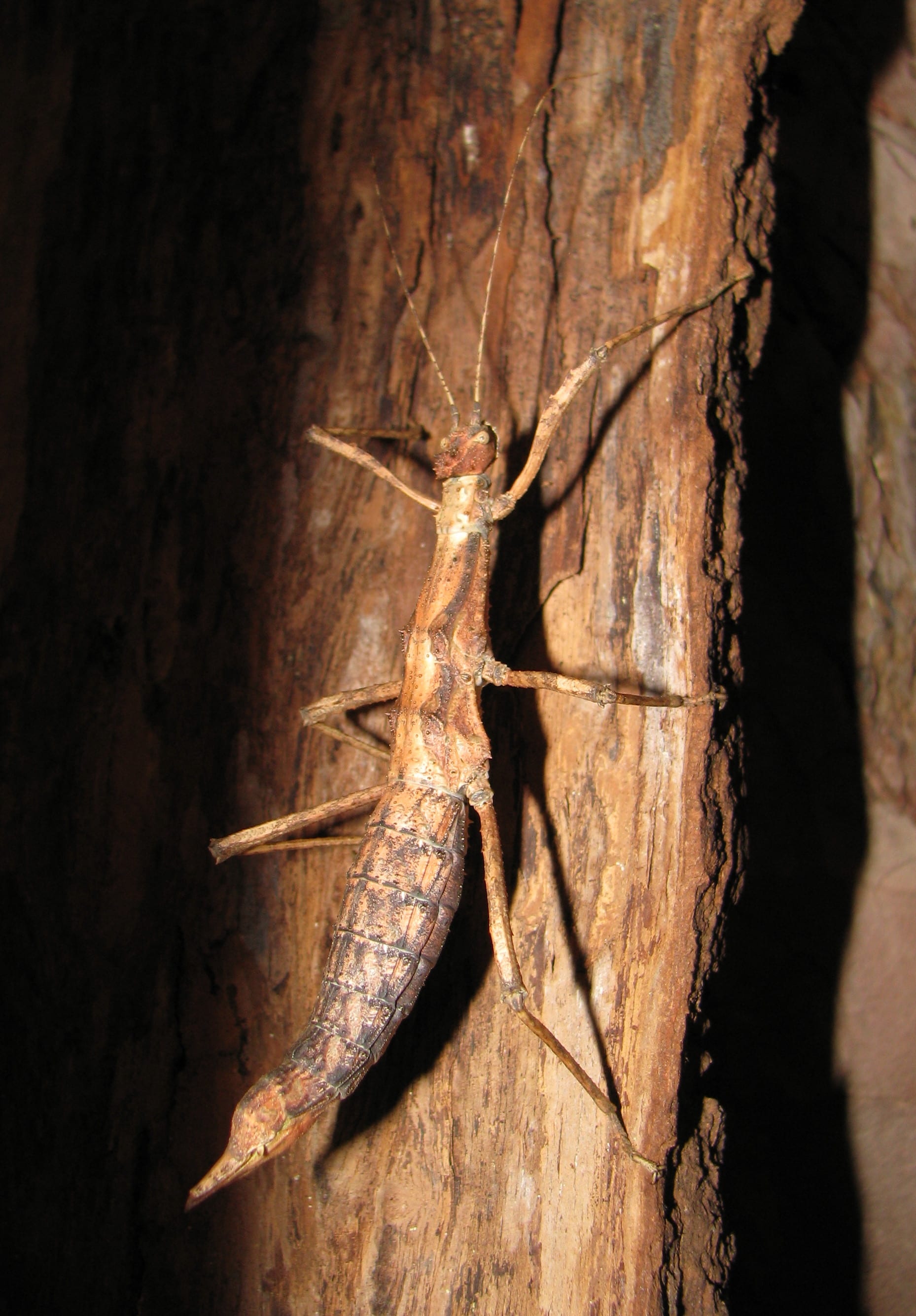
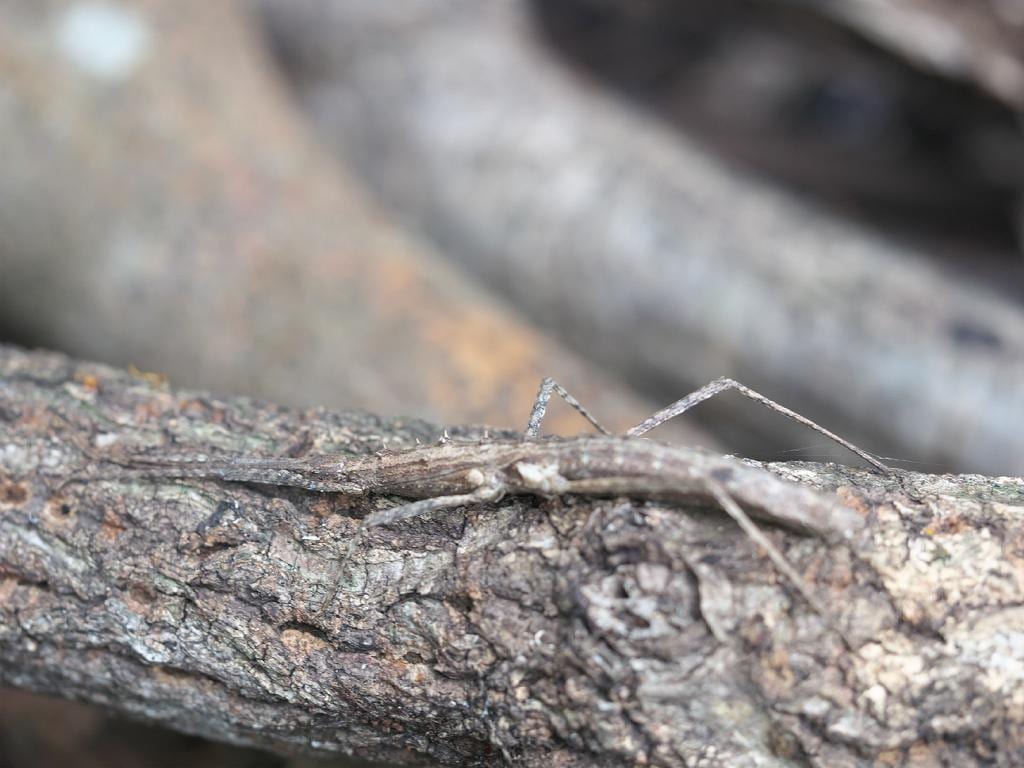
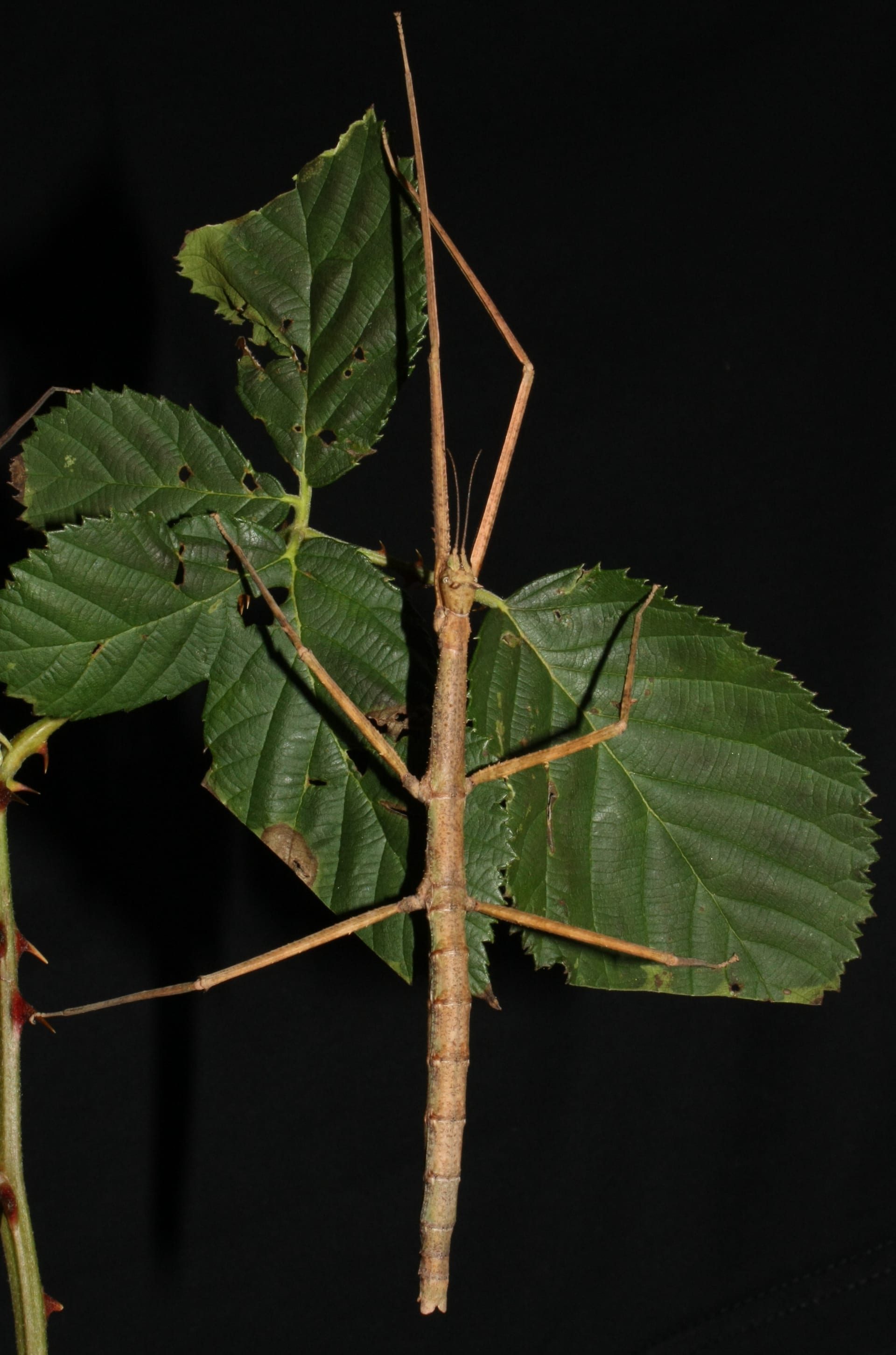
Medauroidea extradentata lives in the tropical forests of Vietnam and takes its name from Annam in the centre of the country. Females reach 110 mm and males 75 mm; females carry two small backward-pointing horns above the eyes and have shorter antennae and a stouter body than males. The ground colour is grey-brown to beige, with dark brown or green individuals appearing occasionally, and neither sex has wings. The insects are nocturnal, avoid unnecessary movement by day and walk with a side-to-side rocking gait that imitates a twig moving in the wind. They mate readily where males are present and otherwise reproduce parthenogenetically. Nymphs are about 15 mm at hatching and mature in three to four months. First brought to Europe in 1949, the species is easy to keep and has become both a popular terrarium insect and a model organism in biological research.
Source: Wikipedia (CC BY-SA 4.0)
Size of the Annam Stick Insect
The Annam Stick Insect grows to Females up to 110mm, males up to 75mm.
Temperature & humidity for the Annam Stick Insect
The barrel-shaped eggs measure 2.5 by 1.5 mm and are grey with brown flecks; development depends on temperature, averaging three to four months but falling to well under two at 25-27 °C.
Basic Info
Origin
Vietnam, in the central region of Annam
Lifespan
Up to one year in culture
Size
Females up to 110mm, males up to 75mm
Care Specifications
PeacefulGroupBreeding: Easy
Sources: Medauroidea extradentata - Wikipedia (DE; size, behaviour, eggs and development, food plants, husbandry, synonyms, PSG numbers) / Medauroidea extradentata - Wikipedia (EN; range, number of moults, sexual dimorphism) / GBIF species page for Medauroidea extradentata (accepted)
References & Sources
Edited & verified by: BreederDirect editorial team
The taxonomic, regulatory, and husbandry data on this page are compiled and verified against the authoritative primary sources below.
Primary sources
- Wikipedia
- CITES Appendices (species not listed)
- Japan Plant Protection Station: permission to import prohibited articles (definition of quarantine pests and the Article 7 exemption)
- e-Gov: Plant Protection Act, Article 7 (prohibition of import)
- Ministry of the Environment: list of Invasive Alien Species (no Phasmatodea listed)
- Medauroidea extradentata - Wikipedia (EN; range, number of moults, sexual dimorphism)
- GBIF species page for Medauroidea extradentata (accepted)
Taxonomy & Authority
Accepted name: Medauroidea extradentata (Brunner von Wattenwyl, 1907)
Synonyms: Clitumnus extradentatus Brunner von Wattenwyl, 1907, Cuniculina annamensis Brunner von Wattenwyl, 1907, Baculum extradentatum (Brunner von Wattenwyl, 1907)
Authority databases: GBIF
Nomenclature follows global taxonomic authority databases.
Regulations & Conservation Status
Not CITES-listed
Plant Protection Act: Phasmids feed on leaves, and live specimens of foreign species that do not occur in Japan count as quarantine pests under the Plant Protection Act. Article 7 of that Act makes quarantine pests prohibited imports, so they may not be brought in except with prior permission from the Minister of Agriculture, Forestry and Fisheries for research, exhibition or a similar purpose. Stock available in Japan is therefore limited to animals bred domestically over generations, and the Plant Protection Station should be asked about any individual case.
Sources: CITES Appendices (species not listed) / Japan Plant Protection Station: permission to import prohibited articles (definition of quarantine pests and the Article 7 exemption) / e-Gov: Plant Protection Act, Article 7 (prohibition of import) / Ministry of the Environment: list of Invasive Alien Species (no Phasmatodea listed)
Regulations may change. Always verify the latest information with the relevant authorities.
Annam Stick Insect Listings
Loading latest listingsFind listings for this species