Source: Wikimedia Commons
Giant Leaf Insect
IntermediatePhyllium giganteum
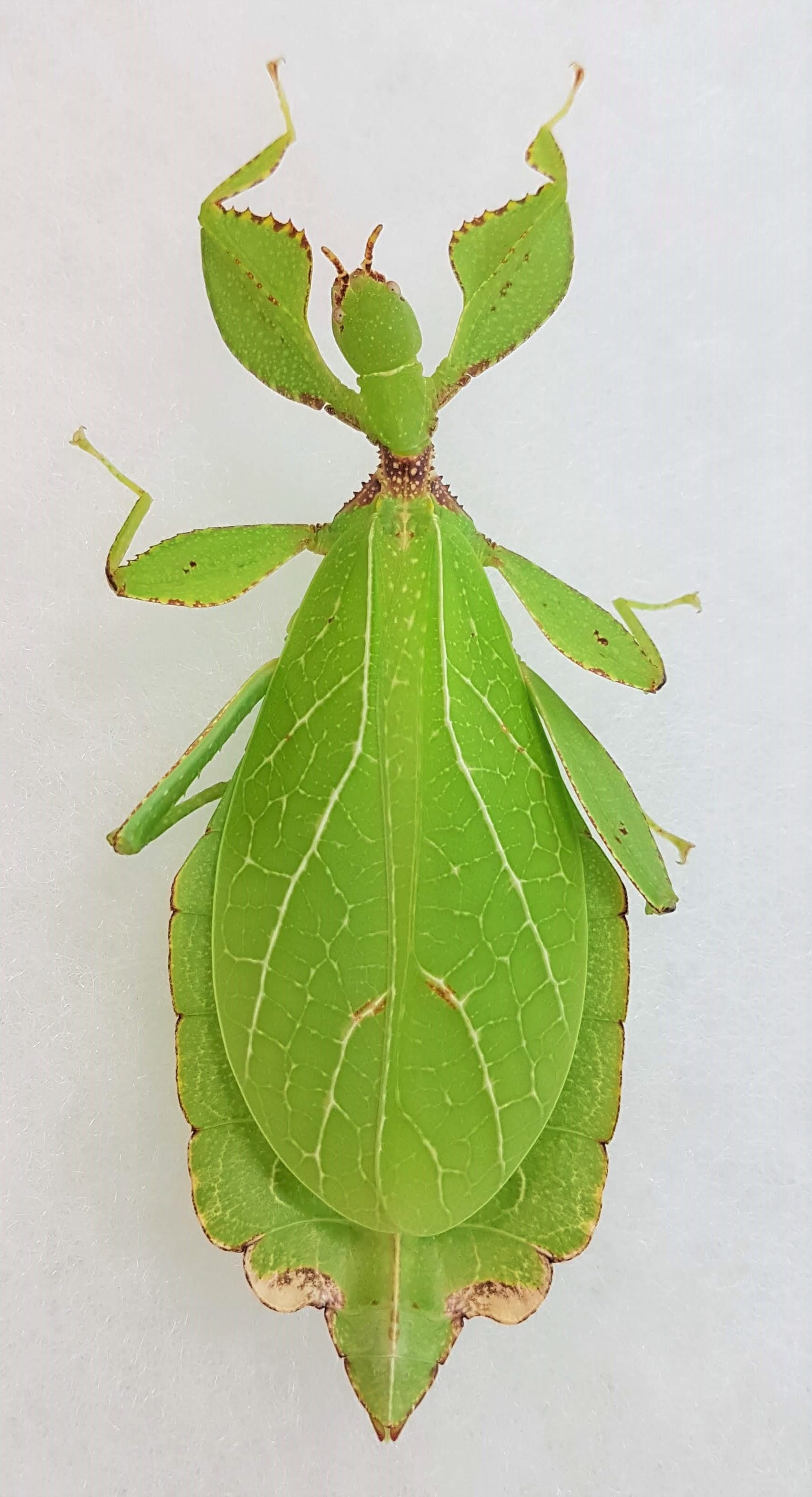
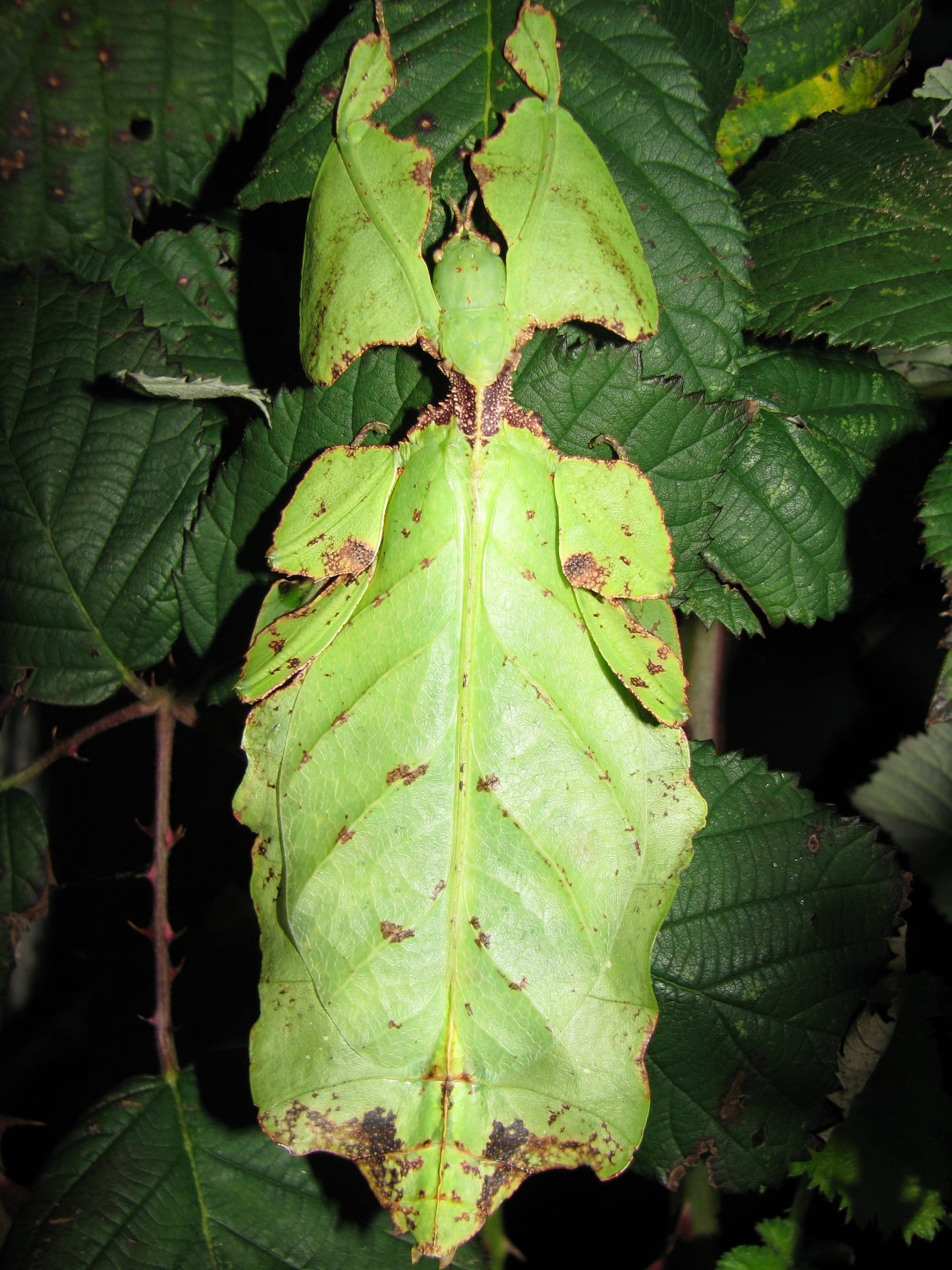
One of the largest leaf insects, found on the Malay Peninsula and Borneo. Females reach almost 12 cm and closely resemble a partly withered leaf. In captivity the species reproduces parthenogenetically, and newly hatched nymphs are easily lost to dry air.
Difficulty
Intermediate
Lifespan
Adult females 6-10 months, adult males a few weeks to three months
Size
Males up to 8.2cm, females about 12cm
Humidity
70〜80%
Diet
Guava leaves are preferred, with oak in summer and bramble in winter
About
Pulchriphyllium giganteum, long known as Phyllium giganteum, is one of the largest leaf insects and lives in the tropics of the Malay Peninsula and Borneo. Males reach 8.2 cm and females almost 12 cm. Females lack hindwings and their forewings do not cover the abdomen out to its lateral margins, while males have hindwings reaching the tip of the abdomen and turn increasingly yellow three to four weeks after the final moult. Both sexes carry a pair of eyespots on the fifth abdominal segment, and their colour and shape closely match a partly withered leaf. Observations in captivity show parthenogenetic reproduction, with one male reported among the offspring of every 20 to 500 females. The glossy dark eggs are 8.5 mm long, 4 mm wide and average 34 mg, the largest and heaviest of any leaf insect, and hatch after six to eight months. Nymphs are reddish brown at first and turn green once they begin to feed. Seven to twelve months pass between hatching and adulthood. Cultured stock traces back to the Cameron Highlands and the adjoining Tapah Hills, and the Phasmid Study Group lists the species as PSG 72.
Source: Wikipedia (CC BY-SA 4.0)
Lifespan of the Giant Leaf Insect
The Giant Leaf Insect lives Adult females 6-10 months, adult males a few weeks to three months.
Size of the Giant Leaf Insect
The Giant Leaf Insect grows to Males up to 8.2cm, females about 12cm.
Basic Info
Origin
Malay Peninsula and Borneo, with reports also from Thailand and Sumatra
Lifespan
Adult females 6-10 months, adult males a few weeks to three months
Care Specifications
PeacefulGroupBreeding: Moderate
Sources: Pulchriphyllium giganteum - Wikipedia (EN; size, range, reproduction, rearing temperature and humidity, food plants, PSG number) / Pulchriphyllium giganteum - Wikipedia (DE; the same account in more detail) / GBIF species page (Phyllium giganteum Hausleithner, 1984 is a synonym of Pulchriphyllium giganteum)
References & Sources
Edited & verified by: BreederDirect editorial team
The taxonomic, regulatory, and husbandry data on this page are compiled and verified against the authoritative primary sources below.
Primary sources
- Wikipedia
- CITES Appendices (species not listed)
- Japan Plant Protection Station: permission to import prohibited articles (definition of quarantine pests and the Article 7 exemption)
- e-Gov: Plant Protection Act, Article 7 (prohibition of import)
- Ministry of the Environment: list of Invasive Alien Species (no Phasmatodea listed)
- Pulchriphyllium giganteum - Wikipedia (DE; the same account in more detail)
- GBIF species page (Phyllium giganteum Hausleithner, 1984 is a synonym of Pulchriphyllium giganteum)
- GBIF
Taxonomy & Authority
Accepted name: Phyllium giganteum Hausleithner, 1984
Synonyms: Pulchriphyllium giganteum (Hausleithner, 1984), Phyllium (Pulchriphyllium) giganteum
Authority databases: GBIF
Nomenclature follows global taxonomic authority databases.
Regulations & Conservation Status
Not CITES-listed
Plant Protection Act: Phasmids feed on leaves, and live specimens of foreign species that do not occur in Japan count as quarantine pests under the Plant Protection Act. Article 7 of that Act makes quarantine pests prohibited imports, so they may not be brought in except with prior permission from the Minister of Agriculture, Forestry and Fisheries for research, exhibition or a similar purpose. Stock available in Japan is therefore limited to animals bred domestically over generations, and the Plant Protection Station should be asked about any individual case.
Sources: CITES Appendices (species not listed) / Japan Plant Protection Station: permission to import prohibited articles (definition of quarantine pests and the Article 7 exemption) / e-Gov: Plant Protection Act, Article 7 (prohibition of import) / Ministry of the Environment: list of Invasive Alien Species (no Phasmatodea listed)
Regulations may change. Always verify the latest information with the relevant authorities.
Giant Leaf Insect Listings
Loading latest listingsFind listings for this species