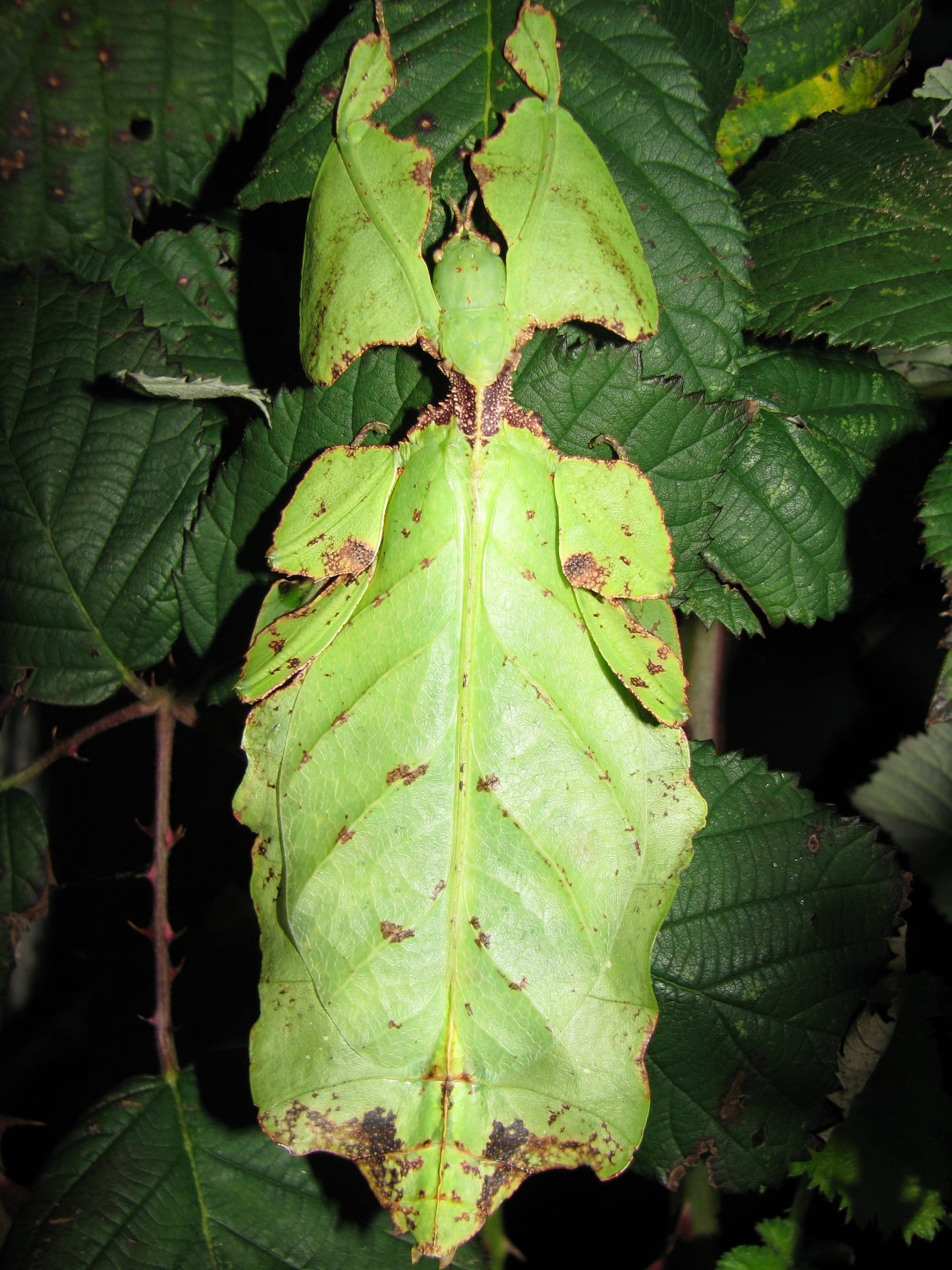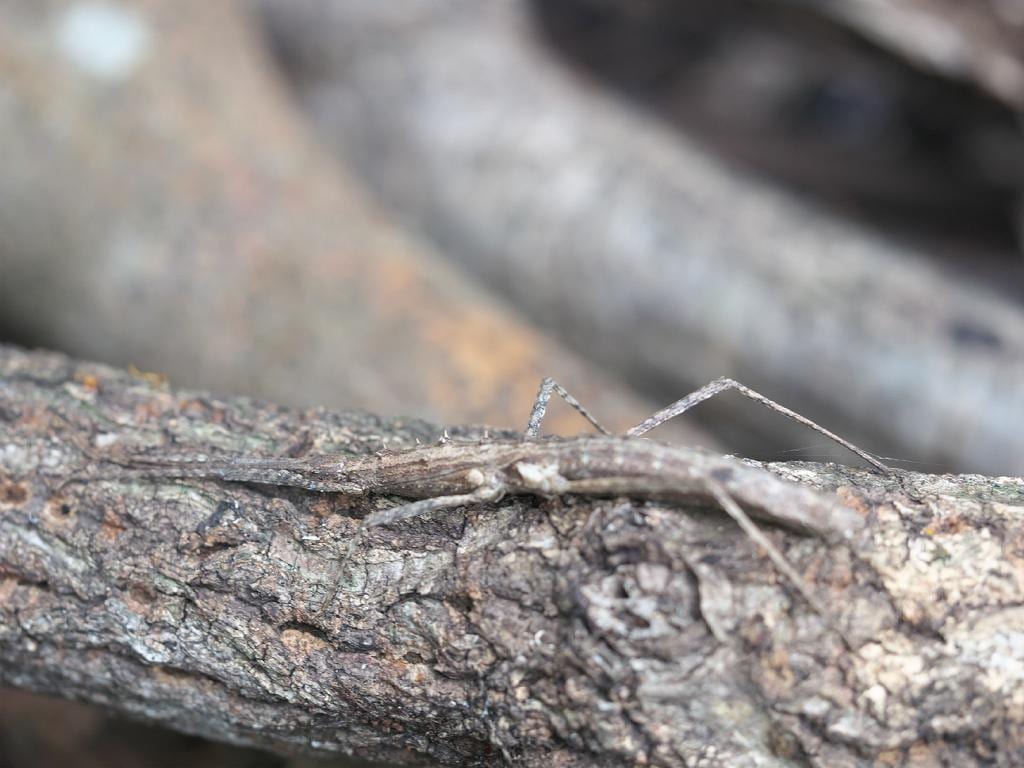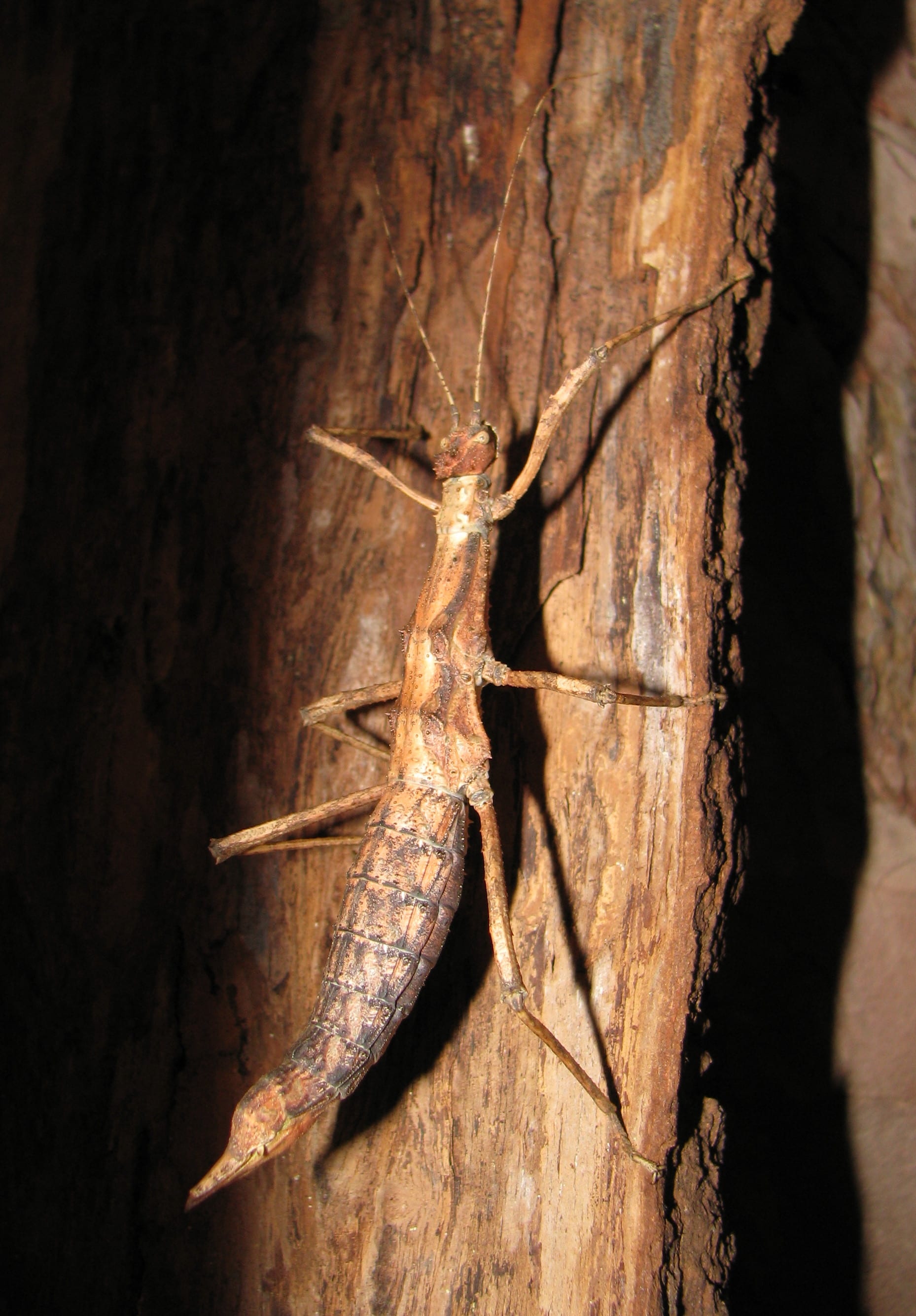
Source: Wikimedia Commons
Sungaya Stick Insect
BeginnerSungaya inexpectata
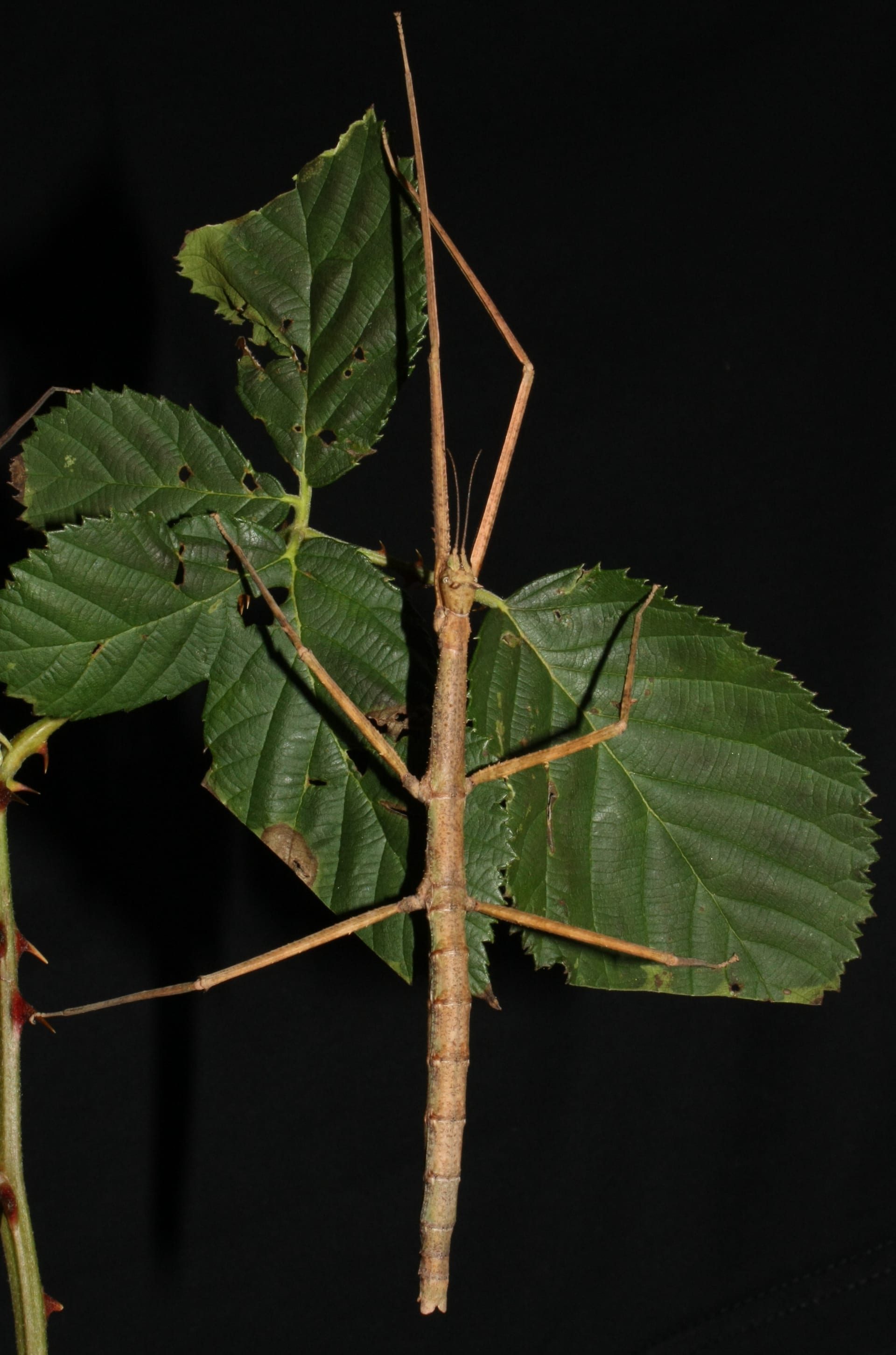
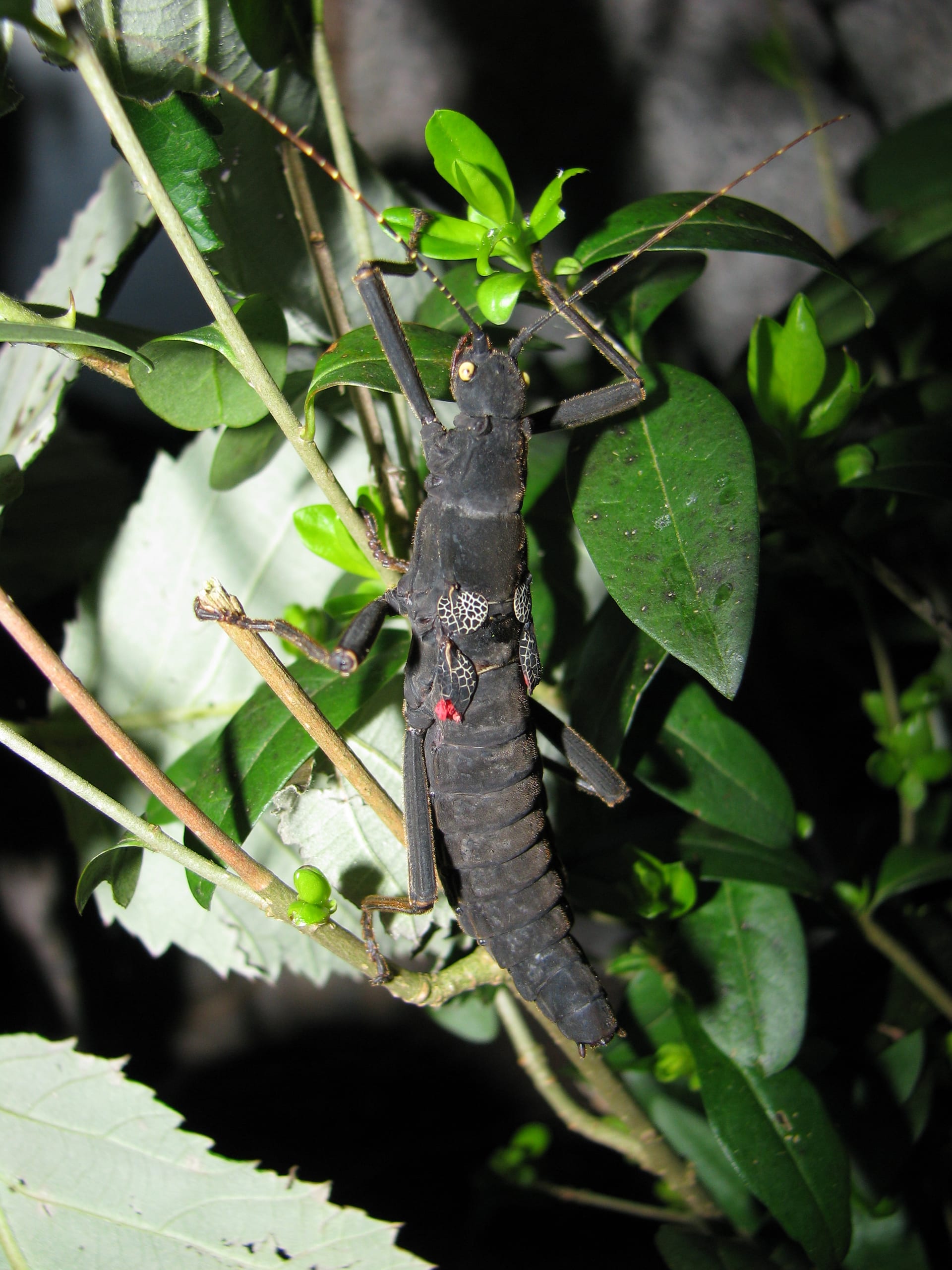
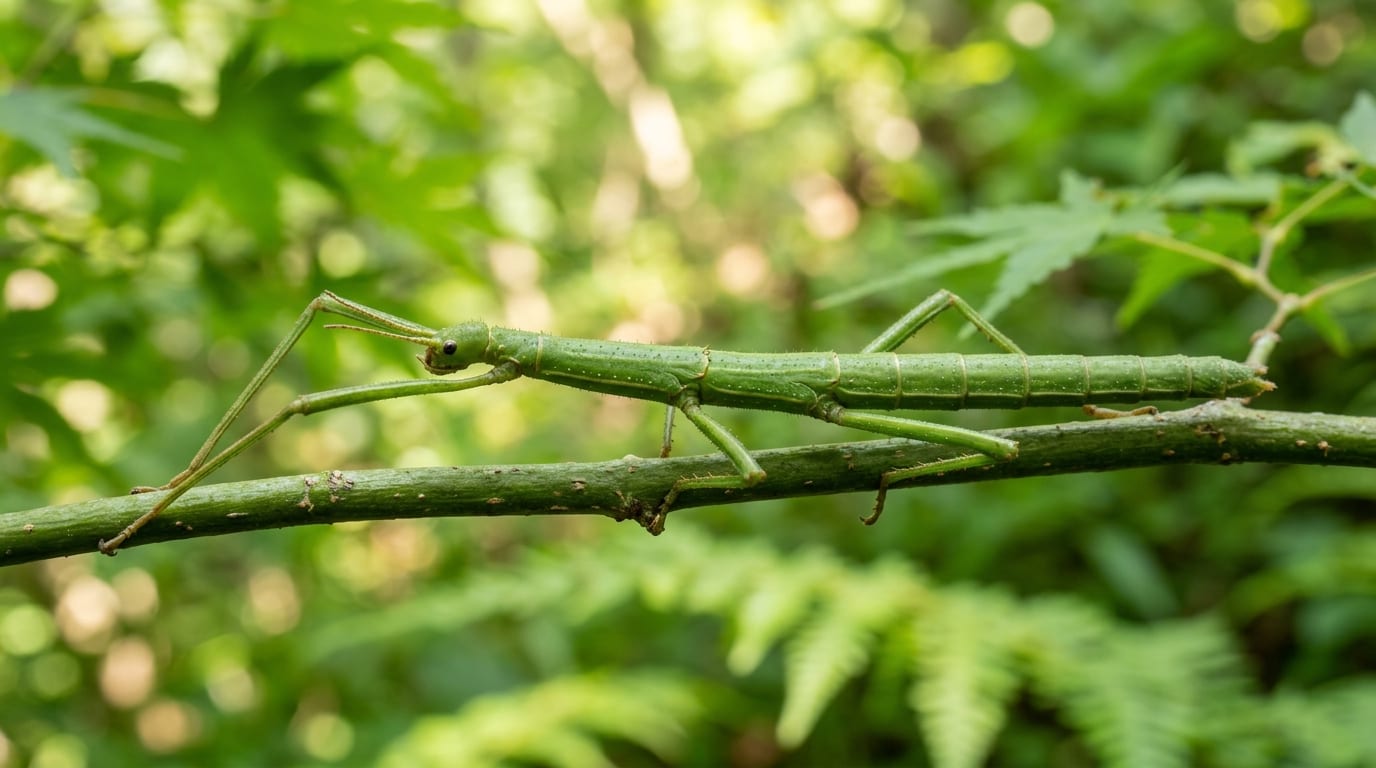
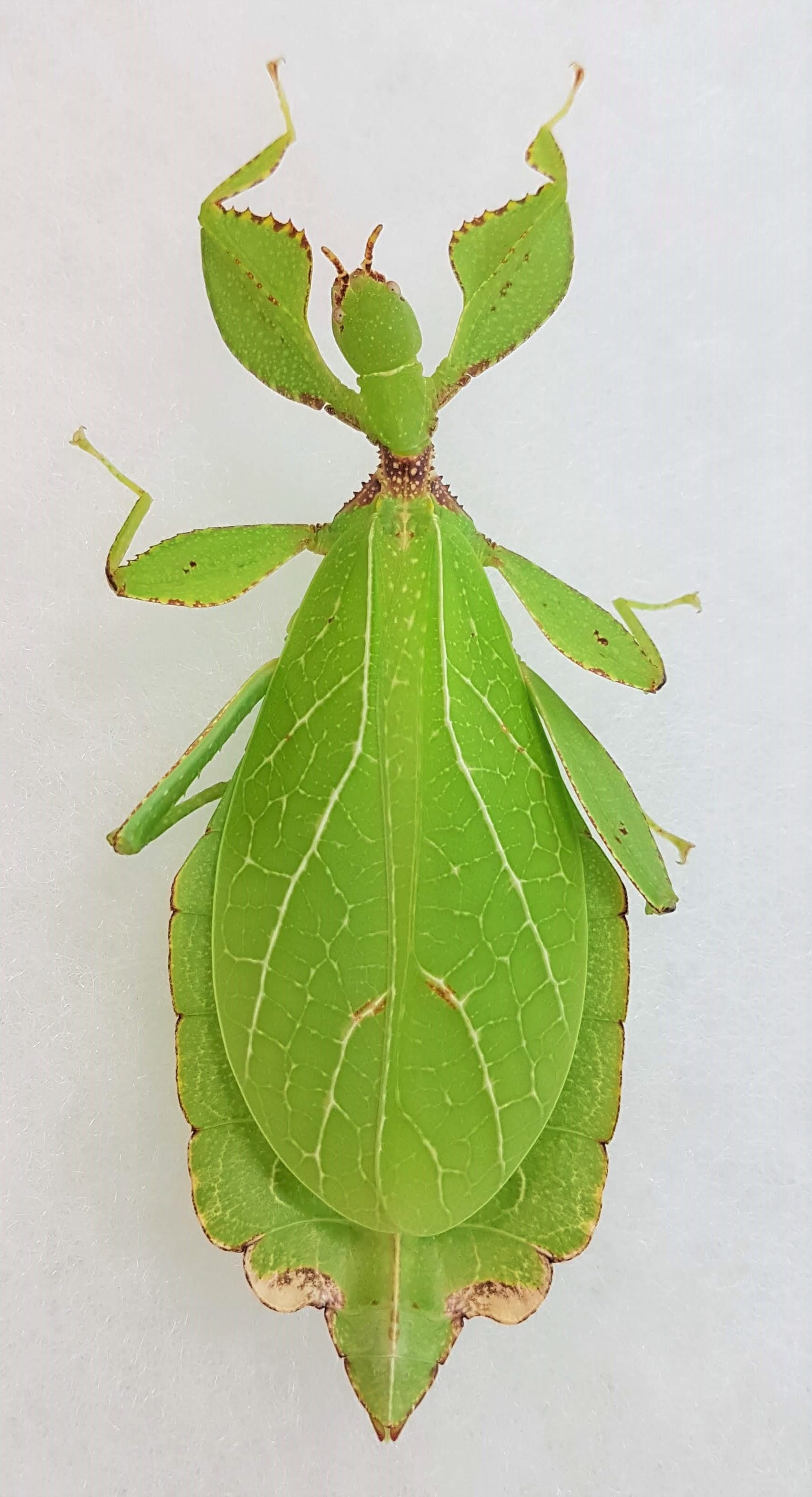
A stick insect from Luzon in the Philippines. Females are 80-85 mm long and weigh about 5 g, with a crown of spines on the back of the head and flat spines on the thorax. Cultured stock reproduces parthenogenetically and accepts a wide range of food plants, so a colony is easy to sustain.
Difficulty
Beginner
Temperature
22〜27℃
Lifespan
Adults 4-8 months
Size
Females 80-85mm, weighing about 5g
Humidity
60〜80%
Diet
Guava, bramble, hazel, rose, beech, hornbeam, maple, ivy, dogwood, ash and many other broadleaf leaves; cucumber is taken as well
About
Sungaya inexpectata was collected near Tagaytay on Luzon in the Philippines in 1995 and is the type species of the genus. At the end of the abdomen they carry the beaked secondary ovipositor typical of the Obriminae, and they bear a crown of spines on the back of the head and four flat spines on the meso- and metanotum. Nymphs and freshly moulted adults are a very pale beige, and females darken as they age; on pale individuals the spines are often set in a brown diamond pattern. The stock now in culture reproduces by parthenogenesis. The amphora-shaped eggs are large, about 4.5 mm long and 3.7 mm wide, are laid into damp earth and hatch after four to six months. Nymphs are already 17 mm at hatching and reach adulthood in a further three to four months. After its introduction the species became one of the most commonly kept stick insects and is listed by the Phasmid Study Group as PSG 195.
Source: Wikipedia (CC BY-SA 4.0)
Lifespan of the Sungaya Stick Insect
The Sungaya Stick Insect lives Adults 4-8 months.
Size of the Sungaya Stick Insect
The Sungaya Stick Insect grows to Females 80-85mm, weighing about 5g.
Females reach 80 to 85 mm and weigh around five grams.
Temperature & humidity for the Sungaya Stick Insect
The ideal temperature for the Sungaya Stick Insect is 22〜27℃. Ideal humidity is 60〜80%.
Basic Info
Origin
Luzon, the Philippines, around Tagaytay in Cavite Province
Care Specifications
PeacefulGroupBreeding: Easy
Sources: Sungaya inexpectata - Wikipedia (DE; size, weight, morphology, eggs and development, rearing temperature and humidity, food plants, culture lines, PSG number) / Sungaya inexpectata - Wikipedia (EN; discovery and the 2023 species split) / GBIF species page for Sungaya inexpectata Zompro, 1996 (accepted)
References & Sources
Edited & verified by: BreederDirect editorial team
The taxonomic, regulatory, and husbandry data on this page are compiled and verified against the authoritative primary sources below.
Primary sources
- Wikipedia
- CITES Appendices (species not listed)
- Japan Plant Protection Station: permission to import prohibited articles (definition of quarantine pests and the Article 7 exemption)
- e-Gov: Plant Protection Act, Article 7 (prohibition of import)
- Ministry of the Environment: list of Invasive Alien Species (no Phasmatodea listed)
- Sungaya inexpectata - Wikipedia (EN; discovery and the 2023 species split)
- GBIF species page for Sungaya inexpectata Zompro, 1996 (accepted)
Taxonomy & Authority
Accepted name: Sungaya inexpectata Zompro, 1996
Authority databases: GBIF
Nomenclature follows global taxonomic authority databases.
Regulations & Conservation Status
Not CITES-listed
Plant Protection Act: Phasmids feed on leaves, and live specimens of foreign species that do not occur in Japan count as quarantine pests under the Plant Protection Act. Article 7 of that Act makes quarantine pests prohibited imports, so they may not be brought in except with prior permission from the Minister of Agriculture, Forestry and Fisheries for research, exhibition or a similar purpose. Stock available in Japan is therefore limited to animals bred domestically over generations, and the Plant Protection Station should be asked about any individual case.
Sources: CITES Appendices (species not listed) / Japan Plant Protection Station: permission to import prohibited articles (definition of quarantine pests and the Article 7 exemption) / e-Gov: Plant Protection Act, Article 7 (prohibition of import) / Ministry of the Environment: list of Invasive Alien Species (no Phasmatodea listed)
Regulations may change. Always verify the latest information with the relevant authorities.
Sungaya Stick Insect Listings
Loading latest listingsFind listings for this species