Source: Wikimedia Commons
Antelope Saw Stag Beetle
AdvancedProsopocoilus antilopus
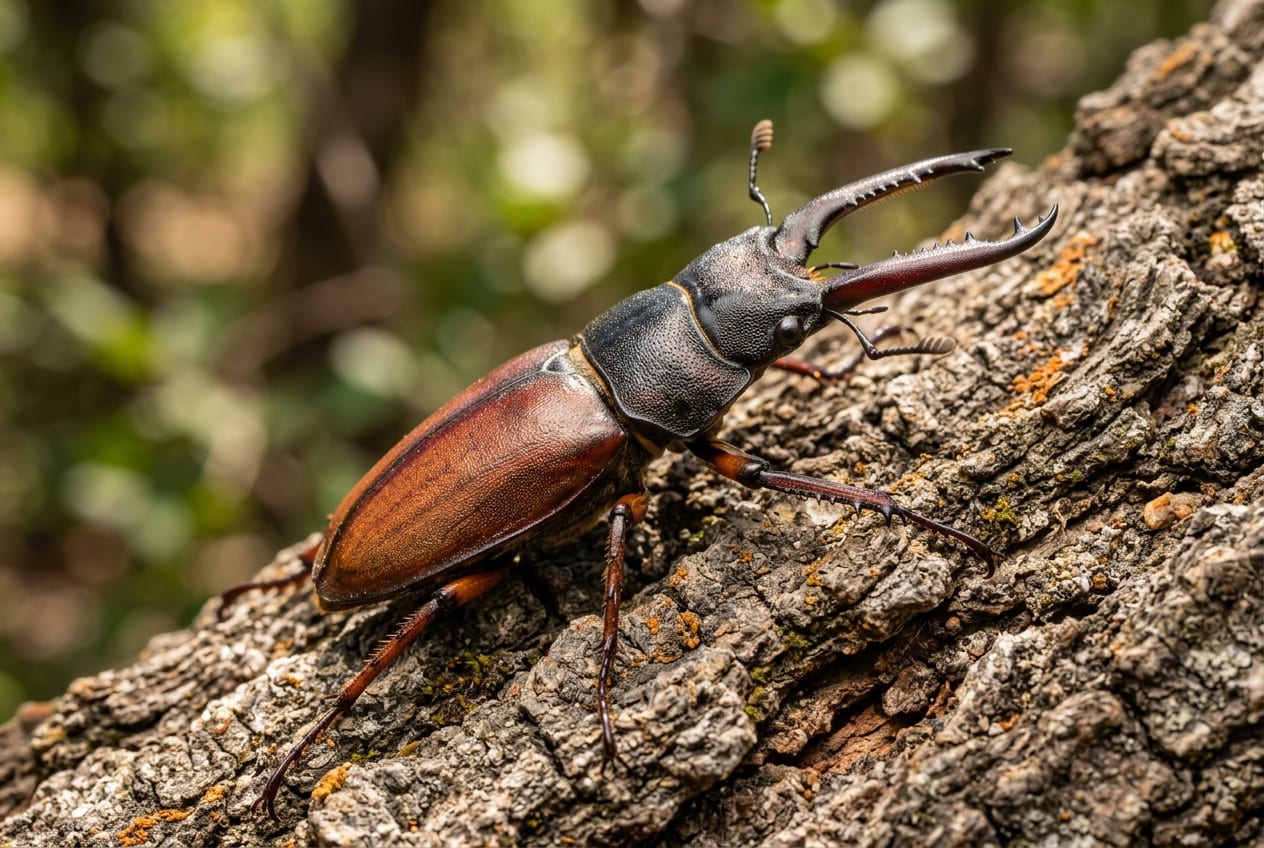
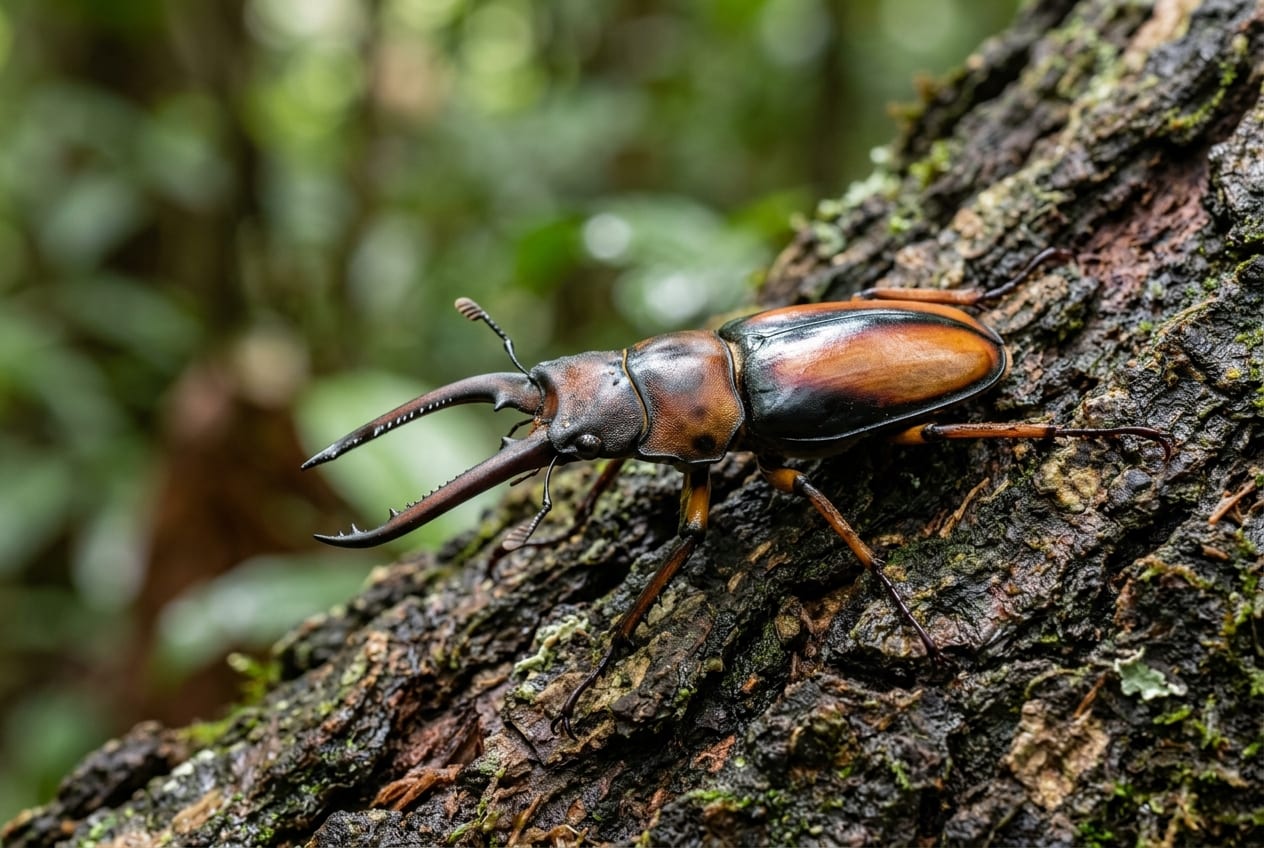
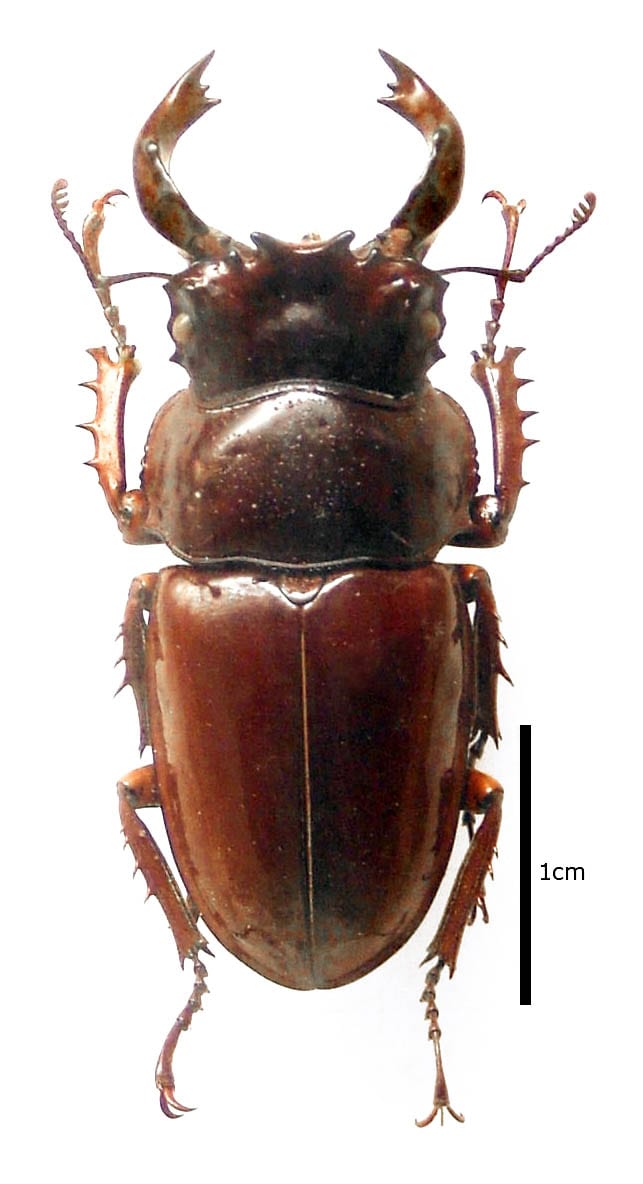
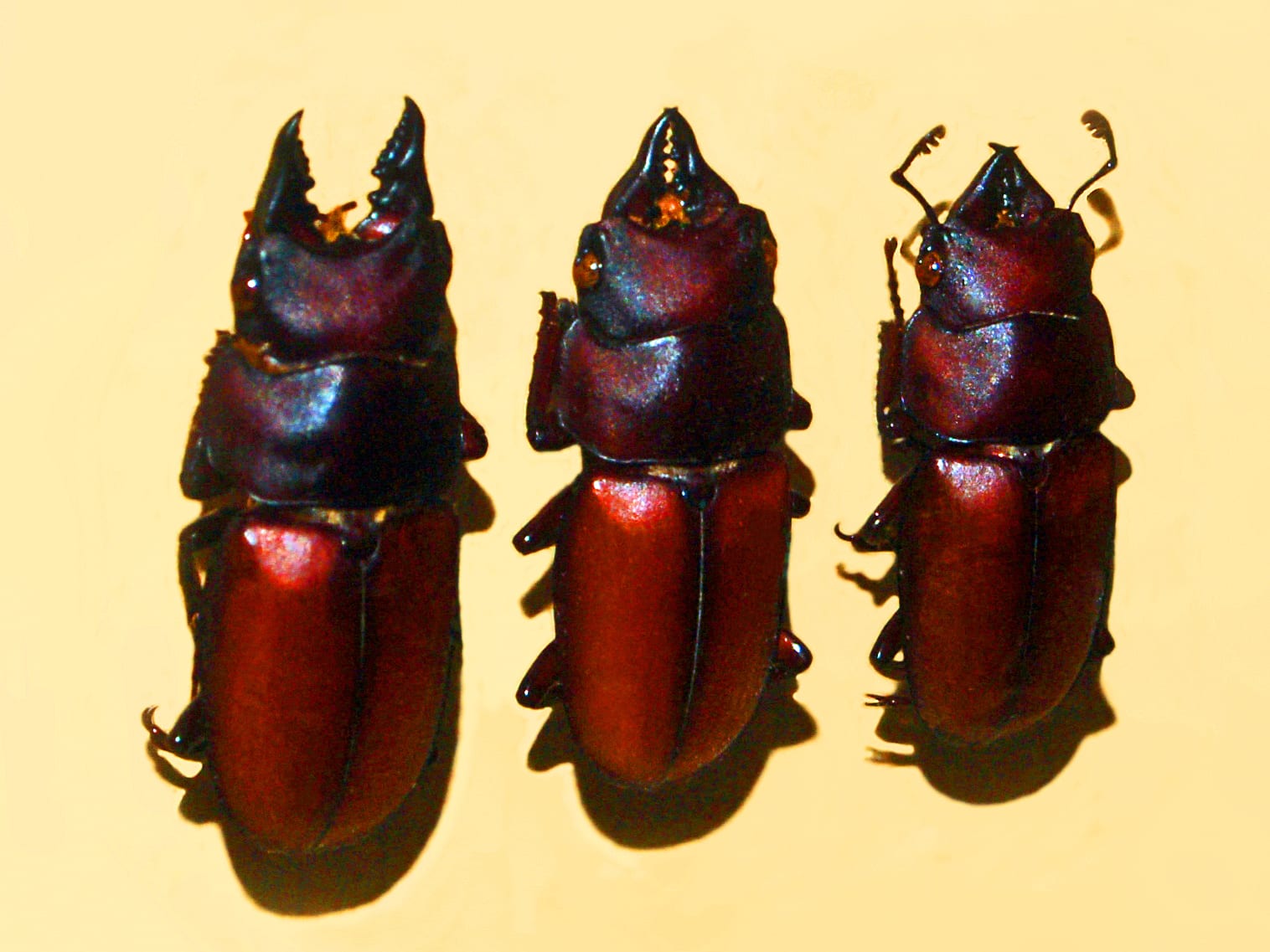
An African saw stag of the rainforests from West Africa to the Congo Basin. The male mandibles curve in a way that recalls an antelope's horns, which is what the Japanese name refers to. In Japan it circulates mainly as set specimens and little husbandry information exists.
Difficulty
Advanced
Temperature
20〜28℃
Lifespan
Adults 2-3 months
Humidity
60〜80%
Diet
Sap of broadleaf trees; beetle jelly
About
The antelope saw stag (Prosopocoilus antilopus) was described by Swederus in 1787. It is known from Senegal, Guinea, Sierra Leone, Liberia, Cote d'Ivoire, Ghana, Cameroon and Equatorial Guinea, and GBIF holds more records from Sao Tome than from anywhere else, so the species is spread through the rainforests of West and Central Africa. Besides the nominate form, the subspecies beisa and insulanus are recognised. The male mandibles curve gently from the base and call to mind the horns of an antelope, which is what the Japanese name means. Unlike the Asian saw stags, almost no captive breeding reports have been published and the species does not appear in the BE-KUWA certified records. In Japan it circulates mainly as set specimens and live stock is seldom offered, so anyone keeping it has to fall back on the general husbandry used for the genus.
Source: Wikipedia (CC BY-SA 4.0)
Lifespan of the Antelope Saw Stag Beetle
The Antelope Saw Stag Beetle lives Adults 2-3 months.
Basic Info
Origin
West and Central Africa (Senegal, Guinea, Sierra Leone, Liberia, Cote d'Ivoire, Ghana, Cameroon, Equatorial Guinea and Sao Tome)
Lifespan
Adults 2-3 months
Temperature
20〜28℃
Humidity
60〜80%
Diet
Sap of broadleaf trees; beetle jelly
Care Specifications
References & Sources
Edited & verified by: BreederDirect editorial team
The taxonomic, regulatory, and husbandry data on this page are compiled and verified against the authoritative primary sources below.
Primary sources
- Wikipedia
- Ministry of the Environment, Invasive Species Act: "Guidance for Those Importing Live Insects in Scarabaeoidea"
- CITES Appendix (checklist.cites.org)
- GBIF species page for Prosopocoilus antilopus (distribution and occurrence records by country)
- Mushinavi - Tokara saw stag (general egg-laying, larval and adult husbandry for Prosopocoilus, JA)
Taxonomy & Authority
Accepted name: Prosopocoilus antilopus (Swederus, 1787)
Synonyms: Lucanus antilopus Swederus, 1787
Authority databases: GBIF
Nomenclature follows global taxonomic authority databases.
Regulations & Conservation Status
Not CITES-listed
Plant Protection Act: When importing live specimens of Scarabaeoidea (including rhinoceros beetles, stag beetles, flower beetles, etc.), a species identification certificate issued by the exporting country government agency or equivalent must be attached in accordance with the Invasive Species Act (import ports are limited to Narita, Chubu, Kansai, Fukuoka, and Kagoshima airports). This species itself is not a designated invasive species, and import is possible upon submission of the certificate.
Sources: Ministry of the Environment, Invasive Species Act: "Guidance for Those Importing Live Insects in Scarabaeoidea" / CITES Appendix (checklist.cites.org)
Regulations may change. Always verify the latest information with the relevant authorities.
Antelope Saw Stag Beetle Listings
Loading latest listingsFind listings for this species