Source: Wikimedia Commons
Cacicus Goliath Beetle
AdvancedGoliathus cacicus
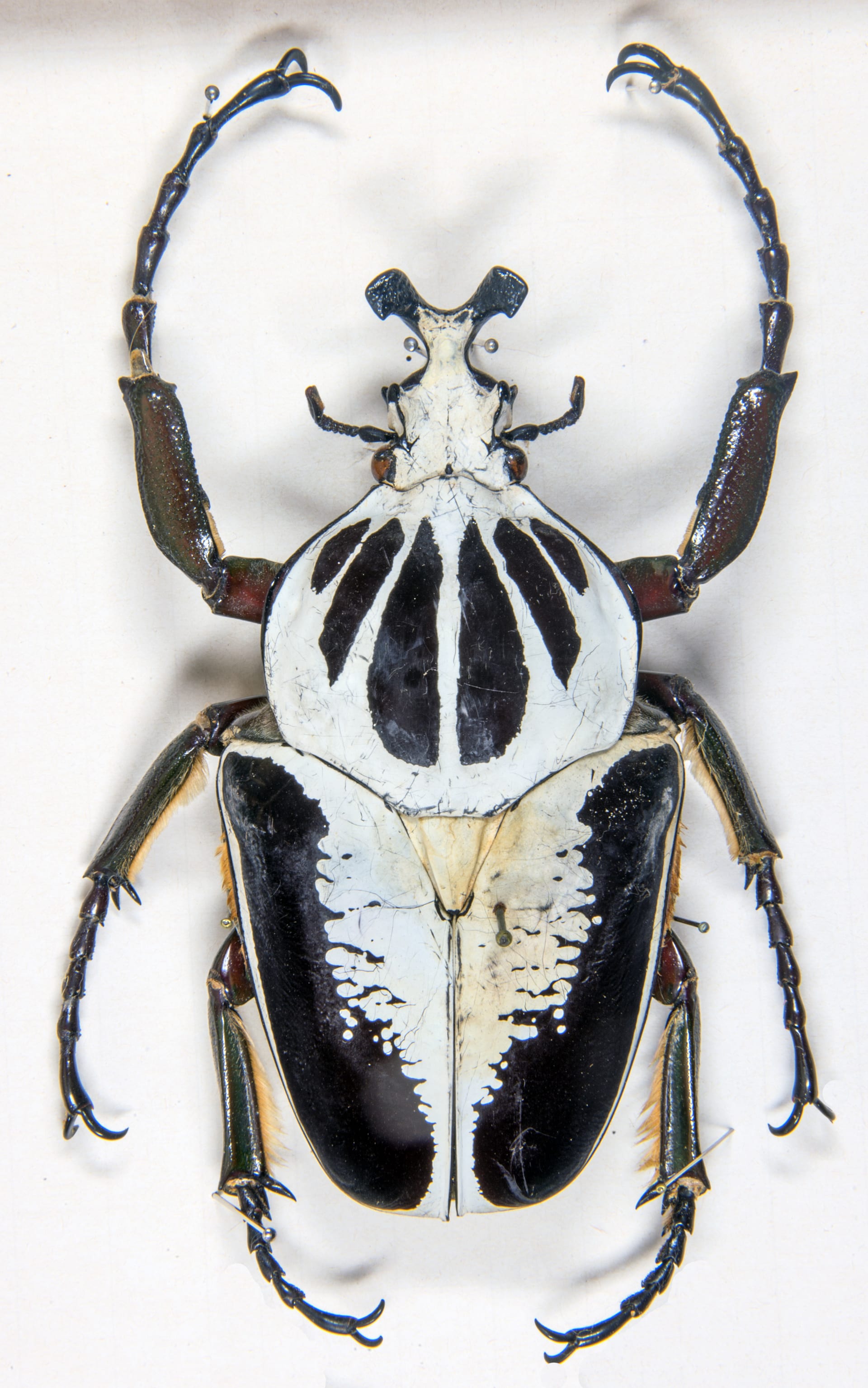
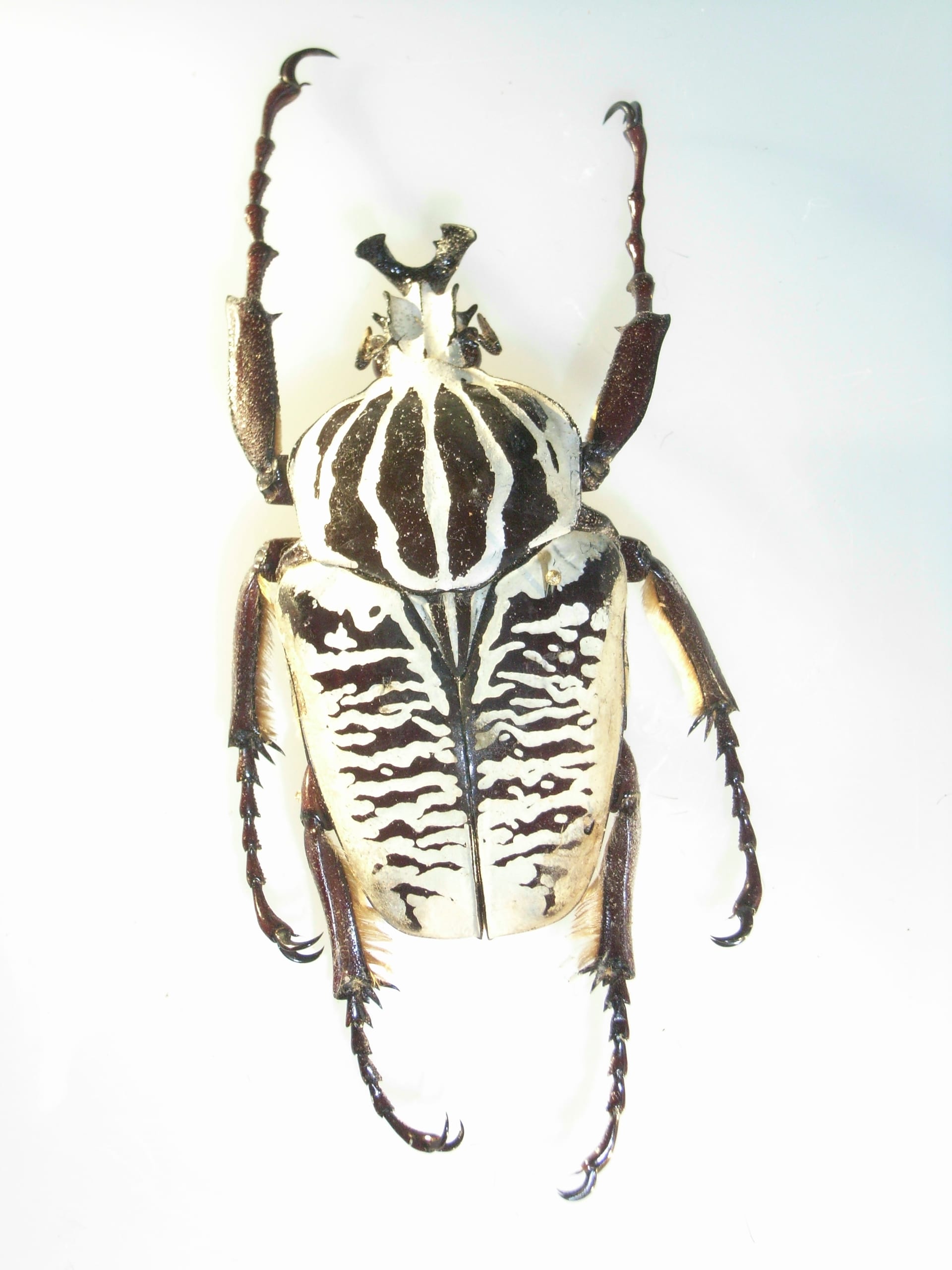
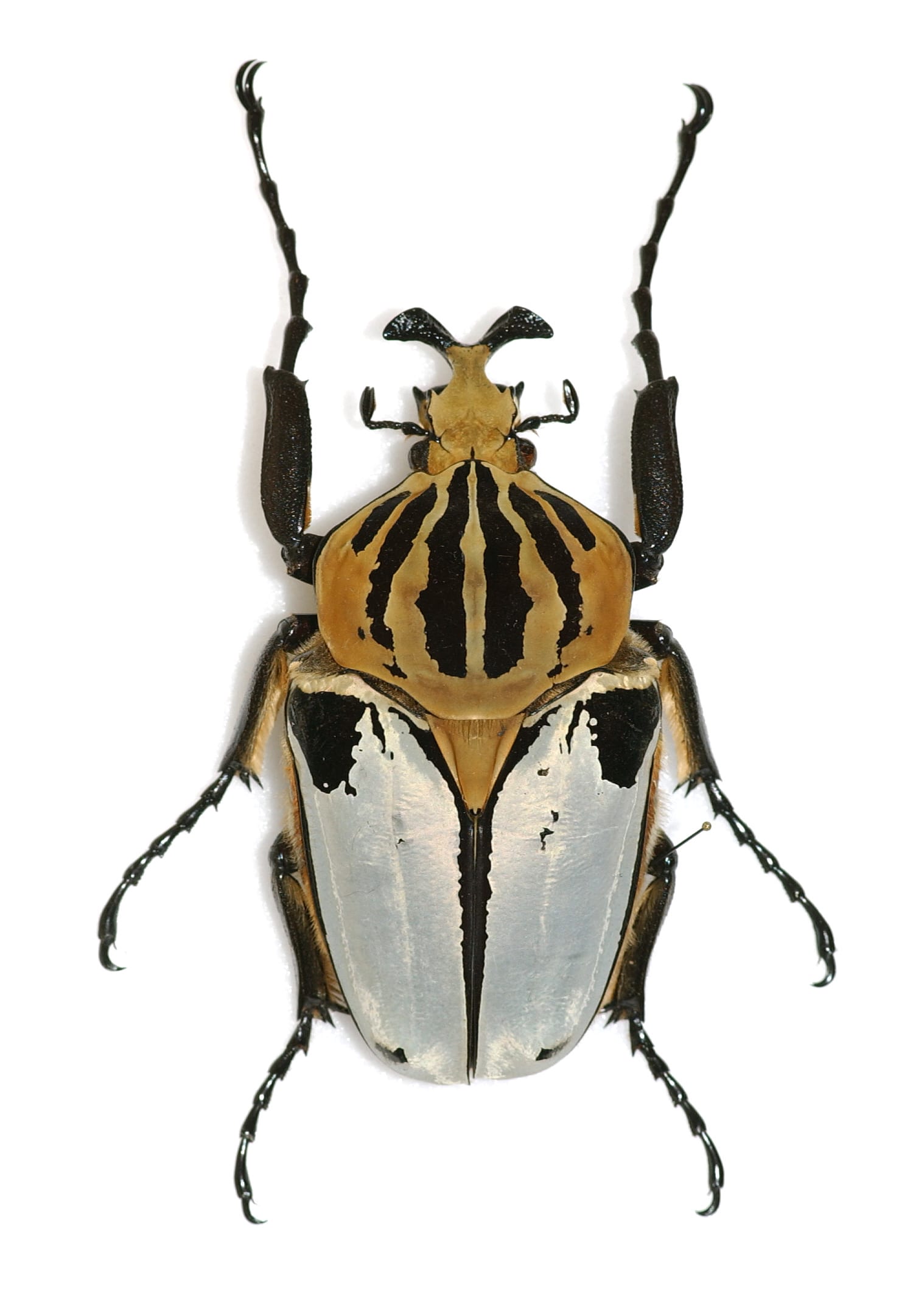
A large West African goliath beetle unlike the others in the genus: males have silvery, iridescent elytra and an orange pronotum, while females are matt white, so the sexes differ markedly in colour.
Difficulty
Advanced
Temperature
20〜28℃
Lifespan
Adults 5-8 months
Size
Males 50-100mm, females 58-79mm
Humidity
60〜80%
Diet
Adults take tree sap and fruit; larvae require animal protein
About
Goliathus cacicus is a large goliath beetle of the West African rainforests; males measure 50-100 mm and females 58-79 mm. Structural differences in the elytra produce a striking sexual dichromatism: males look silvery and iridescent depending on the angle of view, while females are matt white. The orange-tinged pronotum also sets it apart within the genus. GBIF holds most records from Cote d'Ivoire (51) and Ghana (16). Ben's Beetle Breeding Pages notes that exports are rare because of the situation in the region, that the species is held to be harder to breed than the other Goliathus, and that no captive breeding is known to the author.
Source: Wikipedia (CC BY-SA 4.0)
Lifespan of the Cacicus Goliath Beetle
The Cacicus Goliath Beetle lives Adults 5-8 months.
Size of the Cacicus Goliath Beetle
The Cacicus Goliath Beetle grows to Males 50-100mm, females 58-79mm.
Basic Info
Origin
West Africa (Cote d'Ivoire, Ghana, Liberia, Sierra Leone, Nigeria and neighbouring countries)
Lifespan
Adults 5-8 months
Size
Males 50-100mm, females 58-79mm
Temperature
20〜28℃
Humidity
Care Specifications
SolitaryBreeding: Very hard
Sources: Goliathus cacicus - Wikipedia (EN; size, sexual dichromatism, range) / Ben's Beetle Breeding Pages - Goliathus cacicus (Ivory Coast, silver elytra with orange thorax, harder to breed than other Goliathus) / Ben's Beetle Breeding Pages - Breeding Goliathus (cannibalistic larvae, protein feeding, temperature cycles, losses at pupation) / GBIF occurrence records for Goliathus cacicus (counts by country)
References & Sources
Edited & verified by: BreederDirect editorial team
The taxonomic, regulatory, and husbandry data on this page are compiled and verified against the authoritative primary sources below.
Primary sources
- Wikipedia
- Ministry of the Environment, Invasive Species Act: "Guidance for Those Importing Live Insects in Scarabaeoidea"
- CITES Appendix (checklist.cites.org)
- Ben's Beetle Breeding Pages - Goliathus cacicus (Ivory Coast, silver elytra with orange thorax, harder to breed than other Goliathus)
- Ben's Beetle Breeding Pages - Breeding Goliathus (cannibalistic larvae, protein feeding, temperature cycles, losses at pupation)
- GBIF occurrence records for Goliathus cacicus (counts by country)
- GBIF
Taxonomy & Authority
Accepted name: Goliathus cacicus (Olivier, 1789)
Synonyms: Goliathus casicus
Authority databases: GBIF
Nomenclature follows global taxonomic authority databases.
Regulations & Conservation Status
Not CITES-listed
Plant Protection Act: When importing live specimens of Scarabaeoidea (including rhinoceros beetles, stag beetles, flower beetles, etc.), a species identification certificate issued by the exporting country government agency or equivalent must be attached in accordance with the Invasive Species Act (import ports are limited to Narita, Chubu, Kansai, Fukuoka, and Kagoshima airports). This species itself is not a designated invasive species, and import is possible upon submission of the certificate.
Sources: Ministry of the Environment, Invasive Species Act: "Guidance for Those Importing Live Insects in Scarabaeoidea" / CITES Appendix (checklist.cites.org)
Regulations may change. Always verify the latest information with the relevant authorities.
Cacicus Goliath Beetle Listings
Loading latest listingsFind listings for this species